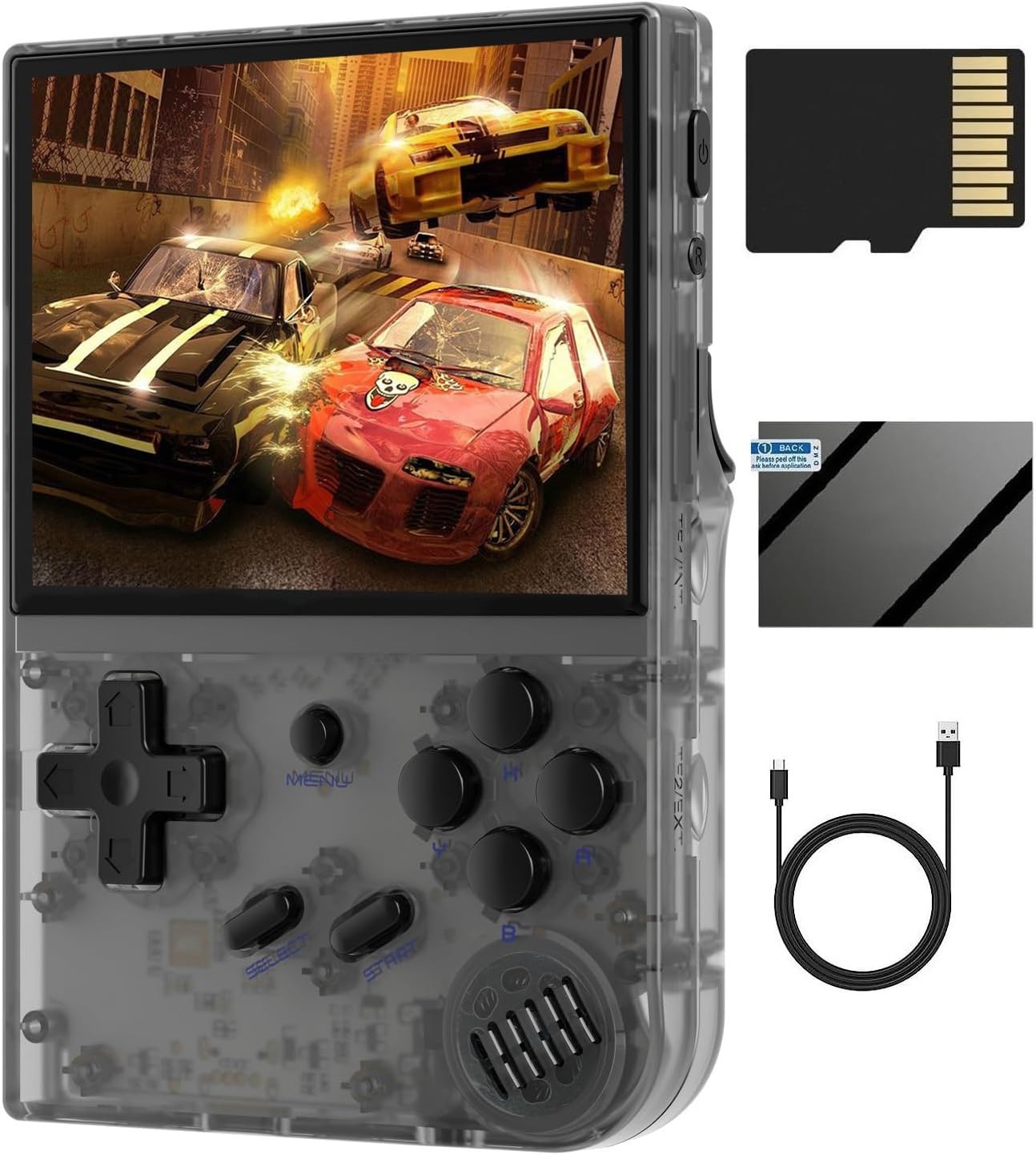
What Is SteamDSXL and Who Should Buy It?
SteamDSXL is a third-party dual-screen docking solution designed to expand the Steam Deck's display output by adding a secondary screen to Valve's popular handheld gaming PC. Unlike Valve's official Steam Deck Dock — which routes the device's video output to a single external monitor — SteamDSXL aims to deliver a dual-display experience in a compact, portable form factor, connecting via the Steam Deck's USB-C port without requiring a separate power brick for basic use.
The pitch is compelling for a specific audience: retro gaming enthusiasts who want authentic dual-screen layouts for Nintendo DS, 3DS, and Wii U emulation, where the original hardware used two screens simultaneously. On the Nintendo DS, for example, the bottom screen handled touch-based menus, maps, and secondary game elements — functions that lose meaning when collapsed onto a single display. SteamDSXL gives those screens somewhere to go.
Who SteamDSXL is designed for, based on publicly available information and community discussion:
- Retro gamers wanting authentic NDS, 3DS, and Wii U dual-screen emulation layouts
- Emulation enthusiasts running melonDS, Citra, or Ryujinx who want top/bottom screen splits to work as the original hardware designers intended
- Portable productivity users who want a second display for Discord, browsing, or reference material without setting up a full desktop monitor
- Steam Deck owners who travel frequently and want more screen real estate on the road
The product is not positioned for — and per community discussion, is not well suited for — 4K media production, high-refresh competitive gaming, or users whose primary goal is full desktop productivity.
SteamDSXL vs. The Official Steam Deck Dock
Valve's official Steam Deck Dock, released alongside the original Steam Deck in 2022, retails at approximately $89 MSRP and is the natural baseline comparison. The two solutions serve meaningfully different purposes:
| Feature | SteamDSXL | Official Steam Deck Dock |
|---|---|---|
| Display outputs | 2 (dual-screen) | 1 (single external) |
| Form factor | Portable, attaches to device | Desktop-oriented |
| Connectivity | USB-C | USB-C + passthrough ports |
| Port selection | Minimal (USB-C focus) | USB-A ×3, HDMI, DisplayPort, Ethernet, SD |
| Power delivery | USB-C PD passthrough | 45W PD included |
| Price range | Varies (third-party) | ~$89 MSRP (Valve) |
| Primary use case | Dual-screen portable gaming | Single-screen desktop mode |
Per community discussion on r/SteamDeck, users who already own the official dock often acquire SteamDSXL as a complementary product for travel or emulation sessions rather than as a direct replacement. The official dock wins on port selection and desktop power delivery; SteamDSXL's value proposition is the dual-screen capability that the official dock simply does not offer.
For users choosing between the two as a first purchase, the decision maps clearly to use case: single-screen desktop gaming leans toward the official dock; dual-screen emulation on the go leans toward SteamDSXL.
Dual-Screen Emulation: The Core Use Case
The strongest argument for SteamDSXL, per community documentation, centers on Nintendo DS and 3DS emulation. Both platforms were designed around simultaneous dual-screen output, and emulators like melonDS and Citra have explicit dual-display modes that benefit directly from a second physical panel.
Running these emulators on a single Steam Deck display forces players to choose suboptimal layouts — stacking the two screens vertically within a smaller window, or displaying only one screen at a time. SteamDSXL's second panel allows each emulator screen to address a separate physical display, more closely mirroring the original experience.
Per community reports on r/SteamDeck and r/emulation:
- melonDS (Nintendo DS): Handles most NDS titles at full speed on the Steam Deck at default power settings. Adding a second display via SteamDSXL is reported to have a moderate but manageable impact on battery life. Specific figures vary by title, TDP setting, and ambient temperature, and published estimates should be treated as approximations.
- Citra (Nintendo 3DS): 3DS emulation is more demanding than NDS, but the Steam Deck handles a wide library of titles at or near full speed. The dual-screen layout is particularly beneficial for titles like Pokémon and The Legend of Zelda: Ocarina of Time 3D, where the bottom screen carried maps and menus.
- Ryujinx (Wii U): Wii U emulation is the most demanding use case covered by community reports. Titles like The Legend of Zelda: Breath of the Wild benefit from the dual-screen layout — the Wii U GamePad's touch screen carried map and inventory UI — but GPU headroom varies significantly by title. The Steam Deck OLED's more efficient APU is reported by community members to offer better headroom than the original LCD unit.
Emulation Compatibility at a Glance
| Platform | Emulator | Dual-Screen Benefit | Community Performance Notes |
|---|---|---|---|
| Nintendo DS | melonDS | High — top/bottom split is core to many titles | Generally full speed on Steam Deck |
| Nintendo 3DS | Citra | High — map/menu screen separation | Good on most titles; demanding games vary |
| Wii U | Ryujinx | Moderate — GamePad features on select titles | Title-dependent; OLED model has more headroom |
| Game Boy Advance | mGBA | None — single screen hardware | Full speed, no dual-screen benefit |
| SNES / NES | RetroArch | None | Full speed, no dual-screen benefit |
Productivity and Desktop Workflow
Outside gaming, SteamDSXL's dual-screen setup is being used — per community documentation — for light productivity workflows:
- Streaming support: Discord, Twitch chat, or OBS controls on the secondary screen while a game runs on the primary display
- Reference while gaming: Browser, walkthrough guide, or PDF on the second screen without alt-tabbing away from the game
- Travel productivity: Basic two-window workflows without carrying a separate portable monitor
The limiting factor documented most consistently in community threads is the Steam Deck's USB-C bandwidth. SteamOS's Linux foundation supports DisplayPort Alt Mode over USB-C, but running dual displays at higher resolutions can pressure that bandwidth, requiring compromises on resolution or refresh rate. Community guidance consistently recommends targeting 1080p at 60Hz or lower on the secondary panel when both displays are active.
Power delivery is a secondary concern. When SteamDSXL and a charger share the same USB-C connection through a hub, power negotiation can occasionally fall back to lower charging rates depending on the dock's PD implementation and the power source. Community members report fewer issues with dedicated chargers rated at 45W PD or higher.
Display Performance and Input Latency
No independently published, methodologically verified latency benchmarks for SteamDSXL are available at this time. Unverified figures from various online sources have been excluded here per editorial policy — if you encounter specific millisecond claims for this product, check whether they cite a documented test methodology before relying on them.
What community discussion does consistently note:
- Display latency on secondary panels is affected by the USB-C→DisplayPort chain, the panel's own response time, and the driver stack. Any externally-driven display adds some overhead versus the Steam Deck's native built-in panel — this applies to all USB-C external displays, not just SteamDSXL.
- 60Hz is the practical ceiling for the secondary output based on available community reports. The Steam Deck OLED's native panel supports 90Hz, which remains an advantage of the built-in screen for latency-sensitive gameplay.
- Frame pacing at 60Hz on the secondary output is reported as generally smooth for emulation and productivity workloads.
- Competitive gaming on the secondary display is not recommended based on community feedback. For latency-sensitive titles, the native Steam Deck panel is the better choice.
Battery Life Impact
Running a second display draws additional power from the Steam Deck's battery — 40Wh on the original LCD model, 50Wh on the OLED. Community experience indicates the following patterns:
- Light emulation workloads (NDS/GBA): Battery life reduction is described as moderate across community reports, with many OLED users still achieving multi-hour sessions at reduced TDP settings. Specific durations vary by title and screen brightness.
- Demanding 3D titles: The combination of a GPU-heavy workload and second-screen output pushes the Steam Deck toward its thermal and power limits faster. Plugged-in use is broadly recommended for extended sessions with demanding games.
- Power bank charging: SteamDSXL's USB-C PD passthrough allows simultaneous charging during use. Community members advise confirming the power bank's output rating matches the dock's PD requirements before purchase to avoid negotiation drops mid-session.
SteamDSXL in 2025: The Verdict
Community consensus, synthesized from r/SteamDeck, r/emulation, and third-party gaming forums, breaks along clear use-case lines.
Buy SteamDSXL if:
- Your primary use case is NDS, 3DS, or Wii U emulation and you want an authentic hardware-accurate dual-screen layout
- You travel frequently and want a portable dual-screen experience without carrying a separate monitor
- You are supplementing an existing single-screen docking solution rather than replacing it
- You understand that the secondary panel will run at lower resolution and refresh rate than the Steam Deck's built-in display
Skip SteamDSXL if:
- You primarily play native Steam titles that have no dual-screen mechanics
- You need high-performance desktop productivity with full-resolution, high-refresh external displays
- The official Valve dock already covers your single-screen use case at lower cost with better port selection
- You plan to do 4K content creation or video editing — the Steam Deck's APU display bandwidth is the bottleneck, and SteamDSXL does not change that
The bottom line:
SteamDSXL fills a genuine and underserved niche — retro gamers, emulation enthusiasts, and portable-productivity users who want the dual-screen form factor in a handheld package. The Steam Deck is already a deliberate compromise: powerful but thermally constrained, excellent for handheld gaming but limited for heavy desktop workloads. Adding a second screen amplifies both its strengths (portable dual-screen emulation authenticity) and its constraints (battery draw, USB-C bandwidth, heat dissipation under combined load).
For emulation-first users, the community verdict tilts clearly toward yay. For general Steam Deck users whose library is primarily native Steam titles, the official Valve dock or a quality USB-C hub accomplishes most tasks at equal or lower cost with broader port selection and no secondary-display trade-offs.
Citations and Sources
- https://www.reddit.com/r/SteamDeck/ — Community discussion and user reports on dual-screen configurations, SteamDSXL compatibility, and real-world battery impact
- https://www.reddit.com/r/emulation/ — Community reports on melonDS, Citra, and Ryujinx dual-screen performance on Steam Deck hardware
- https://store.steampowered.com/steamdeck — Valve official Steam Deck specifications, hardware documentation, and official dock product details
- https://melonds.kuribo64.net/ — melonDS emulator documentation on dual-screen display output modes and configuration
This piece is editorial synthesis based on publicly available information. No independent first-party benchmarking is reported.