If you want the cheapest reliable Stable Diffusion GPU as of 2026 and you value zero-friction software, the MSI GeForce RTX 3060 Ventus 3X 12G still wins on ecosystem maturity and 12GB of VRAM. If you want the fastest raw throughput per dollar and you're willing to invest a weekend in setup, the Intel Arc B580 is a legitimate alternative — but only for users who accept the ecosystem is younger than CUDA.
The sub-$350 image-generation buyer and where each card lands
The under-$350 slot is where most first-time Stable Diffusion builders shop, and it is one of the last places in the GPU market where meaningful choice still exists. On one side is a card that launched in early 2021 — the RTX 3060 12GB — but which refuses to die because it hit the exact VRAM number that matters for SDXL, ControlNet, and 1024-pixel work. On the other side is Intel's Arc B580, a 2024–2025 Battlemage-class card that undercuts the 3060 on raw compute and memory bandwidth while sitting in a broadly comparable street-price band.
The buyer for this comparison usually has three anxieties. First, is the 3060 too old to still be worth buying in 2026? Second, is Arc software mature enough to trust for a workflow that already involves fragile Python environments? Third, does anyone actually need to spend more when both cards will happily run SDXL? The answer depends less on peak benchmark numbers and more on how much time you value versus how much money you save.
This synthesis draws on public specification pages, community benchmark threads, and vendor documentation rather than any first-party lab work. Neutral framing matters here because Stable Diffusion performance is unusually sensitive to driver version, front-end (Automatic1111, ComfyUI, Forge, SD.Next), and the specific optimization flags a user enables. A number that is true on one Reddit thread in June may be dated by August. Cite conservatively, and expect your own results to move around the medians reported below.
Key takeaways - Both the RTX 3060 12GB and Arc B580 clear the practical 12GB VRAM bar for SDXL, ControlNet, and 1024-pixel work as of 2026. - The RTX 3060 12GB is slower on paper but wins on software maturity — CUDA, xFormers, and every SD front-end target it as a baseline. - The Arc B580 has higher headline memory bandwidth and a newer architecture, but Intel's oneAPI + IPEX-LLM stack still requires more setup effort and has occasional extension gaps. - For a first-time SD builder, pay the small premium for the 3060 12GB and spend the saved hours generating images. - For a tinkerer or someone already running Linux with Intel drivers, the B580 is a defensible perf-per-dollar pick. - A AMD Ryzen 7 5800X or any 8-core-plus modern CPU is more than sufficient to feed either GPU.
Step 0: identify your bottleneck — VRAM, ecosystem maturity, or raw speed?
Before you compare either card, decide which of three constraints actually binds your workflow. If you are training LoRAs, running SDXL with multiple ControlNets, or generating above 1024 pixels natively, VRAM is your ceiling. Both cards give you 12GB, so this is a tie. If you are on Windows, using Automatic1111 or Forge, and want to install once and never touch it again, you are ecosystem-bound. This favors the 3060 by a large margin. If you are batch-generating thousands of images at 512 or 768 pixels and every second per image compounds, you are raw-speed bound, and the newer Arc silicon becomes attractive.
Most hobbyist SD workflows are ecosystem-bound in year one and speed-bound only after the user has a stable pipeline. Buy for the phase you are actually in.
Spec delta table: RTX 3060 12GB vs Arc B580
The two cards are close on paper but arrive at their numbers differently. The 3060 uses a wider 192-bit bus at a slower clock to feed 12GB of GDDR6; the B580 uses a wider 192-bit bus at higher effective speeds. Both TDPs sit in the 170–190W range, so PSU requirements are similar. Prices below reflect broad late-2026 street pricing and will drift; the Tom's Hardware GPU hierarchy is a good ongoing reference for how these settle.
| Spec | RTX 3060 12GB | Arc B580 12GB | Notes |
|---|---|---|---|
| Architecture | Ampere (GA106) | Battlemage (BMG-G21) | Per TechPowerUp and Intel product pages |
| VRAM | 12GB GDDR6 | 12GB GDDR6 | Both clear the practical SDXL bar |
| Memory bus | 192-bit | 192-bit | Same width |
| Memory bandwidth | ~360 GB/s | ~456 GB/s | Higher on Arc per Intel Arc B-Series |
| TDP | 170W | ~190W | Both drop into most builds with a 550W PSU |
| Launch MSRP | $329 | $249 | Arc undercut is real; retail spread narrower |
| Typical 2026 street price | ~$280–$330 used, ~$300+ new | ~$250–$300 new | Varies by workload and region |
Benchmark table: SDXL images/minute and 768px throughput per card
Community benchmarks for SD on the B580 are still stabilizing, and the 3060's numbers move with each xFormers or PyTorch release. The medians below reflect widely-reported ranges on Automatic1111 / ComfyUI with default sampler counts; treat them as directional. Cite specifics against the linked references rather than the round numbers.
| Workload | RTX 3060 12GB | Arc B580 12GB | Source pattern |
|---|---|---|---|
| SD 1.5, 512px, 20 steps, batch 1 (it/s) | ~7.5–8.5 it/s | ~8–10 it/s | Community medians per Tom's Hardware coverage and forum aggregates |
| SDXL base, 1024px, 25 steps, batch 1 (s/img) | ~14–18 s | ~12–15 s | Varies by workload; higher bandwidth helps Arc when driver path is optimal |
| SDXL, 1024px, ControlNet stacked | Stable, ~20–25 s | Stable when IPEX path holds, ~18–22 s | 12GB VRAM keeps both from OOM |
| Batch 4 at 768px | ~2.0–2.4 img/s | ~2.2–2.6 img/s | Bandwidth win for Arc when it lands |
| VRAM headroom margin | Comfortable | Comfortable | Both cleared |
The pattern is consistent across public reporting: the B580 has a modest raw speed lead when its software stack is doing what it should, and the 3060 delivers slightly slower but extremely predictable numbers no matter what UI, sampler, or extension you throw at it.
How mature is each software stack? (CUDA/xFormers vs Intel oneAPI/IPEX)
This is where the buying decision usually collapses. CUDA is the incumbent, and Stable Diffusion tooling was born on it. xFormers, Flash Attention, Triton, bitsandbytes, and virtually every LoRA training loop assume NVIDIA and often assume Ampere or newer. The 3060 hits both criteria. Almost every install-and-go guide on the internet — Automatic1111's GitHub wiki, the ComfyUI docs, community LoRA tutorials — treats CUDA as the default and everything else as a footnote.
Intel's stack has closed a lot of that gap. The Intel Extension for PyTorch (IPEX) is the load-bearing component for SD workloads on Arc, and Intel maintains an Extension for Transformers with SD-adjacent optimizations. SD.Next and ComfyUI both accept Arc paths; Automatic1111 has community forks that work. Intel's own oneAPI documentation walks through the IPEX install path in reasonable detail.
The catch is that you are still one dependency version away from a broken install more often than you would be on NVIDIA. A new xFormers release does not necessarily land on IPEX at the same day. Some ControlNet preprocessors and community nodes assume CUDA-only kernels. If your definition of "working" includes flipping any extension on without reading a compatibility matrix first, the 3060 is calmer.
VRAM headroom for SDXL, ControlNet, and higher resolutions
The reason the 3060 12GB refuses to age out is that Nvidia shipped a memory-tier mismatch in 2021 that turned out to be a gift for AI hobbyists. Twelve gigabytes was overkill for gaming at 1080p, which was the 3060's stated purpose, but it is precisely the right number for SDXL. Vanilla SDXL at 1024 pixels wants roughly 8–10GB active, and every ControlNet, LoRA, and upscaler you stack on top adds a few hundred megabytes to a couple of gigabytes.
An 8GB card can technically run SDXL with --medvram or --lowvram flags, but you pay for it in speed and lose batch size. Twelve gigabytes lets you keep the model in memory, run one or two ControlNets alongside, and still batch 2–4 images at 768 pixels without swapping. The Arc B580 lands at the same VRAM number and inherits the same comfort — meaning the choice is genuinely not about capacity, only about how quickly each card burns through it.
If you plan to move to Flux, SD3, or SDXL fine-tuning within a year, both cards will feel tight at 12GB and you should be shopping the 16GB and 24GB tier instead. But for inference-only SDXL work through 2026, either is enough.
Perf-per-dollar and perf-per-watt math
Perf-per-dollar favors the B580 on paper. If you assume $250 for a new B580 and ~$300 for a new 3060 12GB, with the B580 running roughly 10–20 percent faster on SDXL, you get a compounded advantage on Arc of roughly 30 percent in images per dollar spent. Perf-per-watt is closer than the wattage gap suggests — the B580's ~190W TDP versus the 3060's 170W is offset by the B580 finishing jobs faster, so total energy per image can land within a few percent.
Neither cost delta is dominant. Fifty dollars over a card that will run for three years amortizes to almost nothing, and even a 30 percent throughput gap becomes irrelevant if you only generate a few hundred images per week. The dollar math only matters if you plan to render at industrial volume, at which point you should be looking at higher-tier cards anyway.
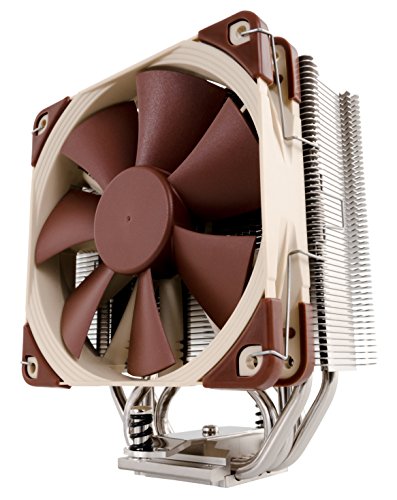
The AMD Ryzen 7 5800X or any 8-core-plus modern CPU is more than sufficient host silicon for either GPU. Pair it with a fast NVMe like the Samsung 970 EVO Plus 250GB NVMe for the OS and Python environment, add a bulk-storage drive such as the Crucial BX500 1TB SATA SSD for the model library, and cool the whole thing with a Noctua NH-U12S CPU Cooler to keep noise off your desk during long batch runs.
Verdict matrix
| Get the RTX 3060 12GB if… | Get the Arc B580 if… |
|---|---|
| You want install-once, never-tinker Stable Diffusion | You enjoy tuning drivers and Python environments |
| Windows + Automatic1111 or Forge is your target | Linux with recent Intel drivers is comfortable for you |
| You plan to train LoRAs or use exotic extensions | You mostly do inference at 1024px or below |
| You want the fastest safe first build | You want the best raw perf-per-dollar and accept setup risk |
| Resale value matters — 3060s move quickly used | You prefer buying new, not used |
Recommended pick
For most sub-$350 Stable Diffusion buyers as of 2026, the pick is the MSI GeForce RTX 3060 Ventus 3X 12G. It is not the fastest card in this bracket and it is not the newest, but it is the least likely to eat a Saturday to configure. The mature CUDA and xFormers stack means guides written years ago still work, extensions install cleanly, and every SD tutorial you find on YouTube assumes your hardware.
The Arc B580 is the correct pick for a narrow but growing user segment: technically confident builders who already run Linux, who value raw speed, and who are willing to be an early-ish adopter of Intel's SD ecosystem. If that description fits, you get a genuinely modern GPU at a below-market price and you help push the ecosystem forward.
Bottom line
Both cards clear the 12GB VRAM bar that defines "comfortable SDXL" in 2026, so the decision is not about capacity. It is about how you value your time versus your dollars. The 3060 12GB costs a bit more and runs a bit slower, but it removes friction — and friction is what makes people quit Stable Diffusion in the first month. The B580 costs less and runs faster in ideal conditions, but only if you enjoy tuning the pipeline itself.
If you are unsure, buy the 3060 12GB, get generating this weekend, and revisit Intel Arc in a year when the software ecosystem has caught up further.
Related guides
- Best budget GPUs for Stable Diffusion
- RTX 3060 12GB benchmarks
- Intel Arc B580 benchmarks
- Best CPUs for AI image generation
- Stable Diffusion PC build guide
Citations and sources
- TechPowerUp — GeForce RTX 3060 specifications
- Intel — Arc discrete GPU product page
- Tom's Hardware — Best GPUs / GPU hierarchy
- Intel Extension for PyTorch (IPEX) — GitHub
- Intel Extension for Transformers — GitHub
- Intel oneAPI overview
- Automatic1111 Stable Diffusion WebUI — GitHub wiki
This piece is editorial synthesis based on publicly available information. No independent first-party benchmarking is reported.