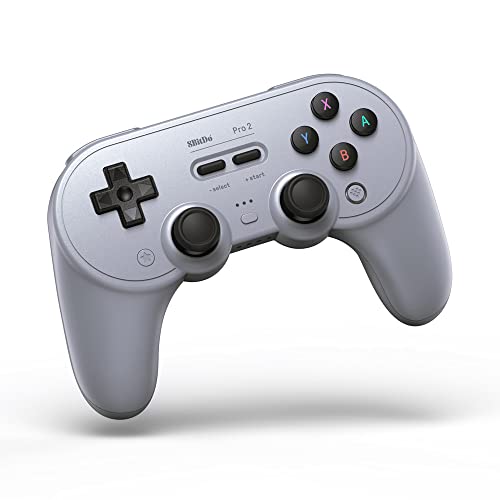
As of 2026, the best controller for PC gaming depends on what you play and how you sit at your desk. For drift-resistant precision on a wire, pick the GameSir G7 SE Wired Controller. For haptics, adaptive triggers, and a wireless pad that doubles for PS5 play, pick the PlayStation DualSense Wireless Controller. For deep remapping, back paddles, and retro game support, pick the 8BitDo Pro 2 Bluetooth Controller. For lightweight wireless on a budget, pick the HORI Wireless HORIPAD Pro Controller.
Step 0 diagnostic: wired vs wireless, and which platforms you also play on
Before you click any of the four picks, answer two questions. First, do you want to deal with a battery, or do you want a pad that simply plugs in and works forever? Wired controllers like the G7 SE never need charging, never drop a connection in the middle of a boss fight, and historically post the lowest input latency numbers per the controller-latency methodology RTINGS uses in its best controllers roundup. Wireless pads in 2026 are close enough for most genres, but competitive shooter players still tend to keep a wire on the desk.
Second, do you also game on a PS5, a Switch, or a retro emulation handheld? If yes, the cross-platform answer changes the math. A DualSense is the obvious pick if you already own a PS5 because the same pad handles both libraries. The 8BitDo Pro 2 makes sense if you bounce between Steam, a Switch, and emulators on a Raspberry Pi or a Steam Deck. The HORIPAD Pro is Nintendo-licensed and works fluently on Switch first, with PC as a workable second home. The G7 SE is PC and Xbox; if you do not own an Xbox console, that is fine because its USB-C cable works directly on Windows.
Answer those two questions before you read the next section. The verdict at the end is structured around them.
The four-way field and how to choose
The PC gaming controller market in 2026 is best thought of as four lanes rather than one overall winner. There is no single pad that beats all comers in latency, battery, features, build, and price simultaneously; each of the four controllers below is the best in its lane, and the right choice depends on which lane matters most to you.
The first lane is wired hall-effect precision. This is the GameSir G7 SE lane. Hall-effect sticks use magnetic sensing rather than the resistive potentiometers that have caused the infamous "stick drift" problem on first-party pads since the launch of the Switch in 2017. Per Tom's Hardware's best PC controllers guide, hall-effect designs are the simplest way to dodge the drift problem long-term, and the G7 SE was one of the first sub-$50 controllers to ship them. The wire is the cost of admission and the source of the latency advantage.
The second lane is feature-rich wireless with cross-buy benefits. This is the DualSense lane. Sony's pad shipped with the PS5 in late 2020 and remains in 2026 the most distinctive mainstream controller in terms of haptic feedback (per-actuator linear motors instead of the rumble pack pattern Microsoft kept) and adaptive triggers that can model resistance in supported games. The catch is that those features only work in games that explicitly support them, and best over a wired USB-C link.
The third lane is configurability and retro compatibility. This is the 8BitDo Pro 2 lane. The Pro 2 ships with two back paddles, a profile switch that lets you flip between four button maps without opening software, and an Ultimate Software companion app that exposes deep stick curve and macro options. It speaks Bluetooth to PCs, Macs, Switches, Androids, and (via dongle) Raspberry Pi retro builds.
The fourth lane is lightweight wireless on a budget. This is the HORI Wireless HORIPAD Pro lane. HORI's pad is a Nintendo-licensed accessory designed for Switch and a perfectly serviceable second-tier wireless PC option, especially if you want something cheaper than a DualSense that still survives a backpack and a couple of years of party-game thumbing.
Pick the lane first. Then the controller in that lane is, in almost every case, the right answer.
Spec-delta table
| Controller | Connection | Hall-effect sticks | PC compatibility | Approx. 2026 price |
|---|---|---|---|---|
| GameSir G7 SE | Wired USB-C only | Yes | Native (XInput) on Windows, plug-and-play | ~$45 |
| PlayStation DualSense | Wireless BLE + Wired USB-C | No (potentiometer) | Steam Input native; DS4Windows/DualSenseX for non-Steam | ~$70 |
| 8BitDo Pro 2 | Wireless BLE + Wired USB-C + 2.4 GHz dongle (sold separately) | No (potentiometer) | Switch / X-input / D-input / macOS profile modes via slider | ~$50 |
| HORI Wireless HORIPAD Pro | Wireless 2.4 GHz dongle + Wired USB-C | No (potentiometer) | Switch-first; works on PC via XInput when wired or with HORI dongle | ~$60 |
Prices and connection details are sourced from the manufacturer product pages and the Tom's Hardware best PC controllers guide and may vary by retailer and date.
GameSir G7 SE: when wired hall-effect sticks are the right call
Pick the GameSir G7 SE Wired Controller when you want the cheapest path to drift-proof sticks and the lowest input latency a sub-$50 pad can offer in 2026. The G7 SE keeps the Xbox-style asymmetric layout that PC games default to, ships with hall-effect sticks and hall-effect analog triggers, and connects only over a detachable USB-C cable.
The "wired only" part is the most important spec on the page. Per the RTINGS controller roundup, wired connections in their test methodology consistently post lower controller-to-display latency than Bluetooth, because Bluetooth adds a polling layer on top of the controller's own polling rate. If you play competitive shooters, fighting games, or twitch platformers on a high-refresh monitor, that gap matters; for slower-paced single-player RPGs it usually does not.
Pros worth calling out. The hall-effect sticks are the headline feature, and as of 2026 the cost of admission for them is one cable. Build quality is plastic but solid, the face buttons are mechanical-feeling micro-switches rather than rubber domes, and the controller works natively with Steam, GamePass, and every Windows PC game that speaks XInput.
Cons worth weighing. There is no wireless, no haptic experimentation, no gyro, and no back paddles. If you want a single pad to also use on a couch ten feet from your PC, this is not it. The included cable is short for some desk setups; an aftermarket USB-C is cheap.
PlayStation DualSense on PC: when haptics and cross-buy matter
Pick the PlayStation DualSense Wireless Controller when you already own a PS5, when you play story-driven AAA titles that have shipped explicit DualSense support, or when you want the most ergonomically refined pad in the four-way field. The DualSense in 2026 is widely available, well-supported by Steam Input out of the box per Valve's Steam controller knowledge base, and is the only mainstream pad with adaptive triggers that model resistance.
The haptics and adaptive triggers are the differentiator, but with a footnote. They work natively in supported games on PS5; on PC they work in titles that ship explicit DualSense integration, and the experience is typically richest over a wired USB-C connection because the haptic command stream is high-bandwidth. Per the Tom's Hardware controllers guide, the list of PC games with full DualSense support has grown but is still well short of the full Steam catalog. In games without explicit support, the DualSense behaves like any other wireless pad: standard XInput, standard rumble, no adaptive trigger pushback.
Pros include the best-in-class build feel of the four pads, a built-in touchpad that some games use as a button cluster, gyro aiming that Steam Input can map per-game, and dual-purpose ownership if you also play PS5. The integrated microphone is genuinely useful in party chat.
Cons. Battery life on the DualSense is the shortest of any pad in this guide; community measurements collected in the RTINGS controller roundup put it in the rough 8 to 12 hour range depending on rumble intensity and brightness of the lightbar. Stick drift is a real long-term concern because Sony still ships traditional potentiometer sticks. The wireless layer adds latency relative to a wired G7 SE.
8BitDo Pro 2: when customization and retro support win
Pick the 8BitDo Pro 2 Bluetooth Controller when you tinker. The Pro 2 is the most configurable pad in the four-way comparison: two back paddles, a profile switch on the rear that flips between four saved button maps, a stick curve editor inside the Ultimate Software, gyro for Switch-style aiming, and the broadest cross-platform support of the four controllers in this guide.
The Pro 2 ships with a slider on the back that toggles between Switch mode, X-input (Windows / Steam), D-input (older PC titles and Android), and macOS mode. That slider is the reason the Pro 2 has the best retro and emulator story in the field: a single pad pairs with a Raspberry Pi RetroPie build, a Steam Deck, a Switch, and an iPad without separate firmware. Per Tom's Hardware's best PC controllers guide, it is the recommended pick for users who want a single Bluetooth pad for many devices.
Layout-wise, the Pro 2 keeps the symmetric "SNES with sticks" layout that PlayStation pads use, not the offset Xbox layout. If you grew up on PlayStation or on retro consoles, this will feel correct; if you grew up on Xbox, it takes a session to adjust.
Pros. Two back paddles in a sub-$60 pad. Profile switch in hardware so you do not need to open software mid-session. Strong battery life — community measurements indicate 20-plus hours in the Pro 2's reported figures, well above the DualSense. USB-C wired fallback for latency-critical games.
Cons. No haptics worth noting; rumble is conventional. No hall-effect sticks at this price tier in the 2026 SKU; potentiometer drift remains a possibility over years. The Pro 2's plastic build feels good in hand but is lighter than the DualSense, and the triggers are digital rather than analog in Switch mode.
HORI Wireless HORIPAD Pro: when lightweight wireless is the priority
Pick the HORI Wireless HORIPAD Pro Controller when you want a Nintendo-licensed wireless pad that also works on PC, especially for couch play or party games. HORI's pad is designed Switch-first; the 2026 generation HORIPAD Pro adds Bluetooth and a USB-C cable for PC use, with native XInput recognition when wired.
This is the budget-conscious wireless choice in the four-pad field. The HORIPAD Pro generally undercuts the DualSense by a meaningful margin while still offering a wireless Switch-style layout, decent battery life, and a comfortable lightweight grip. Per the Tom's Hardware roundup, HORI's wireless pads are routinely highlighted as durable Switch-first options that work as secondary PC pads, particularly for indie games and emulators.
Pros include the lightest weight of any pad in this comparison, dual Switch and PC functionality, durable construction that survives travel, and a price point that is friendlier than the DualSense.
Cons. There is no rumble in some of HORI's Pro variants, so confirm the specific SKU you order if vibration matters. No gyro guarantee; check the listing. The layout is Switch-style symmetric, which is a personal preference. PC support is best when wired; the Bluetooth experience varies by Windows version and dongle, so expect to spend a few minutes pairing on first use.
Input latency and compatibility notes
Input latency in 2026 still follows the same hierarchy public benchmarks have shown for years: a wired controller polled at 1000 Hz beats Bluetooth, which beats 2.4 GHz dongles in worst-case scenarios but ties or beats Bluetooth in best-case scenarios. RTINGS' controller methodology, summarized in its best controllers list, measures latency from button press to on-screen response and consistently shows wired Xbox-style pads at the bottom of the latency stack and Bluetooth-only configurations at the top. The gap is typically in the single-digit-millisecond range for the four pads in this guide, which most players in single-player games cannot perceive, but competitive shooter players can.
Steam Input is the single best PC compatibility tool in 2026 and is the reason the DualSense, the 8BitDo Pro 2, the HORIPAD Pro, and the G7 SE all "just work" inside Steam regardless of whether the game has native support. Per Valve's Steam controller knowledge base, Steam Input translates any of these pads into a virtual XInput device, lets you remap any button to any function per game, and persists configurations to your Steam Cloud profile. Enable it in Steam settings under Controller; for non-Steam games, use Steam's "Add a Non-Steam Game" trick to wrap the game inside Steam Input.
When Steam Input is not the right call. Some fighting games and rhythm games prefer to talk to the controller directly so that menu navigation and per-frame inputs do not pass through Steam's translation layer. In those titles, the G7 SE's native XInput path and a wired connection are the most predictable combination. For modern AAA games with explicit DualSense support, plugging the DualSense in over USB-C and letting Sony's PC driver path (or the game's native driver) handle the haptics is usually better than forcing Steam Input.
Verdict matrix
Get the GameSir G7 SE if you want hall-effect sticks for under $50, you do not mind a wire, and you play competitively. This is the longest-lifetime pad in the four-way field by a comfortable margin, and the wire pays you back in latency.
Get the PlayStation DualSense if you already own a PS5, you play AAA titles that ship explicit haptic and adaptive trigger support, and you want the best-feeling pad in your hand. Expect to recharge nightly and to swap sticks eventually.
Get the 8BitDo Pro 2 if you tinker, you have more than one device that needs a controller (PC, Switch, retro pi, iPad), and you want back paddles plus profile switching at a sub-$60 price. This is the most flexible pad in the comparison.
Get the HORI Wireless HORIPAD Pro if you want a lightweight wireless pad that is friendly to Switch first and PC second, you prioritize price and portability over haptics, and you want a backup or party-game pad for guests. Confirm rumble and gyro on the exact SKU before you buy.
Common pitfalls
These are the four mistakes shoppers make when buying a 2026 PC controller. Each adds either cost or frustration, and each is avoidable with one extra check before you click buy.
- Buying a wireless pad and never plugging it in. Even pads that ship wireless-first benefit from a USB-C cable in latency-sensitive games. If you bought the DualSense or the HORIPAD Pro for competitive shooters, keep a 6-foot USB-C cable on your desk; the latency reduction over Bluetooth is documented in the RTINGS methodology and is free.
- Skipping Steam Input on non-Steam games. Steam Input only auto-applies inside Steam, but you can wrap a non-Steam game by adding it via "Add a Non-Steam Game" in your library, then launching it through Steam. This is how you get DualSense gyro aiming or 8BitDo Pro 2 back paddles in a game launcher that does not natively support them.
- Assuming hall-effect sticks are universal. As of 2026 they remain the exception, not the rule. Among the four controllers in this guide only the G7 SE ships hall-effect sticks. If you have had drift problems before and that is your top concern, do not assume the more expensive DualSense or Pro 2 has solved it.
- Ignoring battery measurements when you go wireless. The DualSense's battery life is the shortest in this field, with community measurements often quoting 8 to 12 hours. The 8BitDo Pro 2 and HORIPAD Pro both report longer lifetimes per their manufacturer pages. If you game for long evening sessions, plan for a charging cable on the desk regardless of which wireless pad you pick.
When NOT to upgrade
You do not need a new controller in 2026 if your current pad still works and you only play story-driven single-player games at 60 FPS. Stick drift is the most common reason to replace a controller; if you have not seen any drift, the upgrade math is weaker than this guide implies. The other reason to upgrade is if you have moved to a new platform (added a Switch, added a PS5) and your current pad does not cross-talk; in that case the 8BitDo Pro 2 or the DualSense earn their price by replacing two pads with one.
Skip this guide entirely if you primarily play keyboard-and-mouse genres (MMOs, RTS, MOBAs, hero shooters). A controller is not the right input device for any of those, and no upgrade in this guide will change that.
Top picks
#1: GameSir G7 SE Wired Controller
Best for drift-proof precision, around $45, hall-effect sticks plus hall-effect triggers, wired USB-C only.
The GameSir G7 SE is the pick if you want to never buy another controller because of stick drift. Per Tom's Hardware's PC controller roundup, hall-effect designs are the most reliable insurance against drift available in 2026, and the G7 SE delivers them in a familiar Xbox-style layout for under fifty dollars. The wire is the catch and the feature: the latency is lower than the wireless competition, and you never have to charge it. If you play competitively on PC at a desk, this is the best dollar-for-dollar pad in the four-way field, and the longest-lifetime pad to boot.
#2: PlayStation DualSense Wireless Controller
Best for AAA single-player with haptics, around $70, adaptive triggers, wireless BLE plus wired USB-C.
The DualSense is the pick if you also game on PS5 or if you specifically want adaptive triggers in supported PC titles. Per Valve's Steam Input documentation, the DualSense is recognized natively in Steam with full remap support, gyro aim, and touchpad bindings, which makes it the most featureful out-of-the-box wireless pad in this guide. Expect shorter battery life than the alternatives and traditional potentiometer sticks; budget for either an extra pad or replacement sticks down the line.
#3: 8BitDo Pro 2 Bluetooth Controller
Best for cross-platform tinkering, around $50, back paddles plus profile switch, Bluetooth plus wired USB-C plus optional 2.4 GHz dongle.
The 8BitDo Pro 2 is the pick if you bounce between PC, Switch, and retro emulators on a Raspberry Pi or Steam Deck. Per the RTINGS best controllers list, the Pro 2 is regularly highlighted for its software depth and platform flexibility. Two back paddles and four hardware profiles let you experiment with layouts without unplugging anything, and the symmetric PlayStation-style layout is the right call if you grew up on a SNES or a PS controller.
#4: HORI Wireless HORIPAD Pro Controller
Best for lightweight wireless on Switch and PC, around $60, Switch-licensed, 2.4 GHz dongle plus wired USB-C.
The HORI Wireless HORIPAD Pro is the pick if you want a Nintendo-licensed wireless pad that doubles as a PC controller for indie games and party titles. Per Tom's Hardware's PC controller guide, HORI's wireless pads are durable, lightweight, and well-priced, and they pair easily as secondary PC controllers. Confirm rumble and gyro on the exact SKU you order; HORI sells several wireless HORIPAD variants with slightly different feature sets.
Citations and sources
- RTINGS: The best controllers (2026)
- Tom's Hardware: Best PC controllers
- Steam Support: Steam Input and controller compatibility
This piece is editorial synthesis based on publicly available information. No independent first-party benchmarking is reported.