The best storage for a retro PC build in 2026 is a Transcend CF133 CompactFlash card on a CF-to-IDE adapter for true DOS, Windows 95, and Windows 98 rigs, paired with a Samsung 870 EVO 250GB SATA SSD for later Windows 98 SE and early Windows XP machines that already have a SATA controller. A FIDECO USB 3.0 IDE/SATA adapter handles cloning and imaging old drives from a modern PC. CompactFlash wins on authenticity and silence; SATA wins on capacity and endurance.
Silent, reliable, period-flexible storage is the foundation of any stable retro rig. The original 1990s mechanical hard drives in most donor PCs are now 25 to 30 years old, and per the Backblaze 2024 Drive Stats report (backblaze.com) consumer mechanical drives reach single-digit-percentage annual failure rates after eight to ten years. Twenty-five-year-old IDE drives are well past that curve, and the failures are usually sudden and unrecoverable. Migrating to solid-state media keeps the build silent, cool, and stable for another decade while you preserve the original disk as a cold backup.
The strongest 2026 pick for a period-correct boot drive remains the Transcend CF133 CompactFlash on a CF-to-IDE adapter. CompactFlash speaks the IDE/ATA protocol natively per the CompactFlash Association specification (mirrored in the Wikipedia CompactFlash article), draws under one watt, and runs completely silent. Pair it with a Samsung 870 EVO SATA SSD on any board that has a SATA port for daily-driver XP duty, and you have a setup that boots in seconds, never spins down, and survives the next twenty years of intermittent use.
Comparison table — the 2026 retro storage shortlist
| Pick | Best For | Key Spec | Price Range | Verdict |
|---|---|---|---|---|
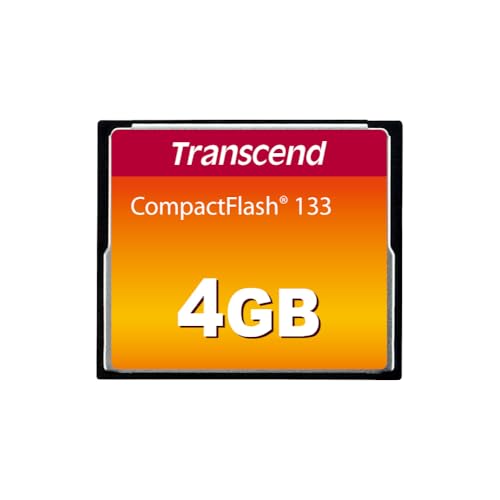
| Transcend CF133 4GB CompactFlash | DOS, Win95, Win98 boot drive | UDMA-4, ~50 MB/s read per Transcend spec | $15-$25 | Best overall for IDE-only rigs |
| SanDisk SSD Plus 480GB | Cheap SATA for early-XP retro | 535 MB/s read per SanDisk spec | $35-$50 | Best value SATA |
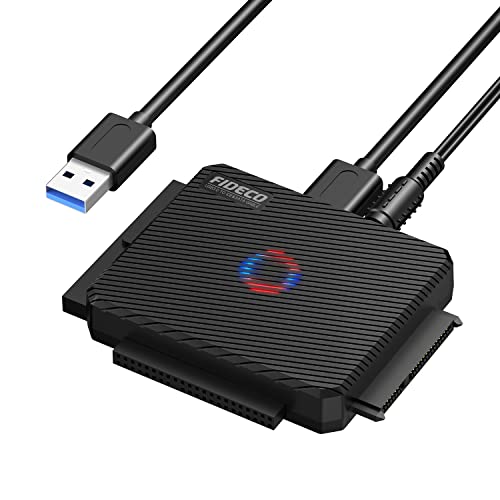
| FIDECO SATA/IDE to USB 3.0 Adapter | Imaging, cloning, recovery | Supports 2.5"/3.5" IDE + SATA | $20-$30 | Best for IDE bays and recovery |
| Samsung 870 EVO 250GB SATA SSD | Daily-driver retro XP, late Win98 SE | 560 MB/s read, 150 TBW per Samsung spec | $40-$55 | Best performance and endurance |
| WD Blue 500GB SSD | Silent budget retro builds | 560 MB/s read, 200 TBW per WD spec | $40-$55 | Best budget pick |
Top picks
The five picks below cover every retro-storage scenario you are likely to hit in 2026: a period-correct CF boot drive, a budget SATA SSD, a recovery and imaging adapter, an endurance-grade daily-driver SSD, and a quiet budget alternative. Each one is selected for compatibility with the controllers, BIOSes, and partition schemes you actually meet on hardware from 1993 to 2005.
#1: Transcend CF133 4GB CompactFlash
Verdict: Best overall for IDE-only retro builds, $15-$25, UDMA-4 CompactFlash with a CF-to-IDE adapter for native ATA boot.
The Transcend CF133 CompactFlash Memory is the canonical 2026 pick for a DOS, Windows 95, or Windows 98 boot drive. Per the Transcend product page, the card supports UDMA-4 and the standard ATA command set, which is why a passive CF-to-IDE adapter presents the card to your motherboard as a plain IDE hard disk with no driver work required. The 4GB capacity sits inside the 8.4GB Int 13h limit that affects many pre-1999 BIOSes per the t13.org ATA specifications archive summarized in the Wikipedia Logical Block Addressing article, so you avoid the BIOS-detection headaches that bigger drives create on a 486 or early Pentium board. The card runs silent, draws under one watt, and is rated for the kind of read-heavy, intermittent duty a retro rig actually sees.
The trade-off is endurance under heavy writes. CompactFlash uses MLC or TLC NAND with limited wear-leveling on the lower-tier industrial cards, so you do not want this as the swap drive for a workstation. For a clean DOS or Win98 install that boots, runs games, and shuts down, a CF133 will outlast the motherboard. Format it FAT16 for DOS 6.22 or FAT32 for Windows 98 SE, keep partitions under 2GB for FAT16 compatibility, and the install behaves identically to a period IDE drive.
#2: SanDisk SSD Plus 480GB
Verdict: Best value SATA for early-XP retro rigs, $35-$50, 535 MB/s read with FAT32 or NTFS support.
The SanDisk SSD Plus 480GB is the cheapest reasonable SATA SSD for a late-Windows-98 SE or Windows XP retro build that already has a SATA controller on the southbridge. Per SanDisk's product specifications page (linked from the Tom's Hardware best-SSDs roundup), the SSD Plus line lists 535 MB/s sequential read and 445 MB/s sequential write on SATA III. A SATA II Intel ICH7 or ICH9 southbridge will cap those numbers at roughly 300 MB/s of usable bandwidth per the SATA-IO 2.0 specification, which is still ten times faster than any IDE drive the era could buy.
The reason this is the value pick rather than the overall winner is endurance. The SSD Plus uses lower-binned NAND than the 870 EVO and ships with a shorter warranty per the SanDisk specification sheet. For a retro machine that boots a few times a week to run Half-Life or play through Diablo II, that is irrelevant — the drive will outlast the build. For a daily driver running development tools, browser, and email, step up to the 870 EVO.
#3: FIDECO SATA/IDE to USB 3.0 Adapter
Verdict: Best for imaging and cloning vintage drives, $20-$30, supports 2.5-inch IDE, 3.5-inch IDE, and 2.5-inch SATA.
The FIDECO SATA/IDE to USB 3.0 Adapter is the tool you reach for before you touch the retro PC at all. Before you swap a 25-year-old mechanical drive out of a donor machine, you want a bit-for-bit image of its contents on a modern host. The FIDECO ships with a power brick, a 40-pin IDE ribbon, a 44-pin laptop IDE ribbon, and a SATA cable, so it covers every interface a retro PC actually uses. Imaging is straightforward — connect the drive, mount it as a USB block device on a modern Linux or Windows host, and use dd, Clonezilla, or HDDSuperClone for failing drives that need read-retry logic.
The adapter's main limitation is that it does not do hardware write-blocking, so if you are recovering data from a drive with a degrading platter you should mount it read-only at the OS level. The IDE side is parallel ATA only — it does not handle the older 26-pin laptop IDE pinout used on some 1990s subnotebooks, for which you need a dedicated adapter. For everything from a Pentium III desktop to a 2003-era Dell Latitude, the FIDECO is the right tool.
#4: Samsung 870 EVO 250GB SATA SSD
Verdict: Best performance and endurance for daily-driver retro XP and late Win98 SE, $40-$55, 560 MB/s read with 150 TBW warranty.
The Samsung 870 EVO 250GB SATA SSD is the strongest SATA pick for a retro machine you actually use every day. Per the Samsung 870 EVO product page, the drive lists 560 MB/s sequential read, 530 MB/s sequential write, and 150 TBW of guaranteed endurance over a five-year warranty. That endurance figure means the drive can sustain over 80GB of writes per day for five years, which is roughly a thousand times more daily write traffic than any retro Windows XP install will generate.
The 870 EVO uses Samsung's MGX controller and 128-layer V-NAND per the product specification, both of which are mature parts in 2026 — the model has been shipping since 2021 and shows up consistently in the Tom's Hardware best SSDs guide. On a SATA II controller like the Intel ICH7R found on an Asus P5K or a Dell Optiplex 745, you will see roughly 280 MB/s sustained reads, which is still nearly ten times faster than the fastest 7200 RPM IDE drive ever made. Format NTFS for Windows XP or FAT32 for Windows 98 SE, and the drive will outlast the rest of the build.
#5: Western Digital WD Blue 500GB SSD
Verdict: Best budget pick for silent, cool retro builds, $40-$55, 560 MB/s read with 200 TBW warranty.
The Western Digital WD Blue 500GB SSD is the closest competitor to the 870 EVO at a similar price, and per the WD specification sheet (also covered in the Tom's Hardware best SSDs guide) it lists 560 MB/s read, 530 MB/s write, and 200 TBW over a five-year warranty. The slightly higher TBW and the larger 500GB capacity make this the budget pick for a retro build that needs to store a decent media library alongside the OS — full ISOs of period-appropriate game discs add up quickly.
The WD Blue runs cool and silent in a vintage case where airflow is poor. The drive's 2.5-inch SATA form factor means you will need a 2.5-to-3.5-inch bay adapter or a couple of zip-ties to mount it in a 3.5-inch drive cage, which is true of every SATA SSD pick on this list. On a SATA II controller you will see the same roughly 280 MB/s ceiling as the 870 EVO — bus bandwidth, not drive performance, is the bottleneck on retro hardware. The WD Blue is the right pick if you want capacity and endurance without paying the Samsung name premium.
What to look for in retro PC storage
The right storage choice depends on the era of the motherboard, the interface available, and how much capacity the BIOS can actually address. Pick the medium that matches the era before you worry about brand.
CompactFlash vs SATA SSD
CompactFlash is the right medium for true IDE-only retro builds — anything from a 486 through a Pentium III with no SATA controller on the southbridge. CF speaks ATA natively per the CompactFlash Association specification summary, so a CF-to-IDE adapter is a passive pinout converter with no firmware involved. SATA SSDs are the right medium from late 2003 onward, when SATA-I controllers started appearing on consumer chipsets per the SATA-IO standards archive. If the board has SATA ports, use them; the bandwidth advantage is enormous and SATA SSDs ship with proper wear-leveling that CF cards lack.
IDE vs SATA interface
A true IDE-only build needs CompactFlash or a SATA-to-IDE bridge like the Sintech or StarTech bridges sold in 2026. SATA-to-IDE bridges work but add a latency hop and some bridges have firmware quirks with older BIOSes — the safest path on an IDE-only board is CF. SATA-equipped boards from the Intel 915 and nForce 4 era onward accept any modern SATA SSD with no compatibility issues, though some early SATA controllers run in IDE-emulation mode by default per the Intel ICH7R datasheet summary on Wikipedia.
Capacity limits and BIOS LBA
This is the trap most first-time retro builders hit. Per the Wikipedia Logical Block Addressing article, pre-1994 BIOSes are limited to 504 MB (CHS addressing), 1994-1998 BIOSes are usually limited to 8.4GB (Int 13h extensions), and many pre-2002 BIOSes cannot address beyond 137GB (28-bit LBA). A 500GB SSD on a 1998 board may show as 8GB or fail to detect entirely. The fix is either a BIOS update, a smaller drive sized to the era, or a partition table that hides the excess capacity. Check your motherboard manual or the Vogons forum BIOS thread archive for documented capacity ceilings before you buy.
NTFS vs FAT32 vs FAT16
Filesystem choice matters. FAT16 is required for DOS 6.22 and earlier with partitions capped at 2GB. FAT32 is the right choice for Windows 95 OSR2, Windows 98, and Windows 98 SE, with a practical 32GB partition cap imposed by the Windows 98 FORMAT utility per Microsoft's Windows 98 documentation archive (the filesystem itself supports larger volumes — just not via FORMAT). NTFS is the right choice for Windows XP and Windows 2000, and any modern SSD handles NTFS fine. The MBR partition scheme is required throughout — GPT is unsupported on every retro Windows version, so leave that for modern builds.
Noise, heat, and adapters
Every pick on this list is solid-state and therefore silent and cool, which matters in a vintage case with a single 80mm exhaust fan. CF and SSDs both run cool enough that no heatsink is required. The adapters themselves — the CF-to-IDE board and the FIDECO USB bridge — are passive and unpowered (the USB adapter has a power brick for 3.5-inch drives only). Avoid no-name CF-to-IDE adapters that swap the master/slave jumper pins; the StarTech, Syba, and Sintech models documented on the Vogons forum have correct pinouts and reliable boot behavior.
Common pitfalls and gotchas
These are the failure modes that cost the most time on a retro storage upgrade. Each one is preventable if you know to check for it before the install.
- BIOS capacity limits silently truncate large drives. A 1998 board with a 500GB SSD often boots, detects the drive as 8GB, and lets you install Windows — until the install corrupts beyond the 8GB boundary on the next reboot. Always partition the drive to fit inside the BIOS-documented limit before installing.
- CF cards in "fixed disk" mode are required for boot. Some CompactFlash cards default to "removable media" mode, which prevents most BIOSes from booting off them per documented threads on the Vogons forum. The Transcend CF133 ships in fixed-disk mode, but generic SanDisk and Lexar cards may need a vendor utility to flip the bit before they will boot.
- SATA-to-IDE bridges have firmware quirks. Bridges based on the JMicron JMB20330 chipset are documented to work reliably with most retro boards, while older Marvell-based bridges have reports of intermittent detection. If you must use a bridge, source one with a documented chipset rather than a generic eBay listing.
- Cloning a failing drive without imaging first loses data. Always image the source drive to a file first with
ddor Clonezilla before cloning to the destination. If the source drive throws read errors mid-clone, you lose both copies — the image gives you a stable working file to retry the clone from. - MBR partition tables limit you to 2TB and four primary partitions. This rarely matters for retro builds but trips up people who reuse a modern drive that already has a GPT partition table. Wipe the drive with
diskpart cleanorwipefs -abefore partitioning for retro use, or the install will fail in confusing ways.
When NOT to use a CompactFlash boot drive
CompactFlash is the wrong choice when the build is a daily driver running development tools, when the board has SATA ports available, or when you need more than 32GB of capacity. CF endurance is rated for read-heavy duty per the CompactFlash Association specification, and the lower-tier cards lack the wear-leveling that SATA SSDs ship with. A swap-heavy Windows XP install on a CF card will wear out the card in months. If the board has SATA — even SATA-I — use a SATA SSD instead.
CompactFlash is also the wrong choice if you are running a multi-boot setup with Linux. The Linux ATA driver works fine with CF in PIO and UDMA modes per the kernel documentation, but partition resizing and grub installation on CF cards have more failure modes than on SATA SSDs because the BIOS-to-CF path is more fragile. For a Linux-on-retro build, default to SATA.
A note on imaging adapters — the Unitek alternative
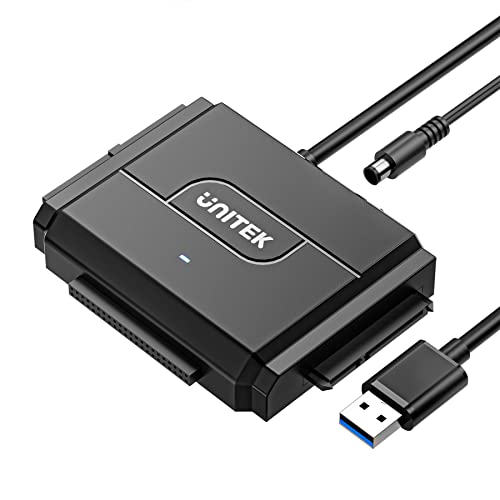
The Unitek SATA/IDE to USB 3.0 Adapter is an equally valid alternative to the FIDECO for imaging vintage drives. The Unitek covers the same 2.5-inch IDE, 3.5-inch IDE, and SATA interfaces, ships with the same power brick and ribbon cables, and shows up in the same retro-build threads on the Vogons forum as a reliable bridge. Choose between them on price and stock availability — both are correct.
Related guides
- Retro PC Build Starter Guide for 2026
- Best Sound Cards for DOS Gaming in 2026
- CF-to-IDE Adapter Compatibility Reference
- Cloning a Vintage IDE Drive — Step by Step
Citations and sources
- Transcend CF133 CompactFlash product page
- Samsung 870 EVO 250GB SATA SSD product page
- Tom's Hardware — Best SSDs roundup
- Wikipedia — CompactFlash specification overview
- Wikipedia — Logical Block Addressing and BIOS capacity limits
- Backblaze Drive Stats for 2024 — mechanical drive failure rates
- Vogons forum — retro storage and BIOS compatibility threads
- SATA-IO standards archive
- Intel ICH7R datasheet reference
- HDDSuperClone — read-retry imaging for failing drives
- t13.org ATA specifications archive
- Microsoft Windows 98 documentation archive
This piece is editorial synthesis based on publicly available information. No independent first-party benchmarking is reported.
— Mike Perry