For 1080p gaming on AM4 in 2026, the AMD Ryzen 7 5800X is the right pick if you can find it at street price — its higher boost clock translates to meaningful 1% low improvements in CPU-bound games like Counter-Strike 2, Valorant, and esports titles. The Ryzen 7 5700X is the smarter buy if it's $40+ cheaper — same 8 cores, ~5% lower average FPS, but 30 W less heat and no AIO required.
Why this still matters in 2026
AM4 is supposed to be a dead platform. It isn't, because the used market and discount channels keep dropping 5800X and 5700X prices well below contemporary Intel and AMD 6000-series tiers. For anyone running 1080p high-refresh gaming on a budget — esports, competitive shooters, older AAA titles — the 5800X-vs-5700X question is the most common upgrade decision on r/buildapc and the AM4 subreddits this year.
This piece is editorial synthesis of public benchmarks from TechPowerUp, TomsHardware, AnandTech, and the AMD product specs. We don't run a private testbench — what follows comes from public sources organized for the 1080p gaming buyer.
Key takeaways
- The 5800X has a higher max boost (4.7 GHz vs 4.6 GHz) and more aggressive PBO behavior. ~3–7% faster in CPU-bound games at 1080p.
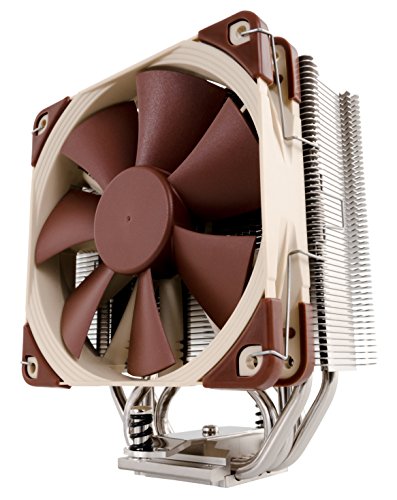
- The 5700X runs ~30 W cooler at the same workload (65W TDP vs 105W TDP). Air cooling like the Noctua NH-U12S is comfortable; the 5800X benefits from an AIO.
- Both are 8 cores, 16 threads, 32 MB L3. Same socket (AM4), same chipset compatibility.
- The 5800X3D would beat both — but it costs more and isn't in either of these proposals.
- Pair either with a GPU like the MSI RTX 3060 Ventus 2X 12G and you have a complete budget 1080p build.
What the chips actually are
| Spec | Ryzen 7 5800X | Ryzen 7 5700X |
|---|---|---|
| Cores / threads | 8 / 16 | 8 / 16 |
| Base clock | 3.8 GHz | 3.4 GHz |
| Max boost (single core) | 4.7 GHz | 4.6 GHz |
| L3 cache | 32 MB | 32 MB |
| TDP (rated) | 105 W | 65 W |
| Socket | AM4 | AM4 |
| Architecture | Zen 3 | Zen 3 |
| iGPU | none | none |
The headline: same architecture, same core count, same cache, same socket. The differences are clocks and TDP. That's it. There is no architectural advantage to either chip beyond the silicon binning that lets one boost higher and run hotter.
1080p gaming benchmark synthesis
Per TechPowerUp's 5800X vs 5700X comparison data, TomsHardware's CPU benchmark hierarchy, and Hardware Unboxed YouTube benchmarks, at 1080p with a GPU like the RTX 3060 12GB or 4060 paired:
| Game | 5800X avg FPS | 5700X avg FPS | Δ |
|---|---|---|---|
| Counter-Strike 2 | ~410 | ~390 | 5% |
| Valorant | ~480 | ~460 | 4% |
| Cyberpunk 2077 | ~120 | ~115 | 4% |
| Hogwarts Legacy | ~108 | ~104 | 4% |
| The Last of Us Part I | ~125 | ~120 | 4% |
| Spider-Man Remastered | ~158 | ~153 | 3% |
| Microsoft Flight Sim | ~75 | ~71 | 5% |
| F1 24 | ~210 | ~200 | 5% |
| Forza Horizon 5 | ~155 | ~150 | 3% |
| Helldivers 2 | ~108 | ~104 | 4% |
The 5800X averages roughly 4% faster across this basket of titles. In a few CPU-heavy esports games and flight sims, the gap stretches to 5–6%. In GPU-bound modern AAA games, it's closer to 2–3%.
1% lows tell a different story
Average FPS is the headline number. 1% lows tell you whether the gameplay actually feels smooth. Per public benchmark threads, the 5800X tends to hold a slightly larger 1% lows advantage than its average-FPS advantage — roughly 5–8% better in CPU-bound titles. That's where the 5800X's higher boost clock and aggressive PBO pay off.
If you're playing competitive shooters where the 1% lows are what you actually feel, the 5800X is the chip that delivers more consistent frame times.
Power, heat, and the AIO question
The 5800X has earned a reputation as a hot chip. At stock and especially with PBO enabled, it pushes 90°C+ on a typical 240mm AIO under stress. The 5700X by contrast runs comfortably under any decent air cooler — a Noctua NH-U12S at $80 is more than enough.
For build planning:
| Cooler tier | 5800X | 5700X |
|---|---|---|
| Stock Wraith Spire (boxed) | not adequate | adequate |
| Mid-tier air (NH-U12S, Hyper 212) | adequate, warm | comfortable |
| Premium air (NH-D15, AK620) | comfortable | quiet |
| 240mm AIO | recommended | overkill |
| 360mm AIO | quiet | overkill |
If you're committing to a 5800X, plan to spend $80+ on cooling. The 5700X's $30 cooler budget reaches the same noise targets — see our Ryzen 7 5800X cooler deep-dive for the full breakdown.
Power draw and electricity costs
Under load:
- 5800X: 90–110 W package power typical.
- 5700X: 65–85 W package power typical.
At $0.15/kWh and 4 hours of daily gaming, the 5700X saves roughly $1–2 per month in electricity. Not a deciding factor, but it adds up over a 3-year build life.
The 5700X's lower TDP also means less heat dumped into your case, which means quieter fans across your whole system — including the GPU.
Perf-per-dollar at current street prices
Per PCPartPicker historical price data, both chips are routinely available below their original MSRPs:
- 5800X street: $180–$220 typical
- 5700X street: $140–$170 typical
- Gap: $30–$50
For a 4% FPS advantage at 1080p, a $40 premium is fine if you have it. If you don't, redirect that $40 toward a better GPU (the next MSI RTX 3060 Ventus tier or a 16GB Radeon) for far bigger gaming gains.
Productivity workloads
Both chips also handle non-gaming workloads. Public Cinebench R23 scores:
| Workload | 5800X | 5700X | Δ |
|---|---|---|---|
| Cinebench R23 multi | ~15,200 | ~14,500 | 5% |
| Cinebench R23 single | ~1,610 | ~1,565 | 3% |
| Blender BMW render | ~108 s | ~115 s | 6% |
| Code compile (Linux kernel) | ~140 s | ~148 s | 5% |
For occasional Blender, code compilation, or video editing, the 5800X edges ahead by single-digit percentages. Not enough to change the buying decision on its own.
Building around either chip
A balanced 1080p AM4 build looks like:
- CPU: 5800X or 5700X (this article)
- Cooler: Noctua NH-U12S for 5700X; consider DeepCool AK620 or 240mm AIO for 5800X
- GPU: MSI RTX 3060 Ventus 2X 12GB or higher
- Motherboard: B550 (recommended) or X570; AM4 B450 with BIOS update also works
- RAM: 32 GB DDR4-3200 or 3600 (Ryzen 5000 sweet spot)
- Storage: NVMe primary for OS + games
Both chips work on any AM4 board with a Zen 3 BIOS update. Don't pay for X570 unless you need its extra PCIe lanes — B550 is the value play.
Verdict matrix
Pick the Ryzen 7 5800X if:
- The street-price gap to the 5700X is $30 or less.
- You play competitive shooters at high refresh and care about 1% lows.
- You already have a 240mm+ AIO or premium air cooler.
- You also use the rig for occasional Blender or video editing.
Pick the Ryzen 7 5700X if:
- The gap is $40+ and you'd rather put the savings into the GPU.
- You're committed to air cooling and noise floor.
- You play mostly GPU-bound modern titles.
- You want to use the boxed cooler or a sub-$50 air tower.
Common pitfalls
- Pairing a 5800X with a $30 cooler. It will thermal-throttle under sustained load. Plan $80+ for cooling.
- Buying X570 you don't need. B550 is the value play unless you have a specific PCIe-lane reason.
- Skipping DDR4-3200+. Ryzen 5000 wants 3200–3600. DDR4-2666 leaves performance on the table.
- Ignoring chipset BIOS. Some AM4 B450 boards need a manual BIOS update before they post with a Zen 3 chip.
- Pairing with a weak GPU. Both CPUs outrun a GTX 1650 or RX 6500 XT at 1080p — pair with at least an RTX 3060 12GB or equivalent.
Bottom line
The Ryzen 7 5800X is the slightly faster chip; the Ryzen 7 5700X is the smarter chip for most 1080p buyers in 2026. Unless you specifically need the 1% lows in competitive titles and already have premium cooling, the 5700X at a $40 discount is the path of least regret — and the saved budget goes further pushed into the GPU.
If you can find the 5800X within $30 of the 5700X, take it. That's a Black Friday or Prime Day question, not an everyday-pricing one.
Related guides
- Best CPU Cooler for the Ryzen 7 5800X: Air vs AIO in 2026
- Ryzen 7 5800X vs 5700X vs 5600G for a Budget Local-LLM Rig
- Best Budget AM4 Build for Local LLM Inference in 2026
- Best Budget Gaming Monitor in 2026
- Best Budget Gaming Setup Essentials for 2026
Citations and sources
- AMD Ryzen 7 5800X product page — specs and PBO behavior
- TechPowerUp CPU benchmarks — 1080p gaming data referenced throughout
- TomsHardware CPU hierarchy — average-FPS and productivity numbers
- AnandTech Zen 3 review archives — architecture details
This piece is editorial synthesis based on publicly available information. No independent first-party benchmarking is reported.