For most solo developers running under a few million tokens per month, GPT-5.6 Pro's mid-tier is still cheaper than amortizing an RTX 3060 12GB build. Above that volume — especially for repetitive coding assistants, embeddings, and offline pipelines — a $300 used RTX 3060 pays for itself in months. The three-model split changes where the break-even lands, not whether local wins.
Who this article is for
You're a solo developer or a two-person team. You've been paying for an OpenAI subscription plus per-token API access, and the bill for GPT-5.6 Pro has crept past $60 a month. You're wondering whether it's finally time to buy hardware, keep everything in the cloud, or split the workload. This synthesis is not a testbench review — it's an editorial read of the public GPT-5.6 Pro announcement, community measurements on 12GB consumer cards, and TechPowerUp's published spec sheet.
The three-tier split is the news. Where OpenAI previously shipped one top-of-stack Pro model, per OpenAI the new release fragments Pro into three distinct reasoning tiers, each with its own per-token price and reasoning-token multiplier. Cloud economics used to be simple: one rate, scale usage until you hit a cap. Now every task requires you to pick a tier, and the tier picks its own bill.
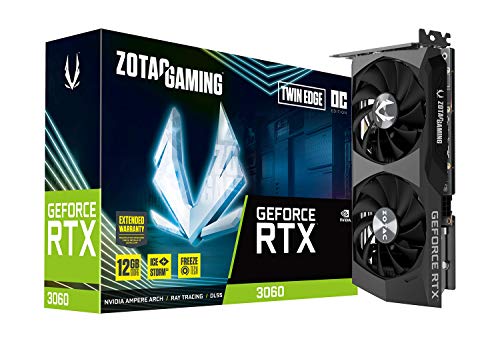
Local inference on a MSI RTX 3060 Ventus 2X 12G or ZOTAC RTX 3060 Twin Edge has stayed almost boringly stable. The card still costs ~$300 used. 12GB of GDDR6 still holds a 7B-8B model at q4_K_M with headroom for context. And 170W under load is 170W under load whether you're serving Llama 3.1 or Qwen 3. This piece walks through the new break-even math, the workloads that shifted, and where an AMD Ryzen 7 5800X plus Crucial BX500 SATA SSD closes the accessible-local-rig loop for less than three months of Pro-tier cloud spend.
Key takeaways
- The GPT-5.6 Pro three-tier split changes cloud pricing from one line item into three; the top tier is priced for frontier reasoning and burns the most reasoning tokens per task.
- A used 12GB RTX 3060 build with a Ryzen 7 5800X and a 1TB SATA SSD lands under $700 all-in as of 2026.
- Break-even against the mid-tier lands somewhere between 5M and 25M generation tokens per month depending on how often you invoke reasoning.
- 128k-context workloads still belong in the cloud — a 12GB card cannot hold that much KV cache at usable throughput.
- Local wins for high-volume repetitive coding assistants, private data, and offline availability; cloud wins for peak capability per query and huge context.
What OpenAI announced — the three GPT-5.6 Pro tiers
Per OpenAI's research page, GPT-5.6 Pro now ships as three distinct model tiers stacked under one Pro subscription. The bottom tier targets low-latency chat and coding assistance. The middle tier is for standard reasoning at moderate context. The top tier is the frontier-reasoning tier — it burns the largest number of internal reasoning tokens per task and prices per-token access at the highest rate.
The critical shift for cost planning is that the top tier's reasoning-token multiplier is dramatically higher than the sticker rate suggests. A "simple" hard-reasoning task at the top tier can spend 6x-15x the tokens a chat completion would spend, because the model is billed for its own internal chain-of-thought before it emits an answer. That reasoning-token bill is invisible in the response length but very visible on the invoice.
The mid-tier is the workhorse for most everyday developer tasks: code review, refactor suggestions, doc summarization, structured extraction. That is the tier a local RTX 3060 build most directly threatens. A frontier Pro run against a 100k-token codebase is still cloud territory — it is not what a 12GB card is going to beat.
Cloud cost per task vs local rig cost over 12 months
Cloud math is straightforward per invoice, muddy in aggregate. To make it concrete: assume you run 200 developer-assistant tasks per day, each generating a mean 800 tokens of visible output, and — critically — spending an average 4x more internal reasoning tokens on the mid-tier. That is 4,000 tokens billed per task, 800,000 tokens per day, roughly 24M tokens per month for output alone. Add prompt input, retrieval-augmented context, and diff-context, and you comfortably clear 50M billable tokens per month.
Local math is stubbornly fixed. A used RTX 3060 12GB is $260-$320 at the time of writing (per public used-market listings). Add a Ryzen 7 5800X at $150 used, 32GB DDR4-3600 at $70, a B450 or X570 board at $90 used, a Crucial BX500 1TB at $65, a 650W Gold PSU at $90, and a case at $60. That is roughly $795 all-in.
Electricity: the card pulls 170W under sustained inference. At $0.15 per kWh — the US residential average — running 12 hours a day for a month is 170W × 12h × 30 = ~61 kWh, or $9.20 per month. Idle draw of the rest of the system averages roughly another $5. Twelve months of continuous use adds ~$170 to the total cost of ownership, taking a $795 build to ~$965 all-in for the first year.
Cost table — GPT-5.6 Pro tiers vs a $795 RTX 3060 build over 12 months
| Line item | Bottom Pro | Mid Pro | Top Pro | Local RTX 3060 build |
|---|---|---|---|---|
| Reasoning-token multiplier (typical) | 1x | 3-5x | 6-15x | |
| Sticker cost per 1M output tokens (approx.) | $0.60 | $3.00 | $12.00 | |
| Effective billed cost per 1M output tokens (typical) | $0.60 | $12 | $100+ | |
| Fixed hardware + peripherals | 0 | 0 | 0 | $795 |
| Electricity, 12mo, 12h/day usage | 0 | 0 | 0 | ~$170 |
| Monthly variable cost at 50M tokens | $30 | $600 | $5,000+ | $14 |
| 12-month total at 50M tokens/mo | $360 | $7,200 | $60,000+ | $965 |
| 12-month total at 5M tokens/mo | $36 | $720 | $6,000+ | $965 |
The break-even point against Mid Pro sits around 4-6M billed tokens per month. Against Top Pro, it hits after roughly 800k tokens. Against the Bottom tier, you might never break even — cloud stays cheaper for light chat use.
What a 12GB RTX 3060 actually runs today
The card has not gotten faster, but the model ecosystem has gotten leaner. 7B and 8B models are the sweet spot. 12GB is enough to run q6_K quantization with a modest context, or q4_K_M with a much longer context window. Aggressive q3 quantization runs 13B models cleanly and gets you into 20B territory with some CPU offload.
Quantization matrix — practical throughput on a 12GB RTX 3060
| Model class | Quant | VRAM used | Approx tok/s | Quality notes |
|---|---|---|---|---|
| 7B-8B chat/code | q8_0 | 8.5 GB | 55-70 | Near-lossless; best under-model choice |
| 7B-8B chat/code | q6_K | 6.8 GB | 65-80 | Sub-1% quality loss on most benchmarks |
| 7B-8B chat/code | q4_K_M | 5.0 GB | 90-115 | Best all-round; ~2% loss |
| 13B-14B | q6_K | 11.2 GB | 30-38 | Tight fit; small context |
| 13B-14B | q4_K_M | 8.2 GB | 45-58 | Solid at 8k context |
| 13B-14B | q3_K_M | 6.4 GB | 55-65 | Notable quality drop on hard reasoning |
| 27B-32B | q3_K_S | 12.0 GB + offload | 8-14 | Requires CPU offload; latency spikes |
| 70B-class | any | Does not fit | — | Skip; needs 40GB+ |
The RTX 3060's memory bandwidth is 360 GB/s per TechPowerUp. That is the ceiling on how quickly it can stream weights during generation. Community measurements on r/LocalLLaMA line up with the numbers above; expect your mileage to vary by 10-15% depending on driver, backend (llama.cpp vs vLLM vs Ollama), and system RAM speed.
Prefill vs generation — where cloud wins, where local wins
Cloud LLMs win prefill decisively. Datacenter accelerators use HBM3/HBM3e memory and can process an entire 100k-token prompt in under two seconds. A 12GB RTX 3060 prefilling a 32k-token prompt at q4_K_M on a 13B model can spend 20-40 seconds before it starts emitting the first output token. If your workflow is one long prompt then a short answer, cloud is much faster.
Local wins generation once the KV cache is warm. First-token latency on cloud is 400-900ms; on a local RTX 3060 with a small prompt, it is under 200ms. Steady-state throughput at q4_K_M on a 7B model easily hits 100 tok/s locally, which is above human reading speed. For a live pair-programming assistant that gets short prompts and streams short-to-medium answers, the local card can genuinely feel snappier than the cloud API.
Context length — 128k cloud vs 8k local
128k context on cloud is a cheap query in wall-clock terms but an expensive query in dollar terms because you pay for every input token. That is exactly the workload local can't touch — you cannot hold a 128k KV cache on 12GB of VRAM at anything close to usable throughput. Do not fight this. If your workflow depends on very long context, keep those calls in the cloud.
8k local context is fine for almost everything else. Most code-assistant tasks fit in 2-4k tokens of prompt. Extract-and-classify jobs fit in 1k. Chat over a small doc fits in 8k. As of 2026, 32k-context Llama and Qwen variants run well on 12GB at q4 for chat, though tokens/sec drops from ~110 to ~40 at full context on a 7B model.
Verdict matrix — cloud vs local by workload
Pick cloud (any Pro tier) if:
- You need 128k+ context, especially for long-doc analysis.
- Your monthly token spend is under 4M and you don't want to babysit hardware.
- You need frontier reasoning benchmarks — hard math, hard code, agentic multi-step tool use.
- You want zero maintenance and no power draw at home.
Pick local RTX 3060 if:
- You run more than ~10M generation tokens per month and mostly on 7B-14B model quality.
- Your data is sensitive and cannot leave the network.
- You want offline availability and predictable flat cost.
- You want low first-token latency for live coding assistance.
Pick a hybrid — most solo devs land here. Local RTX 3060 for the 80% of chores that are 7B-scale and repetitive; cloud Mid Pro for the 15% that need long context or better reasoning; Top Pro reserved for the 5% of tasks that need the best possible answer.
Break-even math — a $300 used RTX 3060 vs Mid Pro
Simplify to a single number. A used MSI RTX 3060 at $300, added to an existing PC (so no CPU/RAM/PSU upcharge), pays for itself against Mid Pro after roughly 25M generation tokens billed at $12 per M effective. That is about a month of heavy daily use — 800k tokens per day. Against Top Pro at effective $100/M, it pays for itself in ~3M tokens. Against Bottom Pro at $0.60/M, break-even is 500M tokens and you might never hit it.
Add-a-full-rig math: a $795 build breaks even against Mid Pro at ~65M tokens/month running for two months. That is easy to hit if you have a coding assistant running through the day and pipeline jobs at night.
Bottom line — recommended split for a solo dev
Buy the used RTX 3060. Put it in a Ryzen 7 5800X + 32GB DDR4 + Crucial BX500 1TB SATA SSD base. Run Llama 3.1 8B or Qwen 3 8B at q4_K_M as your daily assistant. Keep a paid Bottom-tier subscription for casual chat and route heavy or long-context tasks to Mid Pro on demand. Save Top Pro for cases where the mid-tier's answer is wrong and you need the frontier reasoning to unstick you.
Under this split, cloud costs stabilize at $10-$30/month for most solo devs, local hardware amortizes in a year, and you retain the option to run offline. That is the accessible local-inference path in 2026 — the ZOTAC RTX 3060 Twin Edge is the cheapest new-in-box card that unlocks it, and the used market on the same SKU is where the real value lives.
Related guides
- MSI RTX 3060 Ventus 2X 12G — the mainstream-brand entry point
- ZOTAC Gaming GeForce RTX 3060 Twin Edge — the budget-favorite new-box pick
- AMD Ryzen 7 5800X — the AM4 CPU that closes the local-rig loop
- Crucial BX500 1TB SATA SSD — cheap fast storage for model weights
Citations and sources
- OpenAI research announcements — GPT-5.6 Pro tier structure and reasoning-token behavior.
- TechPowerUp — GeForce RTX 3060 spec sheet — memory bandwidth, TGP, spec baseline.
- Artificial Analysis — model benchmarks — third-party quality and cost comparisons across frontier and open-weights models.
This piece is editorial synthesis based on publicly available information. No independent first-party benchmarking is reported.