

EVGA
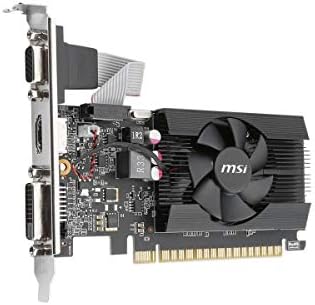
EVGA GeForce GT 740 Superclocked Single Slot 4GB DDR3 Graphics Cards 04G-P4-2744-KR
Bottom line: The EVGA GeForce GT 740 Superclocked Single Slot 4GB DDR3 Graphics Cards: Single-slot design fits compact cases and crowded motherboards; main trade-off: DDR3 memory limits bandwidth to 21.35 GB/s.
As an Amazon Associate, SpecPicks earns from qualifying purchases. Full disclosure →
Pros & Cons
Pros
- ✓ Single-slot design fits compact cases and crowded motherboards
- ✓ 4GB DDR3 frame buffer, large for an entry-level card
- ✓ Factory superclocked to a 1059 MHz base clock
- ✓ 384 CUDA cores plus CUDA and OpenCL support for light compute
- ✓ NVIDIA Surround, PureVideo HD and Adaptive VSync included
Cons
- ✗ DDR3 memory limits bandwidth to 21.35 GB/s
- ✗ DirectX 12 support is capped at feature level 11_0
- ✗ OpenGL 4.4 ceiling may block newer apps and emulators
- ✗ 384 CUDA cores struggle with modern AAA games
Manufacturer description
The EVGA GeForce GT 740 Superclocked is a single-slot, 4GB DDR3 graphics card. It suits small cases, office PCs that need more than integrated graphics, and retro builds where space matters. EVGA factory-clocks it at a 1059 MHz base clock, and its 384 CUDA cores run on a PCI Express 3.0 interface. The 4096MB of DDR3 uses a 128-bit bus at a 1334 MHz effective memory clock, for 21.35 GB/s of bandwidth. That is enough for HD video playback, photo work and older or lighter games. Modern AAA titles are beyond this card. NVIDIA rates it at up to 4X faster gaming, 10X faster video editing and 13X…
SpecPicks Verdict
SpecPicks scored EVGA GeForce GT 740 Superclocked Single Slot 4GB DDR3 Graphics Cards using a rating × review-volume × price-fit model applied to published specs and reviews across the retro graphics cards category. EVGA's retro graphics cards lineup sits within the broader category mid-tier; price and specs are the deciding factors over brand loyalty here. Judge it on the specification table and the price rather than on sentiment: check the figures that decide your use case, then put it side-by-side with two or three close alternatives in the Compare tool before clicking through.
Common buyer scenarios for retro graphics cards of this kind: matching it to an existing build, replacing a failing part, or upgrading from a previous-generation equivalent. Check the spec table below against your current setup — particularly socket / form-factor / power-rating fields — and confirm compatibility on the retailer's listing before purchase. Prices and stock are set by the retailer and may have moved since this page was last updated.
Frequently Asked Questions
How much memory does the EVGA GT 740 Superclocked have?
It has 4096MB of DDR3 on a 128-bit bus with a 1334 MHz effective memory clock, which gives 21.35 GB/s of memory bandwidth.
Will the GT 740 fit in a small form factor or slim case?
It is a single-slot card, so it takes up only one expansion slot. Check your case's maximum card length and height against EVGA's listed dimensions before buying, because the product details do not give them.
Does the GT 740 support DirectX 12?
It supports the Microsoft DirectX 12 API at feature level 11_0. Games that require DirectX 12 feature level 12_0 or higher may not run. It also supports OpenGL 4.4 and OpenCL.
What slot does the EVGA GT 740 need?
It uses a PCI Express 3.0 interface. PCIe cards are generally backward compatible with older PCIe x16 slots, but check your motherboard manual to confirm.
Can I run multiple monitors with this card?
It supports NVIDIA Surround for multi-display setups. The listing does not give the number or type of video outputs, so check the manufacturer's product page for port details before you plan a multi-monitor setup.
Key Features
- Base Clock: 1059 MHZ Memory Clock: 1334 MHz Effective CUDA Cores: 384Bus Type: PCI-E 3.0
- Memory Detail: 4096MB DDR3Memory Bit Width: 128 Bit Memory Bandwidth: 21.35 GB/s
- NVIDIA PhysX technology NVIDIA SMX Engine NVIDIA Adaptive Vertical Sync NVIDIA Surround
- Microsoft DirectX 12 API (feature level 11_0)Support NVIDIA 3D Vision Ready NVIDIA CUDA Technologic Express 3.0 Support
- OpenGL 4.4 Support OpenCL Support NVIDIA FXAA Technology NVIDIA TXAA Technology NVIDIA Pure Video HD Technology
Full Specifications
| Brand | EVGA |
|---|---|
| Weight | 04g |
| Base Clock | 1059 MHZ Memory Clock: 1334 MHz Effective CUDA Cores: 384Bus Type: PCI-E 3.0 |
| Model Name | EVGA CORPORATION |
| Unit Count | 1 Count |
| Model Number | 04G-P4-2744-KR |
| Memory Detail | 4096MB DDR3Memory Bit Width: 128 Bit Memory Bandwidth: 21.35 GB/s |
| Built-In Media | Graphics card, manuel, cables |
| Mfr Part Number | 04G-P4-2744-KR |
| Video Processor | NVIDIA |
| Antenna Location | Gaming, Professional |
| Graphics Card Ram | 4 GB |
| Graphics Ram Size | 4 GB |
| Graphics Ram Type | DDR3 SDRAM |
| Compatible Devices | Desktop |
| Memory Clock Speed | 1334 MHz |
| Graphics Coprocessor | Nvidia GeForce |
| Graphics Description | GeForce GT 740 |
| Video Output Interface | HDMI |
| Graphics Card Interface | PCI Express |
Ready to buy?
EVGA GeForce GT 740 Superclocked Single Slot 4GB DDR3 Graphics Cards 04G-P4-2744-KR is vintage hardware; the used and vintage market on eBay carries most of the live inventory. Prices and condition vary by seller and move in real time, so we link the live listing rather than quote a cached price. It also has an Amazon listing — check it for current price and availability. SpecPicks earns a small commission on qualifying purchases — thank you for supporting independent review work.
Related Retro Graphics Cards


More guides & deep dives from the SpecPicks archive
Browse all articles & guides →- Best Budget Gaming PC Build 2026 — ~$1,000 ($800 on Sale)
- Emulation Hardware in 2026: FPGA, Software, and Cart-Reader Ecosystems
- Best 1440p Gaming GPUs in 2026
- How to Build a Windows 98 Retro PC in 2026
- The Complete Voodoo5 5500 AGP Driver Guide (2026 Edition)
- Best Retro Handhelds in 2026 — From $35 to $500
- RTX 4070 Super vs RX 7800 XT — Which to Buy in 2026
More reviews from the SpecPicks archive
Browse all reviews →- Sound Blaster Audigy FX Deep Dive: Is It Worth It for a 2003 WinXP Period-Correct Gaming Build?
- Voodoo3 3000 PCI No-Display Troubleshooting on Windows 98 SE (2026)
- Claude Opus 4.8 vs Local LLM on RTX 3060 12GB: Honest 2026 Benchmarks
- Best Travel Gaming Kit in 2026: 5 Picks for Hotels and Flights
- MLX engine comparison… and oMLX is the top choice.
- R36S Retro Handheld: Real Specs vs. the Hype (2026 Guide)
- Abit BP6 Dual Celeron 366 Build Guide: The Legendary $200 SMP Workstation in 2026
- How to run Llama 3.1 8B on NVIDIA GeForce RTX 3090
- 48GB vs 64GB DDR5 for Gaming and AI: Worth It?
- Building a Period-Correct 2001 GeForce 3 + Windows 98 SE Gaming Rig
- Can a Raspberry Pi 4 Run a Local LLM? Ollama tok/s Tested
- Real Productivity on 32-64GB RAM for Local LLMs
- Intel Core Ultra X7 Panther Lake Performance on Linux 7.1
- How to run Llama 3.1 70B on AMD Radeon RX 7900 XTX
- Linux Fu: Upcycling an Old Router in 2026
- Imaging Big-Box CD-ROMs to CompactFlash for a Windows 98 Retro PC
- RTX 3060 12GB vs RTX 3060 Ti 8GB for Local LLMs: VRAM Beats Bandwidth Every Time
- Sound Blaster X G6 on a Windows XP Retro Gaming PC: Worth It?
- Self-Hosting Jellyfin on a Raspberry Pi 4 8GB: What It Can Really Do
- 3dfx Voodoo2 SLI in 2026: Building a Period-Correct Windows 98 Glide Rig
- 2000s LAN Party, Modern Build: Period-Correct Hardware That Still Boots in 2026
- Llama 3.3 70B: Dual RTX 3060 12GB vs Ryzen 7 5800X CPU Offload (2026)
- Best Sim Racing Wheel + Shifter Combo Under $400 in 2026: 5 Setups for iRacing, ACC, and GT3
- 768GB Intel Optane DIMM Rigs: Can Cheap Persistent Memory Really Run a 1T-Parameter LLM?
Earliest SpecPicks reviews
Browse full archive →- Best GPU for Llama 3.1 8B (2026)
- Best GPU for Qwen 3 14B (2026)
- Best GPU for Qwen 3 32B (2026)
- Best GPU for Llama 3.1 70B (2026)
- Best GPU for DeepSeek-R1 32B (2026)
- Best GPU for Llama 3.1 405B (2026)
- How to run Llama 3.1 8B on NVIDIA GeForce RTX 5090
- How to run Qwen 3 14B on NVIDIA GeForce RTX 5090
- How to run Qwen 3 32B on NVIDIA GeForce RTX 5090
- How to run Llama 3.1 70B on NVIDIA GeForce RTX 5090
- How to run DeepSeek-R1 32B on NVIDIA GeForce RTX 5090
- How to run Llama 3.1 8B on NVIDIA GeForce RTX 4090