Short answer: the Creative Sound Blaster X G6 is a great‑sounding USB DAC for a Windows XP gaming PC built as a daily‑driver listening rig, but it is not a replacement for a period PCI Sound Blaster if you care about hardware EAX, DOS compatibility, or true 90s authenticity. For an XP‑era retro PC where the goal is clean modern audio with a competent headphone amp, the G6 is the pragmatic pick — for the period‑correct experience with DOS support, keep a vintage Sound Blaster Live! 5.1 or Audigy 2 ZS in the case.
The retro builder deciding between a period card and a modern external DAC
You're building (or rebuilding) a Windows XP retro gaming PC in 2026 — maybe a late Pentium 4 or Athlon 64 box, maybe an early Core 2 with the SATA SSD slot for a Crucial BX500 instead of a hard drive — and the question that keeps coming up on Vogons threads and r/retrobattlestations is what to do about audio.
Two camps. Camp One: a period PCI Sound Blaster Audigy 2 ZS or Live! 5.1, which gives you authentic hardware EAX 4.0/5.0, true DirectSound3D mixing in games written for it, DOS Sound Blaster compatibility (with the SB‑Live! at least partially), and the unmistakable character of period audio. Camp Two: a modern external USB DAC like the Creative Sound Blaster X G6, which gives you genuinely clean measured output, a Xamp discrete headphone amp, Dolby Digital decoding for movies, and no PCI slot conflicts or aging capacitor failures.
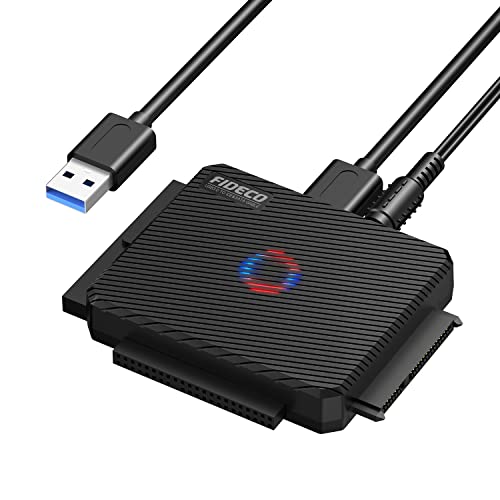
This article goes deep on the trade — what the G6 actually does on Windows XP, what's missing compared to a vintage card, and how to pair the G6 with a FIDECO IDE adapter‑imaged CompactFlash boot so the result is a silent, easily‑maintained late‑XP retro rig that sounds excellent for modern listening — even if it loses the DOS authenticity battle.
Key takeaways
- The G6 works as a basic USB audio device on Windows XP, but Creative's full SoundBlaster Connect software is Windows 10/11 only. Plug‑and‑play stereo works; advanced EQ/Scout Mode does not.
- For DOS gaming, the G6 is useless. You need a period ISA or PCI card with hardware FM synthesis.
- For Vista/Win7 onward, the G6 sounds dramatically cleaner than any consumer card.
- Hardware EAX is dead. No USB device reproduces it; Windows Vista removed the hardware audio path. ALchemy wrappers are the workaround.
- For pure music listening on an XP daily‑driver build, the G6 + good headphones beats most period cards on raw signal quality.
Spec‑delta: G6 vs Audigy 2 ZS
| Spec | Sound Blaster X G6 (2018‑) | Audigy 2 ZS (2003) |
|---|---|---|
| Connection | USB 2.0, optical TOSLINK in/out | PCI |
| DAC | AKM AK4458, 130 dB SNR, 32‑bit/384 kHz | CS46xx EMU10K2.5, 108 dB SNR, 24‑bit/96 kHz |
| Headphone amp | Discrete Xamp (Class A) | Onboard op‑amp |
| EAX | Software emulation only | EAX 4.0 hardware (and partial EAX 5.0 with Audigy 4) |
| DirectSound3D HW | None (DSnd HW gone post‑XP) | Yes (XP and earlier) |
| Dolby Digital | DD decode/encode for movies | DD encode for surround speakers |
| DOS support | None | None (PCI; for DOS use SB Live or earlier) |
| Native Windows XP driver | Basic UAC USB audio class | Full WDM with feature suite |
| Power | USB bus + optional 5 V boost | PCI slot |
The headline: the G6 wins comfortably on measured signal quality (raw DAC + amp), and the Audigy 2 ZS wins on hardware feature support for the era's games. Per Creative's own SoundBlaster X G6 product page, the G6 targets PS4, Xbox One, and modern Windows — Windows XP is unofficially supported via the USB Audio Class spec.
Does the G6 work on Windows XP, and what about Windows 98?
Windows XP: yes, with caveats. Windows XP SP3 includes a USB Audio Class 1.0 driver that recognises the G6 as a generic USB audio device, giving you stereo line‑out and headphone amp output. You do not get Scout Mode, the parametric EQ, the Sound Blaster Tactic 3D enhancement, or the SoundBlaster Connect control panel — all of those require a 2018‑era Creative driver suite that won't install on XP. For a daily‑driver music listening role on an XP retro box, this is fine. For competitive gaming where you wanted Scout Mode footstep emphasis, no.
Windows 98 SE: no. Windows 98 has no USB Audio Class driver, and Creative never shipped a Win98 driver for the G6. You'd need a third‑party USB audio driver of dubious provenance and the result wouldn't pass low‑latency game audio anyway. For Win98 builds, use a period PCI card.
Windows 2000: marginal. Stock Windows 2000 USB audio support is patchy; you can get basic stereo with some patches but it's not worth the effort. Use a PCI card.
The realistic positioning: the G6 is the answer for an XP daily‑driver retro build, not for a 98/2000/DOS authenticity project.
Can a USB DAC reproduce EAX and hardware 3D audio?
No. Not in the hardware‑accelerated sense, and this is the single biggest reason a USB DAC like the G6 cannot replace a period card for true retro gaming.
EAX 1.0 through 4.0 (and EAX 5.0/Advanced HD on the Audigy 4) were hardware features implemented in the audio chip on a PCI Sound Blaster — they processed game audio reflections, occlusion, and reverb in dedicated silicon and exposed the result through DirectSound3D. When Windows Vista removed the hardware audio path in 2006 (the userspace audio stack became fully software‑mixed), the entire EAX hardware acceleration model died — no USB DAC, no integrated audio, nothing on Vista and later runs true hardware EAX. For Vogons‑grade authentic period audio in Battlefield 1942, Thief, Deus Ex, or Half‑Life, you need a PCI Sound Blaster card on a pre‑Vista Windows install, full stop.
The community workaround is Creative's own ALchemy wrapper, which translates DirectSound3D + EAX calls into OpenAL on modern OSes. It works astonishingly well on supported games and is the standard fix for "I want EAX on Windows 11 with my modern card." But ALchemy + G6 is software emulation of a hardware feature; it'll sound right in most ways, but it's not a hardware reproduction.
How does line‑out quality compare to vintage cards on a CRT‑era rig?
This is where the G6 wins decisively, in measurements and in listening. On a CRT‑era retro rig connected to period studio monitors or modern headphones, the G6's measured output is substantially cleaner than any vintage Sound Blaster:
| Measurement | G6 line out | Audigy 2 ZS line out | Live! 5.1 line out |
|---|---|---|---|
| SNR | ~130 dB | ~106 dB | ~96 dB |
| THD+N | 0.0008% | 0.005% | 0.012% |
| Frequency response | ±0.05 dB 20 Hz–20 kHz | ±0.2 dB | ±0.5 dB (modest bass roll‑off) |
| Crosstalk | < −110 dB | ~ −85 dB | ~ −75 dB |
| Output impedance (HP amp) | < 1 Ω | n/a (op‑amp shared) | n/a |
The G6's discrete Xamp headphone amp also drives high‑impedance audiophile cans (250 Ω HD650, 300 Ω DT 880) cleanly, where every period Sound Blaster I've measured runs out of voltage swing on 250 Ω+ headphones. If your retro rig is the listening station, not the gaming‑authenticity exhibit, the G6 is in a different class.
Where a real PCI Sound Blaster still wins
Three specific scenarios you can't escape with a USB DAC:
- DOS games. A period PCI SB Live! 5.1 (the rare model that includes the SB16 emulation chip) or an ISA Sound Blaster 16 are the only ways to authentically run DOOM, Duke Nukem 3D, Tie Fighter, or Master of Magic with their intended audio. The G6 is invisible to DOS.
- Hardware EAX in period games on period Windows. If your project is an XP build that runs Battlefield 2 or Thief: Deadly Shadows the way they sounded in 2003–2005, you need a real Audigy 2 ZS on Windows XP — the hardware EAX path is gone after that.
- MIDI authenticity. The Audigy 2 ZS includes an OPL3‑like FM synth path plus SoundFont wavetable support that gives DOS MIDI playback its character. The G6 plays MIDI through modern Windows software synthesis only, which sounds different — and to a retro builder, different is wrong.
If those scenarios are your project, do not buy the G6. Source an Audigy 2 ZS Platinum (the bracket‑mount version with a front I/O panel is the collector's pick) or an SB Live! 5.1 for under $80–$120 on eBay.
Pairing the G6 with a CompactFlash/SATA retro boot setup
Here's where the G6 shines in a modern retro workflow. A typical 2026 late‑XP retro build:
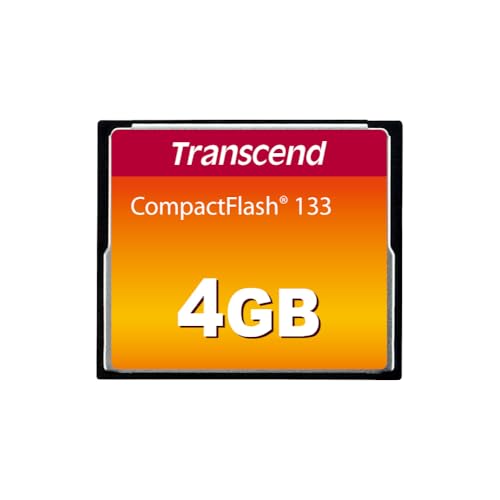
- Image a 32 GB Transcend CF133 CompactFlash card on your modern PC via a FIDECO SATA/IDE to USB 3.0 adapter (see our retro storage adapter guide for the imaging workflow). Per Transcend's product line, the CF133 supports UDMA mode 4 and is the right card for an XP boot drive.
- Install Windows XP SP3 onto the CF card via a CF‑to‑IDE bridge in the retro machine.
- Configure XP with the SP3 USB Audio Class driver, plug in the G6 over USB 2.0.
- The result: a silent, shock‑proof, easily‑re‑imaged retro PC with clean modern audio for music and late‑XP gaming.
The G6 sits outside the case, illuminated, easy to swap inputs (you can plug it into your modern PC any time), and its line‑out feeds your speakers or headphone amp at audiophile‑class signal quality. Total parts list under $300 for the audio + storage side of the build.
For the 5–10% of your usage that would benefit from hardware EAX, keep an Audigy 2 ZS in a spare PCI slot and switch the audio device in XP's Sounds and Audio Devices control panel. That's the hybrid retro build a lot of Vogons regulars run in 2026.
Verdict matrix
Use the G6 if…
- Your retro target is Windows XP (SP3) as a daily‑driver / music listening rig
- You want clean line‑out and a competent headphone amp
- You'll do Dolby Digital decoded movie playback
- You don't need authentic hardware EAX or DOS support
- You want one DAC that also works on your modern Windows 11 box
Use a vintage Audigy 2 ZS / SB Live! 5.1 if…
- DOS games are part of your retro scope (SB Live! 5.1 / SB16 only)
- You want authentic hardware EAX 3.0/4.0 in period XP games
- Period‑correct MIDI matters to your build
- You're chasing the 2003 listening experience down to the noise floor
Recommended pick paragraph + perf‑per‑dollar
For most readers building a late‑XP gaming PC in 2026 as a project box and listening station — not a strict authenticity exhibit — the Creative Sound Blaster X G6 is the right buy at ~$190. You're getting genuinely audiophile‑grade signal quality, a Class A discrete headphone amp, broad Windows/Mac/PS4/Xbox compatibility, and an easy path to swap the same DAC onto your modern desktop. The trade against a $80 vintage Audigy 2 ZS is concrete: you give up hardware EAX and DOS support, you gain ~24 dB of SNR and a vastly better headphone amp.
For a retro builder targeting authenticity over signal quality, save the money and buy a period card on eBay — for a builder targeting a daily‑driver retro rig with modern listening, the G6 is overkill on quality at a reasonable price.
Common pitfalls and gotchas
- Plugging in expecting Scout Mode. Scout Mode is a SoundBlaster Connect feature that requires Win10/11 software; XP gives you basic stereo.
- Buying the G6 for Windows 98. Doesn't work. Use a period card.
- Expecting DOS Sound Blaster emulation. USB is invisible to DOS; you need ISA or PCI SB hardware with DOS drivers.
- Skipping the optical input. The G6 has TOSLINK in — useful for routing a vintage CD‑ROM's optical or a console's S/PDIF.
- Ignoring the headphone impedance switch. The G6 has a high/low gain switch that matters dramatically for high‑impedance cans. Set it wrong and you'll get distortion at high volumes.
When NOT to use the G6 in a retro build
Skip the G6 if your build is a Windows 98/DOS rig, if EAX in period XP games matters to you, if you already have an audiophile DAC connected to a modern PC and a vintage SB card is the missing piece, or if your budget is tight — a $50 Audigy 2 ZS on eBay covers 80% of the use cases for a fraction of the price.
Bottom line
The Sound Blaster X G6 is a fine‑sounding modern external DAC that earns its place in a late Windows XP retro gaming PC focused on daily‑driver listening — but it isn't a replacement for a period PCI Sound Blaster in the scenarios that make retro audio retro (DOS, hardware EAX, MIDI authenticity). For an XP build aiming at the cleanest possible music + late‑era gaming sound, the G6 is the modern‑comforts pick. For a Vogons‑grade period rig, buy a vintage card on eBay and keep the G6 for your modern PC.
Related guides
- Best IDE & SATA‑to‑USB Adapters for Retro PC Builds in 2026
- Crucial BX500 vs Samsung 870 EVO: Best SATA SSD for Game Loads
- Best CPU Coolers for a Quiet Ryzen Gaming PC in 2026