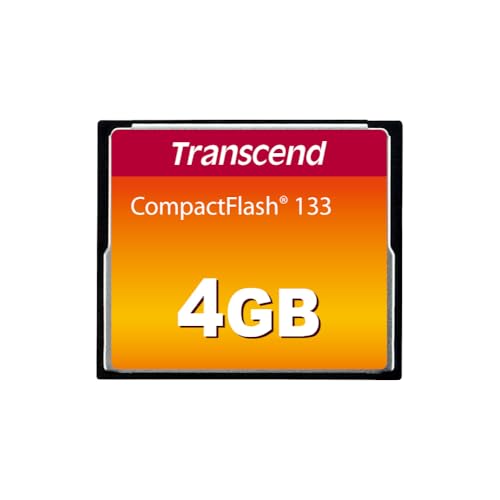
A period-correct 2001 GeForce 3 + Windows 98 SE gaming rig is not a boot-and-play weekend project — it is a parts hunt, a driver dance, and a storage swap. The short recipe is a Pentium III Tualatin (or Athlon XP) motherboard with an AGP 4x slot, a GeForce 3 or GeForce 3 Ti card, 512 MB of PC133, a period-appropriate Sound Blaster Live!, and a boot drive that is not a 20-year-old spinning platter. The parts still exist on eBay, and the boot media in particular is easy to modernize with a Transcend CF133 CompactFlash card plus an IDE-to-CF adapter, so your rig stays silent and cool without giving up 98 SE's authentic quirks.
2001 sits in a rare sweet spot for retro builders: DirectX 8 shipped, the GeForce 3 introduced programmable pixel and vertex shaders, Windows 98 SE was still the mainstream consumer OS, and the games that generation shipped — Serious Sam, Max Payne, Return to Castle Wolfenstein, Aliens vs. Predator 2, Tribes 2 — hit their perceived sweet spot on hardware you can still assemble from parts eBay lists thousands of. The trap is period-fidelity: run the games on a modern GPU with a compatibility shim and they look better, but they don't feel right. The CRT phosphor bloom, the AGP-era vsync behavior, the Sound Blaster hardware acceleration, and the interaction between DirectX 8 and NVIDIA's Detonator drivers all combine into a texture you cannot get any other way. This guide focuses on the parts choices that make the build reliable in 2026 — because if you skip the storage-swap step, you're getting into a race with 24-year-old capacitors and even older bearings, and the capacitors are winning. If you want the deep-dive history on the GeForce 3 silicon, TechPowerUp's GeForce 3 Ti 500 entry has the die shots and clocks.
What you'll need checklist
- Motherboard: an AGP-4x-capable Socket 370 or Socket A board — a Tualatin Pentium III platform or a KT266A / KT333 Athlon XP board both work.
- CPU: Pentium III-S 1.4 GHz (Tualatin) or an Athlon XP 1800+ / 2000+.
- GPU: a GeForce 3 or GeForce 3 Ti 200/500 AGP card. Later GeForce 4 Ti also works but is arguably out-of-era.
- RAM: 512 MB of PC133 (Socket 370) or PC2100 DDR (Socket A). Do not exceed 512 MB — see the RAM FAQ below.
- Storage: a 2–8 GB Transcend CF133 CompactFlash card plus an IDE-to-CF adapter.
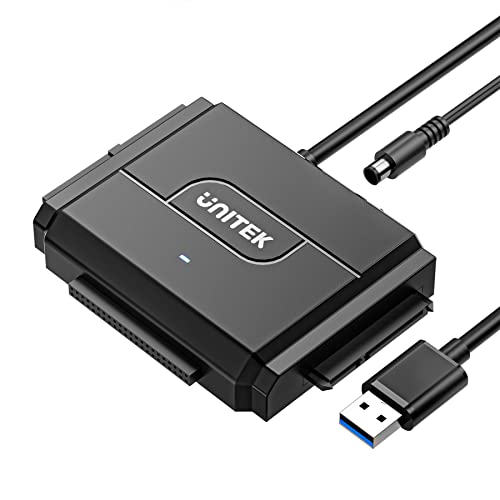
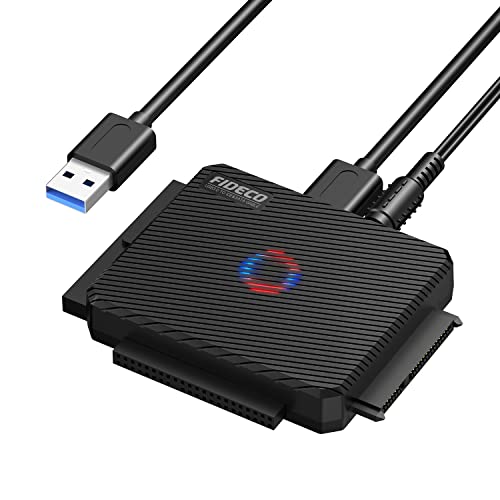
- Modern-to-IDE adapter: a USB 3.0 to SATA/IDE dongle like the Unitek or the FIDECO — you'll need this to write the Win98 image onto CF from your daily driver.
- Sound: Sound Blaster Live! or Audigy (the Audigy 2 has known 98 SE quirks — Live! is safer).
- PSU: 300–400 W AT-era ATX supply with a 3.3V rail that isn't 20 years old.
- Optical: any IDE CD/DVD drive that still spins.
- Display: a CRT for authenticity, or a 4:3 LCD via a good VGA input.
- Nice-to-have: an SNES Classic Edition sitting next to the rig for when you need a 16-bit palate cleanser between DirectX 8 sessions.
Key takeaways
- Modern CompactFlash boot is the single biggest reliability win — silent, cool, and immune to bearing failure.
- Cap 98 SE at 512 MB of RAM — the OS mis-sizes its disk cache above that and randomly bluescreens.
- GeForce 3 Ti 500 is the era's peak but the plain GeForce 3 is nearly as good and much cheaper.
- Detonator 44.03 or 45.23 is the driver sweet spot for the GeForce 3 on Win98 SE — later drivers dropped Win98 support entirely.
- Sound Blaster Live! beats Audigy on Win98 SE in 2026 because the Live! drivers are simpler and the EAX 2 stack works cleanly with DX8 games.
- A 4 GB CF card is enough — Windows 98 SE plus a period game library rarely tops 3 GB.
What made the GeForce 3 a landmark card in 2001?
The GeForce 3 was NVIDIA's first consumer GPU with programmable vertex and pixel shaders, aligning silicon with DirectX 8's new shader model. Before the GeForce 3, "graphics acceleration" meant a fixed-function pipeline you could feed textures and triangles into and hope for the best; after the GeForce 3, the shipping game engine could ask the GPU to run its own tiny per-pixel program. That's the entire history of modern real-time graphics in one paragraph — everything from PS4-era normal-mapped everything to 2026's real-time RT compute leans on the primitive the GeForce 3 introduced.
For period gameplay this matters because DirectX 8 titles genuinely used the shader hardware — the water shaders in Morrowind, the metallic surfaces in Serious Sam 2, the volumetric effects in Aliens vs Predator 2. Running these games on a fixed-function card (a Voodoo3, a GeForce 2 MX) drops those effects entirely; running them on a GeForce 3 with the right drivers gives you the intended visuals. The card also mattered for straight fill rate: 800 MP/s peak fill on the Ti 500 was competitive with anything AMD/ATI shipped that year. AnandTech archived the entire era's launch coverage and remains the go-to for spec verification.
Which motherboard, CPU, and RAM are period-correct for a Win98 SE rig?
Two viable platforms:
Socket 370, Pentium III Tualatin. Boards from Asus (TUSL2-C, CUSL2) or Abit (ST6, ST6-R) with an i815 or Intel-chipset northbridge accept a 1.4 GHz Tualatin, 512 MB of PC133, and an AGP 4x GeForce 3 without any coaxing. This is the "safest" period-correct platform because the chipset, CPU, and GPU were literally the era's Intel enthusiast stack. Downside: Tualatin CPUs got expensive on eBay in the 2020s.
Socket A, Athlon XP. VIA KT266A / KT333 or nForce2 boards with an Athlon XP 1800+ or 2000+ are cheaper, faster in most 2001 games, and equally period-appropriate — the "Athlon XP + GeForce 3" build was arguably the enthusiast pick of the era. The nForce2 boards give you an on-board Ethernet that's more reliable in 2026 than most 2001 add-in NICs.
RAM. 512 MB. Not 768. Not 1024. Windows 98 SE has a well-documented cache-sizing bug above roughly 512 MB — VCache tries to grow beyond the OS's addressable range and returns memory errors that manifest as random reboots. There are unofficial patches that add MaxFileCache lines to system.ini, but they're brittle. If you want reliability, cap the sticks at 512 MB and stop.
Why use CompactFlash instead of a spinning disk for the boot drive?
Every 2001 IDE hard drive still in the wild is at least 24 years old. Even the well-preserved ones are on the wrong end of the bathtub curve for bearing failure, and the WD/Seagate/Maxtor drives from that era used spindle motors and lube stacks that dry out in storage. In 2026 you should assume any period IDE drive is on borrowed time.
CompactFlash on an IDE adapter solves five problems at once:
- Silent. No spindle, no seek noise. The rig runs as loud as its case fans and nothing more.
- Cool. A CF card draws milliwatts. No hard-drive heat dumped into a small AT case.
- Fast enough. A Transcend CF133 card hits ~20–30 MB/s reads, which comfortably outruns a period IDE drive's ~20 MB/s.
- Reliable. Solid state, no moving parts, no mechanical failure modes.
- Imageable. You can back up the entire boot drive to a
.imgfile on your daily driver in ninety seconds. Restore a corrupted install by writing the image back to a fresh card.
The only tradeoff is capacity — Windows 98 SE plus games plus a driver stash is typically 2–3 GB, so a 4 GB CF card is enough. You can go 8 GB if you want swap headroom.
Spec table: GeForce 3 vs Voodoo5 vs GeForce 2 Ultra for this era
| Card | Fab | Shaders | AGP | Fill rate | DX 8 shaders | Notes |
|---|---|---|---|---|---|---|
| GeForce 3 (200 MHz) | 150nm | vertex + pixel | AGP 4x | ~800 MP/s | yes | the target part |
| GeForce 3 Ti 200 | 150nm | vertex + pixel | AGP 4x | ~700 MP/s | yes | cheaper, slightly slower |
| GeForce 3 Ti 500 | 150nm | vertex + pixel | AGP 4x | ~960 MP/s | yes | peak of the era |
| GeForce 2 Ultra | 180nm | fixed function only | AGP 4x | ~1000 MP/s | no | high fill rate, no shaders |
| Voodoo5 5500 | 250nm | fixed function only | AGP 2x | ~667 MP/s | no | dual-GPU, no shaders |
The pattern is stark: the GeForce 2 Ultra can push more raw texels per second than a GeForce 3 Ti 200, but it cannot render the shader effects those 2001 titles used. The Voodoo5 is a great card for pre-2001 games and utterly outclassed by the time DX8 lands. If the goal is "authentic 2001 experience," GeForce 3 is not a preference — it's a requirement.
How do you image and prep a CompactFlash boot drive on a modern PC?
The workflow that has worked reliably for us:
- Get an installer image. Locate a genuine Windows 98 SE ISO. Boot it in a VM (VirtualBox or QEMU) with a small virtual disk (2 GB is plenty).
- Install into the VM. Run through the Win98 SE installer with typical defaults. Install DirectX 8.1 and the Detonator 44.03 or 45.23 driver before you shut down. Also install any required chipset drivers for the target motherboard, not the VM's virtual chipset — the OS won't need them until first boot on real hardware, but having the files present is convenient.
- Dump the virtual disk. Convert the
.vdior.qcow2to a raw.imgwithqemu-img convert. - Write to CF. Connect the CF card to your modern PC via a USB adapter — a Unitek USB-to-IDE/SATA or the FIDECO equivalent both work with a CF-to-IDE riser. Use
dd, Rufus in DD mode, or Win32DiskImager to write the raw.imgto the CF card. - Insert into the IDE-to-CF adapter and boot the target hardware. First boot rebuilds the hardware detection (10–20 minutes), then you're in.
The killer step is #4 — modern Windows will not natively write a raw disk image to a physical drive, so a dd-capable tool (Rufus, WinDiskImager) is required. A Linux live USB stick or WSL2 also works.
Once you have a working image, back it up. If the OS ever corrupts you can restore in ninety seconds instead of reinstalling.
Driver and DirectX setup gotchas for Windows 98 SE
- DirectX 9.0c installs but is not the target. Some 2003+ games require it. For 2001 titles, DirectX 8.1a is the correct target and is more stable on 98 SE.
- Detonator 44.03 is the sweet spot for the GeForce 3 series on 98 SE — later drivers (52.16+) show artifacting in some DX8 titles, earlier drivers (23.11) miss shader optimizations.
- The Unofficial Windows 98 SE Service Pack (KernelEx, USB 2.0 mass storage, and the Kernel32 patches) adds meaningful compatibility. Skip only if you're a purist.
- VIA 4-in-1 drivers matter if you went the Socket A route. Install first, before anything else, or the AGP GART will misbehave.
- Disable BIOS shadowing for the video BIOS — some period BIOS options shadow the ROM into system RAM, which cuts your usable memory by 128 KB and can trigger the RAM-sizing bug faster.
Benchmark targets: Quake 3 timedemo and 3DMark2001 expectations
- Quake 3 Arena timedemo1 at 640×480: 100–130 FPS on a Ti 500, 85–105 FPS on a plain GeForce 3.
- Quake 3 at 1024×768 max detail: 60–80 FPS.
- 3DMark2001 SE: 8500–10500 on a Ti 500 with a Pentium III 1.4, 12000+ on an Athlon XP 2000+.
- Serious Sam: Second Encounter at 1024×768: 50–70 FPS on the "Fluid" preset.
- Return to Castle Wolfenstein at 1024×768: 60–90 FPS with all effects on.
If you're seeing numbers 20% below these ranges, the culprits are usually AGP GART misconfiguration (VIA boards), a stale AGP driver (older nForce boards), or a BIOS setting that dropped the GPU to AGP 2x. Verify by inspecting the display properties → NVIDIA control panel → AGP settings.
Common pitfalls
- Buying an old spinning hard drive and skipping the CF step. It works for a week, then dies. Just do the CF conversion.
- Overshooting 512 MB of RAM. Random reboots, no clear cause, until you pull a stick.
- Sound Blaster Audigy 2 on 98 SE. The Audigy 2's Win98 SE driver stack has documented EAX bugs. The Live! doesn't.
- AGP voltage mismatch. Some GeForce 3 cards want 1.5 V AGP; some older Socket A boards default to 3.3 V. Result: fried card. Verify board and card compatibility before installing.
- Modern PSU on a period board. ATX 2.x supplies with no -5V rail work fine on most 2001 boards but a small minority (older Slot 1 leftovers) actually needed the rail. Check the board manual.
- Skipping the SB Live! entirely and using onboard AC'97. You lose EAX 2 and half the era's audio feel. The Live! is $20 on eBay. Just buy one.
When NOT to do this build
Emulate instead if any of these apply: you want to play 2001 titles for the games not the hardware, you don't own or want a CRT, you have less than a weekend to devote to setup, or your primary constraint is space. DOSBox-X and PCem emulate the whole platform faithfully enough for casual play. This build is for the "I want to hear the fan noise, feel the AGP-era tearing, and swap Sound Blaster cards on a Saturday" audience. If that's not you, save the eBay budget.
Bottom line: the parts that make this build reliable in 2026
- Boot on CompactFlash, not a period HDD. A Transcend CF133 plus an IDE adapter. Non-negotiable.
- Use a USB 3.0 IDE adapter to prep the CF image on your modern PC. Either the Unitek or the FIDECO — both cheap and reliable.
- Cap RAM at 512 MB. Everything else is fighting the OS.
- Detonator 44.03 or 45.23 for the GeForce 3.
- Sound Blaster Live! over Audigy on 98 SE.
- Keep an SNES Classic around for 16-bit intermissions — it plugs into a modern TV and lets the CRT rest between sessions.
Related guides
- Pentium 4 + Radeon 9700 Pro Windows XP Build in 2026
- How to Image and Preserve a Vintage IDE Hard Drive in 2026 (CompactFlash + USB Adapter Workflow)
- Imaging Big-Box CD-ROMs to CompactFlash for a Windows 98 Retro PC
- Rescue a Dying Retro PC: Image Your IDE Drive to CompactFlash First