
FIFINE
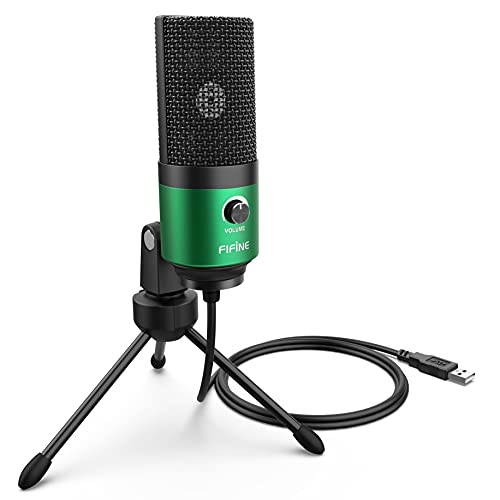
FIFINE AmpliTank Tank3 XLR/USB Podcast Dynamic Microphone for Streaming
Bottom line: The FIFINE AmpliTank Tank3 XLR/USB Podcast Dynamic Microphone: Dual XLR/USB output: start on USB, upgrade to XLR later; main trade-off: arm stand and base stand not included in the box.
As an Amazon Associate, SpecPicks earns from qualifying purchases. Full disclosure →
Pros & Cons
Pros
- ✓ Dual XLR/USB output: start on USB, upgrade to XLR later
- ✓ All-metal cardioid dynamic capsule rejects room and background noise
- ✓ Front mute button plus real-time headphone monitoring jack
- ✓ Onboard mic-gain and headphone-volume knobs, no software needed
Cons
- ✗ Arm stand and base stand not included in the box
- ✗ XLR mode needs a separate interface or sound card
- ✗ End-address dynamic needs close 2-6 inch mic placement
- ✗ Cardioid pickup only, no stereo or multi-pattern modes
SpecPicks Verdict
SpecPicks scored FIFINE AmpliTank Tank3 XLR/USB Podcast Dynamic Microphone using a rating × review-volume × price-fit model applied to published specs and reviews across the gaming peripherals category. FIFINE's gaming peripherals lineup sits within the broader category mid-tier; price and specs are the deciding factors over brand loyalty here. Judge it on the specification table and the price rather than on sentiment: check the figures that decide your use case, then put it side-by-side with two or three close alternatives in the Compare tool before clicking through.
Common buyer scenarios for gaming peripherals of this kind: matching it to an existing build, replacing a failing part, or upgrading from a previous-generation equivalent. Check the spec table below against your current setup — particularly socket / form-factor / power-rating fields — and confirm compatibility on the retailer's listing before purchase. Prices and stock are set by the retailer and may have moved since this page was last updated.
Key Features
- [Rounded Rich Audio] The recording studio microphone has a lower self-noise, which is crucial when capturing subtle details and maintaining a clean signal in quiet studio settings. Dynamic microphone with noise-reduction and shock-absorbing effectively reduces unwanted back-ground noise, allowing your voice to shine through in podcast or streaming scenes that require clear communication.(Tip: You can speak to the top of the end addressing microphone within a range of 2 to 6 inches for clear sound)
- [Upgrade-able XLR/USB Connection] The XLR/USB dynamic microphone gives you the way to start out with USB and then upgrade down the road to XLR. The recording microphone transferring audio signal going to different programs/games. Two connection versatility ensures that you get the investment of the podcast microphone by using it for a variety of recording purposes.(Tip: You can adjust your audio by connecting the sound card, but this microphone does not require a 48V phantom power supply)
- [Mute and Monitoring] Use a finger on the front of the USB microphone for PC and easily mute or unmute during recording via the silent mic mute button that was a physical button to avoid mute being triggered by mistake. The USB podcast microphone features a monitoring headphone jack to let you keep concentration on real-time audio without plugging in headphones elsewhere.
- [Volume Control] Recording with the USB connection of studio microphone, you will get adjustment of input mic gain and headphones output volume. Volume knobs on the side of the computer recording microphone are easily accessible. You can directly adjust the mic gain volume without having to yell or whisper and control the monitoring output volume to concentrate on podcast recording, but no having to distract yourself with other computer settings.
- [Friendly Microphone Design] The all metal designed XLR studio microphone protects the cardioid dynamic mic body from wear and tear, while further maintaining the stability of audio input, which is beneficial for streamer, singers and youtuber. Built-in 3/8’’ and 5/8’’ threads to connect mic stand is more convenient for you to use different arm stand in various environments. Six windows pane makes the XLR microphone for podcast more in line with the trend and beauty of your live streaming, and remind you to record at the top of the mic for cleaner audio quality. (Arm Stand, Base Stand NOT Included)
Full Specifications
| Brand | FIFINE |
|---|---|
| Color | Black |
| Model Name | TANK3 |
| Unit Count | 1 Count |
| Connectivity | USB |
| Model Number | TANK3 |
| Power Source | Corded Electric |
| Audible Noise | 20 db |
| Compatibility | PC |
| Polar Pattern | Unidirectional |
| Built-In Media | 8.2ft (2.5m) USB-C to USB-A Cable, Dynamic Microphone, User's Manual |
| Connector Type | USB, XLR |
| Frequency Range | 50Hz—16KHz |
| Item Dimensions | 9.84 x 6.1 x 2.56 inches |
| Mfr Part Number | ALQ2404Tank3 |
| Special Feature | All Metal Built, Headphones Jack, Mute Function, Volume Control, XLR/USB Connection |
| Antenna Location | Gaming, Podcasting, Streaming |
| Hardware Platform | Laptop, PC, PS4/PS5 |
| Maximum Frequency | 16 KHz |
| Minimum Frequency | 50 hertz |
Ready to buy?
FIFINE AmpliTank Tank3 XLR/USB Podcast Dynamic Microphone for Streaming is listed on Amazon. Price, availability, shipping and returns are set by Amazon and its sellers — check the listing for current terms. SpecPicks earns a small commission on qualifying purchases — thank you for supporting independent review work.
Related Gaming Peripherals


More guides & deep dives from the SpecPicks archive
Browse all articles & guides →- How to Build a Windows 98 Retro PC in 2026
- The Complete Voodoo5 5500 AGP Driver Guide (2026 Edition)
- Emulation Hardware in 2026: FPGA, Software, and Cart-Reader Ecosystems
- Best 1440p Gaming GPUs in 2026
- Best Budget Gaming PC Build 2026 — ~$1,000 ($800 on Sale)
- Best Retro Handhelds in 2026 — From $35 to $500
- RTX 4070 Super vs RX 7800 XT — Which to Buy in 2026
More reviews from the SpecPicks archive
Browse all reviews →- vLLM Framework Vulnerability: What Local LLM Operators Need to Patch in 2026
- Benchmarking Open Models for Agentic Tool Use on an RTX 3060
- Best Parts for an Always-On Local LLM Server in 2026
- Claude Fable 5: Anthropic Admits 'Wrong Tradeoff' on Throttling
- Gemini-Class Models on Local Hardware: How Much VRAM You Actually Need
- 3dfx Voodoo2 SLI in 2026: Build Guide, Glide Setup, CF Storage
- Best GPU for 1440p Esports at 240Hz in 2026
- Best CPU Cooler for Intel Core i7/i9 Builds in 2026
- MiniMax-M3 Scores 55 on AA Index: Can You Self-Host It?
- Dumping and Imaging Vintage IDE and CompactFlash Drives in 2026: A Safe Workflow
- Steam Deck OLED vs Legion Go S: 2026 Comparison
- Raspberry Pi 4 8GB Homelab in 2026: Jellyfin, Pi-hole and Home Assistant on One Board
- RTX 3060 vs Arc B580 for 1440p Gaming: Which 12GB Card Wins?
- DualSense vs GameSir G7 SE for PC Gaming in 2026: Which Controller Wins?
- Voodoo3 3500 TV on Windows 98 SE: AI-Assisted Driver Install Walkthrough in 2026
- Voodoo 5 6000 Benchmarks: Quake III at Five Resolutions
- ExLlamaV2 vs llama.cpp for Single-User Chat on an RTX 3060 12GB in 2026
- Silent Cooling for a Retro Sleeper PC: Fitting a Modern Quiet Fan to a Vintage Case
- Sega Genesis Mini vs Raspberry Pi Emulation in 2026: Which to Buy?
- Alienware Area-51 RTX 5090 Gets $2,580 Off — Worth It?
- PiKVM Hardware Guide 2026: Boards, Kits & Storage
- Best Apartment Sim Racing Wheel Setup: Quiet and Clamp-On (2026)
- Best Controller for Steam Deck Docked Mode in 2026
- Best Parts for a Budget Ryzen + RTX 3060 Gaming PC Build in 2026
Earliest SpecPicks reviews
Browse full archive →- Best GPU for Llama 3.1 8B (2026)
- Best GPU for Qwen 3 14B (2026)
- Best GPU for Qwen 3 32B (2026)
- Best GPU for Llama 3.1 70B (2026)
- Best GPU for DeepSeek-R1 32B (2026)
- Best GPU for Llama 3.1 405B (2026)
- How to run Llama 3.1 8B on NVIDIA GeForce RTX 5090
- How to run Qwen 3 14B on NVIDIA GeForce RTX 5090
- How to run Qwen 3 32B on NVIDIA GeForce RTX 5090
- How to run Llama 3.1 70B on NVIDIA GeForce RTX 5090
- How to run DeepSeek-R1 32B on NVIDIA GeForce RTX 5090
- How to run Llama 3.1 8B on NVIDIA GeForce RTX 4090