Short answer
If you want to plug in a console tonight and play 16-bit Sega classics with zero setup, buy the Sega Genesis Mini. If you want one box that emulates Genesis, NES, SNES, Game Boy, PS1, and more — and you do not mind a weekend of tinkering — build a Raspberry Pi retro console with a kit like the Vilros Raspberry Pi Zero W Starter Kit and an 8BitDo SN30 Pro. The Mini is the right pick for most people in 2026; the Pi is the right pick for tinkerers and households that want one device for every retro library.
The official-mini vs DIY-emulation debate
Six years after Sega first shipped the Genesis Mini, the buy-vs-build question for retro gaming has actually gotten sharper rather than fading. Plug-and-play mini consoles from Sega, Nintendo, and others have settled into a stable identity: small, licensed, curated, and aggressively cheap whenever a stock refresh hits major retailers. The DIY side has moved in parallel — the Raspberry Pi 4 and 5 are now powerful enough that single-board emulation handles libraries the Genesis Mini was never asked to touch, including PlayStation, Nintendo 64, and in some cases lighter Saturn and Dreamcast titles.
That leaves a real choice rather than a fake one. The Sega Genesis Mini is a $50-to-$80 sealed appliance. A Raspberry Pi build with a case, microSD card, controller, and power supply lands in the $80-to-$150 range depending on which Pi you pick and whether you reuse a TV remote-shelf full of cables. The mini is a fixed catalog of around 42 games. A Pi running RetroPie is a programmable platform that runs as many emulators as you care to install.
Both paths are legitimate in 2026. The right answer depends on whether you treat retro gaming as a finished product or a hobby. Parents buying a gift for a 10-year-old, partners surprising each other on a birthday, and anyone who has been burned by half-finished tech projects should usually take the mini. Tinkerers, parents who want to introduce kids to soldering and Linux, and collectors who already own cartridges and want one neutral playback device should usually build the Pi. This piece walks through how each option actually behaves in 2026, what the realistic total cost of ownership looks like, and where the failure modes live.
Key takeaways
- The Sega Genesis Mini is a finished product: 42 curated games, an HDMI cable, two licensed pads, M2-derived emulation, and zero configuration.
- A Raspberry Pi retro build is a platform: it can emulate Genesis plus a dozen other systems, but you supply the games legally, choose the OS, and own the support burden.
- Total cost of ownership comes out close — roughly $50-$80 for a Mini package versus $80-$150 for a Pi build with case, SD card, controller, and PSU.
- For pure Genesis fidelity with no tinkering, the Mini wins on simplicity and on guaranteed accuracy of its included lineup.
- For breadth (multiple consoles in one box), upgradeability, and the ability to play your own legally-owned games, the Pi wins.
- Both paths benefit from a high-quality D-pad such as the 8BitDo SN30 Pro; the Mini's bundled pads are fine, but the SN30 Pro is the gold standard for 2D retro input.
Spec-delta table
| Dimension | Sega Genesis Mini | Raspberry Pi build (Pi Zero W / Pi 4 / Pi 5) |
|---|---|---|
| Included games | ~42 licensed titles, fixed | None — you supply legally-owned ROMs |
| Expandability | None — closed device | High — add emulators, themes, scrapers, BIOS files |
| Accuracy | High for Genesis (M2-derived emulator tuned by Sega) | High with the right cores; per-system tuning required |
| Setup effort | Plug in HDMI, plug in pads, power on | Flash SD card, configure RetroPie/Batocera, pair pads, scrape art |
| Price band (2026) | ~$50-$80 | ~$80-$150 (Pi + case + SD + PSU + controller) |
How accurate is the Genesis Mini's emulation vs RetroPie on a Pi?
The Genesis Mini ships with an emulator developed by M2, the studio behind the Sega Ages re-releases. M2's Genesis core is widely regarded as accurate to original hardware in audio and timing, and Sega tuned the bundled library so that the games run as intended without configuration. That matters for titles like Streets of Rage 2 and Sonic the Hedgehog 2 where audio quirks and sprite scaling were part of the design.
RetroPie on a Raspberry Pi reaches similar accuracy for Genesis using libretro cores such as Genesis Plus GX or PicoDrive, both of which are mature and well-supported. The difference is that you are responsible for choosing the right core, enabling per-game overrides, and dialing in video filters. Out of the box, RetroPie on a Pi 4 or Pi 5 will run Genesis games full-speed; the question is whether your audio sounds exactly like the Mini's. Tom's Hardware's Raspberry Pi retro gaming reviews note that Genesis emulation has been a strong point of the platform since the Pi 3 era, and the Pi 5 only widens that headroom.
The honest summary: for Genesis specifically, both options sound and feel right when configured. The Mini gets there with zero work. The Pi gets there once you spend an evening picking cores and tweaking settings, after which it can also do every other 16-bit (and earlier) console.
What does a Raspberry Pi retro build actually require?
The bill of materials for a Pi-based retro console is short but every line matters. At minimum you need:
- A Raspberry Pi board. The Raspberry Pi Zero W handles NES, SNES, Genesis, Game Boy, and Master System comfortably but starts to struggle with PSX and N64. A Pi 4 or Pi 5 is the sweet spot for "all retro consoles up to roughly the PS1 era." Pi 5 adds headroom for PSP, Saturn, and some Dreamcast.
- A microSD card, ideally 32 GB or larger, A1- or A2-rated for random IO. Cheap counterfeit cards are the number-one cause of "my Pi randomly hangs" complaints on the forums.
- A reputable USB-C or micro-USB power supply. Using a phone charger that cannot sustain 3 A on a Pi 4 causes voltage sag, throttling, and the dreaded lightning-bolt icon. A first-party PSU is cheap insurance.
- A case with passive or active cooling. Pi 4 and Pi 5 throttle under sustained PSX/N64 emulation without a heat sink and fan.
- An HDMI cable (micro-HDMI to HDMI for Pi 4/5; mini-HDMI for Pi Zero).
- A controller. A wired or Bluetooth pad such as the 8BitDo SN30 Pro covers nearly every retro library, from NES to PS1.
A kit like the Vilros Raspberry Pi Zero W Starter Kit bundles the Pi, case, PSU, and cabling, which removes most of the parts-sourcing friction. You still need to supply your own ROMs from legally-owned cartridges and pick whether you want RetroPie, Batocera, or Lakka as the OS.
Game library: fixed official lineup vs your own legally-owned collection
The Genesis Mini's library is one of its biggest selling points and one of its hardest limits. Sega chose 42 titles spanning Sonic, Streets of Rage, Phantasy Star, Shining Force, Castlevania: Bloodlines, Contra: Hard Corps, Earthworm Jim, and a curated set of Japan-only releases that western players never legally owned. That is a polished, opinionated catalog that you cannot expand. If you want to play a Genesis game that did not make the cut — say Aladdin or Vectorman 2 — the Mini is a dead end.
A Raspberry Pi build inverts that constraint. You supply the games, which the law expects to be backups of cartridges you own. ROM dumpers like the Retrode let you dump Genesis carts over USB to a PC. Once dumped, the file goes onto the Pi's SD card and RetroPie picks it up the next time you boot. The library is bounded only by what you own. The same Pi can host your NES, SNES, Game Boy, and PS1 dumps alongside the Genesis ones, so a single device covers thirty-plus years of cartridges and discs in one menu.
The legality picture is worth being precise about. Emulators themselves are legal in most jurisdictions, and dumping a cartridge you own for personal backup is generally accepted as fair use in the United States, though courts have not given a clean ruling on every edge case. Downloading copyrighted ROMs you do not own is not legal. The Mini sidesteps this by including only licensed games, which is part of its appeal for buyers who do not want to engage with the ROM question at all.
Controllers and feel: pairing the right gamepad
Controller quality decides whether retro emulation feels right or feels like a museum exhibit. The Genesis Mini ships with two licensed three-button pads that replicate the feel of the original; six-button pads are sold separately and matter for fighters like Street Fighter II. For most buyers the bundled pads are good enough on day one.
For a Pi build, plan to spend $30-$60 on a pad. The 8BitDo SN30 Pro is the canonical recommendation: an accurate eight-direction D-pad, Bluetooth pairing, twin analog sticks for PS1/N64-era games, and a layout that works for everything from Mega Man to Metal Gear Solid. RetroPie's documentation walks through pairing it over Bluetooth in a few minutes. If you prefer wired, a Buffalo Classic USB pad or the wired version of the SN30 are both fine.
Two field notes from the community. First, modern analog-first controllers like an Xbox or PlayStation pad are usable for retro but actively bad for 2D titles, because the D-pad is the secondary input and the geometry is wrong for diagonal Hadokens. Second, the Bluetooth pairing dance is the single most common "I gave up on my Pi" failure mode. Pair the controller before you scrape your ROM library, not after.
Plug-and-play minis compared: Genesis Mini, NES Classic, SNES Classic
| Mini console | Included games | Price band (2026) | Notable strengths |
|---|---|---|---|
| Sega Genesis Mini | ~42 titles incl. Sonic, Streets of Rage 2, Castlevania: Bloodlines | $50-$80 | M2 emulation; deep Japan-only inclusions |
| Nintendo NES Classic Mini | 30 NES titles | $60-$100 | First-party NES library; iconic packaging |
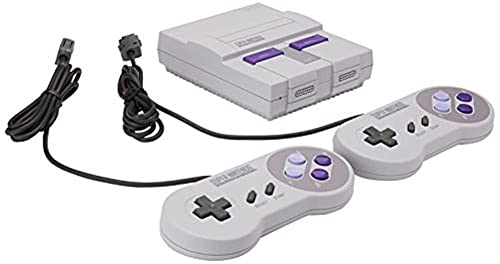
| Nintendo Super NES Classic Edition | 21 SNES titles incl. Star Fox 2 | $80-$150 | Higher per-game polish; Star Fox 2 first release |
All three minis share the same value proposition: zero setup, a curated lineup, licensed emulation, and HDMI output at modern TV resolutions. The Genesis Mini stands out for the depth and obscurity of its lineup. The SNES Classic stands out for the per-game quality, and for being the first official release of Star Fox 2. The NES Classic is the lowest-priced entry point and a strong gift for younger players.
If a household wants two of these and a Pi, that is also a reasonable answer — the minis stay in the living room for guests and kids, and the Pi lives in the office or game room for the tinkerer.
Total cost of ownership: Mini vs Pi build
| Line item | Genesis Mini (2026) | Pi Zero W build | Pi 4 / Pi 5 build |
|---|---|---|---|
| Console / SBC | $50-$80 | $20-$35 (Pi Zero W) | $50-$90 (Pi 4 4 GB / Pi 5 4 GB) |
| Case | included | $8-$15 | $15-$25 (with fan) |
| Power supply | included | $8-$10 | $10-$15 (official USB-C PSU) |
| microSD card (32 GB+) | n/a (internal storage) | $8-$12 | $10-$15 |
| HDMI cable | included | $5-$8 (mini-HDMI) | $8-$12 (micro-HDMI) |
| Controller | 2 pads included | $30-$60 (SN30 Pro) | $30-$60 (SN30 Pro) |
| Realistic all-in | $50-$80 | ~$80-$140 | ~$125-$215 |
The Pi Zero W path lands close to a Mini in raw cost but covers many more systems. The Pi 4 or Pi 5 path costs more, but it can plausibly replace several minis and play PS1, N64, PSP, and lighter Saturn titles a Mini cannot touch. Treat the Pi numbers as the cost of buying breadth rather than depth.
Common pitfalls (and how to avoid them)
- Pi 4 power-supply throttling. Using a phone charger that cannot sustain 3 A under load is the single most common cause of "my Genesis emulator randomly slows down" complaints. Buy the first-party PSU or a known-good 5 V / 3 A USB-C charger.
- Counterfeit microSD cards. Cheap "128 GB" cards from no-name sellers are routinely fake. Stick to Samsung, SanDisk, or Kingston A1/A2-rated cards bought from reputable retailers.
- PSX HD packs on Pi 4. Texture packs and 4× internal-resolution upscaling can push a Pi 4 past its thermal envelope. The Pi 5 handles them better, but plan for a fan in the case.
- Bluetooth controller pairing. Pair before you load your full ROM library, so that you can debug input issues without a full SD-card rebuild. The SN30 Pro pairs reliably; older 8BitDo firmware does not.
- ROM legality. Dumping your own cartridges is the lawful path. Downloading copyrighted ROMs you do not own is not legal in most jurisdictions, and the official mini route avoids the question entirely.
- No HDMI signal on first boot. On a Pi 4 or Pi 5, make sure the micro-HDMI cable is plugged into the port closest to the USB-C jack (HDMI0). The second port is often disabled by default in RetroPie.
- Bundled Mini pad cable length. The Genesis Mini's licensed pads have a short cable. If you sit more than six feet from the TV, plan to buy a six-button pad with a longer cable or a USB extension.
When the Mini is the right pick
- You want a polished, gift-ready box that runs Genesis classics tonight.
- You are buying for a child, a non-technical relative, or anyone who will be frustrated by Linux configuration.
- You are happy with Sega's curated lineup and have no plans to chase ROMs you do not own.
- You want guaranteed audio and timing accuracy without per-game tweaking.
- Budget is a hard constraint and $50-$80 is the ceiling.
When the Pi is the right pick
- You want one box that plays Genesis plus NES, SNES, Game Boy, PS1, and more.
- You already own cartridges and a way to dump them, or you have a clear legal path to your library.
- You enjoy tinkering, and pairing a controller over Bluetooth and editing config files does not scare you.
- You want the option to scale up later — bigger SD card, more emulators, scraped box art, custom themes.
- You are buying for a tinkerer or a household that will treat the device as a hobby rather than an appliance.
Parents vs tinkerers: the buying logic
Parents and gift-givers should default to the Mini. The plug-in-and-play story is real, the licensing is clean, and the bundled controllers mean a 10-year-old can be playing Sonic 2 within five minutes of opening the box. If a kid grows into the hobby, a Pi build is a great follow-up project — RetroPie can be a parent-child weekend, and the SN30 Pro carries over from the Mini to the Pi without rebuying.
Tinkerers should default to the Pi. The whole point of the platform is that it grows with you. The same Pi 5 that runs Genesis today can run a PSP game next month and a small AI project next year. You are paying for breadth and flexibility, not depth on any one system.
The third path — buy both — is more reasonable than it sounds. A Mini plus a Vilros Pi Zero W kit and an SN30 Pro is still under $200 all-in, and you get the polished living-room appliance and the hobby box without compromising on either.
Bottom line
For most people in 2026, the Sega Genesis Mini is the easier and more satisfying buy: a finished product, licensed games, accurate emulation, and a price band that has held steady for years. For tinkerers and households that want one device for every retro library, a Raspberry Pi with an 8BitDo SN30 Pro is the better long-term investment because it scales. Both answers are legitimate, and the right one for you depends on whether you want a console or a hobby.
If you are still deciding, the safe sequence is: buy the Mini first, decide whether you actually want the broader retro library, and add a Pi later only if you do. The Mini's resale value on the second-hand market is high enough that you can flip it without losing much if you decide to consolidate on the Pi.
Related guides
- Retro PC build guides on SpecPicks
- Browse the retro-gaming articles index
- Compare Genesis Mini vs SNES Classic
- Compare Genesis Mini vs NES Classic
FAQ
Is the Sega Genesis Mini's emulation accurate?
Yes — the Genesis Mini uses a respected emulator and a curated lineup tuned by the platform holder, so timing and audio are faithful to the originals without the configuration work a DIY build requires. It trades flexibility for guaranteed correctness out of the box. If you want a plug-in-and-play experience with no tinkering, the Mini's accuracy and reliability are its main selling points.
Can a Raspberry Pi do more than an official mini console?
A Pi running RetroPie can emulate many systems beyond a single platform, accept your own legally-owned games, and be customized endlessly, which a fixed official mini cannot match. The tradeoff is setup effort and the need to source games yourself. If you value breadth and tinkering, the Pi wins; if you value simplicity and a guaranteed lineup, the mini wins.
Which is cheaper overall, the Mini or a Pi build?
A Pi Zero W starter kit plus a controller can land near or below the price of an official mini, but the real cost difference is your time, since the Pi requires assembly and configuration. The mini is a fixed one-time purchase with no setup. Factor in the controller and storage for the Pi when comparing the true all-in totals.
Is it legal to put games on a Raspberry Pi emulator?
Emulators themselves are legal, and the lawful path is to play games you own, ideally by dumping your own cartridges rather than downloading copyrighted ROMs. Distribution and downloading of copyrighted titles you do not own is not legal. The official mini sidesteps the question entirely by including licensed games, which is part of its appeal for cautious buyers.
What controller works best for retro emulation?
A compact pad with an accurate D-pad, such as the 8BitDo SN30 Pro, suits 2D retro titles far better than a modern analog-first controller, because precise eight-direction input is what these games were designed around. Bluetooth pairing keeps cabling simple on a Pi. For fighting and platforming classics, D-pad quality matters more than any other controller feature you might consider.
Citations and sources
- RetroPie official site — canonical documentation for the most widely-used Raspberry Pi retro-gaming distribution, including supported systems, controller pairing guides, and BIOS notes.
- Raspberry Pi Zero W product page — official specs and price reference for the Pi Zero W board commonly bundled in starter kits.
- Tom's Hardware: Raspberry Pi retro gaming — third-party reviews of Raspberry Pi retro-gaming performance, including Genesis emulation headroom and recommended configurations.
This piece is editorial synthesis based on publicly available information. No independent first-party benchmarking is reported.

![Nintendo NES Classic Mini EU Console [video game]](https://m.media-amazon.com/images/I/51QVgoMv-CL._SL500_.jpg)