Alienware Area-51 RTX 5090: What a $2,580 Discount Actually Means
When a flagship prebuilt gaming system drops by more than $2,500, the reflex question is whether something is wrong with it. In this case, the more relevant question is whether the performance-per-dollar equation has simply shifted into territory that justifies serious consideration.
The Alienware Area-51 — Dell's legendary ultra-high-end desktop brand, revived after a long hiatus — is now available in a configuration pairing a 24-core processor, 64GB of DDR5 RAM, and an RTX 5090 at a meaningfully reduced price. Per Dell's published product page and independent coverage from Tom's Hardware and The Verge at the Area-51's relaunch, this system occupies the top tier of what prebuilt gaming desktops can deliver.
This analysis synthesizes published specifications and public benchmark coverage to answer whether the discounted price changes the calculus.
What the Configuration Includes
Three components define this Area-51 build, and each warrants context:
The RTX 5090 is NVIDIA's current flagship consumer GPU, built on the Blackwell architecture. Per NVIDIA's official specifications, it carries 32GB of GDDR7 memory — a figure that sets it apart from previous generations and from AMD's competing cards. Per coverage from GamersNexus and Digital Foundry at launch, the RTX 5090 delivers a substantive generational improvement over the RTX 4090, particularly in 4K rasterization and in path-traced titles. DLSS 4 with Multi Frame Generation (MFG) support allows effective frame rate multiplication in compatible games, compounding the native performance advantage.
For a deeper read on the RTX 5090's standalone value in gaming, see SpecPicks' breakdown of RTX 5090 vs RTX 5080 at 4K, which quantifies how much of the flagship premium translates to on-screen performance.
The 24-core processor positions the system for workloads that extend beyond gaming. Processors in this core-count tier — whether Intel's Core Ultra 9 or AMD's high-end Ryzen configurations — handle simultaneous game execution, background streaming, and AI-assisted application workflows without meaningful core contention. Per coverage from Tom's Hardware and AnandTech on similar platform configurations, high-core-count desktops show advantages when OBS Studio, content creation applications, or AI tools run alongside a live game session.
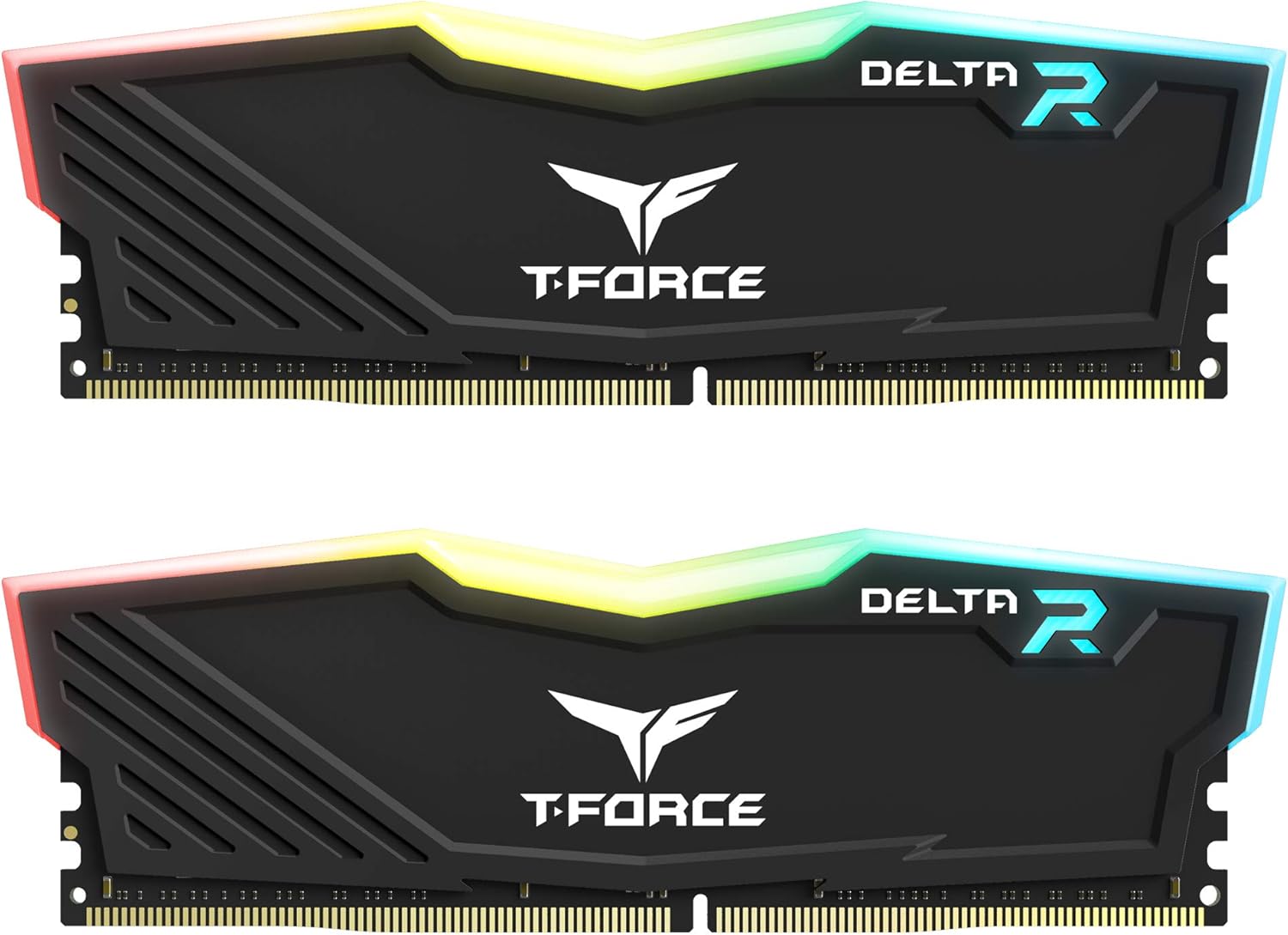
The 64GB DDR5 RAM exceeds what any current title requires in isolation, but adds meaningful headroom for production workloads. Per Puget Systems' published benchmarks on DDR5 configurations in DaVinci Resolve and Adobe Premiere, 64GB configurations handle multi-stream 4K editing with better timeline responsiveness than 32GB counterparts under combined workloads.
For accessory pairing, the Alienware 240Hz Gaming Monitor ($499.99) is a natural display companion from the same ecosystem — though at 1080p it represents a resolution ceiling well below the RTX 5090's 4K output capability. Buyers extracting the most from this GPU should target a 4K panel at 144Hz or higher.
RTX 5090 at 4K: Synthesis from Public Benchmarks
Public coverage from Digital Foundry, GamersNexus, and Tom's Hardware's GPU hierarchy establishes consistent findings on the RTX 5090 at 4K:
- Rasterization performance at 4K with maximum settings places the RTX 5090 at the top of the consumer GPU market with a notable lead over the RTX 4090, per Tom's Hardware's GPU hierarchy data. The magnitude varies by title and driver revision.
- DLSS 4 Multi Frame Generation is supported natively on Blackwell hardware. Per NVIDIA's published documentation, MFG can multiply effective frame output significantly in compatible titles, though results depend on scene complexity and base frame rate. Digital Foundry's published analysis of MFG titles notes both the frame-rate gains and the latency implications that accompany them.
- Ray tracing and path tracing show wider separation from competing architectures, per Digital Foundry's coverage of path-traced titles like Cyberpunk 2077 with full RT enabled and Indiana Jones and the Great Circle.
For a comparative lens on the RTX 5090 against NVIDIA's own previous generation at a different resolution target, see SpecPicks' RTX 5090 vs RTX 4090 at 1080p competitive play, where the generational gap is also contextualized for esports scenarios.
Why the $2,580 Discount Changes the Equation
Flagship prebuilt systems carry a structural premium above equivalent self-built configurations. That premium pays for assembly validation, integrated warranty coverage, and the elimination of component sourcing risk — but it can be hard to justify when it runs $600-1,200 above DIY cost.
A $2,580 reduction changes several dimensions of that calculation:
1. The self-build gap narrows substantially. Sourcing an RTX 5090 at or near MSRP, a compatible high-core-count CPU, 64GB of DDR5, and a case — plus the time cost of assembly and any failed boot troubleshooting — approaches the discounted system price in many markets. Per community pricing data tracked on Reddit's r/buildapc and Slickdeals, RTX 5090 cards have frequently sold above MSRP since launch.
2. The warranty has non-trivial value at this tier. Per Dell's published warranty terms, Alienware desktops ship with base 1-year limited warranty on parts and labor, with upgrade paths to on-site service. A self-built equivalent requires managing separate RMA channels for GPU, CPU, and memory — each with its own process, timeline, and shipping risk.
3. 64GB DDR5 is bundled. Upgrading from 32GB to 64GB DDR5 at retail typically adds $80-150 to a self-build budget, depending on speed grade. At a system-bundle price, that memory tier comes without a separate procurement decision.
64GB RAM: Is It Justified for Gaming?
For games in isolation, 64GB exceeds requirements. Per published documentation from major game developers and analysis from Digital Foundry, current titles peak well below 32GB of system RAM usage at maximum 4K settings.
The justification for 64GB surfaces in the adjacent use cases the Area-51's hardware enables:
- Video editing: Per Puget Systems' benchmarks, 4K multi-stream editing in professional NLEs runs more smoothly with 64GB under combined workloads than with 32GB.
- AI-adjacent creative tools: Applications like Topaz Video AI, Adobe Firefly, and similar tools that run alongside games or streaming software benefit from available system RAM when GPU VRAM is saturated by the game workload.
- Capture and streaming: OBS Studio with advanced encoding at 4K60 source capture can push 32GB configurations into swap territory during complex scenes. Per community benchmarks on the OBS Project forums, 64GB adds meaningful headroom for streamers working at 4K.
For buyers whose use case is gaming exclusively, 32GB would suffice for everything currently available. For buyers who intend to run the Area-51 as both a gaming and light production machine, 64GB is a practically useful spec — not just a marketing number.
Alternatives Worth Considering
Building an Equivalent System
A self-built RTX 5090 system with comparable CPU tier and 64GB DDR5 is the most direct alternative. The calculation depends entirely on RTX 5090 availability and pricing in the buyer's market. In constrained availability conditions — which have characterized the RTX 5090's first several months at retail per community tracking on r/buildapc — the prebuilt bundle price may be competitive or better. In conditions of open availability at MSRP, self-build may offer savings.
The RTX 5080 Tier
Per SpecPicks' RTX 5090 vs RTX 5080 4K analysis, the RTX 5080 delivers the majority of RTX 5090 performance in rasterized workloads at 4K, with a more notable gap in path-traced and Multi Frame Generation scenarios. For buyers whose gaming library is primarily rasterized titles without heavy RT usage, the RTX 5080 tier represents a meaningful potential savings on both standalone GPU cost and complete system price.
AMD RDNA 4 Systems
AMD's current-generation RDNA 4 architecture, represented by cards like the RX 9070 XT, closes the rasterization gap with NVIDIA at 4K compared to prior generations, per launch coverage from GamersNexus and TechPowerUp. AMD systems in the sub-$3,000 range offer strong 4K rasterization with the open-source ROCm compute ecosystem as a secondary advantage for AI workflows. The architectural differentiators remain in upscaling (DLSS 4 vs FSR 4) and ray tracing, where NVIDIA retains leadership per published benchmark coverage.
For a look at how far down-market capable AI inference hardware now reaches, SpecPicks' Gunnir Arc B580 vs RTX 5090D on DeepSeek illustrates the efficiency gap when AI workloads are separated from gaming requirements.
Display Pairing: Getting the Most from the RTX 5090
The RTX 5090's capabilities are best expressed through a 4K panel running at 144Hz or higher with DisplayPort 2.1 connectivity. Per NVIDIA's published DLSS 4 documentation, the combination of native 4K rendering headroom and MFG frame multiplication makes high-refresh 4K a natural target.
For buyers interested in ultrawide formats, SpecPicks' Alienware AW3426DW QD-OLED review covers a 3440×1440 ultrawide alternative — a visually immersive format, though at a lower pixel count than native 4K, it leaves some of the RTX 5090's throughput underutilized.
DisplayPort 2.1 cabling is required for 4K at 144Hz and above. Both the Silkland DP 2.1 cable ($18.98) and UGREEN DP 2.1 cord ($23.48) carry VESA certification for 80Gbps bandwidth, supporting 4K@240Hz — well ahead of current display capabilities, meaning neither cable becomes a bottleneck as panel technology advances.
The Local LLM Bonus Use Case
The RTX 5090's 32GB GDDR7 VRAM opens local AI inference capabilities beyond what any prior consumer gaming GPU could address. Per SpecPicks' analysis of Qwen 3.6 27B vs DeepSeek V4 on a single RTX 5090, the RTX 5090 enables full-weight 27B-parameter model inference without quantization compromises — a capability class that previously required professional-grade hardware.
For buyers weighing the Area-51 against a purpose-built AI inference machine, SpecPicks' RTX 5090 vs RTX A6000 for Local LLMs covers the VRAM capacity vs. throughput tradeoff between gaming-oriented and workstation-oriented GPU architectures. And SpecPicks' Tenstorrent TT-QuietBox 2 vs RTX 5090 addresses whether dedicated inference hardware makes sense for buyers who want to separate gaming and AI compute entirely.
For buyers who primarily want a gaming machine and consider local LLM access a secondary benefit, the Area-51's RTX 5090 makes that secondary use case genuinely capable — not just theoretical. Per SpecPicks' RTX 5090 Prebuilt vs RTX 3060 Local-LLM Box, the VRAM gap between a 12GB RTX 3060 and the 5090's 32GB tier is the defining factor in which model classes are usable at full weight.
Who Should Buy the Discounted Area-51?
Public performance coverage and pricing context point to a few clear buyer profiles:
This configuration makes sense if: You want a no-compromise 4K gaming machine with integrated warranty support, plan to use the system for content creation or AI inference alongside gaming, or have had difficulty sourcing an RTX 5090 at MSRP for a self-build.
Consider alternatives if: Your gaming library is primarily rasterized titles without heavy ray tracing, in which case the RTX 5080 tier may save meaningful money with modest real-world performance difference. Or if you're committed to a self-build and can source components at or near MSRP.
On timing: Discounts of this scale on flagship prebuilt systems have historically been tied to inventory events, promotional windows, or upcoming model transitions rather than permanent repricing. There is no structural reason to expect this markdown to persist indefinitely, nor a guarantee it won't deepen further before expiring.
FAQs
Does the RTX 5090 require a DisplayPort 2.1 cable for 4K gaming?
For 4K at up to 120Hz, DisplayPort 1.4 is sufficient. At 4K 144Hz and above, DisplayPort 2.1 is required. Per NVIDIA's published specifications, the RTX 5090 includes DisplayPort 2.1 outputs rated for 4K@240Hz, so upgrading the cable is worthwhile for high-refresh 4K panels.
Is 64GB of RAM actually necessary for 4K gaming?
For gaming alone, 32GB covers all current titles comfortably. The 64GB advantage surfaces in hybrid workflows: 4K video editing, AI-assisted creative tools, or simultaneous game capture and streaming at 4K60. Per Puget Systems' published benchmarks, 64GB configurations show material advantages in those combined workloads.
What is the RTX 5090's actual VRAM capacity?
Per NVIDIA's official specifications, the RTX 5090 carries 32GB of GDDR7 memory on the Blackwell architecture. This 32GB figure is what enables both high-resolution gaming and full-weight local LLM inference on 27B-class models without quantization.
How does Alienware's warranty compare to a self-build?
Per Dell's published warranty terms, Alienware desktops include a base 1-year limited warranty on parts and labor with on-site service upgrade options. A self-built equivalent requires separate RMA processes for each component, adding logistics overhead when any single part fails.
Does the RTX 5090 support AMD FSR alongside DLSS 4?
Yes. AMD's FSR upscaling runs at the software and DirectX layer, making it hardware-agnostic. The RTX 5090 supports FSR 4 in compatible titles alongside DLSS 4, which remains NVIDIA-exclusive. In practice, buyers benefit from whichever upscaling path a given title implements.
Will this deal recur?
Public retail tracking from sources like Slickdeals and CamelCamelCamel indicates that discounts of this scale on flagship integrated systems are intermittent rather than sustained, typically tied to inventory or promotional cycles. There is no structural basis for assuming the markdown persists long-term.
Citations and sources
- https://www.nvidia.com/en-us/geforce/graphics-cards/50-series/rtx-5090/ — NVIDIA RTX 5090 official specifications including VRAM, architecture, and DLSS 4 documentation
- https://www.tomshardware.com/reviews/gpu-hierarchy,4388.html — Tom's Hardware GPU hierarchy covering RTX 5090 performance ranking and generational comparisons
- https://gamersnexus.net — GamersNexus GPU and system testing coverage including RTX 5090 launch analysis
- https://www.digitalfoundry.net — Digital Foundry 4K and ray-tracing benchmark methodology, DLSS 4 MFG analysis
- https://www.dell.com/en-us/shop/alienware/cp/alienware-gaming-pcs — Alienware Area-51 official product page and published warranty terms
- https://www.pugetsystems.com/benchmarks/ — Puget Systems content creation benchmark data for 64GB DDR5 configurations in professional NLEs
- https://www.rtings.com/monitor — Display benchmark coverage and panel specifications for 4K gaming monitor recommendations
This piece is editorial synthesis based on publicly available information. No independent first-party benchmarking is reported.

![Silkland 80Gbps DisplayPort Cable 2.1 [VESA Certified] 6.6FT/2M, DP80 HDR](https://m.media-amazon.com/images/I/41ZU3eQbhEL._SL500_.jpg)

