

Pixio
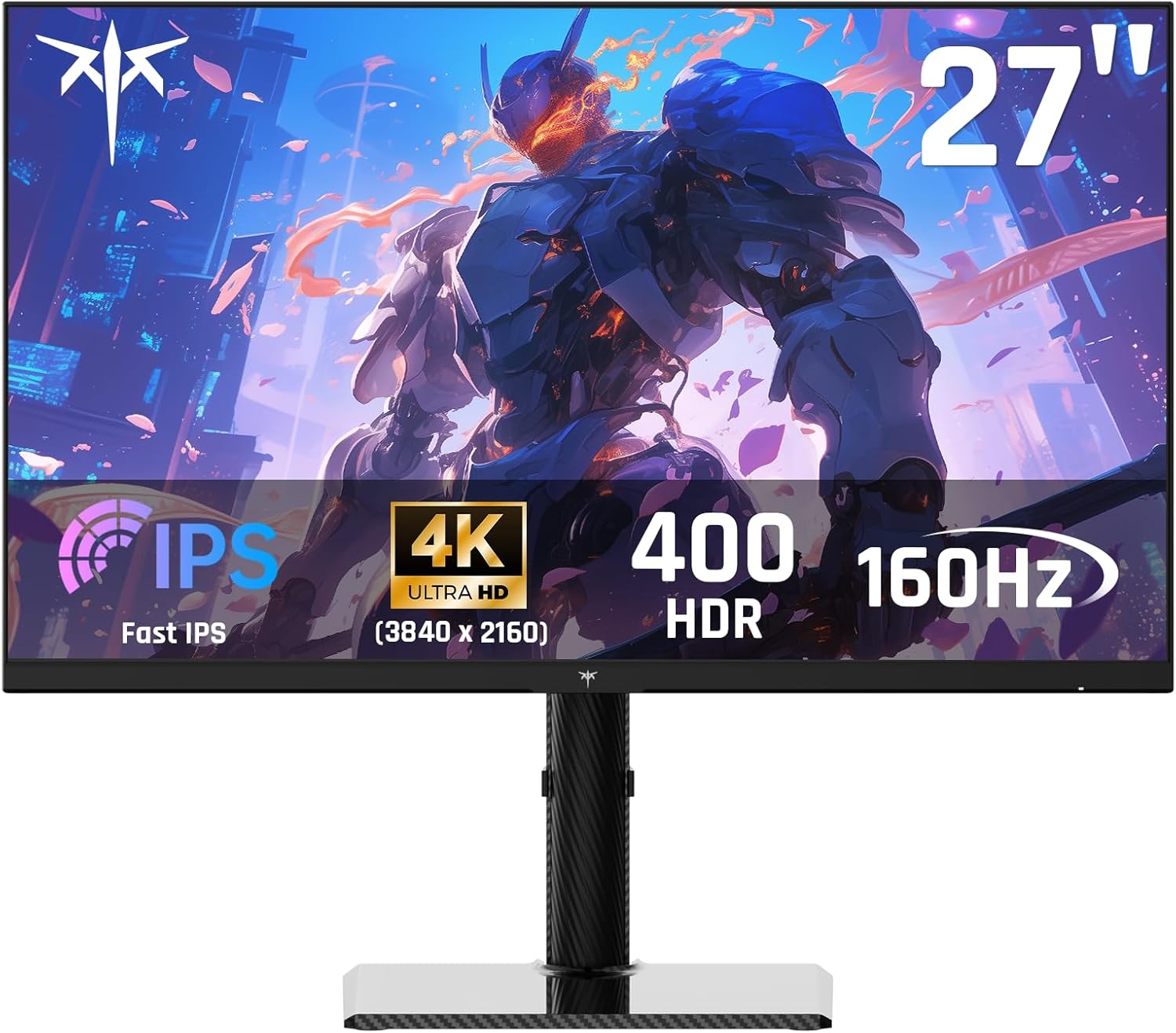
Pixio PX27U Wave 27 inch 160Hz Refresh Rate 4K 3840x2160p Resolution Fast IPS Panel 1ms GTG Response Time Tilt Adjustable Gaming Monitor with Adaptive Sync
Bottom line: The Pixio PX27U Wave 27 inch 160Hz Refresh Rate 4K 3840x2160p Resolution ($237.99 on Amazon as of 2026-11-20 17:18 UTC): 4K 3840x2160 on a 27-inch panel for sharp, dense detail; main trade-off: stand only tilts; no height, swivel or pivot adjustment listed. Another in-stock pick with the same 27" 4K 160Hz+ monitor: the KOORUI 27" 4K QD-Mini LED Gaming Monitor, $399.99 on Amazon as of (price may vary).
As an Amazon Associate, SpecPicks earns from qualifying purchases. Full disclosure →
*Price sourced from Amazon.com. Last updated 2026-11-20. Product prices and availability are accurate as of the date/time indicated and are subject to change. Any price and availability information displayed on Amazon.com at the time of purchase will apply to the purchase of this product.
Pros & Cons
Pros
- ✓ 4K 3840x2160 on a 27-inch panel for sharp, dense detail
- ✓ 160Hz refresh rate at full 4K resolution
- ✓ Fast IPS panel rated at 1ms GTG to reduce ghosting
- ✓ DisplayPort 1.4 and HDMI 2.1 each support 4K@160Hz
- ✓ Adaptive Sync cuts screen tearing with compatible GPUs
Cons
- ✗ Stand only tilts; no height, swivel or pivot adjustment listed
- ✗ Only two video inputs, one DisplayPort and one HDMI
- ✗ HDR support is listed without a certification tier or peak brightness
- ✗ Running 4K at 160Hz takes a high-end graphics card
Manufacturer description
The Pixio PX27U Wave is a 27-inch 4K gaming monitor for players who want sharp detail and a high refresh rate on the same screen. It has a 3840 x 2160 Fast IPS panel that runs at up to 160Hz, so you get the clarity of 4K with motion well above the usual 60Hz or 144Hz ceiling. The Fast IPS panel is rated at a 1ms GTG response time. That reduces ghosting in quick shooters and racing games, and the panel still produces the vivid color IPS is known for. Adaptive Sync matches the refresh rate to your graphics card's frame output to cut screen tearing. You need a compatible GPU for that feature…
SpecPicks Verdict
SpecPicks has no buyer-rating or benchmark data for Pixio PX27U Wave 27 inch 160Hz Refresh Rate 4K 3840x2160p Resolution…, so this read rests on the manufacturer's listed specs and the current price in the gaming monitors category (how we evaluate). Compare with similarly-priced alternatives in the gaming monitors category before committing. On the listing's own facts, the case for it is "4K 3840x2160 on a 27-inch panel for sharp, dense detail"; the main trade-off is "Stand only tilts; no height, swivel or pivot adjustment listed". If those two points fit how you will use it, put it beside one or two close alternatives in the Compare tool to confirm the price.
Before ordering, check the listed dimensions, ports, power requirements and supported devices or systems in the spec table below against how you plan to use it, and confirm them on the retailer's listing. Prices and stock are set by the retailer and may have moved since this page was last updated.
Frequently Asked Questions
Can the Pixio PX27U Wave run 4K at 160Hz over HDMI?
Yes. Its HDMI 2.1 port supports up to 4K@160Hz, and so does its DisplayPort 1.4 port. A source device that can output that signal is required.
Is the PX27U Wave a good monitor for PS5 or Xbox Series X?
It has an HDMI 2.1 input that supports up to 4K@160Hz, so it works with current consoles. The console's own output limits decide the refresh rate you actually get.
Does the Pixio PX27U Wave work with G-Sync or FreeSync?
The monitor supports Adaptive Sync for tear-free gameplay when paired with a graphics card that supports Adaptive Sync. Check your GPU's specifications to confirm compatibility.
Can I adjust the height of the PX27U Wave stand?
The listing only describes tilt adjustment. Height, swivel and pivot are not listed, so plan on a separate monitor arm if you need them. Check the product listing for VESA mount details.
Does the Pixio PX27U Wave support HDR?
Yes, it accepts HDR content, but it needs HDR material and a compatible source device. The listing does not state an HDR certification tier or peak brightness.
Key Features
Quoted from the manufacturer's listing. Where it differs from the pros and cons above, those note the conditions the listing leaves out.
- Visual Clarity in Stunning Detail - Immerse yourself in crisp visuals with 4K resolution (3840 x 2160p), showcasing incredible detail for a breathtaking gaming experience.
- Unleash Ultra-smooth Gameplay - Experience exceptional smoothness with a rapid 160Hz refresh rate even at 4K, eliminating lag and blur for competitive gaming and crystal clear visuals
- Fast-IPS Panel for Speed and Color - The Fast IPS technology delivers a lightning-fast 1ms GTG response time, minimizing ghosting, while also offering vivid colors for immersive gaming.
- Adaptive Sync for Seamless Performance - Enjoy tear-free visuals compatibility, ensuring your graphics card and monitor work together for a smooth and responsive experience (graphics card with compatible Adaptive Sync required).
- Supports both HDMI and DisplayPort - There are two ports for DisplayPort 1.4 and HDMI 2.1, each supporting up to 4K@160Hz. This assures maximum compatibility for PC desktops, laptops, consoles, or any device that supports DisplayPort or HDMI.
- Dominate the Competition - The Pixio PX27U Wave boasts a 27-inch 4K (3840 x 2160p) Fast IPS display with a 160Hz refresh rate, 1ms GTG response time, Adaptive Sync, and HDR compatibility (HDR content and compatible source required), delivering exceptional smoothness, stunning detail, vibrant colors, and tear-free visuals for a competitive edge.
Full Specifications
| Brand | Pixio |
|---|---|
| Color | Black |
| Shape | Flat |
| Voltage | 12 volts |
| Brightness | 400 cd |
| Model Name | PX27UWAVE |
| Resolution | 4K UHD 2160p |
| Color Gamut | 121.76 |
| Pixel Pitch | 0.16 |
| Screen Size | 27 inches |
| Aspect Ratio | 16:9 |
| Display Type | LCD |
| Model Number | PX27UWAVE |
| Refresh Rate | 160 hertz |
| Adaptive Sync | FreeSync |
| Compatibility | PC |
| Mounting Type | Wall Mount |
| Response Time | 1 milliseconds |
| Screen Finish | Matte |
| Viewing Angle | 178 degrees |
Ready to buy?
Pixio PX27U Wave 27 inch 160Hz Refresh Rate 4K 3840x2160p Resolution Fast IPS Panel 1ms GTG Response Time Tilt Adjustable Gaming Monitor with Adaptive Sync is listed on Amazon. Price, availability, shipping and returns are set by Amazon and its sellers — check the listing for current terms. SpecPicks earns a small commission on qualifying purchases — thank you for supporting independent review work.
*Price sourced from Amazon.com. Last updated 2026-11-20. Product prices and availability are accurate as of the date/time indicated and are subject to change. Any price and availability information displayed on Amazon.com at the time of purchase will apply to the purchase of this product.
Related Gaming Monitors



More guides & deep dives from the SpecPicks archive
Browse all articles & guides →- Best Budget Gaming PC Build 2026 — ~$1,000 Parts List
- Emulation Hardware in 2026: FPGA, Software, and Cart-Reader Ecosystems
- RTX 4070 Super vs RX 7800 XT — Which to Buy in 2026
- The Complete Voodoo5 5500 AGP Driver Guide (2026 Edition)
- Best 1440p Gaming GPUs in 2026
- How to Build a Windows 98 Retro PC in 2026
- Best Retro Handhelds in 2026: Pocket, Mid-Tier and FPGA Picks
More reviews from the SpecPicks archive
Browse all reviews →- Imaging Vintage IDE Drives in 2026: A CompactFlash + USB Adapter Workflow
- Build a Raspberry Pi 4 AirPlay Receiver in 2026: Full Walkthrough
- Raspberry Pi RP2350 Emulates a Z80 in Real Time — What That Actually Means
- Tesla Caps AI Spend at $200/Week — The Local RTX 3060 Rig Case
- Mistral AI Seeks €3 Billion to Fund Its European Push — The Local-vs-Cloud Angle
- Best 4K Monitor for PS5 and PC Under $500: KOORUI QD-Mini LED vs Samsung Odyssey
- Secluso: Private DIY Home Security on a Raspberry Pi 4
- Which LLMs Fit a 12GB RTX 3060? Per-Model VRAM Cheat Sheet (2026)
- GLM-5.2 Is Now the Most Intelligent Open-Weights Model — and the Most Verbose
- How to run Qwen 3 32B on NVIDIA GeForce RTX 4090
- Best GPU for Ollama Under $300: Why 12GB Beats a Faster 8GB Card
- Best Hardware for Running Small Language Models Locally in 2026
- Best Budget SSD for Gaming and PC Upgrades in 2026
- KOORUI 27" 4K QD-Mini LED: Is a Budget 4K Gaming Monitor Enough for an RTX 3060?
- Building a Period-Correct Windows 98 Gaming PC in 2026: Parts, Pitfalls, and Driver Archaeology
- AI-Assisted Sound Card Driver Install on Vintage WinXP: How a Vision LLM Automates the Sound Blaster Audigy FX
- Best Gaming Monitor for PS5 & High-Refresh PC Gaming (2026)
- Build a Real-Time Flight Tracker (ADS-B) on a Raspberry Pi 4 in 2026
- 2002 GeForce 4 Ti Win98 Build: CompactFlash Storage Done Right
- Best SSD for a 1TB+ Steam Library in 2026: SATA vs NVMe Showdown
- Sound BlasterX G6 on a Windows 98/XP Retro Gaming PC: What It Actually Does
- Best CPU Coolers for AMD Ryzen 5000 (AM4) in 2026
- Best Budget PC Gaming Peripherals in 2026: 5 Picks That Punch Above Their Price
- LiquidAI LFM2.5-8B-A1B: An 8B MoE You Can Run on a 12GB RTX 3060
Earliest SpecPicks reviews
Browse full archive →- Best GPU for Llama 3.1 8B (2026)
- Best GPU for Qwen 3 14B (2026)
- Best GPU for Qwen 3 32B (2026)
- Best GPU for Llama 3.1 70B (2026)
- Best GPU for DeepSeek-R1 32B (2026)
- Best GPU for Llama 3.1 405B (2026)
- How to run Llama 3.1 8B on NVIDIA GeForce RTX 5090
- How to run Qwen 3 14B on NVIDIA GeForce RTX 5090
- How to run Qwen 3 32B on NVIDIA GeForce RTX 5090
- How to run Llama 3.1 70B on NVIDIA GeForce RTX 5090
- How to run DeepSeek-R1 32B on NVIDIA GeForce RTX 5090
- How to run Llama 3.1 8B on NVIDIA GeForce RTX 4090