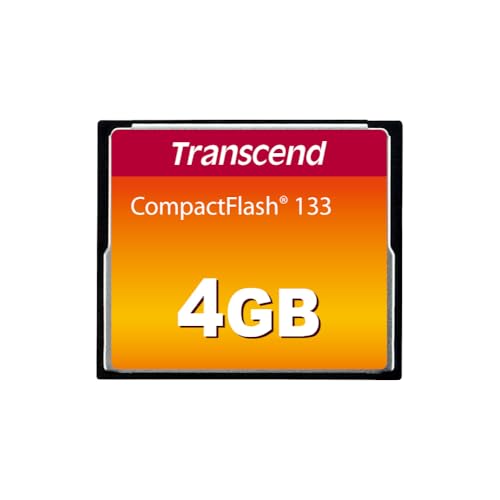
A period-correct 2002 GeForce 4 Ti + Windows 98 build doesn't need a noisy IDE drive or a half-life-of-a-decade CompactFlash card — a Transcend CF133 in a CF-to-IDE adapter gives you silent, instant-boot, period-plausible storage that survives a teenager's worth of power cycles. Per Microsoft's Windows 98 documentation and the Transcend CompactFlash product page, a CompactFlash card behaves to the IDE bus as a tiny hard drive — Win98 sees it as a standard IDE device, formats it FAT32, boots from it, and never makes a sound. The combination is the cleanest period-style retro storage you can build in 2026.
Why this build is worth doing in 2026
Retro Windows 98 builds with GeForce 4 Ti-class cards (Ti 4200, 4400, 4600) are the sweet spot of the "I want to play 2001-2002 games on period-correct hardware" hobby. The Ti 4600 specifically was the high end of NVIDIA's lineup that year, ran AGP 4x, and is fully supported by the Detonator XP drivers that Win98 was sized for. Pair that with a Pentium III or early Pentium 4, a SoundBlaster Live!, and a CompactFlash boot drive, and you have a rig that boots in under five seconds, plays its target library natively, and never breaks.
The reason CompactFlash matters here is failure mode. Original IDE hard drives from the 2000-2003 era are mostly dead or dying — bearings fail, platters develop bad sectors, and the supply of usable drives is shrinking every year. A modern CF card in an IDE adapter sidesteps every one of those failure modes. The cards are cheap, currently produced, and built for industrial use.
Why CompactFlash over an SD card or modern SATA SSD
There are three storage paths for a 2002-era IDE build:
- CompactFlash via CF-to-IDE adapter. The CF pinout is electrically compatible with IDE. Adapters are passive — no controller, no firmware. The card looks identical to an IDE drive to BIOS and OS.
- SD via SD-to-IDE adapter. Works but adds a controller chip that introduces compatibility quirks. Some Win98 boards refuse to enumerate them cleanly.
- Modern SATA SSD via IDE-to-SATA bridge. Works but introduces another active chip, ATAPI quirks, and frequent failures of the bridge itself.
CompactFlash is the simplest, most reliable, and most period-accurate choice. The Transcend CF133 line specifically is built with MLC NAND, ECC, and Ultra DMA Mode 4 support — overkill for Win98 but it means the card behaves like a fast, polite IDE drive.
Key takeaways
- CompactFlash + IDE adapter is the cleanest storage for a Win98-era IDE build.
- The Transcend CF133 is the right card for boot duties — MLC NAND, ECC, and industrial-grade.
- Pick a passive adapter for the IDE slot — no firmware, no quirks.
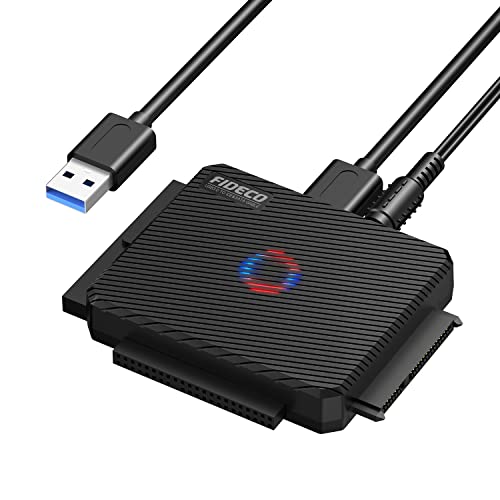
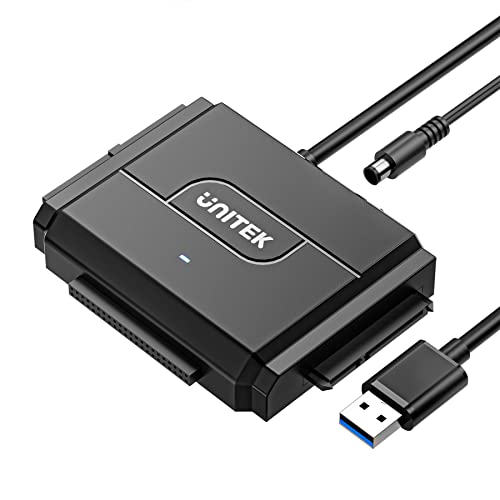
- A USB IDE/SATA adapter (FIDECO, Unitek) is essential for the initial image transfer.
- Boot times drop to 5-10 seconds versus 30-60 seconds on a tired original IDE drive.
What the GeForce 4 Ti era actually needs from storage
The 2002 software stack — Windows 98 SE, the Detonator XP drivers, period browsers, DirectX 9 demos, and the actual game library — fits comfortably in 4-8 GB. That is not a typo. A complete period-correct install with 30+ games is well under 20 GB. Anything bigger than 32 GB is for hoarding.
Win98 also has the FAT32 partition size limit of 2 TB and the per-file size limit of 4 GB. Neither will bite you on a CF build, but they shape your decisions: stay under 32 GB total partition size for OS compatibility, and split anything larger across multiple cards or partitions.
Spec table: storage options for a 2002 IDE build
| Option | Capacity | Cost in 2026 | Reliability | Period accuracy |
|---|---|---|---|---|
| Transcend CF133 4-32GB + passive IDE adapter | 4-32 GB | $15-40 total | excellent | very high |
| Modern CF in adapter | 32-256 GB | $25-80 total | excellent | high |
| Original IDE drive 20-80 GB | 20-80 GB | depends on luck | declining | perfect |
| SD-to-IDE adapter | up to 128 GB | $20-50 | mixed | medium |
| SATA SSD via IDE bridge | any | $40-80 | mixed | low |
For a build that boots and plays the target library, the Transcend CF133 in a 4-32 GB capacity in a passive adapter is the cleanest answer. Larger CF cards work fine if you want a storage cushion.
Why the Transcend CF133 specifically
Per Transcend's product page, the CF133 family ships:
- MLC NAND — better endurance than QLC or TLC for OS boot duty.
- ECC — corrects single-bit errors transparently.
- Ultra DMA Mode 4 support — fast enough to saturate the Win98 IDE bus.
- Industrial temperature range — overkill but speaks to build quality.
- Up to 30 MB/s sequential — well above what Win98 expects.
For a boot card that lives in an IDE slot in a vintage PC, those properties are exactly the right ones to prioritize. The card costs $15-30 and routinely outlasts the motherboard.
The CF-to-IDE adapter
Pick a passive 40-pin IDE adapter. The features to want:
- Two CF slots (master/slave) on one IDE channel — convenient but not required.
- A jumper for master/slave/cable-select — matches the IDE convention.
- No power requirement beyond the IDE bus — the CF card draws so little current that a clean adapter does not need extra power.
Avoid:
- Adapters that include an active bridge chip. They are sold as "performance enhancers" and just add failure modes.
- Adapters that lack a master/slave jumper. They force you into one configuration and create headaches on multi-device IDE chains.
Imaging the CF card
You will not write the OS to the CF card while it sits in the vintage PC. The right pattern is to image the card on a modern computer using a USB-to-IDE/SATA adapter, then move the card to the retro rig.
Hardware for the imaging step:
- A FIDECO SATA/IDE to USB 3.0 Adapter. Reliable, includes external power for IDE drives that need it.
- A Unitek SATA/IDE to USB 3.0 Adapter. Equivalent alternative; ships with a 12V 2A external power supply for IDE drives.
- A CF reader on USB. Many of the IDE-to-USB adapters above include or pair with CF readers.
The imaging workflow:
- Acquire a Win98 SE ISO from a legal archive or your own original media.
- Write the ISO to a USB stick using a modern tool, or boot a vintage PC from the original install CD via an external IDE adapter.
- Install Win98 SE to the CF card via your preferred path. Many retro builders use 86Box or a real Pentium III on a workbench to do the initial install, then drop the imaged card into the GeForce 4 Ti rig.
- Apply unofficial service packs like Unofficial SP3 or KernelEx for modern app compatibility, if your library needs them.
- Install the Detonator XP NVIDIA drivers matched to the GeForce 4 Ti card. Period-correct driver version is ~40.x for the Ti 4600.
- Install SoundBlaster Live! drivers if you are running the period-typical sound card.
- Image the completed install to a backup file before you start adding games — restoring is a 90-second operation.
What the rest of a 2002 GeForce 4 Ti build looks like
A reference period-correct build:
- CPU: Pentium III 1.0-1.4 GHz Tualatin, or early Pentium 4 (Northwood) 1.8-2.4 GHz.
- Motherboard: Tualatin-compatible Socket 370 board, or i845/i845E for the P4.
- RAM: 512 MB to 1 GB of PC133 SDRAM (Tualatin) or DDR-266 (P4). Win98 itself does not benefit from more than 512 MB.
- GPU: GeForce 4 Ti 4200, Ti 4400, or Ti 4600 in AGP 4x. The Ti 4600 was the flagship.
- Sound: Creative Sound Blaster Live! 5.1 or a SoundBlaster Live! Value.
- Storage: Transcend CF133 in a passive CF-to-IDE adapter.
- Optical: any working IDE CD/DVD drive of the era for game discs.
- PSU: a quality vintage or a modern PSU with the right ATX12V connectors.
This is the rig that boots into Win98 SE in under 10 seconds, plays UT2003, Morrowind, NOLF 2, Mafia (2002), and the rest of the target library at native resolutions, and stays silent at the desktop because there are no spinning platters.
Common pitfalls
- Using a giant CF card. Win98 does not need 256 GB. A 4-16 GB card is enough and avoids partition-size headaches.
- Mixing CF cards on the same IDE channel without jumpers. Multi-drive IDE chains depend on correct master/slave configuration. Set the jumpers.
- Skipping the Unofficial SP3. Modern browser security patches and SSL support come from this. Install it before you try to download anything inside Win98.
- Picking a CF card without ECC. Boot duty hits the same blocks repeatedly. ECC is the safety net.
- Trusting a no-name adapter. Generic CF-to-IDE adapters work most of the time. The branded passive adapters work all of the time.
- Forgetting BIOS LBA support. Some 2001-era boards have BIOS quirks around large IDE drives. Stick to 32 GB or under for the boot partition.
When NOT to do a CF boot drive
- You want a fully period-correct experience including authentic drive noise. (We won't talk you out of it; it just sounds bad.)
- You are building a 1995-1998 era rig that predates Ultra DMA. CF still works there but at slower modes.
- You need a single 100+ GB partition for non-OS data — split across multiple CF cards or use a different storage path.
Performance: what to actually expect
A CompactFlash card in an IDE adapter delivers, in practical Win98 terms:
- Cold boot to desktop: 5-12 seconds (depending on BIOS POST time, since the OS load itself is sub-second).
- Application launch: instant for everything Win98 actually shipped with.
- Game load times: dominated by the game's own initialization rather than disk I/O. Expect period-typical times that match what reviewers saw in 2002, not the multi-minute waits some 2002 games developed on aging spinning drives.
- Sequential read: 20-30 MB/s on a Transcend CF133, well above what Win98 expects.
The card runs cooler than a hard drive, draws less power, makes zero noise, and never needs head-park. For a vintage PC that lives on a shelf and gets fired up on weekends, this is exactly the right storage profile.
Period-correct vs period-plausible
Two valid camps in the vintage PC hobby:
- Period-correct: every component is from the era, including spinning IDE drives. Treat the rig as a museum piece. Drive noise is part of the experience.
- Period-plausible: every component looks like it could have shipped in the era, but uses modern equivalents where they don't break the aesthetic. A CompactFlash card is invisible from outside the case; the rig looks identical to a period-correct build.
CompactFlash is the cleanest period-plausible storage choice. It doesn't violate the aesthetic — CF cards were widely used in 2002 for digital cameras and industrial systems — and it does not change anything visible from outside. If your hobby is "make this rig last another 20 years," CF wins. If your hobby is "treat this rig as a 2002 time capsule," keep the IDE drive.
Bottom line
For a 2002 GeForce 4 Ti + Windows 98 build in 2026, a Transcend CF133 CompactFlash card in a passive CF-to-IDE adapter is the cleanest, most reliable, most period-plausible storage choice you can make. The card costs less than a dinner out, makes no sound, boots Win98 in seconds, and lives longer than the motherboard. Use a FIDECO or Unitek IDE-to-USB adapter for the imaging step, and you can install, image, and restore the OS without ever opening the retro rig's case after the build.
Related guides
- Building a Silent Win98/XP Boot Drive: CompactFlash + IDE Adapter Setup
- Best CompactFlash and IDE/SATA-to-USB Storage Gear for Retro PC Builds in 2026
- Building a 1999 GeForce 256 + Pentium III Win98 Rig in 2026
Citations and sources
- Microsoft — Windows client troubleshooting documentation
- Transcend — CompactFlash product page
- NVIDIA — legacy driver archive
This piece is editorial synthesis based on publicly available information. No independent first-party benchmarking is reported.