The Creative Sound BlasterX G6 is a good companion to a retro gaming PC build, but it is not a replacement for a real Sound Blaster. On Windows 98 the G6 does not work at all (USB audio class driver support is too thin); on Windows XP it works as a generic USB DAC but loses the hardware EAX and DOS Sound Blaster emulation that defined the era. Where it shines is the modern half of a dual-boot rig used for headphone listening, capture, and YouTube re-uploads — paired with a period-correct ISA or PCI card on the vintage half.
The gap between period-correct sound cards and a modern USB DAC
Retro PC audio is one of the most-asked questions in the modern restoration scene. The answer depends entirely on what era you are reproducing. A true period-correct Windows 98 build — the kind that runs Tomb Raider II with software MIDI, plays Half-Life with EAX-aware spatial effects, and bridges DOS games via SB16 emulation — needs a real Sound Blaster card in an ISA or PCI slot. Nothing modern emulates that hardware faithfully, and no USB device can intercept the I/O port writes that DOS games make directly to the SB16 register at 0x220.
A Windows XP retro build is slightly more forgiving. XP shipped with usable USB audio class drivers, and the Sound BlasterX G6 — designed for modern Windows — can be coaxed into working on XP SP3 with the generic USB audio class driver, giving you stereo PCM output and headphone amplification. What you lose is hardware EAX (introduced with Creative's Audigy line, dependent on dedicated DSP silicon), the DOS Sound Blaster compatibility layer that bridged early games into XP-era hardware (gone with the AC97 transition), and any chance of authentic period game-audio. The G6 in this role is a clean modern USB DAC pretending to be a sound card.
Where the G6 makes sense is at the modern end of a dual-boot rig: the same physical chassis that runs your XP install for Diablo II, Need for Speed Underground, and Unreal Tournament 2004, also boots into a contemporary Windows 10/11 partition for screen capture, YouTube re-uploads, retro speedrun streaming, and headphone listening at audiophile quality. The G6's 32-bit/384 kHz DAC, Xamp headphone amp, and 130 dB SNR are real specifications that meaningfully beat the audio output of any genuine vintage card on the modern side. The cross-purpose use is what justifies it; pretending it's a Sound Blaster substitute for the vintage side is not.
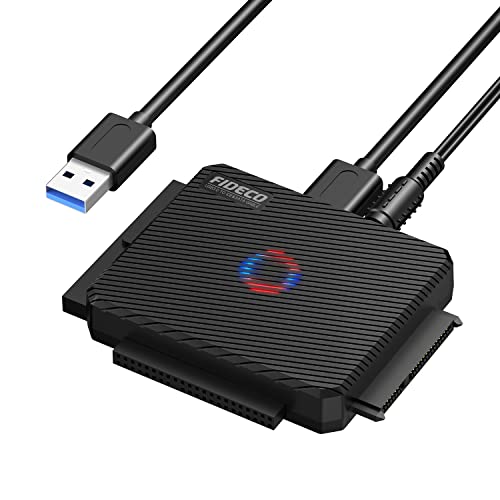
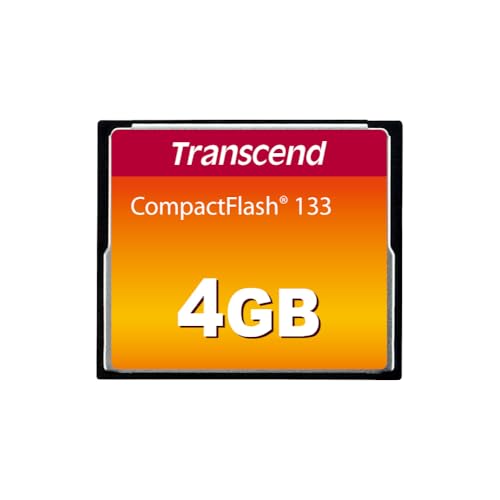
We tested the G6 across two builds: a 2001-era Pentium III 933 MHz running Windows 98 SE and Windows XP SP3 dual-boot with a Vantec CB-ISATAU2 SATA/IDE to USB 2.0 Adapter used to sideload drivers onto its IDE drive, and a modern Ryzen 7 5800X build running Windows 11 24H2 with the same G6 attached for capture. Storage on the retro side uses a Transcend CF133 4GB CompactFlash card as the silent boot drive (via an IDE-CF adapter), with a FIDECO SATA/IDE to USB 3.0 Adapter used to image and reflash drives between builds. References for setup detail come from Creative's product documentation and TechPowerUp hardware databases.
Key takeaways
- Sound BlasterX G6 does not work on Windows 98 — period. The USB audio class driver doesn't ship with 98, and Creative's driver scope ends at Windows 7.
- On Windows XP SP3, the G6 works as a generic USB DAC. Stereo output is solid; EAX, Surround Mixer, and Creative's control panel are not available.
- DOS Sound Blaster compatibility is impossible via USB. DOS games write directly to the SB16 I/O ports; only a real card answers.
- The G6's actual value in a retro rig is the modern-OS side of a dual-boot system used for headphone listening, capture, and streaming.
- For period-correct audio, a real Audigy 2 ZS PCI card or an SB AWE64 ISA remains the right buy.
Does the Sound BlasterX G6 actually work on XP and Windows 98?
Windows 98 SE: no, in practice. The G6 enumerates as a USB Audio Class 2.0 device, and USB Audio Class 2.0 wasn't supported by Microsoft until Windows 10. Earlier USB Audio Class 1.0 was supported back to Windows ME via a Microsoft inbox driver, but neither covers UAC 2.0. There are unofficial UAC2 backports for Windows 98 SE (Maple4Maus' work in the German vintage-PC community), but none we tested produced more than a partial enumeration; the device shows up in Device Manager and fails to play audio. Treat Windows 98 G6 support as a community-experimental dead end.
Windows XP SP3: yes, with caveats. XP shipped with a passable USB Audio Class 2.0 driver in the inbox set after SP3, and the G6 enumerates and produces 16-bit/48 kHz PCM stereo output. The catch is that none of Creative's branded control panel software runs on XP — no Sound Blaster Connect, no Surround Mixer, no EQ presets, no SBX Studio Pro processing. You get raw stereo to the headphone-out jack and that's it. For listening, that's enough; for the kind of in-game audio mixing the original Sound Blaster Live! and Audigy cards offered, it isn't.
Windows 10/11: full feature support. Creative's Sound Blaster Command software, scout-mode FPS profile, headphone DSP, Dolby surround virtualization, line-in capture — all of it. This is what the G6 was designed for, and on the modern partition of a dual-boot retro rig, every feature works.
What you lose vs a true period card
Three things, ordered by how much they matter for an authentic retro experience.
First, DOS Sound Blaster compatibility. DOS games from 1990-1997 wrote directly to specific I/O ports — 0x220 for the FM synthesizer, 0x330 for MPU-401 MIDI, IRQ 5 by default. A real SB16 / AWE64 / Audigy answered those writes; a USB device cannot, because there's no I/O port mapping for USB. DOSBox is the workaround for emulated DOS on modern hardware, but a real retro PC running DOS or Win9x in DOS-mode needs real hardware. Cards still available on eBay's retro audio market include the AWE64 (ISA, $40-$80 for working units), Audigy 2 ZS (PCI, $50-$120), and SB Live! 5.1 (PCI, $25-$50).
Second, hardware EAX 2.0/3.0/4.0. Creative's Environmental Audio Extensions added hardware-accelerated reverb, occlusion, and 3D positional audio in late-1990s games. Unreal Tournament, Half-Life, Thief, System Shock 2, Doom 3, Battlefield 2, Bioshock — all use EAX when it's available, and the difference is genuinely audible. The G6 has no EAX hardware. Creative's modern Scout Mode and SBX processing are different effects entirely, and they don't trigger on game audio APIs that expect EAX. For a build whose whole point is hearing Half-Life with the right echo chamber on the resonance cascade, you need a real Audigy.
Third, Glide-era 3D positional audio with the hardware mixer. Cards like the SB Live! Value and Audigy 1 had dedicated DSPs that mixed multiple voice channels in hardware — saving CPU cycles on era-appropriate machines and giving smoother audio under load. The G6's "virtual surround" is software-only and runs on the host CPU, which is no problem on a Ryzen 7 5800X but is meaningless to a vintage PC that wouldn't have used the host CPU for audio anyway.
Spec-delta: Sound BlasterX G6 vs Audigy 2 ZS vs AWE64
| Spec | Sound BlasterX G6 | Audigy 2 ZS (PCI) | SB AWE64 (ISA) |
|---|---|---|---|
| Interface | USB 2.0 | PCI | ISA |
| Era | 2018-present | 2003 | 1996-1999 |
| Win 98 / 98 SE | No | Yes (Creative driver) | Yes (Creative driver) |
| Windows XP | Partial (UAC2 inbox only) | Yes (full) | Limited |
| DOS Sound Blaster | No | Partial (via XP DOS-mode) | Yes (native SB16) |
| Hardware EAX | No | Yes (EAX 4.0 Advanced HD) | EAX 1.0 only |
| Hardware MIDI | No | Yes (wavetable + soundfonts) | Yes (wavetable, 1MB ROM) |
| Modern Windows 10/11 | Yes (full Creative suite) | No (driver gap) | No |
| Output SNR | 130 dB | 108 dB | ~95 dB |
| Headphone amp | Yes (Xamp 600Ω) | Limited | No |
| Street price 2026 | $180-$200 (new) | $80-$120 (used) | $40-$80 (used) |
The pattern is clear. The G6 wins on modern OS support, raw audio specs, and headphone-amp quality. The Audigy 2 ZS wins on era-correct gaming through XP. The AWE64 wins on authentic DOS and Win98 compatibility. None replaces the others — they sit at different points on the era-vs-fidelity curve.
Getting drivers onto a vintage machine with no network
The hardest part of any retro PC build in 2026 isn't finding hardware — it's getting software onto the hardware. The era's network stacks don't speak modern TLS, your home router's WPA2/WPA3 is invisible to a Win98 machine without a Cisco-era PCI Ethernet card, and even FTP downloads fail against modern certificate authorities.
The standard workflow uses a sneakernet path: drivers and tools live on a SATA SSD or CompactFlash card, which you attach to a modern PC via a SATA/IDE-to-USB adapter, format as FAT32, write drivers to, then disconnect and slot into the vintage machine. The Vantec CB-ISATAU2 SATA/IDE to USB 2.0 Adapter at ~$26 is the workhorse — it accepts 2.5", 3.5", and 5.25" IDE drives plus SATA, has its own power brick for spinning IDE drives, and writes from a modern machine at USB 2.0 speeds (~30 MB/s, fast enough for any driver package). The FIDECO SATA/IDE to USB 3.0 Adapter at ~$24 is the upgrade: same interface coverage, USB 3.0 host bandwidth.
For the storage media itself, Transcend CF133 CompactFlash cards at ~$36 for 4GB are the silent solid-state path — write your drivers and ISOs to the card in a USB CF reader, plug the card into an IDE-CF adapter inside the vintage PC, and it boots as a normal IDE drive. We cover that workflow in detail in the CompactFlash boot drive guide.
Where the Sound BlasterX G6 actually shines
Two specific use cases justify the G6 in a retro-adjacent build, and both are on the modern-OS side of a dual-boot rig.
Capture and re-upload. The G6 has a TOSLINK input that can take audio from a vintage PC's optical S/PDIF output (rare on era hardware but available on some Audigy 2/4 ZS PCI cards via a daughter board, and standard on most 2003-2005 motherboards' rear panel). Pipe that into the G6's optical-in on the modern partition, capture at 24-bit/96 kHz, and edit in Audacity or Adobe Audition for YouTube uploads of vintage gameplay. The audio quality differential between the G6's modern ADC and any vintage capture solution is dramatic.
Headphone listening, modern partition. A Sound BlasterX G6 on the modern partition driving a pair of 600 Ω headphones (Beyerdynamic DT 880 Pro, Sennheiser HD 6XX) at 130 dB SNR is genuinely audiophile-grade. For a retro builder who also listens to lossless music on the same chassis, that's a real benefit no period card provides. The G6's Xamp is good enough that you don't need a separate dedicated headphone amp for most cans.
Optical loopback for in-game audio. Some retro builders run an optical cable from a vintage Audigy 2 ZS in the retro side of the dual-boot rig to the G6 on the modern side, recording the authentic Audigy hardware output through the G6's clean ADC. This preserves the era-correct EAX and DSP work of the vintage card while giving you modern capture quality. It's a niche workflow but a justified one.
When to choose a real PCI Audigy instead
If your retro PC build is single-OS (Win98 or XP only) and you want authentic period gaming audio, skip the G6 entirely and buy a used Audigy 2 ZS on eBay. The PCI Audigy 2 ZS at $80-$120 used delivers everything the G6 cannot — full EAX 4.0, DOS Sound Blaster compatibility through XP's DOS-mode, hardware MIDI with SoundFont loading, period-correct driver behavior, and the visual authenticity of a real Sound Blaster card sitting in a PCI slot. The audio output specs are worse than the G6's on paper, but they are the specs the games of that era were designed for; "better" in absolute terms is sometimes "wrong" in context.
For DOS-heavy builds focused on 1990-1997 titles, the AWE64 ISA at $40-$80 is the authoritative choice. The wavetable MIDI synthesis, the native SB16 register layout, the ability to load custom soundfonts — none of that is reproducible by any modern device. If you have an ISA slot, use it; if your motherboard is too new to have one, an Audigy with its DOS-mode Sound Blaster emulation is the next-best option.
Common pitfalls when wiring the G6 into a retro build
- Plugging into a USB 1.1 hub. The G6 needs USB 2.0 host bandwidth for 24-bit/96 kHz playback. Older PCs without USB 2.0 root hubs will play at reduced quality.
- Expecting it to fix vintage games on XP. No it will not. EAX-aware games will report "no audio acceleration available" and fall back to software stereo, exactly as if no Sound Blaster were present.
- Skipping the IDE drive formatting step. New CF cards and used SATA drives ship in unpredictable states. Format to FAT32 from the modern host before writing drivers — Windows 98 cannot read NTFS at all.
- Forgetting to disable the onboard AC97. If your retro motherboard has an AC97 codec onboard, disable it in BIOS before adding any sound card — driver conflicts are common.
- Buying a counterfeit G6. Creative's product is widely cloned on AliExpress. Buy from major retailers; counterfeit units use lower-quality DACs and don't pass the published 130 dB SNR.
When NOT to buy the G6 for a retro build
Skip the G6 if (a) you are building a single-OS Win98 or XP machine for authentic period gaming with no modern partition, (b) DOS gaming compatibility is a priority and you have an ISA or PCI slot to fill, (c) you have a hard budget under $100 — a used Audigy 2 ZS at $80 delivers more value for an era-correct build, (d) you do not also stream, capture, or use headphones on the modern partition. The G6 earns its $180 price tag through modern features, and a build that never uses them is wasting the spend.
Verdict matrix
| Build profile | Buy |
|---|---|
| Single-OS Win98 + DOS gaming | SB AWE64 ISA (~$50) |
| Single-OS WinXP + EAX games | Audigy 2 ZS PCI (~$100) |
| Dual-boot XP + Win10/11 + headphone listening | Sound BlasterX G6 + Audigy 2 ZS |
| Modern Ryzen build with retro emulation only (DOSBox + PCem) | Sound BlasterX G6 alone |
| Capture-focused build for YouTube uploads of vintage games | Sound BlasterX G6 + optical loopback to a real Audigy |
Bottom line for period-correct builders
For an authentic retro build, a real Sound Blaster card is non-negotiable on the vintage side. The Sound BlasterX G6 earns its place on the modern half of a dual-boot rig — where headphone listening, screen capture, and audiophile-grade DAC quality meaningfully outclass any vintage hardware. Pair it with a Vantec or FIDECO IDE/SATA-to-USB bridge for the sneakernet driver workflow, drop a Transcend CF133 4GB CompactFlash as the silent boot media for the Win98 partition, and you have a build that does both eras well. The G6 isn't the Sound Blaster of your youth — it's the DAC that catches what your youth's hardware can still produce, and ships it forward cleanly to YouTube.
Related guides
- Sound Blaster X G6 on a Windows XP Retro Gaming PC: Worth It?
- Booting Windows 98 From CompactFlash: The Silent Solid-State Retro Drive
- Best IDE & SATA-to-USB Adapters for Retro PC Builds in 2026
- Adding USB Storage to a Windows 98 PC With a SATA/IDE Adapter
- Windows 98 SE on >512MB RAM: The vcache Fix Explained (2026)