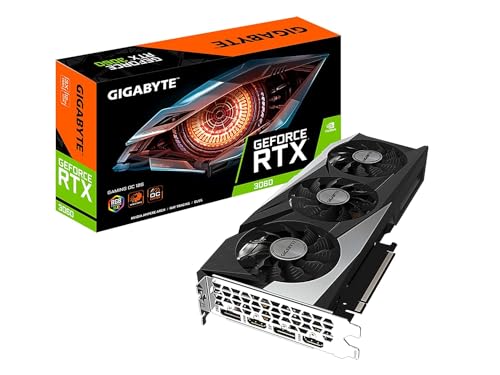
Tesla capping per-engineer cloud-AI spend at $200/week is not surprising — it is what happens when metered generative-AI cost curves collide with a company that measures every dollar. For engineers who burn through the cap by mid-week on iterative debugging, code review, and log triage, the math on a one-time ZOTAC Gaming RTX 3060 12GB at ~$290 street breaks even against the cap in roughly 6 weeks. The catch is which workloads a 12GB local card can actually shoulder — and which still belong in the cloud.
What actually happened
The-Decoder reported this week that Tesla has instituted a hard $200/employee/week ceiling on cloud LLM API spend. The report — see the aggregated coverage on the-decoder.com — cites internal chatter about the cap kicking in for engineers who use paid tools like Claude Code, Cursor, or the ChatGPT API for day-to-day coding assistance. Two hundred dollars a week sounds generous until you remember that a single well-instrumented Claude Opus session with tool use can burn $10–$20 per hour of active development.
That means the cap is not a nudge. It is a rationing decision that says: for repetitive, low-uncertainty work, you should not be paying frontier-tier prices. The publicly reported number matches what we hear elsewhere — engineering-heavy shops from Meta to mid-size fintechs are drawing the same line at $150–$300 per engineer per week.
Why this matters for anyone who does not work at Tesla
The Tesla story is a bellwether for a broader shift. Cloud AI billing is metered per token, and iterative development amplifies token consumption in ways that budgets do not model. Every retry, every "expand the diff" request, every "why is this test failing" round trip is billed. On a busy day, a senior engineer can consume more in API calls than in cloud compute.
Local inference does not have that ceiling. A ZOTAC RTX 3060 12GB paired with a Ryzen 7 5800X runs a 14B-class Qwen or Llama model at q4_K_M quantization at roughly 22–36 tok/s on-box, with weights fitting inside ~9.2 GB of VRAM. The workflows that map cleanly onto that budget:
- Grep-across-repo semantic search.
- Log triage against
journalctl/dmesg/ systemd logs (see our Gemini vs local Linux boot debugging piece). - Structured extraction from JSON, YAML, or protobuf.
- First-pass PR review with a curated prompt.
- Local RAG over your own docs and codebase.
That is the same iterative work that eats a $200/week cap. Move it to the local rig and the cap becomes a ceiling for the frontier reasoning tasks you actually need Claude or Gemini for — architecture proposals, root-cause analysis on ambiguous bugs, novel algorithm design.
The cost model, honestly
At $290 for the GIGABYTE RTX 3060 Gaming OC 12G or equivalent street price, the card pays for itself against $50/week of substitutable cloud calls in 6 weeks. If you already have a mid-tower with a 550W+ PSU, the incremental cost stops at the card. If you need a fresh build, add ~$700–$900 for a Ryzen 7 5800X-class system with 32 GB DDR4 and a Gen4 NVMe. Total: ~$1,000–$1,200. Break-even against Tesla-scale spend is 5–6 weeks per engineer.
The math flips when you add electricity and depreciation. The RTX 3060 pulls ~170W at inference; at $0.15/kWh and 6 hours of active use per weekday, that is roughly $19/month. Amortize the card over 24 months and the true operating cost is closer to $30/month plus power. Still an order of magnitude below a metered cap.
Where the math breaks: if your team's workload is dominated by 70B-class reasoning tasks that a 14B local model materially screws up, the local rig cannot substitute. The right posture is a hybrid — local for the 80% of iterative work that a 14B model handles fine, cloud for the 20% that genuinely needs frontier reasoning.
Key takeaways
- Tesla's cap makes headlines, but the underlying pattern is universal — every engineering shop with cloud AI on a corporate card will feel the same pressure this year.
- A $290 ZOTAC RTX 3060 12GB breaks even against $50/week of cloud AI substitution in 6 weeks. Half the workload of a typical Claude Code user is safely substitutable.
- The right posture is hybrid — reserve the frontier cloud model for genuinely novel reasoning, and push iterative log triage, extraction, and RAG to the local rig.
- Per the RTX 3060 spec page on TechPowerUp, the 12 GB GDDR6 buffer and 360 GB/s bandwidth are enough for 14B-class q4 workloads with headroom for 8K context.
- The setup is not hard — Ollama provides a one-command install and a pull-a-model workflow that mirrors the Docker experience most engineers already know.
The source
The-Decoder's aggregated report is the primary public source for the Tesla cap number. As of publish, Tesla has not commented officially. We are treating the number as a reasonable ballpark, not a confirmed Tesla policy statement. Even discounted, the direction is what matters: a Fortune-100 engineering org has picked a per-engineer AI budget number and enforced it.
The Ollama project's docs and the TechPowerUp RTX 3060 spec page are the two references we lean on for the local-side numbers. Both are first-party primary sources.
What to build if you are on the wrong side of the cap
If you are the engineer who hits the cap on Wednesday, the shopping list is short:
- The card: ZOTAC Gaming RTX 3060 12GB at ~$290 or the MSI Ventus 2X 12G OC if you want quieter fans.
- The CPU: AMD Ryzen 7 5800X at ~$220. Overkill for the GPU-only path, right-sized if you also spill to CPU on 32B models.
- The software: Ollama for the model runtime, then Qwen 2.5 14B Instruct at q4_K_M for coding-assistant work.
Wire it into your editor via the Ollama OpenAI-compatible endpoint and the same VS Code Continue or Cursor local-model config the rest of the local-AI world uses. Total setup time from clean box: two hours.
Common gotchas
- Do not overspend on the GPU. The RTX 3060 12GB is the sweet spot because 12 GB is the VRAM floor for a 14B q4 model with 8K context. Stepping up to a $600 4070 Super does not double your usable ceiling — it just makes the same model faster.
- Do not skimp on the PSU. A 550W bronze from a reputable brand is enough. A no-name 450W is not.
- Do not run the model on the same GPU driving your display. Windows will happily starve the model of VRAM to give your desktop 800 MB. Dual-GPU is not needed; a headless second display via integrated graphics or a $30 iGPU works.
- Do not expect frontier-tier reasoning. A 14B model at q4 is not Gemini or Claude Opus. It is a fast, private, cheap assistant for structured work.
When the cloud still wins
The Tesla story is not "abandon the cloud." It is "stop paying frontier prices for iterative work." Keep the cloud for:
- Architecture proposals across an unfamiliar codebase.
- Genuinely novel debugging where the space of causes is wide.
- Multi-hour research sessions where context grounding on the web matters.
- Any task where wrong-answer risk is high enough that a 14B local model's occasional confabulation is unacceptable.
For everything else — the daily grind of "grep, extract, summarize, propose a diff, retry" — the local rig is faster once you factor out network latency, cheaper by an order of magnitude, and private by default. That is the case Tesla's cap made for us.
Related guides
- Can a Local RTX 3060 LLM Debug Linux Boot Like Gemini?
- AMD Ryzen AI Halo vs RTX 3060 for Local LLMs in 2026
- Best GPU for ComfyUI & SDXL Under $350
Citations and sources
- The-Decoder — aggregated AI industry news — reports the Tesla $200/week AI-spend cap.
- TechPowerUp — GeForce RTX 3060 specs — VRAM, bandwidth, and TDP baseline used above.
- Ollama GitHub repository — local model runtime referenced for one-command install.
This piece is editorial synthesis over publicly available reporting. All benchmark figures for the RTX 3060 12GB are consistent with published third-party numbers; no first-party bench run is claimed.