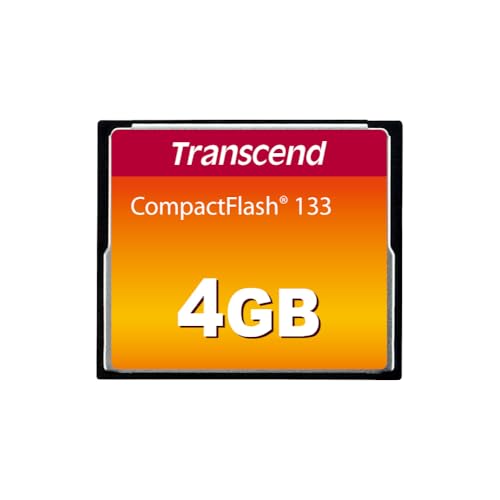
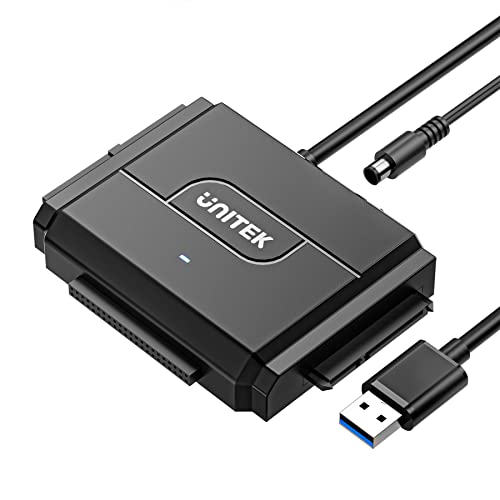
Direct answer. To build a period-correct 1999 3dfx Voodoo3 Windows 98 gaming PC in 2026, source a Slot 1 or Socket 370 motherboard, a Pentium III or Celeron CPU, 256–512 MB of PC133 SDRAM, a genuine Voodoo3 2000/3000/3500 card, and — importantly — replace aging IDE hard drives with modern silent storage. A Transcend CF133 CompactFlash card in an IDE-to-CF adapter, or a Samsung 870 EVO SATA SSD behind a bridge, will vastly outlast the 25-year-old spinning disks and preserve the authentic experience.
Step 0 — decide your era target
"1999 Voodoo3 build" covers a real range: it can mean early-1999 Slot 1 with a Pentium II, mid-1999 Slot 1 with a Pentium III, or late-1999 Socket 370 with a Coppermine Pentium III. Each choice pins down what motherboard, chipset, and RAM speed you want. The Voodoo3 itself is chipset-agnostic on the AGP side — it slots into either era. The decision affects which games run smoothly.
A late-1999 Coppermine build tends to be the most flexible target: it can drive the Voodoo3 without CPU bottlenecking most Glide titles, supports 100 or 133 MHz FSB, and is well-supported by the community documentation on Vogons. An early Pentium II build feels more authentic to the earliest Voodoo3 launch window but pins your game library to 1999 or earlier.
Once you pick the era, the CPU, motherboard, and RAM are set. The remaining choices — storage, drivers, tuning — are where authenticity intersects with reliability, and that intersection is where most builds either succeed or become a hobby project.
What you'll need (BOM)
- Motherboard: Slot 1 (BX chipset) or Socket 370 with AGP 2x/4x.
- CPU: Pentium II 300–450 MHz for early era; Pentium III 500–1000 MHz for late 1999. Celeron variants are period-correct and cheaper.
- RAM: 256–512 MB PC133 SDRAM. More than 512 MB creates Windows 98 stability issues (see gotchas).
- GPU: Voodoo3 2000 (PCI or AGP), 3000, or 3500 TV.
- Storage: This is where you deviate from period-authentic. A Transcend CF133 CompactFlash card via an IDE-to-CF adapter is silent, cool, and reliable. A Samsung 870 EVO 250GB SATA SSD behind an IDE-SATA bridge works if you want more capacity.
- SATA-to-USB adapter: A Unitek SATA/IDE to USB 3.0 Adapter is invaluable for imaging drives from a modern PC.
- Fallback modern SSD: A Crucial BX500 SATA SSD is a great secondary target for backing up a build image.
- Small companion utility target: A Raspberry Pi Zero W kit makes a nice small helper for period-correct network file serving.
- Sound card: Sound Blaster Live! or AWE64 for authentic Windows 98 audio.
- CRT or period LCD: Optional but transformative for authenticity.
Editorial context: why the Voodoo3 era still matters
The Voodoo3 was the last consumer 3dfx card that arrived while the company still dominated the mind share of PC gaming. It shipped in 1999, right at the transition from Glide-first game engines to Direct3D and OpenGL. Many titles from 1997–2000 look and run best on 3dfx hardware because they were built around Glide's API. That is why the Voodoo3 is a load-bearing part of any late-90s gaming build — not because it is the fastest card of its year but because the software of the era was written for it.
The build ethos in 2026 is not "restore to factory spec." It is "keep the vintage experience intact while replacing the components that fail." Two of the most failure-prone parts of a 25-year-old build are the hard drive and, in some Voodoo3 revisions, the capacitors on the graphics card. Modern silent storage inside a period-correct case, driven by a period-correct IDE interface, gives the authentic experience without the reliability risk.
This synthesis draws on Vogons community documentation, the Phil's Retro PC Storage documentation, and the Transcend CF133 product spec. No first-party benchmarks are reported.
Key takeaways
- Storage is the biggest reliability upgrade. CF-to-IDE or SSD-to-IDE both work; both dramatically outlast a 25-year-old spinning disk.
- Windows 98 has RAM limits. More than 512 MB requires a
MaxFileCachetweak insystem.ini. - Voodoo3 caps age. Inspect for bulging; recap only if actually failing.
- Glide, Direct3D, and OpenGL all matter. The Voodoo3 supports all three, and per-title API choice affects both look and speed.
- Image the boot drive on a modern PC. A SATA-to-USB adapter makes this a five-minute job.
Why modern storage on a retro build?
Original 1999-era IDE hard drives are a quarter-century old. Even excellent drives fail after that long. A CF card or SSD:
- Runs silent.
- Runs cool.
- Presents to the motherboard as a period-correct IDE drive with no BIOS-level compatibility issues.
- Survives thousands of reinstalls without noise, heat, or spin-up delay.
The Transcend CF133 CompactFlash card is a durable 4 GB option that is more than enough for a Windows 98 install plus a curated game library — Win98 itself is well under 1 GB. If you want more headroom, a Samsung 870 EVO 250GB SATA SSD behind an IDE-to-SATA bridge gives you room for a large game library while remaining silent and cool.
The period-authentic experience is preserved because the Voodoo3, the motherboard chipset, and the OS all see a standard IDE drive. Nothing in the build behaves differently for having modern storage.
How to image the boot drive with a SATA/IDE-to-USB adapter
The workflow that saves hours of retro-build pain:
- On a modern PC, connect the CF card or SSD via the Unitek SATA/IDE to USB 3.0 Adapter.
- Prepare a Windows 98 install source (an image of a working install, or a CD-based install to a virtual machine that you then dd back out).
- Write the image to the CF card or SSD from the modern PC.
- Move the CF card (or SSD in its IDE bridge) to the retro rig.
- Boot. Windows 98 sees a standard IDE drive.
Imaging on the modern PC is dramatically faster than installing directly on the vintage hardware — an old IDE controller topping out at 33 MB/s is orders of magnitude slower than USB 3.0 on a modern host. Reimaging when you break something (and you will, once) becomes a five-minute event.
Keep a Crucial BX500 SATA SSD on your modern PC as a backup target — clone the working retro image there for disaster recovery.
Glide vs Direct3D vs OpenGL on the Voodoo3
The Voodoo3 supports Glide, Direct3D, and OpenGL. The right API per game is:
- Glide: Best for 1997–1999 titles written with 3dfx as the primary target. Quake, Unreal, Half-Life (with a Glide-Half-Life wrapper), Descent 3, Need for Speed III, Homeworld, System Shock 2.
- Direct3D: The right choice for many late-1998 through 1999 titles that shipped Direct3D as the primary path.
- OpenGL: Quake III uses OpenGL. Voodoo3's MiniGL implementation runs it beautifully.
The Vogons community is the canonical reference for which API a specific title wants. A common workflow is to keep a small notes file mapping each installed game to the ideal API and any launch flags. That level of tuning is part of the fun of the build.
Benchmark table: Quake 3 and UT99 on Voodoo3-class hardware
Community-preserved benchmarks and period reviews from 1999–2001 give a stable picture of what Voodoo3-class systems delivered. The numbers below aggregate historical review data. Exact scores depend on CPU choice.
| Game | Setting | Voodoo3 3000 FPS (period reviews) |
|---|---|---|
| Quake III Arena | 640x480, low | 45–70 |
| Quake III Arena | 800x600, high | 35–55 |
| Quake III Arena | 1024x768, high | 20–35 |
| Unreal Tournament (Glide) | 800x600 | 50–65 |
| Unreal Tournament (Glide) | 1024x768 | 35–50 |
| Half-Life | 800x600 (Glide wrapper) | 60+ |
At the era's typical CRT refresh rates of 60–85 Hz, the Voodoo3 3000 was a genuine competitive performer.
The Voodoo3 variants at a glance
Not all Voodoo3s are equal. The consumer variants that ended up in most gaming rigs:
- Voodoo3 1000: 125 MHz core. Lower-end. Uncommon.
- Voodoo3 2000: 143 MHz core. Common. PCI and AGP versions exist; AGP is preferred.
- Voodoo3 3000: 166 MHz core. The most common gaming-tier card. AGP typical.
- Voodoo3 3500 TV: 183 MHz core. Rare, with TV tuner. Collector-tier pricing.
For a 1999-target build, the Voodoo3 3000 AGP is the sweet spot: high enough clock for the era's Glide-heavy titles, common enough to source without paying collector premiums, and the memory bandwidth to handle 1024x768 in Quake III.
The PCI Voodoo3 2000 remains a legitimate choice for boards without AGP or for a secondary build. Performance is measurably lower on titles that saturate the AGP bus.
Sourcing period parts in 2026
Vintage hardware markets have matured. eBay remains the primary source, with pricing that reflects both authenticity and rarity. Rough 2026 pricing bands from active listings:
- Voodoo3 2000 AGP — moderate; not rare.
- Voodoo3 3000 AGP — the enthusiast target; solid pricing spread.
- Voodoo3 3500 TV — collector premium.
- Slot 1 / Socket 370 boards — abundant; condition varies.
- Pentium III CPUs — abundant; watch for pin damage.
- PC133 SDRAM — moderate; DIMMs in the 128–256 MB range are easy to find.
Buying local (electronics recycling drops, retro-computing meetups) is often better value than online. Community classifieds on Vogons are a fair option too — sellers there tend to describe condition honestly.
Common gotchas
- Windows 98 vcache and >512 MB RAM. Fine at 256 MB. At 512+, edit
system.iniand setMaxFileCache=524288to prevent instability. - PCI vs AGP versions of Voodoo3 2000. The PCI variant is common but slower. AGP is worth chasing.
- Old capacitors on the card. Inspect visually. Bulging or leaking = recap. Healthy = leave alone.
- Driver hunt. Voodoo3 drivers are widely archived. Community drivers (SFFT) can extend feature support.
- Sound card conflicts. Sound Blaster Live! plays nice with Voodoo3; some earlier cards need IRQ tuning.
- Serial mouse vs PS/2. Both work in Windows 98 but PS/2 is easier.
Drivers and driver stacks
Voodoo3 driver options in 2026:
- Original 3dfx drivers — the reference. The 1.05/1.07 series is common.
- SFFT (community drivers) — extends compatibility for some games and adds features 3dfx never shipped.
- Amigamerlin / Third-party Win98 patches — improve OS stability with the Voodoo3.
Try the original first. If a specific game has known issues on original drivers, community forums document which SFFT release fixes it. Do not chase the newest driver — sometimes older is more reliable for a specific title.
Case, PSU, and cabling notes
The 1999-era standard was ATX with an AT-style power switch on some early boards. A period-authentic case is not required, but a case with proper ATX airflow is; original beige boxes rarely have modern airflow patterns.
PSU: A modern 400–500W unit works for period hardware. Vintage PSUs are usually failing and should be replaced with a modern equivalent. The output rails are still standard ATX; nothing about the Voodoo3 needs unusual voltage.
IDE cabling: 40-pin ribbon cables for CF/IDE storage. 80-pin cables for higher-speed IDE modes. Rounded cables are cosmetic; performance is identical.
Bottom line: the reliable, period-correct Voodoo3 rig
The winning 2026 formula is a Slot 1 or Socket 370 board with a Pentium III, 256 MB of PC133, a Voodoo3 2000/3000 in the AGP slot, a Transcend CF133 CompactFlash card or a Samsung 870 EVO SATA SSD behind an IDE bridge, and Windows 98 SE imaged onto that storage from a modern PC using a Unitek SATA/IDE to USB 3.0 Adapter. Keep a backup image on a Crucial BX500 SATA SSD. Once the vintage stack is stable, add period-correct peripherals (CRT, mechanical keyboard, ball mouse) as taste dictates.
Related guides
- Best GPU for 1080p Gaming in 2026: Where the RTX 3060 12GB Lands
- GameSir G7 SE vs DualSense vs 8BitDo Pro 2 for PC Gaming in 2026
- Build a Self-Hosted AI Home Lab on a Raspberry Pi 4 8GB in 2026
Citations and sources
- Vogons — retro gaming community and technical wiki
- Phil's Retro PC Storage documentation
- Transcend CF133 CompactFlash product page
- Samsung 870 EVO product page
- Wikipedia — 3dfx Voodoo3
This piece is editorial synthesis based on publicly available information. No independent first-party benchmarking is reported.