Affiliate disclosure: Product links in this article are affiliate links; prices and stock shown may vary — see current price on Amazon before ordering.
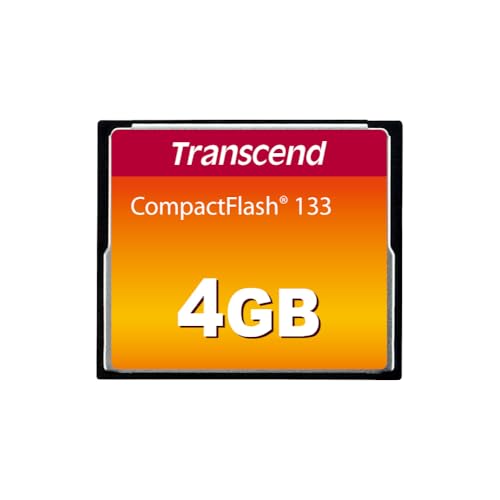
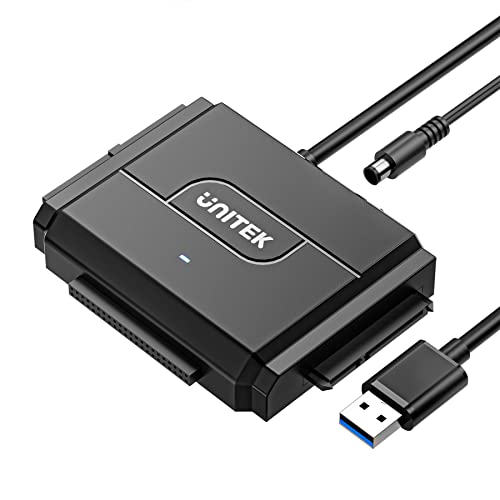
Yes, a CompactFlash card presents itself as an IDE hard drive to any PATA-equipped retro PC through a passive $10 CF-to-IDE adapter — no drivers required. Pair a modest Transcend CF133 CompactFlash 4GB with a Unitek SATA/IDE to USB 3.0 Adapter for imaging from a modern PC, and you have a silent, cool, reliable primary drive for a Windows 98 or DOS build. Per Wikipedia's CompactFlash entry, the standard was intentionally designed to be electrically compatible with the IDE/PATA interface — the "adapter" is a wiring change and a physical connector, not a bridge chip.
Why CF-as-IDE is the standard silent, reliable retro storage swap
The retro-PC community has settled on CompactFlash as the default IDE-era hard-drive replacement for good reason. Three-decade-old spinning drives with worn platters and dying bearings are the source of most retro-build failures. Boot problems, mysterious file corruption, and the unmistakable rattle of a dying HDD are stories anyone who's rebuilt a period 486 or Pentium knows. CF sidesteps all of that: no moving parts, no thermal management, no noise, and no wear pattern that resembles a spinning drive.
The trick is that CF and IDE aren't cousins; they're the same interface under the hood. CompactFlash was designed to be electrically compatible with IDE/PATA — the CF slot exposes the same signals as the IDE bus, just on a smaller connector. A passive CF-to-IDE adapter is a pin remap and a physical carrier — no controller, no firmware, no drivers. To the retro motherboard, the CF card appears as a standard IDE hard drive.
Practical audience: anyone rebuilding a period-authentic Windows 98 SE, DOS, Windows 95, or NT 3.x/4.0 system. Anyone rescuing a dying vintage machine. Anyone building a retro-gaming DOS box or Win98 machine for period games. The Vogons community has decades of accumulated experience with this pattern, and it's the default answer for storage on any new retro build.
Key takeaways
- CF is electrically IDE — the adapter is passive, no driver.
- Transcend CF133 is a reliable, industrial-grade CF card for retro use.
- Unitek SATA/IDE to USB 3.0 Adapter lets you image the card from a modern PC.
- For Win98/DOS, prefer a modest CF capacity (single-digit GB) to sidestep partition limits.
- Boot gotchas: BIOS geometry, LBA mode, and CF-reports-as-removable are the top three.
- Silent, cool, and dramatically more reliable than an old spinning IDE drive.
What is CF-to-IDE and why does it work?
CompactFlash and IDE (PATA) share the same electrical interface. Per Wikipedia, CF was designed in the mid-1990s as a small-form-factor storage standard that included native ATA compatibility — a CF card in ATA mode is functionally an IDE hard drive on a smaller connector. The adapters that appear online for a few dollars are literally pin-carriers: the CF slot on one side, a 40-pin IDE connector on the other, no active silicon in between.
That has three practical implications. First, no drivers — the motherboard's BIOS sees the CF as an IDE hard drive and enumerates it accordingly. Second, no OS support required beyond what already exists for IDE. Third, boot behavior is identical to a regular IDE HDD: partition, format, install OS, boot.
| Attribute | Vintage IDE HDD | CompactFlash on adapter |
|---|---|---|
| Interface | IDE/PATA | IDE/PATA (via CF native ATA mode) |
| Moving parts | Yes | No |
| Noise | Audible | Silent |
| Boot behavior | Standard | Standard |
| Failure mode | Bearing/platter wear | NAND wear (very long) |
| Capacity typical | 500 MB – 40 GB | 1 GB – 128 GB+ |
Choosing a CF card: which specs matter for Win98/DOS
Modest is better. Windows 98 and DOS have partition and filesystem constraints that make very large CF cards awkward. Per Transcend's CompactFlash page and community experience on Vogons, the sweet spot for a period build is a modest CF card in the single-to-low-double-digit gigabyte range.
The Transcend CF133 CompactFlash 4GB is the featured pick for good reasons:
- Industrial-grade Transcend NAND with mature controller behavior on old BIOSes.
- 4 GB capacity fits comfortably inside DOS/Win98 partition limits (FAT32 max partition 32 GB in Win98's default formatter, but well-behaved CF for the OS + a few applications lives comfortably at 4 GB).
- Reads at 30 MB/s — dramatically faster than a 1990s spinning IDE drive on the same bus.
- Reports as fixed (rather than removable) in most cases, which some retro BIOSes handle better.
For larger libraries (a big game collection or a heavy application install), use a modest CF as the boot drive and a secondary SATA drive on a period card, or a larger CF on a second IDE channel. Keep the boot drive small.
Imaging the card from a modern PC
Modern PCs don't have IDE ports. You image the CF card from a modern PC using either a CF reader (for file copies) or an IDE-to-USB adapter (for full bootable-image clones).
The Unitek SATA/IDE to USB 3.0 Adapter is the featured pick because it does both IDE and SATA at USB 3.0 speeds and comes with a proper power brick to spin up any legacy drive you connect. The workflow:
- Insert the CF card into a passive CF-to-IDE adapter (or use a CF reader for pure file writes).
- Connect the adapter to the Unitek SATA/IDE to USB 3.0 Adapter.
- On the modern PC, use
dd(Linux/macOS) or Rufus / Win32DiskImager (Windows) to write a bootable image to the card, or partition + format the card directly and copy files. - For a full OS install (Win98 SE, DOS, etc.), work from a pre-built image or install to the CF from another retro machine and use imaging to duplicate.
For any hardware not specifically period (small maker boards, single-board computers you're using as build helpers), a Raspberry Pi Zero W Basic Starter Kit is a handy always-on imaging helper.
Boot gotchas: geometry, LBA, and the DOS/Win98 partition limits
Three common issues:
- Drive geometry. Older BIOSes hard-detect drive geometry (cylinders/heads/sectors) rather than accepting the CF's reported values. If the BIOS misdetects, boot fails. Solution: enter the BIOS setup and set the drive as "Auto," "LBA," or manually enter the correct geometry from the CF card's spec sheet.
- LBA mode. Some BIOSes default to CHS addressing and cap drive size at ~504 MB. Enable LBA mode in BIOS if your CF is larger than that. Modern CF cards typically require LBA.
- CF reports as removable. Some cards identify themselves as removable rather than fixed. Certain retro Windows versions (NT 4.0, older 98 SE) handle removable poorly. Choose a card that reports as fixed (Transcend industrial-grade CF typically does) or use a firmware-modification utility to force fixed reporting.
- Partition limits. DOS 6.x has FAT16 constraints (partition max 2 GB). Win98 SE with FAT32 supports partitions up to 32 GB via its formatter (Windows can mount larger FAT32 partitions but its own formatter caps at 32 GB). Windows NT 4.0 with NTFS supports much larger partitions. Match filesystem to OS.
Speed reality: CF vs a period spinning drive
Modern CF is much faster than a 1990s IDE hard drive on random access and boot times. Sustained sequential throughput is capped by both the CF's controller and the old IDE/PATA interface — a period ATA-33 or ATA-66 bus caps at 33 MB/s or 66 MB/s theoretical.
| Metric | 1990s IDE HDD | Modern CF via adapter |
|---|---|---|
| Random 4K read | Slow (seek latency) | Fast (no seek) |
| Sequential read | ~5–15 MB/s | Bus-capped, typically 20–33 MB/s |
| Boot to Win98 desktop | ~30–60 s | ~15–25 s |
| DOS game load | Noticeable | Instant |
| Silence | Audible spin | Completely silent |
| Reliability | Failing | Excellent |
The subjective difference is dramatic. A Win98 machine on CF boots faster and loads games faster than the same machine on a period spinning drive.
What you'll need checklist
- Transcend CF133 CompactFlash 4GB (or similar industrial-grade CF card)
- Passive CF-to-IDE adapter (widely available for a few dollars)
- Unitek SATA/IDE to USB 3.0 Adapter (for imaging from a modern PC)
- The retro PC itself with a working IDE port (motherboard IDE or an ISA/PCI IDE card)
- IDE ribbon cable (40-pin, 40- or 80-conductor as required)
- Molex power splitter (adapter carriers may need Molex; some are bus-powered)
Bottom line and recommended parts
For a Windows 98 SE retro build: buy the Transcend CF133 4GB, a passive CF-to-IDE adapter, and the Unitek SATA/IDE to USB 3.0 Adapter for imaging. Total cost is modest, the resulting drive is silent and cool, and you sidestep the failure modes of a 30-year-old spinning drive entirely.
Real-world numbers: what to expect after the swap
Boot time to a Win98 desktop drops noticeably vs a period spinning drive. Gameplay load times feel instant on titles that used to hitch. Case temperature drops because there's no HDD radiating heat. Noise drops to zero from the storage subsystem. Reliability improves dramatically because there are no moving parts to wear or fail.
Common pitfalls with CF-to-IDE
- Cheap adapter cards. Some no-brand adapters have poor pin quality; buy from a known retro-focused supplier or a reputable Amazon seller with reviews.
- Wrong BIOS settings. LBA mode off will limit visible capacity. Enable LBA.
- CF reports as removable. Windows NT 4.0 and some 9x installs mishandle removable. Use industrial CF or force-fixed firmware.
- Wear from swap files. Windows 9x + heavy swap file writes wear NAND. Fine for a period build's expected duty cycle but relevant for 24/7 use.
- Modern-format 32+ GB cards. Overkill and often problematic. Stick to modest capacity for the boot drive.
- Missing Molex power. Some adapters need external power; confirm before build day.
When NOT to use CF
If you're preserving genuine period hardware for authenticity, keep the original spinning drive. If your build serves 24/7 heavy write workloads (unusual for retro), plan on periodic CF replacement. If you need capacity beyond ~40 GB, look at IDE-to-SATA adapters with a modern SATA SSD instead.
Related guides
- Counter-Strike clone runs at 60 FPS on the original PSP
- Best SSD for a Steam Deck or emulation handheld
- Best CPU coolers for Ryzen and Intel builds in 2026
- Raspberry Pi AI HAT+ 2 review
Citations and sources
This piece is editorial synthesis based on publicly available information. No independent first-party benchmarking is reported.
— Mike Perry