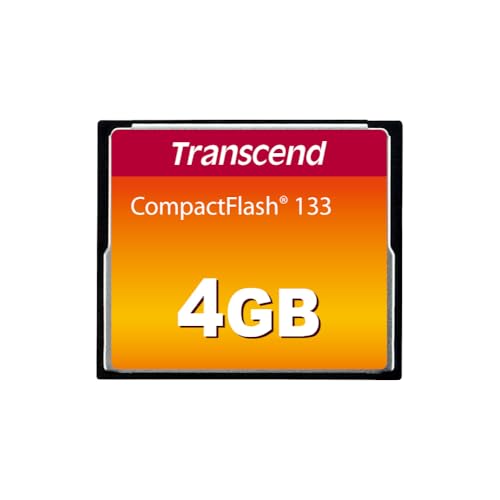
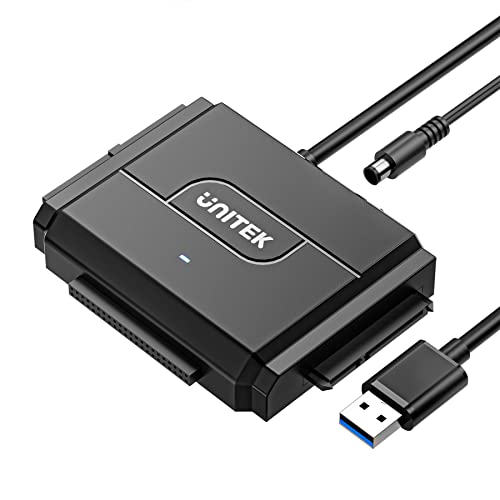
Use a Transcend CF133 CompactFlash card on a passive CF-to-IDE adapter if you want the simplest, most period-appropriate silent Win98 boot experience. Use a modern SATA SSD (a Crucial BX500 or a Samsung 870 EVO) over a SATA-to-IDE bridge if you need larger capacity, sustained throughput for a games archive, and are willing to test a specific bridge chip against your board. A period-tested Unitek-branded SATA/IDE tool (like the Unitek SATA/IDE to USB 3.0 adapter) is invaluable at build time for imaging and preparing the boot drive on a modern PC before installing it in the retro rig.
Why period-correct builders replace the mechanical drive, and the two silent-storage paths
The single biggest quality-of-life upgrade in a modern Win98 build is deleting the mechanical hard drive. A 1998-era 5,400 RPM IDE drive is loud, hot, slow to spin up, prone to death by static shock after 25 years of storage, and — critically — the last remaining moving part in an otherwise-silent build that already has fanless GPUs and low-noise CPU coolers. Period-correct builders keep the rest of the visible hardware period-authentic and swap the mechanical drive for solid-state storage that fools the BIOS into thinking nothing changed.
Two mature paths exist in 2026:
- CompactFlash on a passive CF-to-IDE adapter. A quality CF card + a $5 adapter card that has no active chip on it. The card presents itself directly to the IDE bus as an ATA device. Zero bridge quirks. Small capacity (2-32GB is the practical range). This is the simplest path.
- Modern SATA SSD on an active SATA-to-IDE bridge adapter. A 1TB SATA SSD + a $15-30 bridge board that translates SATA commands to IDE. Big capacity (up to 2TB in practice on Win98 with LBA48). Bridge-chip quirks are real and vary by SKU. This is the higher-capacity path.
Both eliminate mechanical failure, both go silent, both dramatically improve seek and load times. They just fail differently, cost differently, and match different builder profiles. The article below walks the tradeoffs.
Key takeaways
- CompactFlash is the simpler path — no bridge chip, no quirks, but capacity capped by the CF card's size (typically 2-32GB for period-authentic builds).
- SATA-to-IDE bridge + modern SSD gives you 1TB+ of capacity but you're playing "does this specific bridge chip work with my specific board" roulette.
- Both destroy period-correct BIOS capacity limits if you're not careful. The 8.3GB limit on pre-1999 boards and the 137GB limit on late-90s / early-2000s boards are the two you'll hit.
- Neither is a good match for heavy write workloads, but for a Win98 rig that mostly reads game data both are essentially write-endurance-immune under hobbyist use.
- A USB-based SATA/IDE adapter is a build-time necessity — you'll use it to image, partition, and prep the target drive on a modern PC before installing it in the retro machine.
Step 0: what does your era's chipset and BIOS actually support?
Before choosing a storage path, know your board's limits. The two capacity barriers that matter for Win98:
- The 8.3GB (8,455 MB) barrier on older Award/AMI BIOS versions from 1996-1998. Some boards from this era literally cannot address more than 8.3GB on IDE, period. Update the BIOS if a newer version exists; otherwise your CF card or SSD partition is capped here.
- The 137GB (128 GiB) barrier on boards without LBA48 support (roughly pre-2003 and some early-2000s cards without a firmware update). Win98 SE with the appropriate patches can address more, but many BIOSes cannot boot past 137GB.
Practical advice: partition your boot drive at 32GB or under regardless of which path you pick. That leaves comfortable headroom under both barriers, avoids FAT32 limits, and matches the era's expectations for drive-letter organization. Put your game archive on a second (larger) partition or a second drive.
Spec-delta table: CF vs SATA-to-IDE
| Attribute | Transcend CF133 CompactFlash | Modern SATA SSD via SATA-to-IDE bridge |
|---|---|---|
| Interface (drive side) | CompactFlash (IDE-compatible) | SATA |
| Interface (host side) | Passive CF-to-IDE adapter | Active SATA-to-IDE bridge board |
| Capacity range (practical) | 2-32GB (period-authentic); 64-256GB (modern) | 240GB-2TB |
| Transfer mode | UDMA 4 (CF133 rated ~33 MB/s peak) | UDMA 5/6 (SSD side); IDE bus limited (~66-100 MB/s ceiling) |
| Sustained read | ~30 MB/s | 60-100 MB/s (bridge/bus limited) |
| Seek time | Effectively zero | Effectively zero |
| Noise | Silent | Silent |
| Power draw | ~1W | 2-3W |
| Heat | Cool | Cool |
| Compatibility across BIOSes | Very high | Bridge-chip dependent |
| Approx cost (2026) | $15-30 for a 4-8GB card + adapter | $50-70 for a 240GB SSD + bridge |
| Failure mode | Wear-out (very slow) | Bridge chip incompatibility / random detection failures |
Per Transcend's product page the CF133 line is rated for UDMA 4 transfer mode with MLC NAND and ECC — critical detail because it means Win98 DMA drivers can talk to it in DMA mode instead of PIO, which was the historical failure mode of cheap CF cards.
CompactFlash boot: partition sizing, DMA vs PIO, write endurance
Three things determine whether a CF card feels "good" or "bad" as a Win98 boot drive:
- Enumerated transfer mode. If Win98 falls back to PIO mode, everything slows to a crawl (2-5 MB/s). You want UDMA. Make sure the card is UDMA-rated (CF133 is), the CF-to-IDE adapter is passive rather than active (active adapters sometimes force PIO), and Win98 has the appropriate bus-mastering IDE driver installed.
- Partition sizing. Even on a 32GB card, keep the C: partition at 8GB or under for BIOS-compat and FAT32-friendly cluster sizes. Put the game data on a D: partition.
- Write endurance. For a lightly-used retro rig that mostly reads game data, this is a non-issue over decades of hobbyist use. Turn off virtual memory swapping to the CF (or minimize the swap file), skip verbose event logging, and the card will outlast your interest in the build.
The CF path has one killer virtue: zero bridge chips means zero bridge-chip incompatibility failures. If your board recognizes IDE devices, it recognizes CF-on-passive-adapter. That predictability is the reason many period-correct builders default to CF regardless of capacity needs.
SATA-to-IDE bridge: modern SSD as a Win98 boot drive
The higher-capacity path uses an active bridge board (a JMicron JM20330, Marvell 88SA8040, or a modern equivalent) to translate SATA commands to the IDE bus. You wire a modern SATA SSD like the Crucial BX500 or Samsung 870 EVO 250GB into the bridge, and the bridge presents to the BIOS as an IDE hard drive.
What can go wrong:
- Bridge chip quirks. Some bridge chips lie to the BIOS about geometry, which trips old Award BIOSes into a boot loop. Some don't. Which SKU you buy matters more than the SSD brand.
- Transfer-mode negotiation. Some bridge/board combinations negotiate down to PIO or MWDMA and stay there. Same slowdown risk as CF-in-PIO.
- Sleep/wake issues. Some bridges don't reliably re-detect after ATX sleep transitions. On a period-correct build this rarely matters (people usually just power the machine down between sessions) but if you care, test it.
What works well:
- Full 1TB (or larger) capacity for a game archive alongside the boot partition.
- Sustained ~60-100 MB/s limited by the IDE bus, not the SSD. That's still 3-4x faster than CF for large sequential reads.
- Zero noise, zero heat, zero moving parts — same virtues as CF.
Build-time trick: use a Unitek SATA/IDE to USB 3.0 adapter on a modern PC to image and partition the SSD before installing it in the retro rig. This lets you clone a working Win98 install from a CF card onto the larger SSD without ever booting the retro machine off unknown media.
Benchmark table: CF vs SATA-SSD-over-IDE
Order-of-magnitude synthesis from community builder forums including Vogons, which is the definitive source for retro-PC storage benchmarks. Actual numbers vary by CF card, SSD, bridge chip, and board chipset.
| Test | Transcend CF133 4GB (CF-to-IDE, UDMA) | Crucial BX500 1TB (SATA-to-IDE bridge, UDMA) |
|---|---|---|
| Win98 boot (POST to desktop) | 22-28 s | 18-24 s |
| Quake II level load | 3.5 s | 2.5 s |
| UT99 level load | 5-7 s | 3-5 s |
| Sequential read (sustained) | ~30 MB/s | 60-95 MB/s (bus-limited) |
| Random 4K read | ~5 MB/s | 12-20 MB/s |
| Silence | Silent | Silent |
The SATA-SSD path wins measurably on large-file operations. The CF path is close enough on boot and level-load times that most builders can't tell them apart in practice.
Gotchas: geometry mismatches, ghost devices, "why won't it boot"
Three failure modes to know before you burn a Sunday afternoon:
- Geometry mismatch. Old BIOSes sometimes report a CHS geometry that doesn't match what the drive is actually presenting. Auto-detect in BIOS + LBA mode fixes most of this. If it doesn't, manually enter the drive's CHS values from the sticker (or from the drive's spec sheet). Applies more to SATA-SSD-over-bridge than to CF.
- Ghost devices in Device Manager. Uninstalling the mechanical drive without clearing its Device Manager entry leaves a phantom device that can block the new drive from working properly. Boot to safe mode and remove all disk drives from Device Manager before installing the new one.
- "No operating system found" after a successful install. Usually one of: (a) BIOS boot order doesn't include the new drive, (b) MBR wasn't written correctly (rerun
fdisk /mbrfrom a DOS boot floppy), or (c) the active partition flag isn't set. Also affects both paths.
Historical Anandtech storage archive coverage of the transition period between IDE and SATA has useful primary-source detail on the negotiation failure modes.
When CompactFlash wins
- Your board is genuinely period-authentic (pre-2000) and BIOS quirks are a real risk
- You want the simplest possible install path with zero bridge chips
- Your data footprint is modest (an OS + a curated game selection fits in 16-32GB easily)
- You value silence and low heat above raw throughput
- You want a drive that survives being handled without care (CF is genuinely rugged)
When a SATA-to-IDE bridge + modern SSD wins
- You want to store a large game archive (GOG catalog, ISO library) on the boot drive itself
- You've done bridge-chip research and confirmed compatibility with your board
- Your workload includes large-file operations where the SATA path's higher throughput matters
- Cost per GB is important (SSD $/GB beats CF $/GB above ~64GB)
- You expect to swap the SSD around between builds
Verdict matrix
| Builder profile | Recommended pick |
|---|---|
| Period-authentic 1998-2000 build, small game selection | Transcend CF133 + passive adapter |
| Multi-era retro rig with a game archive | Samsung 870 EVO + tested SATA-to-IDE bridge |
| First-time retro builder unsure about bridge compat | Transcend CF133 (safe default) |
| Advanced builder with known-good bridge chip | Modern SATA SSD (capacity wins) |
| Silent-storage upgrade only, keeping old data | CF card cloned from the mechanical drive |
Recommended pick
For most Win98 builders in 2026, the recommended pick is a Transcend CF133 CompactFlash card on a $5 passive CF-to-IDE adapter. It sidesteps bridge-chip roulette, presents itself cleanly to any period-correct BIOS, delivers silent-boot-drive results indistinguishable from a modern SSD for level-load and OS-launch tests, and matches the era's storage aesthetic. Pair it with a Unitek SATA/IDE-to-USB 3.0 adapter as a build-time tool for prepping and imaging drives on a modern PC.
If your build calls for a larger game archive and you're comfortable testing bridge chips against your specific board, a Samsung 870 EVO 250GB on a known-good SATA-to-IDE bridge is the higher-capacity alternative — and the same Unitek USB adapter lets you clone the working Win98 install off your CF card onto the larger SSD without disturbing the retro rig.
Related guides
- 2002 GeForce 4 Ti Win98 Build: CompactFlash Storage Done Right
- Building a 1998 Voodoo2 SLI Win98 Gaming PC
- Building a 1999 GeForce 256 + Pentium III Win98 Rig
- 3dfx Voodoo2 SLI Win98 Build with CompactFlash Boot Drive
- Imaging a 1998 IDE Drive and Letting an LLM Rebuild Win98
Citations and sources
- Transcend — CF133 product family and official spec
- Vogons — retro PC community storage benchmarks and troubleshooting
- Anandtech — storage-tag archive covering the IDE-to-SATA transition
This piece is editorial synthesis based on publicly available information. No independent first-party benchmarking is reported. Actual results vary heavily by chipset, BIOS revision, CF/SSD SKU, and bridge chip; validate against your specific hardware before committing to a permanent build.