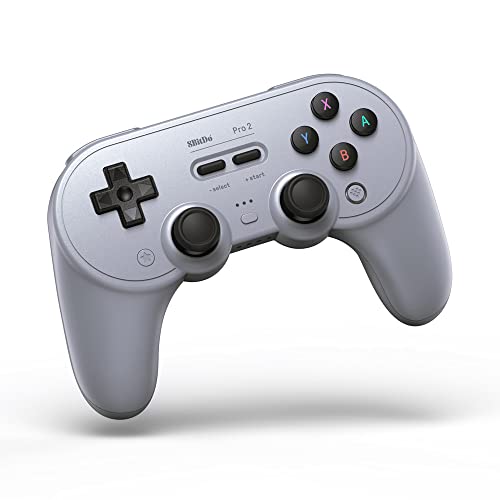
Direct answer. For PC gaming in 2026, the GameSir G7 SE is the best pick if latency and drift-free sticks matter most (wired, Hall-effect, budget-friendly). The PlayStation DualSense is best if you want premium haptics, adaptive triggers, and broad title support. The 8BitDo Pro 2 is best if you play both modern and retro or emulator-heavy libraries and want deep remapping software. Per RTINGS controller reviews, all three sit in the top tier for their respective use cases.
Step 0 — decide your priority before you pick
Controller purchases fail when buyers over-optimize on one dimension. If you buy for premium features and end up playing esports, the wireless-first ergonomics work against you. If you buy for latency and never play twitch shooters, you paid for a wire you did not need. Get one of these three right:
- Latency (esports, fighting games, twitch shooters) → wired, low input polling variance.
- Features (immersion, single-player AAA, PS5-parallel play) → adaptive triggers, haptics.
- Versatility (retro, indie, emulation, multiple form factors) → deep remap software, mixed connectivity.
That is the honest decision tree. Everything below is detail against that tree.
Editorial context: the three archetypes
The 2026 PC controller landscape has consolidated into three archetypes rather than one dominant design. Each is best-in-class for a specific target audience, and none is a universal winner.
- Wired esports / value competitive — represented cleanly by the GameSir G7 SE. Hall-effect sticks eliminate drift. Wired connection minimizes latency. Modular faceplate. Priced well under premium wireless options.
- Feature-rich flagship — represented by the Sony DualSense. Adaptive triggers, high-fidelity haptics, broad software support. The reference AAA pad.
- Versatile all-rounder — represented by the 8BitDo Pro 2. Modern layout with back paddles, deep remap software, comfortable for both modern and retro libraries.
This synthesis draws on the manufacturers' product pages, RTINGS gaming controller reviews, community comparisons on r/pcgaming, and controller-focused subreddits. No first-party latency measurements are reported.
Key takeaways
- Wired beats wireless on latency, but the gap is often small on PC. For competitive play, still pick wired.
- Hall-effect sticks are drift-proof. That is the G7 SE's headline feature and a real quality-of-life win.
- DualSense haptics on PC are excellent when the game supports them. Broad support has grown; universal support has not.
- 8BitDo Pro 2's software depth wins on retro and emulator libraries. Modern titles are covered too.
- XInput is the smoothest driver path. All three implement it, but the DualSense's premium features shine with Sony's PS5-first support.
Wired vs wireless latency on PC
Wired connections have consistent, low-variance input latency because they eliminate the polling irregularities of Bluetooth or 2.4 GHz radio. On competitive twitch shooters, the difference is measurable. The GameSir G7 SE is wired-only by design; the DualSense and 8BitDo Pro 2 both offer wired mode via USB-C and default to that for competitive play.
The gap is often smaller than forum discussions suggest. Well-implemented Bluetooth on modern PCs adds only a few milliseconds; a proprietary 2.4 GHz dongle can be indistinguishable from wired at typical frame rates. For non-competitive genres, choose based on ergonomics and features rather than latency.
Battery life is the wireless trade-off. The DualSense's built-in battery lasts around 6–12 hours depending on haptic use per Sony's product spec. The Pro 2 uses removable AA-style rechargeables. Neither is a burden; both interrupt sessions at some point unless you play wired.
PC compatibility and driver behavior
All three work out of the box on Windows 11 for basic input. The details matter for advanced features.
- GameSir G7 SE: XInput-native. Plug and play in every XInput title. Companion app on Windows unlocks remap, Hall-effect calibration, and vibration profiles.
- DualSense: Windows recognizes it as a generic controller over Bluetooth or USB. Steam Input adds XInput mapping automatically for Steam titles. Game-specific adaptive trigger and haptic support depends on the individual game's implementation of Sony's PS5 APIs on PC (varies).
- 8BitDo Pro 2: Ships with a mode switch on the back for X-input, D-input, Nintendo, and macOS. Excellent flexibility. The 8BitDo Ultimate Software gives deep remapping and profile management.
For most PC gamers on Steam, all three "just work" for the basics. Where they diverge is in the polish of advanced features and how many of those features you actually want.
Spec-delta table: G7 SE vs DualSense vs 8BitDo Pro 2
| Spec | GameSir G7 SE | DualSense | 8BitDo Pro 2 |
|---|---|---|---|
| Connection | Wired USB-C | Wireless (BT) + wired USB-C | Wireless (BT/2.4GHz) + wired USB-C |
| Latency class | Lowest | Low (wired), Low-moderate (BT) | Low (wired/2.4GHz), Low-moderate (BT) |
| Sticks | Hall-effect | Potentiometer | Potentiometer |
| Back buttons | 2 mappable | 0 | 2 mappable |
| Haptics | Standard vibration | Premium haptic actuators | Standard vibration |
| Adaptive triggers | No | Yes (game-dependent) | No |
| Battery | N/A (wired) | Built-in (6–12 hr typical) | 2xAA-style rechargeable |
| Companion software | GameSir Nexus | None (via Steam Input) | 8BitDo Ultimate |
| Native platforms | Xbox, PC | PS5, PC, mobile | PC, Switch, mobile, macOS |
| Price posture | Budget-competitive | Premium | Mid-tier |
The single most differentiating hardware feature is Hall-effect sticks on the G7 SE. Drift-proof sticks over the multi-year lifespan of a controller are a real difference — traditional potentiometer sticks (DualSense, Pro 2) can develop drift over 12–24 months of heavy use, based on community reports.
Feature deep-dive
Adaptive triggers (DualSense). In supported titles like Deathloop, Ratchet & Clank: Rift Apart (PC port), Returnal, and increasingly many others, the triggers change resistance dynamically. On PC over USB the feature works reliably in supported games; over Bluetooth it is title-dependent per community reports. When it works, it is the most novel controller feature of the era.
High-fidelity haptics (DualSense). Sony's dual voice-coil actuators produce more nuanced vibration than the eccentric rotating mass motors in the other two. Games that build for it produce impressive spatial feedback. Games that do not use it fall back to conventional rumble.
Hall-effect sticks (G7 SE). Contactless magnetic sensing means no wear surface, which is what causes stick drift on traditional pads. The G7 SE's implementation is well-regarded per RTINGS and community reviews. The stick feel is subjective but not markedly different from traditional sticks in short use.
Deep remap software (Pro 2). 8BitDo Ultimate lets you build multiple profiles, remap every button, adjust stick response curves, and switch profiles on the fly. The most useful case is emulator setups where different systems benefit from different layouts.
When each is right / when it isn't
GameSir G7 SE: get it if you want a drift-proof, wired, XInput-native controller for competitive PC gaming without paying a premium. Skip it if you specifically need wireless or want premium haptics.
PlayStation DualSense: get it if you want the best haptic feel available on PC and play AAA titles that support the advanced features. Skip it if you play primarily competitive esports (you will still be wired) or if you already have another wireless pad.
8BitDo Pro 2: get it if your library mixes modern PC titles with emulation and retro, or if you want the strongest remap software on the market. Skip it if you specifically need adaptive triggers or high-fidelity haptics.
Verdict matrix
- Get the GameSir G7 SE if… you play competitively, want the sticks to still work in three years, and would rather spend the wireless-and-haptics premium on a game library.
- Get the DualSense if… you play a mix of AAA titles, some of which support adaptive triggers, and you want the best haptic feel on PC.
- Get the 8BitDo Pro 2 if… your library spans modern, indie, and retro, and you want deep customization software.
Everything else in the accessory picture — a good travel case like the ivoler carrying case, a strong desktop GPU like the MSI RTX 3060 12GB to drive whatever titles the controller is aimed at — is downstream of the controller choice.
Ergonomics and build quality
GameSir G7 SE. Xbox-style layout with an asymmetric stick arrangement. Weight around 220 grams — light, which helps for long sessions. The wired cable is a modest downside if your PC's USB-C ports are hard to reach. The Hall-effect sticks feel similar to standard sticks; the drift benefit is a long-term advantage rather than a first-day sensation. Faceplate is removable, which matters if the default color is not to taste.
PlayStation DualSense. Symmetric stick layout (like the older DualShock line). Weight around 280 grams — noticeably heavier, which helps some users' grip and tires others' hands over long sessions. The touchpad is fully functional on PC when supported. Build quality is premium; the front shell has a subtle texture that improves grip.
8BitDo Pro 2. Xbox-style layout with an emphasis on ergonomic thumb reach. Weight around 235 grams. Two back paddles for remapping — useful for fighting games and platformers. The D-pad is one of the best in the class for retro and 2D titles. Removable rechargeable pack works, but keep a spare charged pack if your sessions are long.
Software depth: what each companion app does
GameSir Nexus (for G7 SE). Stick calibration, deadzone tuning, vibration profiles, LED customization, button remapping, macro recording. Straightforward and functional; not the deepest software on this list.
Steam Input (used by DualSense on PC). Free-form remap layer. Supports adaptive triggers and haptics on a per-game basis when the game exposes the API. Community-shared configurations are a strength — most popular titles have well-tuned public configs.
8BitDo Ultimate Software. The deepest of the three. Multiple named profiles, per-stick response curves, per-trigger sensitivity, macro recording, LED profiles. Profile switching on the fly via a hardware combo is legitimately useful for players who mix genres.
Warranty and support notes
All three carry standard 1-year warranties in North America and EU markets. Return experiences vary; 8BitDo's support is well-regarded on retro-gaming forums, GameSir's is competent, and Sony's PlayStation channel is bureaucratic but effective.
For a controller you plan to keep for years, spend the extra dollars on the model that has the feature you will actually use daily — that lowers the odds you replace it before it wears out.
Common pitfalls
- Buying a wireless pad for competitive play. Even excellent wireless adds a few milliseconds. Wired is the honest choice.
- Assuming DualSense features work universally on PC. Adaptive triggers and haptics are game-dependent.
- Overpaying for features you will never use. If you never enable adaptive triggers, the premium is wasted.
- Ignoring stick drift lifespan. Traditional sticks degrade. Hall-effect ones do not.
- Buying without checking your USB port. Some cases have front-panel USB-C; some do not. Wired controllers with permanent cables have specific length requirements.
When NOT to buy any of these
- You already own a controller that works. Do not upgrade for its own sake.
- Your primary platform is a console other than PS5 or Xbox — buy the native pad.
- You want a fight-stick, wheel, or arcade layout instead of a gamepad.
- You need Nintendo Switch-first compatibility as the primary case — the Pro 2 is the best-fit of the three but the Switch Pro Controller or a dedicated Switch pad may serve better.
Related guides
- Best GPU for 1080p Gaming in 2026: Where the RTX 3060 12GB Lands
- Building a Period-Correct 1999 3dfx Voodoo3 Windows 98 PC in 2026
- Best GPU for Local LLMs in 2026: Why the RTX 3060 12GB Still Wins on Value
Bottom line
Three controllers, three specific answers. The GameSir G7 SE at the wired competitive end. The DualSense at the premium feature end. The 8BitDo Pro 2 at the versatile all-rounder end. Pick against your priority — latency, features, or versatility — and you cannot really lose. The mistake is buying for features you will not use or missing the specific one that would have made your library play better.
Citations and sources
- RTINGS — Best PC controllers
- PlayStation DualSense product page
- 8BitDo Pro 2 product page
- GameSir G7 SE product page
- Steam Input documentation
- r/pcgaming community
This piece is editorial synthesis based on publicly available information. No independent first-party benchmarking is reported.