Asus's Prime Z890-P WiFi is a mid-tier ATX motherboard built around Intel's Z890 chipset and LGA1851 socket — the platform Intel introduced for its Core Ultra 200S ("Arrow Lake-S") desktop processors. It sits below Asus's ROG Strix and ProArt Z890 boards on price while still offering full PCIe 5.0 bandwidth to the primary GPU slot, four DDR5 DIMM slots, and onboard WiFi 6E — the core feature set most builders actually use, without the RGB and VRM headroom aimed at extreme overclockers.
What the Prime Z890-P WiFi is built for
Asus's Prime line has historically targeted builders who want a fully-featured board without ROG- or ProArt-tier pricing, and the Z890-P WiFi continues that positioning for the Core Ultra 200S generation. Per Asus's official specification page, the board pairs the LGA1851 socket with the Z890 chipset, four DDR5 memory slots, a PCIe 5.0 x16 primary expansion slot, multiple M.2 storage slots, 2.5G Ethernet, and integrated WiFi 6E with Bluetooth — the standard checklist for a modern mid-range gaming and workstation board.
| Spec area | What the Z890-P WiFi offers |
|---|---|
| Socket / chipset | LGA1851, Intel Z890 |
| CPU support | Intel Core Ultra 200S series ("Arrow Lake-S") |
| Memory | 4x DDR5 DIMM slots |
| Primary expansion slot | PCIe 5.0 x16 |
| Networking | 2.5G Ethernet, onboard WiFi 6E + Bluetooth |
| Form factor | ATX |
Builders comparing boards across the Z890 stack — including our coverage of Asus's recent RTX 5060 Prime pricing moves and near-MSRP RTX 5060 availability — will recognize the same Prime-tier value pitch Asus applies across its GPU and motherboard lineups: full functionality, fewer premium extras.
Core Ultra 200S compatibility and platform positioning
The Z890 chipset exists specifically to pair with Core Ultra 200S desktop processors, according to Intel's own Core Ultra product documentation. That means the Prime Z890-P WiFi supports the full current desktop Core Ultra stack rather than requiring a BIOS update path from an older socket generation, which was a common pain point on prior Intel platform transitions. Builders coming from an older Z690/Z790 system will need a new motherboard regardless of brand, since LGA1851 is a physically different socket from LGA1700.
That platform-level requirement is worth internalizing before comparing board prices: the decision isn't really "Z890-P WiFi vs. an old board I already own," it's "which new Z890 (or lower-tier LGA1851) board fits my build," since anyone adopting Core Ultra 200S is buying a new motherboard no matter which SKU they land on.
VRM, power delivery, and where Prime sits in the stack
Asus doesn't market the Prime Z890-P WiFi as its overclocking flagship — that positioning belongs to the ROG Strix and ProArt Z890 boards, which use heavier VRM designs and more elaborate cooling. The Prime tier's power delivery is sized for mainstream Core Ultra 200S operation and moderate overclocking rather than sustained extreme all-core overclocks under liquid cooling. Builders who plan aggressive manual overclocking, or who intend to run the highest-wattage Core Ultra 200S parts at their power ceiling continuously, are the audience Asus is steering toward its higher tiers; specific VRM phase counts and thermal deltas vary by board revision and should be checked against Asus's current spec sheet rather than assumed, since running changes between board revisions aren't unusual mid-generation.
For typical gaming and productivity workloads — the majority of builds this board will end up in — that distinction matters less. Stock and lightly-tuned configurations are well within what a Prime-tier board is designed to sustain.
DDR5 memory and PCIe 5.0 expansion
Four DDR5 DIMM slots give builders room for high-capacity kits, and Asus's memory QVL (qualified vendor list) is the authoritative source for which specific kits and speeds are validated on a given BIOS revision — that list changes as Asus tests new kits, so checking it before buying memory is worth the few minutes it takes. The primary PCIe 5.0 x16 slot delivers full bandwidth to a single discrete GPU, and additional M.2 slots support NVMe SSDs, including PCIe 5.0 storage on at least one slot per Asus's listing. As with any modern board, running multiple PCIe 5.0 devices simultaneously can involve lane-sharing tradeoffs — consult the board's block diagram in the manual before assuming every slot runs at full speed concurrently.
WiFi 6E and networking: onboard vs. add-on
The "WiFi" in the board's name isn't cosmetic — Asus's spec sheet lists onboard WiFi 6E alongside Bluetooth, giving builders wireless connectivity without a discrete card or USB adapter. WiFi 6E adds the 6GHz band on top of WiFi 6's 2.4GHz and 5GHz bands, which is useful in homes with a WiFi 6E-capable router, since it opens additional uncongested spectrum.
That said, onboard antenna placement and case material can still cause dead spots, especially in basement or metal-case builds. For builders in that situation, a few practical add-ons cover the gap without replacing the board:
| Scenario | Product |
|---|---|
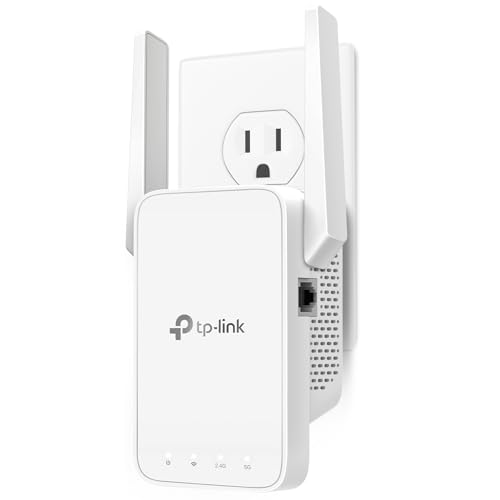
| Weak signal reaching a basement or garage build | TP-Link AC1200 WiFi Extender (details) |
| Router doesn't support 6GHz yet | TP-Link Archer AC1750 dual-band router (details) |
| Budget USB WiFi as a backup/fallback | TP-Link AC600 USB WiFi Adapter (details) |
These aren't upgrades to the board's own WiFi 6E radio — they're practical fallbacks for the minority of rooms where any onboard antenna, regardless of motherboard brand, struggles to reach a router.
If you're setting up a display before installing a discrete GPU — using Core Ultra 200S's integrated graphics output straight from the board — a basic adapter cable like the BENFEI DisplayPort-to-HDMI cable (details) is a cheap way to get a monitor running during initial BIOS setup and driver installation.
Z890 vs. lower-tier LGA1851 boards: is the premium worth it?
Intel's LGA1851 platform, like prior generations, ships with a chipset stack rather than a single option — Z890 sits at the top for full overclocking and PCIe 5.0 lane allocation, with lower-tier chipsets (equivalent to prior-generation B760-class positioning) trimming overclocking support and some PCIe lanes in exchange for a lower price.
| Z890-tier board | Lower-tier (B-class) board | |
|---|---|---|
| CPU overclocking | Full support | Typically limited or disabled |
| PCIe 5.0 lanes to primary slot | Full allocation | Often reduced or absent |
| Typical price position | Higher | Lower |
| Best fit | Overclockers, PCIe 5.0 GPU + PCIe 5.0 storage together | Budget builds, stock-clocked gaming |
The practical question for most buyers isn't which chipset is "better" in the abstract — it's whether you'll ever overclock the CPU or need full PCIe 5.0 bandwidth to more than one device at once. If neither applies, a cheaper LGA1851 board frees up budget for the GPU or storage; if either applies, the Z890 tier — including the Prime Z890-P WiFi — is the board actually able to deliver it.
Who should buy the Prime Z890-P WiFi
It's a sensible pick for builders who want a new Core Ultra 200S system with full PCIe 5.0 GPU bandwidth, onboard WiFi 6E, and room to overclock later, but don't want to pay ROG- or ProArt-tier prices for VRM headroom and extras they won't use. Builders chasing sustained extreme overclocks, multi-GPU workstation configurations, or ProArt-specific creator features should look further up Asus's Z890 stack instead.
For readers assembling a full parts list around a Core Ultra 200S build, our other Asus coverage — including the Asus RTX 5060 near-MSRP tracker, Asus ROG Xreal R1 AR glasses coverage, and Asus gaming laptop deal analysis — tracks the wider Asus product lineup a Z890-based desktop build often sits alongside. For a different angle on WiFi-adjacent hardware, see our piece on turning a Raspberry Pi Pico W into a driverless USB WiFi adapter.
Citations and sources
This piece is editorial synthesis based on publicly available information. No independent first-party benchmarking is reported.