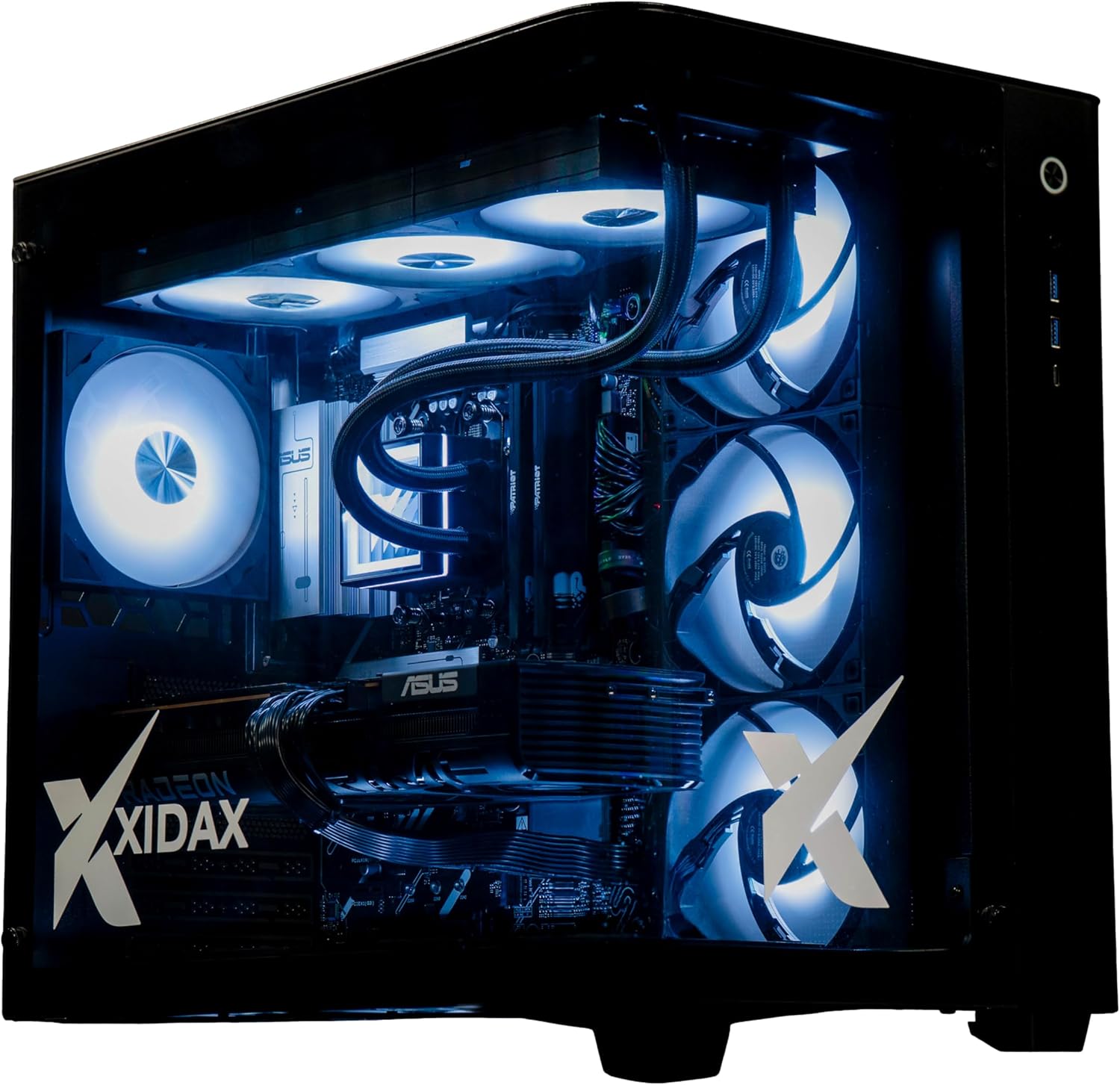
A Ryzen 7 5800X, RTX 4080, and 16GB of RAM is a mismatched build by 2026 standards — not because any one part is bad, but because the CPU and RAM are both several generations behind a GPU that can still hold its own in the current lineup. The short answer: upgrade RAM to 32GB first, since it's cheap and works on the existing AM4 platform, then decide whether a CPU/motherboard jump to AM5 is worth it based on the resolution and titles you actually play.
Is the Ryzen 7 5800X Bottlenecking Your RTX 4080?
Whether the 5800X is holding the 4080 back depends heavily on resolution. At 4K, the GPU is doing enough work per frame that an 8-core Zen 3 chip like the 5800X can usually keep up — the card, not the processor, tends to be the limiting factor. At 1080p and 1440p, especially in esports titles or CPU-heavy simulation and strategy games, public CPU-scaling comparisons from channels like GamersNexus and Hardware Unboxed consistently show newer CPUs pulling ahead of Zen 3 parts paired with high-end GPUs, since the 4080 can render frames faster than the 5800X can feed it draw calls in those scenarios.
SpecPicks' own comparison of the 5800X against a contemporary Intel chip in esports workloads goes into this in more detail: see Ryzen 7 5800X vs Core i7-9700K for 1080p Esports in 2026.
The practical takeaway: if most of your play is at 4K, don't rush a CPU upgrade. If you're on a 1080p or high-refresh 1440p monitor and chasing frame rate in competitive titles, the 5800X is more likely to be the ceiling.
Best CPU Upgrade Paths: Stay on AM4 or Jump to AM5
There is no direct upgrade for the 5800X on its own socket that meaningfully changes gaming performance — it was AMD's top mainstream AM4 gaming chip already. Any real step up means moving platforms. The two realistic targets are AMD's AM5 Ryzen 7000/9000 X3D chips or a comparable Intel 13th/14th-gen part on LGA1700.
| CPU | Cores/Threads | Boost Clock | Cache | Socket | Platform |
|---|---|---|---|---|---|
| Ryzen 7 5800X (spec sheet) | 8/16 | up to 4.7 GHz | 32MB L3 | AM4 | DDR4, PCIe 4.0 |
| Ryzen 7 7800X3D (spec sheet) | 8/16 | up to 5.0 GHz | 96MB L3 (3D V-Cache) | AM5 | DDR5, PCIe 5.0 |
| Core i7-13700K (spec sheet) | 16/24 (8P+8E) | up to 5.4 GHz | 30MB L3 | LGA1700 | DDR5, PCIe 5.0 |
The 7800X3D's large 3D V-Cache is the reason it shows up repeatedly at the top of gaming-focused CPU benchmark charts from outlets like GamersNexus and Hardware Unboxed — cache-heavy designs tend to help most in exactly the CPU-bound, high-frame-rate scenarios where the 5800X falls behind a 4080. The 13700K trades some of that gaming-specific advantage for stronger multi-threaded performance in productivity and streaming workloads, which matters if the PC does more than gaming.
For a deeper look at whether the 7800X3D specifically justifies the jump, see Is the Ryzen 7 7800X3D Worth It in 2026? and the broader Which Ryzen CPU Is Better? 2026 Buying Guide. Either upgrade also changes cooling requirements — see Best CPU Coolers for Ryzen and Intel Builds in 2026 and, if staying on AM4 for now, Best CPU Cooler for the Ryzen 7 5800X for a cooler that can extract more sustained boost clock from the existing chip.
Does 16GB of RAM Hold Back a 4080 Build?
16GB has been the mainstream baseline for years, but current AAA titles are increasingly listing it as a minimum rather than a comfortable target, with 32GB showing up more often in recommended specs — particularly for titles with texture streaming, ray tracing, or heavy background processes (browser, Discord, capture software) running alongside the game. The actual performance impact varies by workload: some titles run identically on 16GB and 32GB, while others show frame-time spikes or stutter under 16GB once system memory fills up. Since it's a straightforward, same-platform upgrade that doesn't require a new motherboard or CPU, it's the lowest-risk fix to try first.
AM4 boards paired with the 5800X officially support DDR4; DDR4-3200 is AMD's official validated speed for that platform, though many boards run faster kits via XMP. If a CPU/platform upgrade to AM5 does happen down the line, memory has to be replaced too — AM5 uses DDR5 exclusively, with AMD's AM5 platform page confirming DDR5 as the supported standard.
Motherboard and Platform Considerations: B650 vs X670E
If the CPU upgrade path is on the table, the motherboard choice mostly comes down to B650 versus X670E. B650 boards cover PCIe 5.0 NVMe storage and enough VRM headroom for chips like the Ryzen 7 7800X3D, which is not an overclockable part and doesn't need the extra power delivery or PCIe lane count that X670E boards are built for. X670E is worth the premium mainly for multi-GPU setups, extensive M.2 expansion, or overclockable Ryzen chips — none of which are typical requirements for a single-GPU 4080 gaming build.
For a look at how a modern high-end CPU pairs with a slightly newer GPU tier, see RTX 5070 Ti + Ryzen 7 9850X3D: Is It a Good Combo? — useful context for what a fully rebalanced AM5 platform looks like versus incrementally upgrading around an existing 4080.
Putting It Together: Two Upgrade Paths
| Path | What changes | Cost tier | Best for |
|---|---|---|---|
| Budget (stay on AM4) | 16GB → 32GB DDR4, keep 5800X + 4080, upgrade cooler if thermal-limited | Low | 4K play, or 1080p/1440p players not chasing max frame rate |
| Platform (move to AM5) | New AM5 board, DDR5 32GB, Ryzen 7000/9000 X3D CPU, keep the 4080 | High | 1080p/1440p high-refresh or esports-focused players CPU-limited today |
Storage is worth a check during either upgrade — an aging SATA SSD can itself become a secondary bottleneck for load times and texture streaming even after RAM and CPU are addressed; see SATA SSD vs NVMe for a Ryzen 5 5600G Budget Build in 2026 for the tradeoffs. And if local AI workloads are part of the picture alongside gaming, more system RAM pays off there too — see Pushing a 6GB VRAM Laptop to Its Limits With Qwen3.6-35B-A3B for how memory constraints show up outside of gaming.
The RTX 4080 itself (spec sheet) remains a capable card; the question raised by a 5800X + 16GB pairing isn't whether to replace the GPU, but whether the rest of the system is holding it back — and for most players, a RAM upgrade closes most of that gap for a fraction of the cost of a new platform.
Frequently Asked Questions
Is a Ryzen 7 5800X a bottleneck for an RTX 4080? It can be, depending on resolution and title. Public CPU-scaling comparisons consistently show older 8-core Zen 3 parts capping frame rates below what a 4080 can deliver at 1080p and 1440p in CPU-heavy titles; the gap narrows substantially at 4K.
Should I upgrade RAM or the CPU first? RAM first — it's a same-platform upgrade that costs far less than a new CPU and motherboard, and addresses stutter issues a faster CPU alone won't fix.
Is 16GB of RAM enough for gaming in 2026? Still workable for less demanding titles, but current AAA releases increasingly recommend 32GB. Impact varies by workload.
Do I need a new motherboard to go from a 5800X to a 7800X3D? Yes — AM4 to AM5 has no drop-in path, and AM5 boards require DDR5 memory.
B650 or X670E for a 4080 build? B650 covers most 4080 builds; X670E mainly adds PCIe lanes and overclocking headroom most gaming setups don't need.
Will just adding more RAM unlock the RTX 4080's full performance? Partially — it reduces stutter tied to memory pressure but won't remove a CPU-bound frame-rate ceiling in titles where the 5800X is the limiting factor.
Citations and sources
- TechPowerUp — AMD Ryzen 7 5800X specifications
- TechPowerUp — AMD Ryzen 7 7800X3D specifications
- TechPowerUp — Intel Core i7-13700K specifications
- TechPowerUp — NVIDIA GeForce RTX 4080 specifications
- AMD — Ryzen 7 7800X3D product page
- AMD — AM5 platform overview
- GamersNexus — CPU/GPU benchmark and scaling coverage
- Hardware Unboxed — CPU/GPU benchmark and scaling coverage
This piece is editorial synthesis based on publicly available information. No independent first-party benchmarking is reported.