As an Amazon Associate, SpecPicks earns from qualifying purchases. Prices and availability shown are current at time of publish and may vary.
Direct answer
For a budget local-LLM PC in 2026, build around a 12GB ZOTAC GeForce RTX 3060 Twin Edge, an eight-core AMD Ryzen 7 5800X on a used B550 board, 32GB of DDR4-3200, and a 1TB Crucial BX500 SATA SSD for weights. That combination runs every 7B, 12B, and quantized 14B model at interactive speed, tolerates offload for 27B-32B, and lands comfortably under a typical mid-range prebuilt price. VRAM is the gate — everything else is secondary.
Why VRAM is the whole game
Every buying-guide for local LLMs eventually collapses to a single number: how many gigabytes of on-card memory. Once that ceiling is set, most of the other decisions get much easier. A 12GB card comfortably holds any 7B or 8B model at q5 or q6 with an 8K-16K context; the same card holds a 12B-14B model at q4 with room for a modest KV cache; a 27B-32B model requires offload to system memory and a corresponding step down in throughput. Nothing about a stronger CPU, faster RAM, or a bigger SSD changes those cutoffs.
That is why the cheapest legitimate entry point in 2026 is still an RTX 3060 12GB. It undercuts every other consumer card that clears 12GB, ships with CUDA support that every serious runtime is built around, and per TechPowerUp's card specifications, delivers 360 GB/s of memory bandwidth — enough to feed 7-14B class weights at conversational speed. Alternatives exist (Intel Arc, older workstation cards on eBay), but no other new-in-box consumer part gives you 12GB for the price.
The rest of the build follows from the card. An eight-core Zen 3 CPU handles tokenization, sampling, and any CPU-offloaded layers without becoming the bottleneck; 32GB of dual-channel DDR4-3200 leaves headroom to offload 27B+ models when you want to; a large SATA SSD holds a serious model library. This guide walks the six parts that build the box, in the order you should buy them, with the reasoning for each pick.
Step 0 — decide your model tier first
Pick your target model class before the parts list. The right tier decides which of these picks matters most.
- 7B-8B tier (chat, coding assistants, drafting) — Llama 3.1 8B, Qwen family, Mistral 7B. Fits at q6 in 12GB VRAM with 8K+ context and change to spare. Any pick below works. Great starter tier.
- 12B-14B tier (better reasoning, instruction following) — Nemo/Nemotron variants, Qwen 14B. Fits at q4 or q5 in 12GB VRAM. Rewards higher memory bandwidth and starts to punish weak CPU cores at longer contexts. RTX 3060 is still the pick.
- 27B-32B tier (frontier open-weight quality, occasional use) — Qwen 32B, Gemma 3 27B, and their descendants. Does not fit in 12GB VRAM at any usable quantization; you offload layers to system RAM. Throughput drops to CPU-memory-bandwidth speed, so the CPU pick becomes decisive. The 5800X is the right buy here.
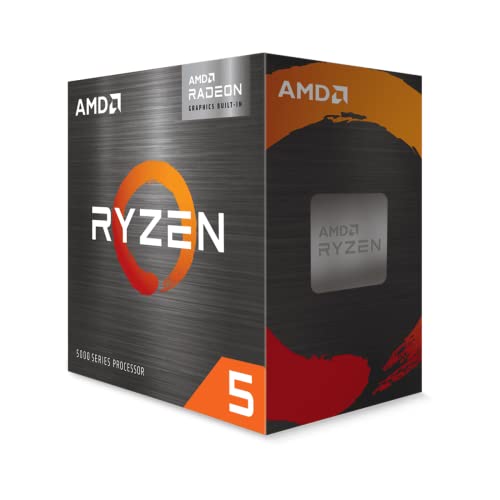
- CPU-only / no-GPU — legitimate for 7B q4 at slow-but-workable speeds. Buy the Ryzen 5 5600G and skip the discrete GPU entirely until budget allows.
The picks at a glance
| Pick | Best For | Key Spec | Price Range | Verdict |
|---|---|---|---|---|
| ZOTAC RTX 3060 Twin Edge 12GB | Best overall | 12GB GDDR6, 360 GB/s, 170W TDP | $300-380 new | Cheapest 12GB card that runs every 7-14B model at interactive speed. |
| MSI RTX 3060 Ventus 3X 12G | Best value / thermals | Triple-fan, quieter cooling, same GPU | $350-450 new | Same silicon as the ZOTAC, a lot quieter under sustained load. |
| AMD Ryzen 7 5800X | Best performance | 8C/16T Zen 3, 3.8 GHz base | $200-260 | 8 cores matter the moment you offload 27B+ weights to system RAM. |
| AMD Ryzen 5 5600G | CPU-only starter | 6C/12T Zen 3 + Vega iGPU | $150-200 | No discrete GPU needed — runs 7B q4 on the iGPU today. |
| Crucial BX500 1TB SATA SSD | Budget pick | 1TB, SATA III, ~540 MB/s | $60-90 | Holds a dozen quantized models and their variants without touching your OS drive. |
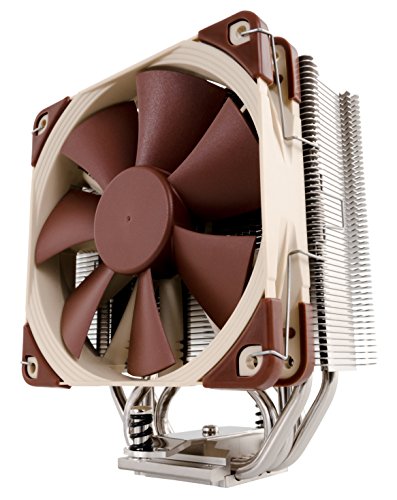
| Noctua NH-U12S | Thermals honorable mention | 120mm tower, 6-year warranty | $70-90 | For overnight fine-tuning or hours-long inference sessions on the 5800X. |
Best overall — ZOTAC Gaming GeForce RTX 3060 Twin Edge 12GB
Verdict: the cheapest 12GB VRAM card on the new market, and it clears the 7-14B tier without compromise.
The ZOTAC RTX 3060 Twin Edge 12GB has been the default budget local-LLM card since the day the 3060 12GB shipped, and nothing new in the price bracket has displaced it. The GA106 die pairs 12GB of GDDR6 across a 192-bit bus for 360 GB/s of memory bandwidth per NVIDIA's product page — modest by today's flagship numbers but plenty to feed 7-8B-class weights at conversational tok/s and to run 12-14B models at q4 without struggling. Community-reported throughput on Llama-3.1-8B at q6 sits comfortably in the interactive-chat range on this card under llama.cpp or ExLlamaV2.
Pros: genuine 12GB, cheapest-in-class, dual-slot dual-fan card fits in almost any mid-tower, mainstream CUDA runtime support everywhere, low power (170W TDP) so almost any 550W-plus PSU works.
Cons: dual-fan cooler can get whiny under sustained load; PCIe 4.0 x16 slot is wired x8 on this die, which shows up as a small penalty on x4 boards; no NVLink so multi-card scaling is limited to per-model parallelism in llama.cpp.
Price disclaimer: street price for the Twin Edge fluctuates in the $300-380 range depending on retailer and inventory; check the current price before you buy.
Amazon CTA: Check current price on Amazon →
Best value — MSI GeForce RTX 3060 Ventus 3X 12G
Verdict: the ZOTAC's cooler running mate. Same silicon, three fans, noticeably quieter.
The MSI RTX 3060 Ventus 3X 12G is functionally the same GPU as the ZOTAC — GA106, 12GB GDDR6, 192-bit bus, 170W TDP. What you pay the extra $30-70 for is the triple-fan Ventus cooler, which keeps the die 8-12°C cooler under sustained load and, more importantly for a machine you might leave inferring overnight, runs quieter at equivalent duty cycles. On a build meant to sit next to a monitor and grind through a batch job, that acoustics gap is the reason to pay up.
Pros: triple-fan cooler with meaningfully lower noise floor, sturdier PCB with a backplate, better zero-fan idle behavior for headless boxes on desks.
Cons: roughly 20mm longer than the Twin Edge — check case clearance before you buy, especially in micro-ATX or SFF chassis; small premium for what is fundamentally the same silicon; some reports of coil whine at very light load.
Price disclaimer: the Ventus 3X 12G runs $350-450 depending on stock; verify current pricing before ordering.
Amazon CTA: Check current price on Amazon →
Best performance — AMD Ryzen 7 5800X
Verdict: eight Zen 3 cores turn a "runs" into "runs comfortably" the moment weights start offloading to system RAM.
The AMD Ryzen 7 5800X is the CPU pairing that makes a 12GB card actually useful for the 27B-32B tier. When the model fits entirely in VRAM, CPU choice barely matters — but the second you push a 30B-class quantized model past the card's ceiling, generation drops to memory-bandwidth-limited speed on the CPU cores, and the difference between six and eight strong cores becomes very visible. On a used B550 motherboard with 2× 16GB DDR4-3200 (32GB total), the 5800X handles both roles: it stays out of the way when the RTX 3060 is the whole show, and it steps in as the workhorse when you cross into offload territory.
The prompt-evaluation stage — the phase where the model processes your input tokens before it starts generating — is CPU-parallel on most runtimes even when generation is GPU-bound. Eight cores cut that "first-token latency" versus a six-core part noticeably on long prompts, which is the felt-difference on RAG or coding-assistant workloads.
Pros: eight strong Zen 3 cores, unlocked multiplier for a mild all-core overclock on any decent cooler, drops into any AM4 board, mature platform with cheap DDR4 and cheap boards on the used market.
Cons: hot part under sustained load — a tower cooler or a solid AIO is not optional; no integrated graphics (needs a discrete GPU to boot); no PCIe 5.0 (irrelevant for this class of build).
Price disclaimer: $200-260 depending on retailer; the used market has driven this part cheap.
Amazon CTA: Check current price on Amazon →
Best for CPU-only starters — AMD Ryzen 5 5600G
Verdict: the cheapest legitimate on-ramp to local LLMs, no discrete GPU required.
The AMD Ryzen 5 5600G is a six-core Zen 3 part with integrated Vega graphics that can actually run modern 7B-class models at q4 through llama.cpp's CPU + Vulkan/ROCm paths. It is not fast — expect conversational-but-slow tok/s on Llama-3.1-8B at q4 — but it is usable, and it leaves a clean upgrade path since adding a discrete GPU later requires no other changes. This is the pick for a first build where a GPU is not in the budget yet.
Buy it with 32GB of DDR4-3200 (dual-channel matters more for the iGPU than raw clock speed does) and a decent air cooler. When the RTX 3060 shows up later, you drop it in and the 5600G stays out of the way.
Pros: cheapest way to boot with no discrete GPU, integrated Vega iGPU is legitimately useful for small models today, 65W TDP so a stock cooler suffices, drops into any AM4 board.
Cons: only 16 PCIe lanes and drops the card to x8 when populated with an NVMe (fine for a 3060), no PCIe 4.0 (5000-series G-parts are stuck on 3.0), and six cores start to feel light the moment you outgrow the 7B tier.
Price disclaimer: $150-200 currently; watch for combo deals with 32GB DDR4-3200 kits.
Amazon CTA: Check current price on Amazon →
Budget pick — Crucial BX500 1TB SATA SSD
Verdict: cheap 1TB SATA is the right storage tier for model weights, full stop.
Model weight files are large and add up quickly — a serious experimenter accumulates a dozen models across quantization levels within weeks, and a single 30B-class q4 file is well north of 15GB. A 250GB or 500GB drive fills fast, and the throughput advantage of NVMe over SATA is invisible for the workload: models load once at server-start and stay resident in RAM or VRAM afterward. SATA is fine; capacity is what matters.
The Crucial BX500 1TB SATA SSD is the cheapest reliable 1TB SATA drive on the market as of 2026, quoted at up to 540 MB/s sequential read on the product page — plenty for pulling a 15GB weight file into RAM once per server restart. It is DRAM-less, which shows up as slightly worse sustained random-write performance under heavy metadata churn, but for the load-once, read-mostly pattern of a local LLM library that trade-off never surfaces.
Pros: cheapest 1TB reliable SATA option, cool-running, tolerable warranty, plenty of interface headroom for the actual workload.
Cons: DRAM-less design shows up in sustained write benchmarks (not the workload here); TLC endurance is fine for years of LLM use but is not the pick if you also plan to run a busy VM host on the same drive.
Price disclaimer: $60-90 depending on discounts; watch the Crucial storefront for periodic 15% off events.
Amazon CTA: Check current price on Amazon →
Honorable mention — Noctua NH-U12S CPU cooler
Verdict: if you plan multi-hour inference or overnight batch runs on the 5800X, the Noctua NH-U12S is the boring safe pick that will still be quiet in five years. A single-tower 120mm design fits every mid-ATX case, keeps the 5800X well inside its thermal envelope under sustained all-core load, and comes with the six-year Noctua warranty. It is not the cheapest air cooler on the market; it is the one that never needs to be revisited.
What to look for in a budget local-LLM PC
VRAM capacity vs memory bandwidth
VRAM is the hard gate — either the model fits or it doesn't — but once it does, memory bandwidth is what drives generation speed. Higher-bandwidth cards produce more tokens per second on the same model. The RTX 3060 12GB is not the fastest 12GB card ever made; it is the cheapest, and its 360 GB/s of bandwidth is enough to keep 7-14B models feeling responsive. If your budget stretches and you can find a used RTX 3080 12GB for the same money, take it — bandwidth is the tie-breaker.
Quantization headroom
Modern inference runtimes support q4, q5, q6, and q8 quantizations (and increasingly the k-quants like Q4_K_M and the mxfp formats). Lower-quant weights are smaller and faster; higher-quant weights are closer to the reference model quality. The relationship is not linear — the perplexity gap between q4 and q6 is small on most modern models and the gap between q6 and q8 is usually negligible. See our quantization format comparison for the actual numbers. In practice, most people run q4_K_M or q5_K_M and never look back.
System RAM for offload
32GB of DDR4-3200 is the sweet spot for this build tier. It leaves 24-28GB usable after the OS for offloading 27B-32B model layers when you push past the card's VRAM ceiling. Going to 64GB is nice but rarely necessary unless you also run a serious dev environment on the same box. Dual-channel matters; do not run a single stick.
PSU sizing
A 3060 + 5800X system runs comfortably on a good-quality 650W 80-Plus Bronze PSU. The card is a 170W part, the CPU is a 105W part, and the rest of the system is negligible. There is no reason to overbuy here; a 750W-plus PSU is over-spec for this tier unless you plan a second GPU.
Storage throughput for model loading
Model loading is a one-time cost per server restart. SATA SSDs move a 15GB weight file into RAM in about half a minute; NVMe cuts that to a few seconds. Either is fine — the felt-difference is negligible for a server you restart infrequently. Spend the storage budget on capacity, not throughput.
Quantization matrix
| Model class | q4 (~ approx VRAM) | q5 (~ approx VRAM) | q6 (~ approx VRAM) | q8 (~ approx VRAM) | Quality notes |
|---|---|---|---|---|---|
| 7B | ~4-5 GB | ~5-6 GB | ~6-7 GB | ~8-9 GB | q4 is fine for chat, q6+ for coding assistants |
| 14B | ~8-10 GB | ~10-12 GB | ~12-14 GB | ~15+ GB | q4 fits comfortably in 12GB; q5 is tight |
| 32B | ~19-22 GB | ~22-26 GB | Offload only | Offload only | q4 needs offload on any 12-16GB card |
Numbers are approximate; add 1-3GB per model for KV cache scaled by context length. Reference the llama.cpp build docs for the actual per-format sizing details as models ship in different weight-file layouts.
Frequently asked questions
Is 12GB of VRAM enough for local LLMs in 2026? It is the practical entry point. Twelve gigabytes comfortably holds 7B and 8B models at q5 or q6 with a long context, and 12-14B class models at q4 with room to spare. Where it runs out is the 27-32B tier, which needs offload to system RAM and drops throughput sharply. If your target is a coding assistant or a chat model rather than a frontier-class open model, 12GB is the cheapest capacity that avoids constant compromise.
Does the CPU matter if the model fits entirely in VRAM? Much less than buyers expect. When every layer sits on the GPU, the CPU handles tokenization, sampling overhead, and the serving process, none of which are demanding. The CPU becomes decisive the moment you offload layers to system RAM, because generation then runs at memory-bandwidth speed on cores. Buy the cheaper CPU if your models fit; buy the stronger one if you intend to run models larger than your card.
Can I run a local model with no discrete GPU at all? Yes, with realistic expectations. An APU with integrated graphics and adequate system memory will run 7B-class models at q4 at conversational-but-slow speeds, which is fine for batch summarization and background tasks and frustrating for interactive chat. It is a legitimate starting point when the budget cannot stretch to a card, and it leaves a clean upgrade path since adding a GPU later requires no other changes.
How much storage do model weights actually need? More than people plan for. A single 7B model at q4 is a few gigabytes, but anyone experimenting seriously accumulates a dozen or more across quantization levels, and 30B-class files are substantially larger. A one-terabyte drive is the sensible floor. SATA throughput is adequate because loading happens once per model rather than continuously, so the capacity matters far more than the interface here.
When should I skip this tier and save for something faster? Skip it if your work genuinely requires 30B-plus models at interactive speed, long-context document processing, or fine-tuning rather than inference. Those needs are bounded by VRAM capacity and memory bandwidth that this tier cannot reach, and no amount of quantization closes the gap cleanly. In that case the honest advice is to wait and buy a 24GB-class card rather than buying twice.
Sources
- NVIDIA — GeForce RTX 3060 / RTX 3060 Ti product page
- TechPowerUp — GeForce RTX 3060 12 GB specifications database
- llama.cpp — official build documentation
Related guides
- Best GPU for Local LLMs Under $300: Why the RTX 3060 12GB Still Wins
- Building a Budget Local-AI Box: Ryzen 7 5800X + RTX 3060 12GB
- Best Budget AM4 Build for Local LLM Inference in 2026
- Best CPU for the MSI RTX 3060 12GB: 5600G vs 5700X vs 5800X
Citations and sources
- NVIDIA GeForce RTX 3060 / 3060 Ti — official product page
- TechPowerUp GeForce RTX 3060 12GB — specifications database
- llama.cpp — build documentation on GitHub
This piece is editorial synthesis based on publicly available information. No independent first-party benchmarking is reported.
— Mike Perry · Last verified 2026-07-28