As an Amazon Associate, SpecPicks earns from qualifying purchases. Prices and stock verified at time of writing; check the retailer for current numbers.
The best upgrades for an aging DDR4 gaming PC in 2026 are, in order: a mid-range GPU like the ZOTAC RTX 3060 12GB, a fast SATA SSD such as the Crucial BX500 1TB for the game library, and — only if you are on AM4 — a Ryzen 7 5800X as the last CPU the socket will ever need. Diagnose the bottleneck before you buy.
The DDR4 owner's dilemma in 2026
You built the machine somewhere between 2018 and 2022. It runs. It boots. It plays the games you play, mostly. But the numbers are slipping — a new title chews frame times, load screens outlast the loading tips, and every review site is talking about DDR5 and AM5 as if DDR4 is a punishment.
It is not. The DDR4 gaming market is still enormous, and the upgrade math on a working DDR4 platform is often significantly better than the math on rebuilding for AM5. A new motherboard-plus-CPU-plus-DDR5-kit for a mid-range AM5 build runs $500 before you install anything. A drop-in GPU upgrade on your existing DDR4 board might cost $300 and yield a bigger real-world frame-rate gain than the platform migration would.
The catch is that not every DDR4 rig is worth upgrading. The upgrade case only holds up when you are reusing a working board, a working memory kit, and a power supply that is not on borrowed time. Once the upgrade list grows past two parts, you are within reach of a full new platform — and the AM4 socket has no future, so you are spending money on a dead-end.
This guide walks the five upgrades that reliably deliver value on a DDR4 build, in the order most readers should buy them. The teaser: the winning upgrade for most readers is the ZOTAC RTX 3060 12GB. Read on for why.
Step 0 — diagnose your bottleneck before you buy
Open MSI Afterburner (or HWiNFO, or Task Manager's Performance tab) and run your actual games for ten minutes. Watch three numbers:
- GPU utilisation. If it pins at 98-100% while your CPU sits below 60%, the graphics card is your limit. Buy the GPU first.
- CPU utilisation. If any single thread saturates above 90% while the GPU idles below 70%, the processor is the constraint. Look at the Ryzen 7 5800X upgrade below.
- Disk activity. If neither is busy but loading screens drag and the drive light stays lit through them, storage is the limit. The Crucial BX500 1TB is the cheapest of the three fixes.
If your GPU is a GTX 1060 6GB, 1070, RX 580, or older, GPU-bound is almost certainly the diagnosis. If your CPU is a Ryzen 5 1600, 2600, or Intel 8th-gen and below, CPU-bound in newer titles is likely. If either your OS or your games still live on a mechanical hard drive, storage is the immediate answer regardless of what else you replace.
5-column comparison
| Pick | Best for | Key spec | Price range | Verdict |
|---|---|---|---|---|
| ZOTAC RTX 3060 12GB | 1080p high, most DDR4 owners | 12GB GDDR6, 170W | $$ | Best overall — the upgrade with the biggest visible impact |
| Crucial BX500 1TB | Game library on older boards | 1TB, SATA 6Gb/s | $ | Best value — cheapest fix if load times are your complaint |
| Ryzen 7 5800X | AM4 owners planning to keep the platform | 8C/16T, 105W | $$ | Best for AM4 — the last CPU the socket ever needs |
| Samsung 970 EVO Plus 250GB | OS boot drive if your board has an M.2 slot | PCIe 3.0 x4, 3500 MB/s | $ | Best performance-per-watt — quiet, cool, fast where it counts |
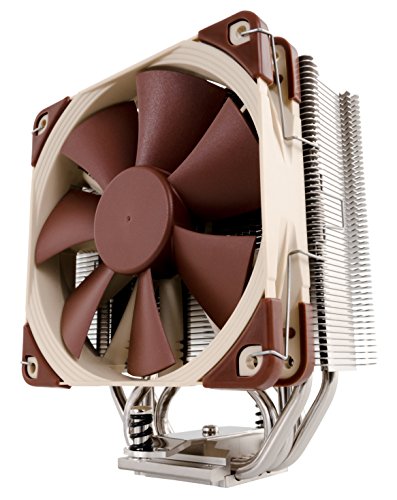
| Noctua NH-U12S | Quieting or unlocking any hot 95W+ chip | 120mm tower, 55.8 CFM | $ | Budget pick — turns a thermally-choked build into a cool one |
🏆 Best Overall: ZOTAC Gaming GeForce RTX 3060 Twin Edge OC 12GB
Spec chips: 12 GB GDDR6 · 192-bit bus · 170 W TGP · 2x DisplayPort + 1x HDMI 2.1
Pros
- 12 GB VRAM buffer that outlasts modern 1080p high texture demands and is comfortably enough for modest 1440p titles
- Sits inside the thermal and power envelope of every mainstream DDR4-era PSU (550-650W)
- Second-life value as a serviceable local-LLM inference card once you retire it from gaming
Cons
- Not the fastest raster card at this power tier — the 12 GB VRAM is the differentiator, not raw shader throughput
- Missing DLSS 3 frame-generation (30-series predates it), which is a real feature loss vs 40-series alternatives at the same tier
Per Tom's Hardware's GPU hierarchy, the RTX 3060 12GB is the sweet-spot 1080p card of its generation and continues to place in the mid-tier of every current gaming index. Per TechPowerUp's spec database, the card runs on a 170 W TGP and pairs with an 8-pin PCIe connector — no adapters, no 12VHPWR anxiety.
For a DDR4 build with a mid-range CPU (Ryzen 5 5600, i7-9700K, Ryzen 5 5600G), the ZOTAC RTX 3060 12GB is the card that upgrades the visual experience without leaving frames on the table because the CPU cannot feed it. Stepping up to a 4070-class card starts to hit CPU-bound ceilings at 1080p on these older platforms.
Price disclaimer: Prices vary week-to-week. Check the current listing before you order.
💰 Best Value: Crucial BX500 1TB SATA SSD
Spec chips: 1 TB · SATA 6 Gb/s · ~540 MB/s read · 2.5-inch
Pros
- The cheapest upgrade in this guide with a visible daily impact if your game library still lives on a hard drive
- Fits any DDR4-era board with a spare SATA port and 2.5-inch bay (or a $5 3.5-inch adapter bracket)
- SATA interface is universal — no chipset compatibility surprises, no NVMe boot-mode gotchas
Cons
- Slower than NVMe on synthetic benchmarks — though the real-world load-time gap for games is much smaller than the spec-sheet gap suggests
- 3D NAND without DRAM cache means very large sequential writes slow down as the SLC-cache fills
Load-time complaints on an old gaming PC almost always trace to a mechanical drive, not to a slow SSD. Moving from a 7200 RPM HDD to any SATA SSD is a night-and-day change; moving from a SATA SSD to NVMe is a modest, measurable-only-in-benchmarks change. For a bulk game library, the Crucial BX500 1TB is the correct trade.
Buy the Samsung 970 EVO Plus 250GB below for the OS partition and use the BX500 for the game library. That is the correct balance of speed where speed matters and capacity where capacity matters.
Price disclaimer: Prices vary week-to-week. Check the current listing before you order.
🎯 Best for AM4 Owners: AMD Ryzen 7 5800X
Spec chips: 8 cores / 16 threads · 3.8/4.7 GHz · 32 MB L3 · 105 W · AM4
Pros
- The last mainstream Vermeer CPU worth putting into an AM4 board outside the 5800X3D
- 16 SMT threads absorb streaming, background compiles, and heavy browsing without cutting into gaming frame times
- Drops into most B450, X470, B550 and X570 boards with a BIOS update
Cons
- 105 W TDP behaves closer to 130 W under all-core load; needs a proper cooler
- No integrated graphics — if your GPU dies, the machine will not POST to a display
Per AMD's product page, the 5800X sits at the top of the mainstream Zen 3 stack (below the 5900X and 5950X, which are worth considering only for multithreaded productivity). For gaming plus streaming, gaming plus compiling, or gaming plus anything else the machine has to do simultaneously, the extra threads over the Ryzen 5 5600G or a stock 3600 pay for themselves.
The upgrade math is straightforward: if you already own an AM4 board and DDR4 kit, the Ryzen 7 5800X is a one-time CPU swap that keeps the platform competitive for years. Pair with a Noctua NH-U12S or a CoolerMaster MasterLiquid ML240L RGB V2 to keep it cool.
Price disclaimer: Prices vary week-to-week. Check the current listing before you order.
⚡ Best Performance Per Watt: Samsung 970 EVO Plus 250GB NVMe
Spec chips: 250 GB · PCIe 3.0 x4 NVMe · 3500 MB/s read · M.2 2280
Pros
- One of the most reliable NVMe drives Samsung has ever shipped; long warranty and predictable performance
- Runs cool at PCIe 3.0 speeds — no thermal-throttle drama, no need for a heatsink on older boards
- 250 GB is exactly the right size for a modern Windows install plus a handful of frequently-loaded games
Cons
- 250 GB fills fast if you install more than three or four modern AAA titles to the boot drive
- Not the fastest NVMe on paper — PCIe 4.0 drives outbench it, but older boards do not run PCIe 4.0 anyway
Put the OS and your most-loaded games on the Samsung 970 EVO Plus 250GB. Put the bulk library on the Crucial BX500 1TB. This split saves you from paying an NVMe premium for TB of infrequently-loaded content while giving Windows and your active games the fastest storage the older board can address.
If your motherboard has no M.2 slot, skip this pick and buy a second BX500 instead. NVMe adapter cards for PCIe slots exist but often will not boot the OS on older UEFI implementations.
Price disclaimer: Prices vary week-to-week. Check the current listing before you order.
🧪 Budget Pick: Noctua NH-U12S
Spec chips: 120 mm tower · single fan (NF-F12 PWM) · 158 mm tall · six-year warranty
Pros
- Turns a thermally-choked build into a cool one for the cost of a game or two
- Fits in almost every mid-tower case and clears tall RAM on most boards
- Quiet enough at low RPM that it changes the acoustic character of the machine, not just its temperatures
Cons
- Single-fan tower — a 240mm AIO edges it out under sustained all-core loads
- Beige/brown industrial aesthetic that some builders actively dislike (Chromax black version costs more)
Any DDR4 build with a 95W-or-higher CPU on a stock cooler is a candidate for the Noctua NH-U12S. It is the small-quiet-competent pick that solves temperature and noise complaints in one purchase. If you want a step up in raw thermal performance, the CoolerMaster MasterLiquid ML240L RGB V2 240mm AIO handles a Ryzen 7 5800X or Core i7-9700K at full tilt without breaking a sweat.
Price disclaimer: Prices vary week-to-week. Check the current listing before you order.
What to look for in a DDR4-era upgrade
PSU headroom and transient spikes
Wattage on the label is only half of the PSU story. A quality 550-650W unit with a native 8-pin PCIe connector handles a single RTX 3060 12GB in a typical build. The failure mode to watch is a decade-old unit whose capacitors have degraded — even if the wattage looks generous on paper, it may trip on the modern card's transient spikes. If your PSU predates the GPU generation you are installing, replace it as part of the upgrade rather than after it fails and takes the new card with it.
Case clearance and cooler height
The Noctua NH-U12S is 158 mm tall and fits nearly every mid-tower. Larger air coolers (NH-D15, Dark Rock Pro 4) push past 165 mm and hit compact cases. Measure your case's advertised max CPU cooler height before ordering.
BIOS/CPU support lists
Every AM4 CPU swap requires a BIOS check. B450 and X470 boards need a Vermeer-capable BIOS for the Ryzen 7 5800X, and you must flash it while the old CPU is still installed. Swapping first and flashing later leaves you with a board that will not POST. B550 and X570 boards shipping after 2020 generally support Vermeer out of the box, but always check the vendor's CPU support list for your exact model revision.
SATA vs NVMe on older chipsets
Some early X370 and B350 boards only support NVMe boot on certain UEFI revisions. If you plan to install Samsung 970 EVO Plus as your OS drive, confirm your board's UEFI has NVMe boot support before you commit the upgrade.
When to stop upgrading
If your upgrade shopping list grows past two parts, price out a full new AM5 or Intel Arrow Lake build. Replacing a GPU and adding an SSD is good value on a working DDR4 platform. Once you are also replacing the CPU, cooler and power supply, you are within reach of a new socket — and every dollar spent on AM4 or LGA1151 in that scenario is a dollar on a dead end.
The most-missed step: checking your motherboard's CPU support list and PSU connector count before ordering
Every year, thousands of DDR4 upgraders learn the hard way that their motherboard needed a BIOS flash they cannot perform without an intermediate CPU. Or that their well-loved 500W PSU has one 6+2 PCIe connector when the new GPU needs two. Or that the case has 155 mm of cooler clearance when the tower they bought is 158 mm.
Before you click buy: pull up the motherboard vendor's product page, find the CPU support list, and confirm the exact CPU model appears with a BIOS version at or below your current BIOS. Open the PSU and count the PCIe connectors. Measure the case interior with a ruler.
Ten minutes of verification prevents the return-shipping-and-restocking hell that follows an incompatibility discovery after the box is opened.
Frequently asked questions
Which upgrade should I do first on an old DDR4 gaming PC? Watch utilisation during your actual games before buying anything. If GPU usage pins near 100% while the CPU sits well below, the graphics card is your limit and it goes first. If the CPU is saturated and the GPU is idling, the processor is the constraint. If neither is busy but loading screens drag and the drive light stays lit, buy the SSD first — it is the cheapest of the three fixes.
Do I need a new power supply for an RTX 3060 12GB? A quality 550-650W unit with a native 8-pin PCIe connector handles a single RTX 3060 12GB in a typical build. The risk is not wattage on the label but age and connector count: a decade-old unit that has been through several builds has degraded capacitors and may trip on transient spikes. If your PSU predates the card generation you are installing, replace it as part of the upgrade rather than after it fails.
Is a SATA SSD still worth buying, or should everything be NVMe? SATA is still the correct choice for bulk game storage on older boards. The real-world difference between SATA and NVMe for game load times is far smaller than the difference between a hard drive and any SSD. Put the OS on NVMe if your board has an M.2 slot, and use a high-capacity SATA drive like the BX500 for the library — you get more capacity per dollar and give up very little.
Will a Ryzen 7 5800X drop into my existing AM4 board? Usually, with a BIOS update first. B450 and X470 boards need a Vermeer-capable BIOS, and you must flash it while the old CPU is still installed — swapping first and flashing later leaves you with a board that will not POST. B550 and X570 boards shipping after 2020 generally support it out of the box. Always check the vendor's CPU support list for your exact model revision.
At what point should I stop upgrading and build new? When the upgrade list grows past two parts. Replacing a GPU and adding an SSD is good value on a working DDR4 platform. Once you are also replacing the CPU, cooler and power supply, you are within reach of a new platform and you are spending that money on a socket with no future. The DDR4 upgrade case rests entirely on reusing a working board and a working memory kit.
Sources
- Tom's Hardware — GPU hierarchy — cross-generation GPU ranking and tier placement for the RTX 3060 12GB
- TechPowerUp — GeForce RTX 3060 specifications — memory bandwidth, TGP, and connector layout
- AMD — Ryzen 7 5800X product page — official specifications and supported chipset list
Related guides
- Best budget upgrades for an old gaming PC in 2026
- Best budget PC upgrades in 2026
- Best mid-range GPU for 1440p in 2026 ($500-$600)
- Best budget PC build $500-$600 for gaming
— Mike Perry · Last verified 2026-08-04
Citations and sources
- Tom's Hardware — GPU hierarchy
- TechPowerUp — GeForce RTX 3060 specifications
- AMD — Ryzen 7 5800X product page
This piece is editorial synthesis based on publicly available information. No independent first-party benchmarking is reported.