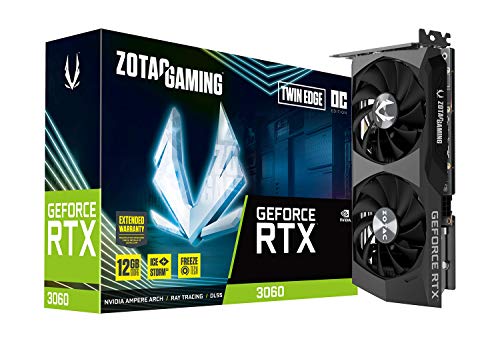
As of September 2026, the RTX 3060 12GB is still the cheapest practical CUDA card for local LLMs, but it no longer costs what it used to. BuySellRam's August 2026 price report puts it at $250–$275 used and $275–$340 new. At that price it runs Qwen3 14B (Q4) at 31.2 tok/s at 4K context, per Hardware Corner, and Gemma 4 12B (UD-Q5_K_XL) at 33.3 tok/s in a community llama.cpp run. The 16GB step-up has become expensive. The RTX 5060 Ti 16GB, which launched at $429, hit a median of $804.99 in August 2026, and used RTX 3090s now sell for $1,095–$1,181.
The case for the 3060 rests on VRAM per dollar, not raw speed. A model that doesn't fit in VRAM spills into system RAM, and throughput collapses. NVIDIA's RTX 3060 family page lists the 3060 in two memory configurations, 12 GB GDDR6 on a 192-bit bus and 8 GB on a 128-bit bus. Buy the 12GB version. TechPowerUp's spec page and Hardware Corner both list 360 GB/s of bandwidth, and Hardware Corner lists a 170 W TDP.
The full cross-card comparison: Best GPUs for Running Local LLMs in 2026 covers VRAM tiers from 12 GB to 48 GB, with a source link on every tok/s row.
What's changed as of September 2026
Five things have changed since this article first ran:
- The memory-price spike reached budget GPUs. Cards built on GDDR7 were hit hardest. The RTX 5060 Ti 16GB median went from $569.99 to $804.99 between June and August 2026, 88% above launch MSRP. BuySellRam's lower-end sampling still found new 5060 Ti 16GB cards at $560–$615. The same report shows used 24GB Ampere cards holding above $1,000. This article's old $650–$850 figure for a used 3090 is out of date.
- The 3060's own price rose. The previous $230–$290 range has become $250–$275 used and $275–$340 new. The same report found a used 3060 12GB selling for more than a used 3060 Ti 8GB, which it attributes to VRAM now being priced above speed.
- New budget options exist. The RTX 5060 Ti 16GB (448 GB/s) and Intel's Arc B580 12GB (456 GB/s, $249 MSRP) now belong on the shortlist. The B580 sold at $309.99 at Newegg and Amazon in July 2026. Apple's new base Mac mini uses the M6, at $899 with 16GB and up to 170 GB/s, available from September 22, 2026.
- The models moved on. The models worth running on 12–16GB are now Gemma 4 12B, Qwen3 8B/14B, Qwen3.5-9B, gpt-oss-20b (a 21B MoE with 3.6B active parameters), and Qwen3.6-35B-A3B with expert offload. The Llama-2-13B and Mistral-7B rows are gone.
- The old tok/s tables were uncited and are replaced. The previous benchmark and perf-per-dollar tables gave ranges with no source. Every speed below is a measured, linked figure, checked against a bandwidth ceiling.
Current-model rows on budget cards (September 2026)
"Ceiling" is memory bandwidth divided by the bytes read per token, which is the theoretical maximum decode speed. For dense models that is the whole Hugging Face GGUF file. For MoE models it is the active-parameter share (file size × active ÷ total parameters), which is an approximation. Every measured figure sits under its ceiling. Hardware Corner rows use llama.cpp with CUDA at 4K context. Hardware Corner labels the quant Q4_K; ceilings use the official Q4_K_M file size.
| Card (bandwidth) | Model (quant, HF file size) | Ceiling | Measured decode | Source |
|---|---|---|---|---|
| RTX 3060 12GB (360 GB/s) | Qwen3 8B (Q4_K_M, 5.03 GB) | ~72 tok/s | 55.2 tok/s | Hardware Corner |
| RTX 3060 12GB (360 GB/s) | Qwen3 14B (Q4_K_M, 9.00 GB) | ~40 tok/s | 31.2 tok/s (22.7 at 16K) | Hardware Corner |
| RTX 3060 12GB (360 GB/s) | Gemma 4 12B (UD-Q5_K_XL, 8.61 GB) | ~42 tok/s | 33.3 tok/s | community run via note.com |
| RTX 3060 12GB (360 GB/s) | Qwen3.5-9B (Q4_K_M, 5.68 GB) | ~63 tok/s | 49.9 tok/s | tyolab |
| RTX 3060 12GB + system RAM | Qwen3.6-35B-A3B MoE (UD-IQ3_XXS, 13.21 GB; 3B of 35B active) | ~318 tok/s on active bytes | 22.9 tok/s, -ncmoe 25, 7.1 GB VRAM | Jean Brito |
| RTX 4060 Ti 16GB (288 GB/s) | Qwen3 14B (Q4_K_M, 9.00 GB) | ~32 tok/s | 27.4 tok/s | Hardware Corner |
| RTX 4060 Ti 16GB (288 GB/s) | gpt-oss-20b (MXFP4, 12.11 GB; 3.6B of 21B active) | ~139 tok/s | 63.2 tok/s | Hardware Corner |
| RTX 5060 Ti 16GB (448 GB/s) | Qwen3 14B (Q4_K_M, 9.00 GB) | ~50 tok/s | 41.1 tok/s | Hardware Corner |
| RTX 5060 Ti 16GB (448 GB/s) | gpt-oss-20b (MXFP4, 12.11 GB) | ~216 tok/s | 92.1 tok/s | Hardware Corner |
| RTX 3090 24GB (936 GB/s) | Qwen3 32B (Q4_K_M, 19.76 GB) | ~47 tok/s | 35.1 tok/s | Hardware Corner |
| RTX 3090 24GB (936 GB/s) | gpt-oss-20b (MXFP4, 12.11 GB) | ~451 tok/s | 147.5 tok/s | Hardware Corner |
| Arc B580 12GB (456 GB/s) | Qwen3 8B (Q4_K_M, 5.03 GB) | ~91 tok/s | 30.4 tok/s (Vulkan, July 2026) | llama.cpp discussion #12570 |
| Arc A770 16GB (560 GB/s) | Llama 3.1 8B (Q4_K_M, 4.92 GB) | ~114 tok/s | 53.6 tok/s (Vulkan) | llama.cpp issue #17628 |
| Arc A770 16GB (560 GB/s) | gpt-oss-20b (MXFP4, 12.11 GB) | ~270 tok/s | 61.0 tok/s (Vulkan) | llama.cpp issue #17628 |
| Mac mini M4 16GB (120 GB/s) | Llama 2 7B (Q4_0, 3.83 GB) | ~31 tok/s | 24.1 tok/s (Metal) | llama.cpp discussion #4167 |
| Mac mini M6 16GB (170 GB/s) | Qwen3 8B (Q4_K_M, 5.03 GB) | ~34 tok/s | not yet published | Apple (bandwidth only) |
Three patterns stand out. The NVIDIA cards land at roughly 60–90% of their dense-model ceiling, so on the same model decode speed roughly tracks bandwidth. That is why the 4060 Ti 16GB (288 GB/s) is slower than the 3060 on Qwen3 14B, 27.4 vs 31.2 tok/s. The Intel cards reach a much smaller share of their ceiling. The B580's 30.4 tok/s on Qwen3 8B is about a third of what its bandwidth allows, and the llama.cpp Arc thread that reports it was started to ask why Intel cards decode so far below their bandwidth. The Qwen3.6 MoE row is a 12GB-plus-system-RAM setup. It runs only because llama.cpp moves 7.7 GB of experts to system RAM, and it OOMs on the 3060 without the flag.
For more on the MoE-offload route, see Qwen3.6-35B-A3B on a 12GB GPU. For the model picks themselves, see the best local LLM for 12GB VRAM.
A budget local-AI build needs more than the GPU. The featured 3060 cards pair with an AMD Ryzen 7 5800X on AM4 and a value SSD such as the Crucial BX500 1TB to store the weights. Add enough system RAM (32GB) if you plan to use MoE expert offload.
Why VRAM-per-dollar, not raw speed, is the budget-AI buyer's metric
Habits from gaming don't carry over to inference. A gamer compares frame rates at the same resolution and picks the faster card at a given price. A local-AI builder's first question is not "how fast" but "can this card even load the model I want." A card that can't hold the weights either offloads layers to system RAM, where decode is limited by RAM and PCIe speed instead of VRAM bandwidth, or fails to load with an out-of-memory error.
That makes VRAM the gating spec. One RTX 3060 owner found gpt-oss-20b, about 11.5 GB at Q4_K_M, left "only 500MB for the KV cache — not viable" on the 12GB card. The same model runs entirely in VRAM on a 16GB card, at 63.2 tok/s on an RTX 4060 Ti 16GB. The 12GB threshold is where 12B–14B dense models fit at Q4 with a working KV cache. That size class covers most local chat, coding help, and small-agent work.
Power is the second metric for a card that runs all day. Hardware Corner lists TDPs of 170 W for the 3060, 165 W for the 4060 Ti 16GB, 180 W for the 5060 Ti 16GB and 350 W for the 3090. Intel lists 225 W total board power for the A770 16GB, and the B580 is rated at 190 W. Real wall draw during single-stream decode varies by workload and is usually below TDP.
Raw TFLOPs matter much less. The common regret in local-AI builds is buying an 8GB card and finding the wanted model won't load. On a budget, spend on VRAM first, bandwidth second, and features third.
Key takeaways
- The RTX 3060 12GB is still the budget reference card for local LLMs in September 2026. It costs $250–$275 used and $275–$340 new, has 12GB of GDDR6 at 360 GB/s, and runs on the CUDA stack most local-AI guides assume.
- It runs 8B–14B models fully in VRAM. Measured speeds are Qwen3 8B at 55.2 tok/s and Qwen3 14B at 31.2 tok/s. gpt-oss-20b doesn't fit with a usable KV cache.
- The RTX 5060 Ti 16GB is now the fastest budget step-up, at 41.1 tok/s on Qwen3 14B and 92.1 tok/s on gpt-oss-20b. The memory-price spike took its median to $804.99, about 2.4–2.9× the price of a new 3060.
- The RTX 4060 Ti 16GB buys capacity, not speed. It trails the 3060 on Qwen3 14B (27.4 tok/s) because its 128-bit bus gives it less bandwidth.
- A used RTX 3090 is still the only card in the group that holds 32B dense models, at 35.1 tok/s on Qwen3 32B. Used prices now top $1,000.
- The Arc B580, Arc A770 and Mac mini are niche alternatives. They trade decode speed for price, capacity or power, as covered below.
Why is the RTX 3060 12GB the budget reference card for local inference?
Three reasons point the same way. First, price. At $250–$275 used and $275–$340 new, the ZOTAC Gaming RTX 3060 Twin Edge OC and MSI GeForce RTX 3060 Ventus 2X 12G OC are still the cheapest way to get 12GB of CUDA-addressable VRAM. The Arc B580 is close on price, at $309.99 in July 2026. It uses a different software stack, covered below.
Second, software. llama.cpp, Ollama, LM Studio, vLLM and KoboldCpp all support CUDA, and on a 3060 they run without custom builds or alternative backends. Intel cards run through Vulkan or SYCL, and there the measured speeds fall well short of the hardware's ceiling (see the table above).
Third, which models fit. Using Hugging Face file sizes, Qwen3 14B at Q4_K_M is 9.00 GB and Gemma 4 12B at Q4_K_M is 7.12 GB. Both leave room for a KV cache on a 12GB card. Qwen3 14B holds up at 16K context, where it still decodes at 22.7 tok/s. An 8GB card can't hold Qwen3 14B at Q4 at all, and Gemma 4 12B would leave it under 1 GB for everything else.
Spec delta table
The table below is the practical budget shortlist for local LLM work in September 2026. Prices move weekly, so check live listings before buying.
| Card | VRAM | Bandwidth | TDP | Price (cited, 2026) | Tooling |
|---|---|---|---|---|---|
| RTX 3060 12GB | 12GB GDDR6, 192-bit | 360 GB/s | 170 W | $250–$275 used, $275–$340 new (Aug) | CUDA |
| RTX 4060 Ti 16GB | 16GB GDDR6, 128-bit | 288 GB/s | 165 W | $445–$497 used (Aug) | CUDA |
| RTX 5060 Ti 16GB | 16GB GDDR7, 128-bit | 448 GB/s | 180 W | $560–$615 new; $804.99 median (Aug) | CUDA |
| RTX 3090 24GB (used) | 24GB GDDR6X, 384-bit | 936 GB/s | 350 W | $1,095–$1,181 used (Aug) | CUDA |
| Intel Arc B580 12GB | 12GB GDDR6, 192-bit | 456 GB/s | 190 W | $309.99 new (Jul) | Vulkan, SYCL |
| Intel Arc A770 16GB | 16GB GDDR6, 256-bit | 560 GB/s | 225 W | varies by listing | Vulkan, SYCL |
| Apple Mac mini M6 (16GB) | 16GB unified | up to 170 GB/s | n/a | $899 new | Metal, MLX |
Three things stand out. The 3090 has about 2.6× the 3060's bandwidth and is the only card here with 24GB. Both 16GB NVIDIA cards sit on a 128-bit bus. The 4060 Ti ends up with less bandwidth than the 3060, while the 5060 Ti's GDDR7 gets it to 448 GB/s. And the M6 Mac mini's 170 GB/s is under half the 3060's, which limits its decode speed on any model it can hold.
How much model fits per card?
The table maps current models to the cards that hold them fully in memory. Sizes are the Hugging Face file sizes for the quant shown, before KV cache and runtime overhead. Expect to need 1–2 GB of headroom on top at modest context. On the Mac, the OS shares the 16GB with the model.
| Model (quant) | Weights | 3060 12GB | B580 12GB | 4060 Ti / 5060 Ti / A770 16GB | 3090 24GB |
|---|---|---|---|---|---|
| Qwen3 8B (Q4_K_M) | 5.03 GB | Yes, 32K+ context | Yes | Yes | Yes |
| Gemma 4 12B (Q4_K_M) | 7.12 GB | Yes | Yes | Yes | Yes |
| Qwen3 14B (Q4_K_M) | 9.00 GB | Yes, 4K–16K context | Yes, short context | Yes, 32K context | Yes |
| gpt-oss-20b (MXFP4) | 12.11 GB | No usable KV room | No | Yes, up to 128K context | Yes |
| Qwen3.6-35B-A3B (UD-IQ3_XXS) | 13.21 GB | Only with expert offload | Only with offload | Tight | Yes |
| Qwen3 32B (Q4_K_M) | 19.76 GB | No | No | No (offload) | Yes |
| Llama 3.3 70B (Q4_K_M) | 42.52 GB | No | No | No | No (partial offload) |
The 16GB "up to 128K" entry for gpt-oss-20b comes from Hardware Corner's context sweeps. It measured 31.1 tok/s at 128K on the 4060 Ti 16GB and 43.8 tok/s at 128K on the 5060 Ti 16GB. The 3060's 14B context range is from the same site's 16K measurement.
Benchmark table: tok/s on the same models across cards
The rows below are from Hardware Corner's llama.cpp runs at 4K context (Qwen3 at Q4_K, gpt-oss-20b at MXFP4). They are the only cited source in this piece that ran the same models under the same method on all four NVIDIA cards.
| Card | Qwen3 8B | Qwen3 14B | gpt-oss-20b | Source |
|---|---|---|---|---|
| RTX 3060 12GB | 55.2 | 31.2 | does not fit | Hardware Corner |
| RTX 4060 Ti 16GB | 45.8 | 27.4 | 63.2 | Hardware Corner |
| RTX 5060 Ti 16GB | 69.2 | 41.1 | 92.1 | Hardware Corner |
| RTX 3090 24GB | 115.3 | 70.0 | 147.5 | Hardware Corner |
For non-NVIDIA cards, the closest cited figures are in the September 2026 table above. The Arc B580 ran Qwen3 8B at 30.4 tok/s on Vulkan, the Arc A770 ran Llama 3.1 8B at 53.6 tok/s on Vulkan, and the M4 Mac mini ran Llama 2 7B Q4_0 at 24.1 tok/s. These come from different runs and models, so treat them as directional. Intel results also vary with driver and backend. The A770 report was filed because a later llama.cpp build dropped the same Llama 3.1 8B run from 53.6 to 42.4 tok/s.
When does the 3060 win, and when is a step up worth it?
The 3060 wins when the budget is fixed and the work is 8B–14B chat, coding help, retrieval over a personal document set, or small-agent loops. It also suits a second card for parallel testing or a small home inference server.
The RTX 5060 Ti 16GB is the step-up if you want gpt-oss-20b or long-context 14B work entirely in VRAM. It is about a third faster than the 3060 on Qwen3 14B (41.1 vs 31.2 tok/s) and holds 32K context on it. The catch is price. At a $804.99 median it costs roughly three 3060s, so look for the $560–$615 listings BuySellRam found. For the two cards head-to-head, see RTX 3060 vs RTX 5060 Ti.
The RTX 4060 Ti 16GB only makes sense used and cheap. It fits the same models as the 5060 Ti but decodes slower than even the 3060 on 14B. Used cards run $445–$497.
The used RTX 3090 is the right call when 32B dense models are the target (35.1 tok/s on Qwen3 32B), or when you need the fastest decode on anything smaller. At $1,095–$1,181 used it is no longer a budget card. Compute Market still quotes a $699–$999 range, so the price depends heavily on the listing.
The Intel Arc B580 12GB matches the 3060's capacity for slightly more money, with more bandwidth on paper. In the July 2026 Vulkan run cited above, however, it decoded Qwen3 8B at 30.4 tok/s against the 3060's 55.2. For the full comparison, see Arc B580 vs RTX 3060 12GB for local LLMs. The Arc A770 16GB gives 16GB and 560 GB/s, and ran gpt-oss-20b at 61.0 tok/s on Vulkan. Buy it only at a clear discount to a used 4060 Ti, and expect driver-dependent results.
The Mac mini suits a quiet, low-power desktop. The M4 managed 24.1 tok/s on a 7B Q4_0 model at 120 GB/s. The new M6 at $899 raises bandwidth to 170 GB/s. Measured M6 figures were not yet published at the time of writing, and its ceiling for an 8B Q4 model is about 34 tok/s.
Perf-per-dollar
The table divides Hardware Corner's Qwen3 8B (Q4_K, 4K context) decode speed by the low end of each card's cited August 2026 price. The B580 row uses the July Vulkan measurement and the $309.99 price. Higher is better.
| Card | Qwen3 8B tok/s | Price basis | tok/s per $100 |
|---|---|---|---|
| RTX 3060 12GB | 55.2 | $250 used / $275 new | 22.1 / 20.1 |
| RTX 4060 Ti 16GB | 45.8 | $445 used | 10.3 |
| RTX 5060 Ti 16GB | 69.2 | $560 new | 12.4 |
| RTX 3090 24GB | 115.3 | $1,095 used | 10.5 |
| Arc B580 12GB | 30.4 | $309.99 new | 9.8 |
The 3060 still leads on throughput per dollar, by nearly 2× over the next-best card. The price spike widened that gap, because GDDR7 and 24GB cards rose more than the 3060 did.
$/GB-VRAM table
For a buyer who only cares how cheaply they can hold a model in memory, the ranking changes. Prices are the same cited low-end figures.
| Card | VRAM (GB) | Price basis | $/GB-VRAM |
|---|---|---|---|
| RTX 3060 12GB | 12 | $250 used | $20.83 |
| Arc B580 12GB | 12 | $309.99 new | $25.83 |
| RTX 4060 Ti 16GB | 16 | $445 used | $27.81 |
| RTX 5060 Ti 16GB | 16 | $560 new | $35.00 |
| RTX 3090 24GB | 24 | $1,095 used | $45.63 |
| Mac mini M6 16GB | 16 (shared with OS) | $899 new | $56.19 |
The 3060 now leads on $/GB as well. That reverses this article's earlier result, in which the Arc A770 led, and the A770 has no current cited price to rank it. The 3090's lead over other 24GB options is intact, but at over $1,000 used it no longer counts as a budget buy.
Common pitfalls
Even buyers who choose the right card often misconfigure the rest of the build. These mistakes come up repeatedly.
Buying the 8GB RTX 3060. NVIDIA sells the 3060 in both 12 GB/192-bit and 8 GB/128-bit versions. The 8GB model gives up both the capacity and the bandwidth that make the 3060 worth buying. Check the listing.
Too little system RAM. The OS, the browser and the runtime all need memory while the model loads. MoE offload also puts expert weights in system RAM. The Qwen3.6 run cited above placed 7.7 GB of experts in system RAM on a 31 GB DDR4 host. Plan for 32GB.
Filling the context blindly. Longer context costs speed even when everything fits. Qwen3 14B on the 3060 drops from 31.2 tok/s at 4K to 22.7 tok/s at 16K.
Undersizing the PSU for a future upgrade. Hardware Corner suggests 550 W for the 3060 and 750 W for the 3090. If a 3090 is the likely next card, buy the larger unit now.
Buying a used 3090 without checks. At over $1,000, a card with worn fans, dried thermal paste or hot VRAM is an expensive mistake. Prefer sellers who show a recent stress test and accept returns.
Skipping the SSD. Loading a multi-gigabyte model from a hard disk is slow. A SATA SSD like the Crucial BX500 1TB is the budget choice. Once the model sits in VRAM, the drive no longer affects decode speed.
When NOT to buy the RTX 3060 12GB
The 3060 is the default budget answer, not the universal one. Skip it if 20B-class models such as gpt-oss-20b, or 32B dense models, are the main workload. The 12GB ceiling rules out the first and the second needs 24GB.
Skip it if the platform is Apple Silicon, or if the build can't use NVIDIA drivers. A Mac mini or an Arc card is the natural answer there, with the throughput trade-offs shown above.
Skip it if the card must also handle modern AAA gaming at 1440p high refresh. A newer card serves a dual-use build better, though the memory-price spike makes 16GB options expensive.
Skip it if you mainly need long context on 14B models. The 16K result is workable, but a 16GB card has far more room.
Verdict matrix
Get the RTX 3060 12GB if:
- You are working to a fixed, low budget.
- Your work is 8B–14B chat, coding help, RAG, or small-agent work.
- You want the CUDA stack and a card priced at $275–$340 new.
Step up to the RTX 5060 Ti 16GB if:
- You need gpt-oss-20b or 32K-context 14B work entirely in VRAM.
- You can find a listing near the $560–$615 low end, not the $805 median.
Step up to a used RTX 3090 if:
- 32B dense models are the target.
- You accept paying over $1,000 and inspecting a used card before purchase.
Consider an Intel Arc B580 or A770 if:
- You are comfortable with Vulkan or SYCL and with speed that depends on the driver.
- You find the card at a meaningful discount to the NVIDIA option.
Consider a Mac mini if:
- A silent, low-power desktop matters more than decode speed.
- 8B-class models are your ceiling.
Bottom line: the recommended budget pick
For most builders shopping for a first local-AI rig in September 2026, the recommended pick is still the ZOTAC Gaming GeForce RTX 3060 12GB or the MSI GeForce RTX 3060 Ventus 2X 12G OC. It costs less than any other card here with 12GB or more of VRAM, at $250–$275 used. It runs the current 8B–14B models at 31–55 tok/s, and it leaves budget for an AMD Ryzen 7 5800X, 32GB of RAM and a Crucial BX500 1TB.
The limit is capacity. The 3060 won't hold gpt-oss-20b or a 32B dense model. The upgrades that fix that, a 5060 Ti 16GB or a used 3090, cost two to four times as much after the 2026 memory-price spike. If you expect to hit that limit within six months, buy the bigger card now rather than paying twice.
Related guides
- Best GPUs for Running Local LLMs in 2026
- Best local LLM for 12GB VRAM
- RTX 3060 vs RTX 5060 Ti
- Intel Arc B580 vs RTX 3060 12GB for local LLMs
- RTX 3060 12GB vs RTX 4060 Ti 16GB for Qwen2.5-Coder 14B
- GLM-5 vs Qwen3 on the RTX 3060 12GB
- Budget local AI rig: Ryzen 7 5800X + RTX 3060
Citations and sources
- BuySellRam — NVIDIA GPU Price Report, August 2026 (new and used price ranges)
- Hardware Corner — RTX 3060 12GB local LLM benchmarks (March 2026)
- zephel01 on note.com — Gemma 4 12B RTX 3060 community measurements (June 2026)
- Wccftech — RTX 5060 Ti 16GB median price surges to $805 (August 2026)
- NVIDIA — GeForce RTX 3060 family specifications
- TechPowerUp — GeForce RTX 3060 12 GB spec database
- PCGamesN — Intel Arc B580 release date, price and specs
- PC Guide — Arc B580 stock and pricing (July 2026)
- Apple Newsroom — Mac mini with M6 and M5 Pro (August 2026)
- Hugging Face — openai/gpt-oss-20b model card (21B total, 3.6B active)
- Hugging Face — Qwen3-8B-GGUF file listing
- Hugging Face — Qwen3-14B-GGUF file listing
- Hugging Face — unsloth/gemma-4-12b-it-GGUF file listing
- Hugging Face — unsloth/Qwen3.5-9B-GGUF file listing
- tyolab — 13 local LLMs on one RTX 3060 (May 2026)
- Hugging Face — unsloth/Qwen3.6-35B-A3B-GGUF file listing
- Jean Brito — Running Qwen 3.6 35B MoE on an RTX 3060 12GB via -ncmoe
- Hardware Corner — RTX 4060 Ti 16GB local LLM benchmarks (March 2026)
- Hugging Face — ggml-org/gpt-oss-20b-GGUF file listing
- Hardware Corner — RTX 5060 Ti 16GB local LLM benchmarks (March 2026)
- Hugging Face — Qwen3-32B-GGUF file listing
- Hardware Corner — RTX 3090 local LLM benchmarks (March 2026)
- llama.cpp discussion #12570 — Current status of Intel Arc GPUs (Arc B580 Vulkan report, July 2026)
- Hugging Face — bartowski/Meta-Llama-3.1-8B-Instruct-GGUF file listing
- llama.cpp issue #17628 — Arc A770 Vulkan llama-bench results
- Hugging Face — TheBloke/Llama-2-7B-GGUF file listing
- llama.cpp discussion #4167 — Performance of llama.cpp on Apple Silicon M-series
- Intel — Arc A770 Graphics (16GB) specifications
- Compute Market — GPU Market 2026: prices, shortages, what to buy for AI
- Hugging Face — bartowski/Llama-3.3-70B-Instruct-GGUF file listing
This piece is editorial synthesis based on publicly available information. No independent first-party benchmarking is reported.