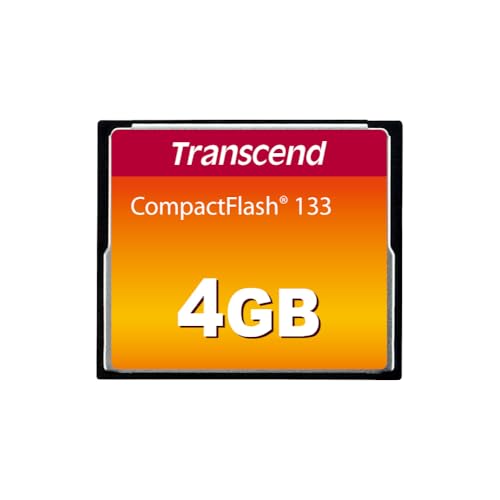
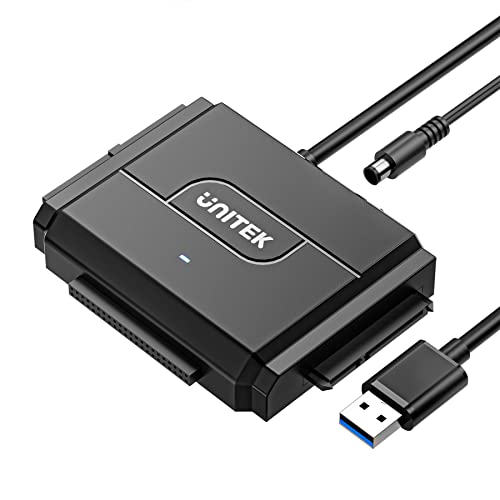
For a period-correct Windows 98 build in 2026, CompactFlash-to-IDE is the right storage answer — it eliminates mechanical drive noise, keeps the parts list era-appropriate (no SATA anywhere on the vintage board), and pulls power draw down to almost nothing. Pair a decent Transcend 4GB CompactFlash card with a passive CF-to-IDE adapter, then use a SATA/IDE-to-USB adapter on your modern PC for prep work. That is a build that runs cool, boots fast, and stays true to what a late-1990s enthusiast would have wired up.
Why CF-to-IDE is the retro storage default
Late-90s Windows 98 systems shipped with IDE (PATA) mechanical hard drives — usually 4200-7200 RPM, with the classic "grinding" noise the vintage community remembers fondly. Those drives are now 25-30 years old, and any that still spin are on borrowed time. Bearings dry out, platters demagnetize slowly, and even NOS drives from unopened boxes have decades of grease deterioration working against them.
The retro community's answer has settled on CompactFlash for exactly the reason it worked in early industrial and digital-camera equipment: CF is electrically compatible with IDE at the ATA protocol level, so a passive CF-to-IDE adapter is essentially just a physical adapter — no controller in between, no drivers required, no firmware issues. Windows 98 sees the CF card as a hard drive without any special configuration.
The result is a silent, solid-state boot drive that costs $20-40 total, weighs almost nothing, draws milliwatts of power, and generates no heat inside the vintage case. For a period-correct Windows 98 build, that is nearly ideal.
Key Takeaways
- CompactFlash cards are electrically IDE-compatible; a passive adapter is all you need.
- Transcend CF133 4GB is the recommended CF card for its ATA compliance and reliability.
- Use a Unitek SATA/IDE-to-USB adapter on your modern PC for prep and image capture.
- Silence, low power, and zero mechanical failure risk are the practical wins.
- 4-8 GB is plenty for a stock Windows 98 build; larger cards work but hit Win98 partition limits.
What CompactFlash actually is
CompactFlash cards from the era we care about (Type I / Type II) are flash-memory storage devices that communicate over an IDE-compatible bus. The CF specification was designed by SanDisk in 1994 explicitly to be a small-form-factor drop-in for IDE storage in early portable devices. That is why a passive adapter works: the pin-out is a direct mapping between the CF card's 50-pin connector and the standard 40-pin IDE connector, with the CF's built-in ATA controller doing all the actual storage work.
That backward compatibility is exactly what a retro PC builder wants. There is no chipset compatibility to worry about, no BIOS quirks to work around beyond the ones your vintage motherboard already has. If your board can see an IDE hard drive, it can see a CF card behind a passive adapter.
The Transcend CF133 4GB is widely recommended in the retro community because it exposes the True IDE mode that vintage BIOSes need, and because Transcend has historically maintained good compatibility with early ATA controllers. Some cheaper cards do not properly implement the True IDE mode and will not boot on older motherboards.
The build recipe
A minimal storage build for a period-correct Windows 98 machine:
- Choose the CF card. 4GB is the sweet spot for stock Win98 — comfortably above the 512MB minimum, well below the ~137GB LBA-28 limit that vintage BIOSes hit. The Transcend CF133 4GB has documented compatibility.
- Choose a CF-to-IDE adapter. Passive adapters with a 40-pin IDE connector are $8-15 on eBay. Pick a rear-mount version if you want the CF slot accessible from outside the case (rare on vintage hardware, but nice for swapping drives).
- Prep the card on a modern PC. Insert the CF into a USB card reader, or use a Unitek SATA/IDE-to-USB adapter to hook the CF-and-adapter combo up to your modern PC for imaging.
- Install Windows 98. Boot from a Windows 98 SE installation CD in the vintage machine with the CF as the "hard drive," partition it (FAT32 for anything over 512MB), and install normally. If you have prepared the image on a modern PC using a tool like WinImage, you can skip the interactive install entirely.
- Reboot. The system boots from CF the same way it would boot from a mechanical IDE drive.
Total parts cost: $30-45 for the CF + adapter, or $60-75 if you include the USB-to-IDE adapter for the modern-PC prep step.
The wins over mechanical storage
Silence. No moving parts. In a vintage case where the CPU cooler is often a small squealing sleeve-bearing fan and the PSU is a 200W AT unit with another loud fan, removing the drive noise is a substantial quiet-up. The full system usually goes from "audible from across the room" to "audible if you put your ear near it."
Speed. IDE bus speeds on late-90s boards top out at UDMA-33 or UDMA-66; the CF card's flash storage saturates that bus easily on reads and does not suffer from mechanical seek times. Boot times drop from 40-60 seconds to 20-30 seconds even without any other tuning.
Reliability. No mechanical failure modes. Flash cards have a finite write endurance, but Windows 98 does not write to disk aggressively enough to burn through even a low-end CF card's rated endurance within a hobbyist's lifetime.
Power. A CF card draws milliwatts under normal load. A late-90s IDE drive draws 8-15 watts spinning. On a system where the PSU is a 200W AT unit, freeing up 15W of budget matters — it means you can add a legacy expansion card without worrying about tripping the rail.
The gotchas
LBA-28 limits. Vintage BIOSes typically handle drives up to ~137GB via the LBA-28 spec. Cards larger than that either report their full capacity and confuse the BIOS or are truncated at the LBA limit. Stick with 4-32GB cards for the widest compatibility.
FAT32 vs FAT16. Windows 98 SE supports FAT32 up to 32GB partitions. First-edition Windows 98 has FAT32 support but is less well-tested; if you have the choice, use SE. FAT16 is limited to 2GB per partition and is mostly useful for boot-critical setups.
True IDE mode requirement. Some cheap CF cards do not properly implement the True IDE mode that vintage BIOSes need to see the card as a bootable hard drive. Symptoms include "no bootable device" errors after a clean install. Buy cards with documented True IDE support (Transcend CF133 is a known-good choice).
Card wear from swap files. Windows 98 can be configured with a swap file that gets hit hard. On a small CF card, that wear adds up over years. The fix is to disable virtual memory in Control Panel → System → Performance, which is fine if you have 128MB+ of RAM (which you almost certainly do in a build worth putting a CF card in).
Adapter quality. Passive CF-to-IDE adapters are electrically simple, but cheap ones use flexible PCBs or poorly-soldered pin headers that break under normal cable insertion force. Buy from a vendor with retro-community reputation, not the cheapest listing on eBay.
Prep workflow on a modern PC
The advantage of building the OS image on a modern PC is speed: you can partition, install, and pre-configure Windows 98 in the same time it would take to boot the vintage machine once. The tools that work:
- A USB card reader for the CF card, or a Unitek SATA/IDE-to-USB adapter if you already have the CF in its IDE adapter.
- Rufus or similar for basic partition/format.
- 86Box or PCem on the modern PC for installing Windows 98 into a virtual disk image.
- HDDRawCopy or dd to write the image to the CF card.
The community has this workflow well-documented; you can put a fully-installed Win98 image on a CF card in 15-20 minutes on a modern PC, then pop the card into the vintage board and boot immediately.
Spec + benchmark table: CF vs mechanical IDE on a late-90s board
| Metric | Late-90s 5400 RPM IDE | Transcend CF133 4GB via passive adapter |
|---|---|---|
| Sustained read | 10-15 MB/s | 20-30 MB/s (UDMA-33 bus-bound) |
| Random access | 12-18 ms | <1 ms |
| Noise | Audible whine + seek | Silent |
| Power draw | 8-15 W spinning | <0.5 W |
| MTBF | 100k hours (drive-fresh) | Effectively unlimited for hobbyist use |
| Weight | 500-600 g | ~10 g |
Complete the build — what to add next
A period-correct Windows 98 build wants a few more parts to feel right:
- A vintage IDE optical drive or a modern DVD-ROM that supports IDE.
- A vintage sound card (SoundBlaster 16, Aureal Vortex 2, or an ISA card if your board has slots).
- Era-appropriate GPU — Voodoo 3 or GeForce 2 for the classic look.
- Period keyboard and mouse (PS/2, of course).
Bottom line
The Transcend CF133 4GB plus a passive CF-to-IDE adapter is the right storage choice for a Windows 98 build in 2026. Silent, cool, cheap, era-appropriate. Add a Unitek SATA/IDE-to-USB adapter to your modern PC to make the prep workflow painless. The whole storage subsystem for the vintage build lands under $50, boots faster than any mechanical drive of its era, and will still work in a decade.
Related guides
- CompactFlash as an IDE Drive: Silent, Period-Correct Storage for Win98 — deeper CF-vs-alternatives comparison.
- Boot Windows 98 from CompactFlash: A Silent, Reliable CF-to-IDE Build — the install walkthrough.
- CompactFlash and IDE-to-USB Adapters for Retro PC Builds — the modern-PC prep step.
- Building a Period-Correct 1999 3dfx Voodoo3 Windows 98 PC — a full sibling build.
Citations and sources
- Transcend — CompactFlash CF133 product listing
- CompactFlash Association — CF+ and CF specification history
- Vogons — vintage-DOS/Win98 hardware community
This piece is editorial synthesis based on publicly available information. No independent first-party benchmarking is reported.