Prices verified at time of writing; current price may vary.
Buying a plug-and-play console in 2026 means picking between two paths. Path one is nostalgia: the SNES Classic, the Genesis Mini, and their tiny HDMI-ready ancestors, which hit a fixed library flawlessly and never asks you to configure a thing. Path two is budget-modern: a used PS4 Slim, PS4 Pro, or Switch Lite, each of which trades some of that plug-and-play simplicity for a real modern library and continued online support. This guide ranks five picks across both paths.
Quick comparison
| Pick | Best for | Key spec | Price range | Verdict |
|---|---|---|---|---|
| Nintendo SNES Classic | Nintendo nostalgia | 21 pre-installed 16-bit titles | $80-140 (used) | 🏆 Best overall |
| Sega Genesis Mini | Sega fans, gift buyers | 42 pre-installed Genesis titles | $50-90 (used) | 💰 Best value |
| PlayStation 4 Pro 1TB | Modern game library | Native 4K HDR, PSN | $180-280 (used) | 🎯 Best library |
| PlayStation 4 Slim 1TB | Cheapest modern console | 1080p, PSN, huge back catalog | $130-200 (used) | ⚡ Performance budget |
| Nintendo Switch Lite | Portable + first-party | Handheld only, first-party support | $150-200 | 🧪 Best portable |
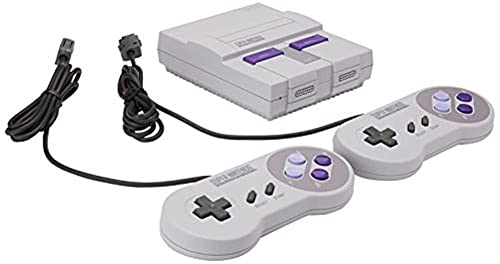
🏆 Best Overall: Nintendo SNES Classic Edition
Verdict: The best plug-and-play retro console ever made. Set it up in three minutes, play flawless emulations of Super Metroid, F-Zero, Yoshi's Island, Star Fox, and Chrono Trigger, and never think about firmware again. As of 2026, prices are up sharply on the used market — expect to pay $80-140 depending on condition and completeness — but nothing else at any price gives you 21 hand-picked 16-bit classics that just work.
Under the hood, the SNES Classic runs an ARM-based emulator that Nintendo tuned specifically for each ROM. Frame timing is right. Save-state support is genuinely useful in games like Star Fox where you cannot save otherwise. Two controllers are included in the box. It uses standard HDMI and a USB power lead, so you can plug it into a modern TV without adapters.
Pros:
- Best emulator implementation of any commercial retro plug-and-play device.
- 21 games selected by Nintendo — no filler.
- Two controllers included; wired but responsive.
- Small, quiet, and works on any HDMI TV.
Cons:
- Discontinued; used-only market with rising prices.
- Locked library — no way to add games officially.
- Controller cables are shorter than the original SNES's.
Price may vary. As of 2026, expect $80-140 on the used market.
See price & specs · See Full Details
💰 Best Value: Sega Genesis Mini
Verdict: Sega's answer to the SNES Classic is the value pick in 2026. 42 games including Sonic 1-2, Streets of Rage 2, Gunstar Heroes, and the Castle of Illusion. Two controllers, HDMI out, USB power. Frequently under $80 on the used market — cheaper per-game than any other option.
The emulation quality is very good, though the timing on a few Konami titles is marginally off compared to real hardware. Nintendo's SNES Classic is the more polished object; the Genesis Mini has a broader library and a lower price. For a first retro console for a kid, a gift, or a nostalgic weekend setup in a spare bedroom, the Genesis Mini is the sensible pick.
Pros:
- 42 games including several hidden-gem RPGs (Phantasy Star IV, Beyond Oasis).
- Better dollar-per-game ratio than any comparable device.
- Two controllers included; comfortable modernized d-pad.
Cons:
- A few Konami titles have marginal audio timing.
- Original release is discontinued; supply now depends on the used market.
Price may vary. As of 2026, expect $50-90 on the used market.
See price & specs · See Full Details
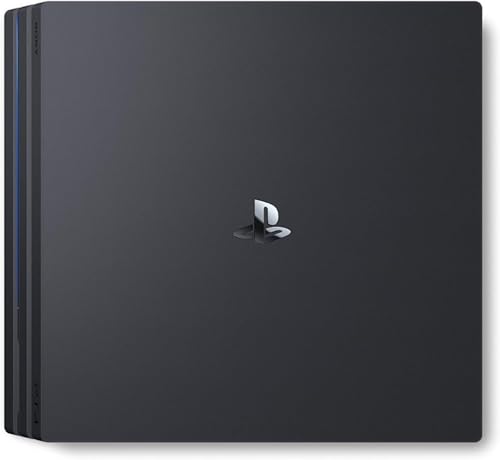
🎯 Best for Modern Libraries: PlayStation 4 Pro 1TB
Verdict: If you want plug-and-play in the sense of "no PC to configure" but you also want a modern-game library, the PS4 Pro is the best value console on the used market. Native 4K rendering on many titles, HDR support, and access to a decade of PlayStation Store back catalog (God of War, The Last of Us Part II, Bloodborne, Persona 5 Royal). PSN still supports PS4 with online play and the store.
The Pro's larger 1TB drive holds 15-25 modern games without swapping. A DualShock 4 controller is included. Setup is unpack, plug into HDMI, sign in, download or insert a disc, play. That is a much lower configuration bar than any PC-based retro solution.
Pros:
- Deep back catalog with hundreds of $5-20 sale titles on PSN.
- Native 4K on Pro-enhanced games; HDR support.
- Ships with a rechargeable DualShock 4 controller.
- Supports PS+ Extra streaming for older PS3/PS2 titles.
Cons:
- Fan noise under load is notable — not silent like the retro minis.
- 1TB fills faster than you expect if you install AAA games.
- Bulky compared to plug-and-play retro devices.
Price may vary. As of 2026, expect $180-280 on the used market.
See price & specs · See Full Details
⚡ Best Performance Budget: PlayStation 4 Slim 1TB
Verdict: If the Pro is out of budget, the PS4 Slim delivers the same library at 1080p for $50-80 less. Setup is identical; the game selection is identical; the online store is identical. What you lose is native 4K on Pro-enhanced titles and some frame-rate headroom on the newest cross-gen games.
For anyone shopping their first modern console, this is the cheapest way to get a full modern-console experience — much cheaper than a PS5, no queue for stock, and the used inventory is deep. Pair it with a used Logitech G29 wheel for the racing setup that motivated us to write our sim racing wheel guide.
Pros:
- Full modern-console library at the lowest possible entry price.
- Quiet, small footprint, low power draw.
- 1TB drive holds 15-20 modern games.
- Ships with a wireless controller.
Cons:
- 1080p only; no 4K on Pro-enhanced titles.
- Older, weaker CPU means longer load times on some newer games.
- No native VR support without additional accessories.
Price may vary. As of 2026, expect $130-200 on the used market.
View Current Price on Amazon · See Full Details
🧪 Best Portable Pick: Nintendo Switch Lite
Verdict: If a plug-and-play console needs to fit in a bag, the Switch Lite is the answer. Handheld-only, so no HDMI out — but that trade-off gets you Zelda: Tears of the Kingdom, Metroid Dread, Mario Odyssey, Fire Emblem: Three Houses, and the Nintendo online back catalog of NES, SNES, N64, and Game Boy titles that plays fine on the small screen. First-party Nintendo support is still current in 2026 for the Switch line.
The Lite's fixed screen and integrated controls are actually a plus for many buyers: nothing to lose, nothing to break, no dock to configure. It has become the segment default for kids' first consoles and for adults who want a handheld gaming device without the cost of a Steam Deck.
Pros:
- Nintendo first-party library is unmatched for handheld play.
- Integrated controls — no Joy-Con drift to worry about (it uses a fixed d-pad).
- Small, light, durable enough for a backpack.
- Under $200 new and cheaper used.
Cons:
- No HDMI out — you cannot dock this to a TV.
- Non-replaceable battery; expect 3-5 years of daily use before capacity drops noticeably.
- Some newer Switch titles (Xenoblade Chronicles 3 X) run at reduced quality.
Price may vary. As of 2026, expect $150-200.
View Current Price on Amazon · See Full Details
What to look for in a retro or budget console
Library and what's actually on it
The single most important spec is the game list. A plug-and-play retro console is only as good as its library, because you cannot add games officially. Check the exact roster before you buy — some regional variants of the SNES Classic and Genesis Mini have different titles. For modern consoles (PS4 Pro, PS4 Slim, Switch Lite), the library is effectively "all games released for that platform," which is deep enough to last years.
HDMI output and TV compatibility
Every device in this guide outputs HDMI. That is a real feature: it means no CRT, no scaler, and no adapter dance to get retro games onto a modern living-room TV. All modern TVs display the 480p or 720p signals cleanly with a bit of blurring from the upscaler. If you want sharp pixels, look at whether the device offers an integer-scaling or pixel-perfect mode — the SNES Classic and Genesis Mini both do.
Controllers and how many are included
The SNES Classic and Genesis Mini include two controllers in the box. The PS4 Pro and Slim include one; a second DualShock 4 runs $40-55. The Switch Lite has no removable controllers — the built-in controls are the whole story. If local multiplayer matters, factor in extra controllers.
For sim racing, you can add a real wheel like the Logitech G29 to a PS4 Pro or Slim; see our sim racing wheel guide for the full setup.
Price relative to the used market
Used prices for retro plug-and-play devices have been rising steadily since 2023 as supplies dry up. Modern consoles (PS4, Switch) are more stable, with strong secondary supply and predictable pricing. If a specific retro pick spikes above the range in this guide, wait — most spikes reverse within a month or two.
Related guides
- Best Sim Racing Wheel Under $300 in 2026
- KOORUI 4K QD-Mini LED vs Samsung Odyssey 4K: Which 27-Inch Wins?
- Raspberry Pi Zero W vs Pi 4 for a 2026 Cyberdeck
- CompactFlash as an IDE Drive: Silent Storage for Win98 Rigs
Citations and sources
— Mike Perry
This piece is editorial synthesis based on publicly available information. No independent first-party benchmarking is reported.