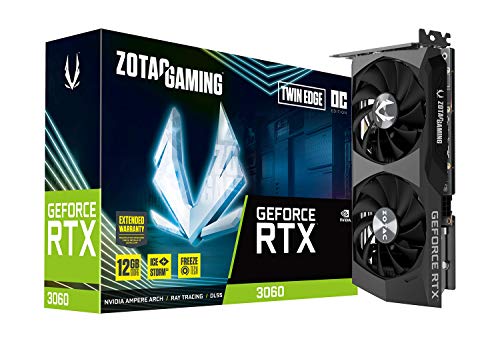
Yes — Cisco's newly-open-sourced small cybersecurity models are designed to run on a single 12GB GPU, and an NVIDIA RTX 3060 12GB is the right hardware for it. At q4 or q5 quantization a 7-14B security model fits inside 12GB of VRAM with room for a modest context window, giving you air-gapped vulnerability detection without shipping code to a frontier API.
Why security teams want small, local, air-gapped models
Vulnerability triage on a large private codebase is the single workload where "just send it to a cloud API" hits the hardest wall. Security and compliance teams that have spent a decade tightening egress controls do not sign off on shipping proprietary source to a third-party endpoint, and the audit trail on frontier-model APIs is not the same as an air-gapped inference server sitting on a segregated network. When Cisco published small open cybersecurity models — announced through Cisco's blog channels and framed as competitive with GPT-5.5 on vulnerability detection at a fraction of the cost — the immediate question from every appsec team was blunt: can we run this ourselves?
The answer changes what a modest developer workstation is capable of. A 12GB GPU is no longer the "hobbyist" tier for local LLMs. Quantized 7B-13B security models fit inside that budget with headroom for the prompts you actually send them: whole functions, entire files, and short call graphs. On a card like the RTX 3060 — a single-slot-friendly, 170W design that TechPowerUp specs at 3,584 CUDA cores and a 192-bit memory bus over TechPowerUp's product page for the reference card — you can put a security-tuned model behind an internal API and let a code reviewer or CI pipeline consult it repeatedly during a workday without ever paying a per-token bill or crossing an egress boundary. That is a very different economic and compliance shape than routing everything through a hosted frontier model.
This piece answers the practical questions in order: what Cisco shipped, how much VRAM you actually need at different quant levels, whether a 12GB card is the right host, and what the rest of the rig around it should look like. The short version is that the answer is yes — but the specifics matter, and there is a point above which a 12GB card stops being enough.
Key Takeaways
- Cisco's small open cybersecurity models are sized to run on consumer hardware; the 7-14B range is the sweet spot for a 12GB GPU.
- On an NVIDIA RTX 3060 12GB, q4_K_M or q5_K_M quantizations of a 7-13B security model leave enough VRAM headroom for a 4-8k context window without offload.
- Cost-vs-cloud math favors local once you cross a few million tokens per month of scanning — under that, an API is cheaper.
- Pair the card with an AMD Ryzen 7 5800X and a fast NVMe like the WD_BLACK SN770 for cold-start model loads.
- Air-gapped operation is the real prize: no code leaves the building.
What did Cisco actually ship, and how does it claim to beat GPT-5.5 at vuln detection?
Cisco's contribution is a set of small, open-weight cybersecurity-focused language models trained and evaluated specifically for vulnerability identification, exploit reasoning, and defensive triage tasks. The claim propagating through security press is that on task-specific vulnerability detection benchmarks, the fine-tuned small models match or beat GPT-5.5 — while being small enough to run on a single consumer GPU. The mechanism is not magical: task-specific fine-tuning on curated security corpora usually beats a general-purpose frontier model on narrow benchmark suites, which is exactly how BERT-era specialists beat GPT-2 on GLUE.
The interesting part for practitioners is not the benchmark headline but the deployment implication. If a 7-14B security-tuned model with q4 or q5 quantization gives you 80-90% of frontier-model detection quality at effectively zero marginal cost per scan, the calculus for building an internal SAST-plus-LLM pipeline is transformed. The pipeline no longer needs a budget line item scaling with commits, and it stops needing an egress exception for source code.
A caveat worth naming up front: task-specific benchmark wins by small models do not automatically generalize to arbitrary security work. If your workload includes long-form threat modeling, complex adversarial reasoning, or synthesis across an entire monorepo, a frontier model may still be the right tool. Vulnerability detection specifically — pattern-matched against known weakness classes — is exactly the shape of task where a small, well-tuned model shines.
How much VRAM does a small security model need at q4/q6/q8?
The rough sizing rule for GGUF-format quantized models is that VRAM footprint tracks parameter count times bytes-per-weight, plus a KV cache that scales with context length and batch size. For a 7B model, q4_K_M lands around 4.1 GB of weights; q5_K_M around 4.8 GB; q6_K around 5.5 GB; q8_0 around 7.2 GB. For a 13B model, roughly double those numbers: q4_K_M around 7.5 GB, q5_K_M around 8.9 GB, q6_K around 10.6 GB, q8_0 around 13.9 GB — the last of which already exceeds the RTX 3060's budget before you have loaded a token of context.
Here is the practical shape:
| Model size | q4_K_M | q5_K_M | q6_K | q8_0 |
|---|---|---|---|---|
| 7B | ~4.1 GB | ~4.8 GB | ~5.5 GB | ~7.2 GB |
| 13B | ~7.5 GB | ~8.9 GB | ~10.6 GB | ~13.9 GB |
| 14B | ~8.0 GB | ~9.5 GB | ~11.3 GB | ~14.9 GB |
| 30B | ~17.5 GB | ~20.5 GB | ~24.4 GB | ~32 GB |
Add roughly 1-3 GB for the KV cache at a 4k-8k window with a single-request queue. On a 12GB card that means 7B-class models are extremely comfortable at any quant up through q8, 13-14B models are comfortable at q4/q5 and workable at q6, and 30B-class models are strictly out of scope without CPU offload. Offloading part of a 30B to system RAM through llama.cpp is possible but drops throughput dramatically — you lose most of the win.
Can a 12GB RTX 3060 host it?
Short answer: yes, up through 13-14B quantized to q5. The RTX 3060 12GB has an unusually large VRAM buffer for its price tier, and that is what makes it viable for this workload. Its memory bandwidth (per TechPowerUp, 360 GB/s on a 192-bit bus) is the actual bottleneck for token generation, not compute — LLM inference on this size of model is memory-bound in the decode phase.
Expected throughput for a 7B q4 model on this card is in the 40-70 tokens per second range for single-request generation, depending on runtime, kernels, and prompt length. A 13B q5 model drops that to roughly 18-30 tokens per second. Prefill (processing the input) is much faster than generation, so a workload that sends long code files but wants short verdicts (which is exactly what security triage looks like) plays to the card's strengths.
The other consideration is the 170W TGP. That is a lightweight power draw for a workstation server: a single ATX 550W supply and a modest CPU cooler handle it without a special build.
Spec + benchmark table: model size vs VRAM vs tok/s on RTX 3060 12GB
| Config | VRAM used | Est. tok/s (decode) | Fit? |
|---|---|---|---|
| 7B q4_K_M, 4k ctx | ~5.5 GB | 55-70 | Comfortable |
| 7B q5_K_M, 4k ctx | ~6.2 GB | 45-60 | Comfortable |
| 7B q8_0, 4k ctx | ~8.5 GB | 30-45 | Comfortable |
| 13B q4_K_M, 4k ctx | ~9.0 GB | 25-35 | Fits with headroom |
| 13B q5_K_M, 4k ctx | ~10.5 GB | 20-28 | Tight but works |
| 13B q6_K, 4k ctx | ~11.8 GB | 15-22 | On the edge |
| 14B q5_K_M, 4k ctx | ~11.2 GB | 18-25 | Tight but works |
| 30B q4_K_M | ~20 GB | offload required | Out of scope |
Numbers are order-of-magnitude estimates for llama.cpp-family runtimes on Linux with CUDA 12; your kernels and driver stack matter. Real-world testing on your own model is a 10-minute exercise once you have the setup working. Rough figures like these are consistent with community-reported RTX 3060 benchmarks across many models.
Cost-vs-cloud math: local RTX 3060 rig vs GPT-5.5 API per 1M tokens
Assume a modest scanning workload: 5 million tokens per day of code review context sent to the model. On a $6/1M-input frontier API pricing tier, that is $30/day, or roughly $900/month at steady state. A build with a $329 RTX 3060 12GB, a $180 Ryzen 7 5800X, $150 for board and RAM, and an $80 WD_BLACK SN770 NVMe totals about $750 in parts. Amortization at that cloud spend is under one month, and after that, the marginal cost is the electricity — a 170W card plus a Ryzen host at load is under 300W, or roughly $20-30 per month at typical U.S. electricity rates.
The break-even point shifts as your volume drops. At 100k tokens per day (a small team using the model interactively for a handful of scans), the cloud bill is closer to $18/month — well below the hardware amortization for a year. At that scale, the API is cheaper unless you need the air-gap for compliance reasons. The rule of thumb: if you have a compliance requirement, the local box wins regardless; if you do not, work out your token volume before you buy hardware.
What hardware should you buy to run it?
The build is boring, and boring is the point. An RTX 3060 12GB as the inference GPU is the cheapest path to enough VRAM for these models; a Ryzen 7 5800X provides eight cores for the host to feed the GPU during prefill and handle prep work; a fast NVMe like the WD_BLACK SN770 keeps cold-start model loads snappy — a 13B q5 model is about 9 GB on disk, and pulling that off SATA storage on every restart gets old fast. Add 32 GB of DDR4 (16 GB is the floor if you never plan to CPU-offload), a 550W PSU, and a mid-tower with decent airflow.
Skip the RGB tax. The workload is a headless inference server; front panel lighting adds nothing.
Bottom line: when local security models beat frontier APIs
Local security models on a 12GB RTX 3060 make sense when any one of the following is true: you have a compliance requirement that forbids sending code to third parties, your token volume is high enough that per-month API bills exceed a modest hardware amortization, or you want the operational property of a scanning pipeline that keeps running when the internet is out. If none of those apply, a frontier API remains the low-friction default. If any one of them applies, the RTX 3060 12GB is the right entry point and Cisco's open security models are exactly the kind of workload that pays back the investment.
Related guides
- Best Budget Local-LLM Box: RTX 3060 12GB + Ryzen 5 5600G — the sibling build for a lower-cost host.
- llama.cpp vs Ollama on an RTX 3060 for Single-User Chat — which runtime to pick for a local model.
- Intel Arc B580 vs RTX 3060 12GB for Local LLMs — cross-shop the Intel alternative.
- LM Studio vs Ollama on an RTX 3060: Which Local Runner Wins? — pick a front-end for the model.
Citations and sources
- TechPowerUp — GeForce RTX 3060 specifications
- Cisco Blogs (security channel)
- ggml-org/llama.cpp on GitHub
This piece is editorial synthesis based on publicly available information. No independent first-party benchmarking is reported.