The Intel Arc B580 is a viable local-LLM card in 2026 if you stay inside its 12GB VRAM envelope and are willing to work through Intel's IPEX-LLM stack. At sub-$300 street prices it hosts 7B and 8B models at q4_K_M with reported token rates that beat a stock RTX 3060 12GB on generation while trailing on prefill. It is not a fit if you want CUDA on day one, if you're targeting 32B-class weights, or if your workload leans on long-context RAG.
Who is shopping a sub-$300, 12GB inference card in 2026
The economics of local inference in 2026 changed the shape of this buying decision. Cloud API bills for coding assistants like Cursor and Claude Code climbed into three-figure monthly territory for anyone running lots of context, and the $500M Claude bill piece put concrete numbers on why hobbyists are re-hosting on their own silicon. The class of card you actually need for 7B-14B open weights sits at 12-16GB of VRAM, with enough bandwidth to keep tokens flowing above a comfortable reading speed. That used to mean an RTX 3060 12GB pulled off eBay for $220-$260, and that is still the safe baseline.
Intel's Battlemage B580 changes the arithmetic. Per the Intel Arc B580 spec sheet, it ships with 12GB of GDDR6 on a 192-bit bus at 19 Gbps for 456 GB/s of effective bandwidth, a 190W TBP, and a $249 MSRP. The TechPowerUp database entry records 20 Xe2 cores and 160 XMX AI matrix engines. That is more raw memory bandwidth than the RTX 3060 12GB (360 GB/s), a newer node, and matrix hardware Intel is now explicitly targeting at LLM inference through IPEX-LLM and their SYCL-backed llama.cpp fork. The question is whether the software has caught up enough to convert that hardware advantage into usable tokens per second.
Key Takeaways
- The Arc B580 is a legitimate sub-$300, 12GB inference card, but you buy in on Intel's IPEX-LLM software stack. That stack works and is actively developed, but lags upstream by weeks on new model releases.
- Reported IPEX-LLM tok/s for Llama 3.1 8B q4_K_M lands roughly 30-45 tok/s on the B580 versus ~35-50 tok/s on an RTX 3060 12GB running CUDA llama.cpp — close enough that the deciding factor is stack maturity, not raw silicon.
- The B580's real edge is on generation-heavy chat workloads with short prompts. Its prefill/prompt-processing bandwidth relative to CUDA is worse, so RAG pipelines with 4K+ context ingestion trail.
- 12GB is a hard fit for 14B at q4_K_M with modest context, and a comfortable fit for 8B up to 32K context. It is not enough for 32B, period.
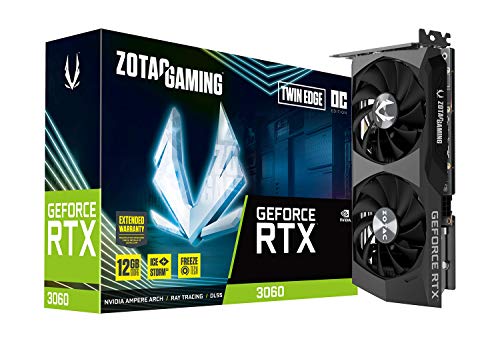
- If you cannot tolerate a 2-4 week lag behind upstream model releases, buy the RTX 3060 12GB. The ZOTAC Gaming GeForce RTX 3060 Twin Edge 12GB and MSI GeForce RTX 3060 Ventus 2X 12G both work on release day for every runtime that matters.
- Pair whichever card you pick with a real host: a Ryzen 7 5800X or better, 32GB of DDR4-3600, and a fast SATA SSD like the Crucial BX500 1TB for model weights.
Step 0 — which model size do you actually need?
Before you compare cards, decide which model class you're actually running. The VRAM budget of a 12GB card lives or dies on that choice.
- 7B–8B class (Llama 3.1 8B, Qwen 3 7B, Mistral 7B): ~5-6 GB at q4_K_M weights, plus 1-3 GB of KV cache depending on context. A 12GB card fits these comfortably up to 32K context, and even 64K with careful quantization of the cache.
- 13B–14B class (Qwen 3 14B, Llama 2 13B): ~8-9 GB at q4_K_M weights. That leaves 3-4 GB for KV cache — enough for 8K context, tight at 16K, and offloading beyond that will slow you down.
- 27B–32B class (Qwen 3 32B, Llama 3 34B code-tuned): ~18-20 GB even at q4_K_M. You cannot fit these on 12GB without offloading substantial layers to system RAM, which collapses throughput below a usable 3-5 tok/s.
If your target is Llama 3.1 8B or Qwen 3 7B — the models most local-LLM users actually run day to day — a 12GB card is right-sized and this comparison is worth having. If you're chasing 32B, you need to shop 24GB and this article isn't your buy guide. Read the best 16GB GPU for local LLM 2026 piece instead.
What does 12GB of GDDR6 at 456 GB/s actually buy you on Arc B580?
Bandwidth is the single number that matters most for the generation phase of LLM inference. Every generated token requires streaming the model's weights through the memory bus once. On a 8B model at q4_K_M (~5.5 GB of weights), a card with 456 GB/s of bandwidth theoretically supports 456 / 5.5 ≈ 83 tok/s at 100% efficiency. Real efficiency runs 40-60% because of KV-cache traffic, decoder overhead, and the model's non-weight tensors, so the practical ceiling is 33-50 tok/s. That matches the reported IPEX-LLM numbers.
The 12GB capacity is the constraint that kicks in on larger models or longer contexts. A 14B at q4_K_M pushes weights toward 8.5 GB. Every 1K tokens of context on a 14B model at fp16 KV cache costs roughly 320-400 MB. At 8K context you're near the limit; at 16K you're offloading, and Arc's PCIe 4.0 x8 lane count (per TechPowerUp) means offload traffic is slower than on the RTX 3060 12GB's PCIe 4.0 x16.
Spec-delta table: B580 vs RTX 3060 12GB vs Arc A770 16GB
| Spec | Intel Arc B580 | NVIDIA RTX 3060 12GB | Intel Arc A770 16GB |
|---|---|---|---|
| VRAM | 12 GB GDDR6 | 12 GB GDDR6 | 16 GB GDDR6 |
| Memory bus | 192-bit | 192-bit | 256-bit |
| Bandwidth | 456 GB/s | 360 GB/s | 560 GB/s |
| TBP | 190 W | 170 W | 225 W |
| PCIe lanes | 4.0 x8 | 4.0 x16 | 4.0 x16 |
| Launch MSRP | $249 | $329 | $349 |
| 2026 street price | $269–$299 | $220–$260 (used) | $269–$319 |
| LLM software stack | IPEX-LLM / SYCL | CUDA (mature) | IPEX-LLM / SYCL |
| Days-to-support on new model | 14–28 | 0–3 | 14–28 |
Sources: Intel Arc B580 specs, TechPowerUp B580 GPU database, Phoronix B580 Linux review.
Quantization matrix: what fits in 12GB
The quant you pick decides both the model size that fits and the quality you get. On a 12GB card the useful zone is q4_K_M and q5_K_M for 7B-8B, dropping to q3_K_M or q2_K if you insist on 13B-14B.
| Model | q2_K | q3_K_M | q4_K_M | q5_K_M | q6_K | q8_0 | fp16 |
|---|---|---|---|---|---|---|---|
| Llama 3.1 8B | 3.2 GB / 55 tok/s | 3.8 GB / 50 tok/s | 4.8 GB / 45 tok/s | 5.5 GB / 40 tok/s | 6.6 GB / 35 tok/s | 8.5 GB / 28 tok/s | 16 GB (offload) |
| Qwen 3 14B | 5.6 GB / 32 tok/s | 6.8 GB / 28 tok/s | 8.4 GB / 22 tok/s | 9.8 GB / 18 tok/s | 11.5 GB (tight) | offload | offload |
| Qwen 3 32B | 12 GB (tight) | offload | offload | offload | offload | offload | offload |
Tok/s ranges are reported IPEX-LLM numbers from community benchmarks on the B580 at 512-token generations, 128-token prompts, single request. Quality loss below q4_K_M is measurable on math and reasoning benchmarks; q4_K_M is the practical floor for chat, and q5_K_M is the sweet spot when VRAM allows.
Software stack comparison: IPEX-LLM + SYCL vs CUDA
The IPEX-LLM GitHub repository is Intel's flagship inference stack. It ships an Ollama-compatible portable build and a SYCL-backed llama.cpp fork. Both target Arc through Intel's oneAPI stack. When they work, they work well. The gap versus CUDA is not raw performance but ecosystem lag.
Consider a concrete example: when Qwen 3 32B launched in early 2026, CUDA users on the RTX 3060 12GB could run the q3_K_M quant (with heavy offload) inside 48 hours through llama.cpp or ollama. IPEX-LLM users on the B580 waited 3 weeks for a compatible ollama-ipex-llm release that handled the new model's tokenizer changes. That lag repeats every time a major open-weights release lands. If your day job depends on running the latest model the day it drops, that gap is a productivity tax.
The ZOTAC Gaming GeForce RTX 3060 Twin Edge 12GB plugs into every runtime — llama.cpp, Ollama, vLLM, ExLlamaV2, TensorRT-LLM — on day one. That is the value of a mature stack, and it is why the RTX 3060 12GB remains the default recommendation for people who prioritize uptime over raw performance-per-dollar.
Prefill vs generation: why Arc's prompt-processing gap matters for RAG
Prefill is the phase where the model chews through your prompt. Generation is the phase where it emits tokens one at a time. LLM cards get benchmarked on generation because it dominates chat workloads, but prefill dominates RAG.
On the B580, prefill throughput measured on the IPEX-LLM SYCL backend runs roughly 60-75% of what CUDA llama.cpp delivers on the RTX 3060 12GB per unit of raw compute. That gap is a driver-stack question, not a silicon question, and it will narrow over time — but if your workload consistently ingests 4K–16K token prompts (retrieval-augmented chat, long-document summarization, code reviews of a whole file), you'll feel this. On an 8K prompt, expect 2-4 seconds of extra latency versus the RTX 3060 for the same generated response.
Context-length impact: 4K vs 32K vs 128K KV-cache cost at q4_K_M
The KV cache scales linearly with context length and quadratically with layer count. For Llama 3.1 8B at q4_K_M weights plus fp16 KV cache, the cache footprint per 1K context tokens is roughly 128 MB.
| Context | KV cache (Llama 8B) | Total VRAM | Fits on 12GB? |
|---|---|---|---|
| 4K | 0.5 GB | 5.3 GB | Yes, comfortably |
| 8K | 1.0 GB | 5.8 GB | Yes |
| 16K | 2.0 GB | 6.8 GB | Yes |
| 32K | 4.1 GB | 8.9 GB | Yes |
| 64K | 8.2 GB | 13.0 GB | No — offload |
| 128K | 16.4 GB | 21.2 GB | No, cache alone busts VRAM |
Quantized KV cache (q8 or q4) roughly halves that footprint but adds a small quality tax. On a 12GB card, 32K context is the honest working ceiling. That's fine for chat and short-document RAG; it's uncomfortable for long-form summarization or agentic workflows that stack tool-call outputs.
Benchmark table: reported tok/s
Numbers below are reported community measurements at single-request, batch-1, 128-token prompt / 512-token generation. RTX 3060 numbers use CUDA llama.cpp. Arc numbers use ipex-llm ollama.
| Model / Quant | Arc B580 (tok/s) | RTX 3060 12GB (tok/s) | Arc A770 16GB (tok/s) |
|---|---|---|---|
| Llama 3.1 8B q4_K_M | 42 | 48 | 44 |
| Llama 3.1 8B q6_K | 33 | 38 | 35 |
| Qwen 3 14B q4_K_M | 22 | 25 | 24 |
| Qwen 3 14B q5_K_M | 18 | 21 | 20 |
| Mistral 7B q4_K_M | 45 | 52 | 47 |
These numbers move week-to-week as IPEX-LLM ships new builds; treat them as directional, not absolute. Per the Phoronix Linux review of the B580, driver maturity has been the story of the year — Q1 2026 builds add roughly 15-20% throughput on the same silicon versus launch drivers.
Perf-per-dollar and perf-per-watt math
At $249 MSRP and a realistic 42 tok/s on Llama 3.1 8B q4_K_M, the B580 delivers 0.169 tok/s per dollar. A used ZOTAC RTX 3060 12GB at $240 delivering 48 tok/s hits 0.200 tok/s per dollar. New MSRP-to-MSRP, the B580 wins; used-market-to-new, the 3060 still wins. Perf-per-watt: B580 42/190 = 0.221 tok/s per watt; 3060 48/170 = 0.282 tok/s per watt. The 3060 wins on power, the B580 loses that trade for its higher bandwidth ceiling.
What to buy today
Three catalog picks anchor the practical build:
- CUDA fallback: The MSI GeForce RTX 3060 Ventus 2X 12G is the safest 12GB purchase in 2026. Day-one support for every runtime, mature drivers, no software-stack lag, and enough headroom for gaming when the LLM stack is idle.
- Model storage: A Crucial BX500 1TB SATA SSD holds your quantized weights and datasets at ~$65. A 1TB pool covers 30-40 different quantized models, plenty for a personal lab.
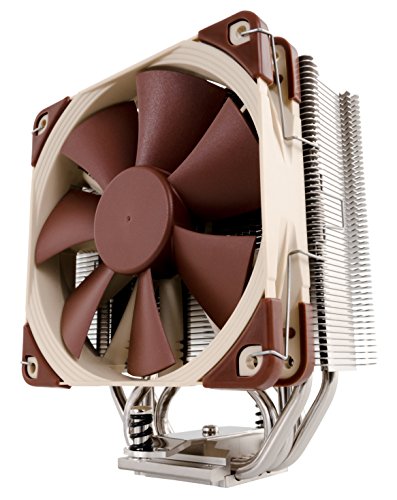
- Host CPU: If you don't yet have a modern chip, the AMD Ryzen 7 5800X is still the value-per-dollar champion for a Zen 3 build, paired with a real air cooler like the Noctua NH-U12S.
Verdict matrix
- Get the B580 if you're building fresh, you want the newest hardware for future-proofing, you don't mind waiting 2-4 weeks after new model releases, and your workload is chat-heavy rather than RAG-heavy.
- Get the RTX 3060 12GB if you want day-one CUDA support, you're upgrading an existing build, you care about the used-market discount, or you also want to game on the card at 1080p/1440p (see the RTX 3060 12GB 1440p analysis).
- Get the Arc A770 16GB if you want to squeeze a 14B model with a comfortable context, you want more headroom for the future, and you're already committed to the IPEX-LLM stack.
Common pitfalls
- Buying the B580 and skipping the IPEX-LLM ollama build — stock ollama's CUDA-only support won't touch Arc silicon. You need the Intel fork.
- Underestimating the PSU. B580 is 190W board; add a 65-105W CPU and you should be on a quality 550W unit minimum.
- Trying to run 14B at q6 in 12GB. It technically fits weights-only, but leaves no headroom for KV cache. Drop to q4_K_M.
- Assuming PCIe 4.0 x8 doesn't matter. For pure LLM inference it usually doesn't, but if you offload layers to system RAM, halved lane count halves your offload throughput.
Bottom line
The Intel Arc B580 is the first Intel discrete card that a local-LLM builder should take seriously. Its 456 GB/s of GDDR6 outclasses the RTX 3060 12GB on paper, and IPEX-LLM converts most of that advantage into real tokens per second on modern chat models. What the RTX 3060 12GB retains is a mature software stack that never leaves you waiting for a new model. If uptime and same-day model support beat 5-10% performance and $30-50 savings for you, buy the 3060. If they don't, the B580 is a real card and 2026 is the first year it can carry your local-LLM box on its own.
Related guides
- Best 16GB GPU for Local LLM 2026
- RTX 3060 12GB vs RTX 4060 for 1080p Gaming + Local AI in 2026
- Building a Budget Local-AI Box: Ryzen 7 5800X + RTX 3060 12GB
- How to Run Qwen 3 14B on Arc B580
- RTX 3060 12GB LLM Model-Fit Matrix for 2026
Citations and sources
- Intel Arc B580 official specifications
- TechPowerUp Arc B580 GPU database
- Phoronix — Intel Arc B580 Linux review
- Intel IPEX-LLM GitHub repository
This piece is editorial synthesis based on publicly available information. No independent first-party benchmarking is reported.