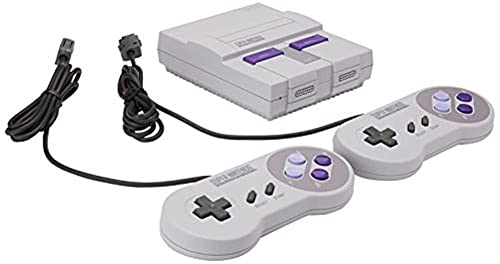
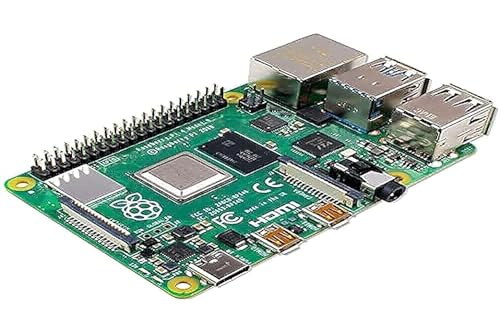
Buy a mini console if you want one specific library working in five minutes and you accept a fixed game list. Build a Raspberry Pi 4 box if you want many systems, your own dumped library, and upgradeable software. In 2026 the cost argument has flipped: both minis are discontinued and trade around $220 in our catalog, while a Pi 4 build lands lower and does more.
Who this is actually for
There are three buyers in this comparison and they want genuinely different things, which is why "which is best" has no single answer.
The plug-and-play nostalgia buyer wants to hand a controller to somebody on a Saturday night and have Sonic or Super Mario World on screen before the popcorn is done. They do not want to flash a microSD card, they do not want to map buttons per-emulator, and they will never load a game that did not come in the box. For that buyer, the Sega Genesis Mini or the Nintendo Super NES Classic Edition is a finished product, and the fact that it cannot be extended is a feature rather than a limitation.
The collector is buying an object, not a games machine. A sealed or complete-in-box mini console is a shelf item whose value is tied to scarcity, and both units are discontinued, which means supply is fixed and secondary-market pricing behaves like collectibles rather than electronics. This buyer should ignore the entire performance discussion below — it is irrelevant to what they are purchasing.
The tinkerer wants one box under the TV that plays 16-bit consoles, arcade boards, and PlayStation-era 3D, with their own dumped cartridges, custom shaders, per-game configs, and the ability to reflash the whole thing when something better ships. That is a Raspberry Pi 4 Model B running RetroPie or Batocera, and no mini console will ever do that job regardless of price.
Most disappointment with retro hardware comes from buying the wrong one of those three products for your actual behavior. Diagnose which buyer you are before you look at a single spec.
Key takeaways
- The Genesis Mini ships 42 built-in games; the SNES Classic ships 21. Neither has an official way to add more.
- Both minis launched at $79.99 and now list around $220 (Genesis Mini) and $219 (SNES Classic) in our catalog as of August 2026 — they appreciated rather than depreciated.
- A Raspberry Pi 4 Model B (4GB) lists at about $123.49 in our catalog, before a microSD card, case, power supply, and controller.
- Setup time: under 5 minutes for either mini; realistically 60–90 minutes for a first RetroPie or Batocera build.
- The Pi 4 outputs up to 4K at 60Hz over micro-HDMI per Raspberry Pi's official specifications; the minis are fixed 720p HDMI devices.
- Emulator software on the Pi ships with zero games. Sourcing your own library legally means dumping media you own.
Step 0 — diagnose your actual goal before you buy anything
Ask yourself one question: how many evenings will this device be on?
If the honest answer is "a handful per year, mostly when guests are over," a mini console is the right purchase and the price premium is buying you the absence of a project. You will never regret a device that works from a cold start with no maintenance.
If the answer is "it lives under the TV permanently and I will keep adding to it," the Pi is the right purchase and the setup evening amortizes to nothing. The failure mode people hit is buying a mini for permanent use, exhausting the 21 or 42 built-in titles in a month, and then buying a Pi anyway — paying for both.
If the answer is "it goes on a shelf," buy whichever mini you have the stronger memory of, in the best condition you can find, and stop reading.
There is also a fourth, quieter answer: "I want to play the specific games I owned as a kid." That one points at the Pi almost every time, because your childhood library is unlikely to overlap cleanly with a curated 21-game or 42-game list chosen by a publisher's licensing department.
What do you actually get in the box?
| Spec | Sega Genesis Mini | Super NES Classic Edition | Raspberry Pi 4 Model B (4GB) |
|---|---|---|---|
| Built-in games | 42 | 21 | 0 (you supply) |
| SoC | ZUIKI ARM-based emulation board | Allwinner R16 (quad Cortex-A7) | Broadcom BCM2711, quad Cortex-A72 @ 1.5GHz |
| RAM | Fixed, not user-serviceable | Fixed, not user-serviceable | 4GB LPDDR4 (also sold in 1/2/8GB) |
| Video out | HDMI, 720p | HDMI, 720p | 2× micro-HDMI, up to 4K60 |
| Controller ports | 2× USB (proprietary pads) | 2× proprietary Nintendo ports | 4× USB (2× USB 3.0, 2× USB 2.0) |
| Networking | None | None | Gigabit Ethernet + Wi-Fi 5 + Bluetooth 5.0 |
| Storage | Fixed internal | Fixed internal | microSD, plus USB boot |
| Launch MSRP | $79.99 | $79.99 | $55 (4GB board, at launch) |
| Catalog price, Aug 2026 | $220.00 | $219.00 | $123.49 |
| Add your own games | No official path | No official path | Yes, that is the point |
Pi 4 platform specifications above are per the official Raspberry Pi 4 Model B specification sheet. Prices are current SpecPicks catalog listings as of August 2026 and move with secondary-market supply — check the live listing before you commit.
The line that matters most in that table is the last one. Everything else is a consequence of it.
How accurate is the emulation on each?
This is where the mini consoles earn their reputation, and it is worth being fair to them.
The Genesis Mini's emulation was handled by M2, a studio with a long history of arcade and console re-releases, and the community consensus on frame pacing and audio reproduction on that unit is unusually positive for a licensed mini console. It is a purpose-built emulator tuned for one hardware target with a fixed 42-game list, which is a far easier engineering problem than a general-purpose emulator, and it shows.
Nintendo's SNES Classic runs the in-house Canoe emulator, which is likewise tuned per-title. It is accurate on the 21 games shipped and irrelevant elsewhere, because there is no supported elsewhere.
The Pi runs RetroArch cores — typically Snes9x or bsnes-family cores for SNES and Genesis Plus GX for Mega Drive/Genesis. Per the libretro documentation for Snes9x, the core exposes per-game overrides, run-ahead latency reduction, and a range of accuracy-versus-speed trade-offs that fixed-function mini consoles simply do not offer. Cycle-accurate SNES cores are more demanding than Snes9x and are the usual reason a Pi 4 struggles where a lighter core is smooth; the accurate answer is that the Pi's accuracy is a dial you set, not a fixed property of the box.
The practical read: for the specific games that ship on the minis, the minis are equal or better out of the box and require no tuning. For everything else, the Pi is the only option, and with run-ahead enabled it can actually beat a stock mini on input latency — at the cost of an evening learning the settings.
What does each one cost in 2026, and why did the minis go up?
Discontinued hardware does not follow the normal price curve. When the production line stops, the supply is whatever already shipped, and the only sellers are people who bought one. Demand from collectors does not decay at the same rate that stock disappears, so prices drift upward.
| Line item | Genesis Mini | SNES Classic | Raspberry Pi 4 build |
|---|---|---|---|
| Main unit | $220.00 | $219.00 | $123.49 |
| microSD card (64GB, decent brand) | included | included | ~$12 |
| Power supply + case + fan | included | included | ~$25 |
| Controller (see next section) | 1 pad included | 1 pad included | $44.99 (GameSir G7 SE) |
| HDMI cable | included | included | ~$8 (micro-HDMI) |
| Realistic total | ~$220 | ~$219 | ~$213 |
| Systems playable | 1 | 1 | 6+ |
| Games available | 42 | 21 | Your dumped library |
On a strict cost-per-system or cost-per-title basis the Pi wins by an enormous margin, and that margin widens every year: the minis get more expensive as stock dries up, while single-board computers get cheaper and faster. On a cost-per-minute-of-your-time basis, the minis win, because $220 buys you zero hours of configuration.
Note the trap in that table: the Pi build only reaches parity on price once you add a good controller. If you already own a USB pad, the Pi build drops to roughly $170 and the comparison stops being close.
How long does each take to set up?
Genesis Mini and SNES Classic: plug HDMI into the TV, plug USB power into the wall, plug in the pad, press power. Under five minutes, most of which is finding a free HDMI port.
Raspberry Pi 4, honestly accounted:
- Flash the image (10–15 min) — Raspberry Pi Imager or Balena Etcher onto the microSD, then wait on the write and verify pass.
- First boot and filesystem expansion (5 min) — the image resizes itself and reboots.
- Controller mapping (5–10 min) — the front-end walks you through it once, and then each emulator core may want its own pass.
- Video and audio configuration (10–20 min) — overscan, HDMI mode, integer scaling, shader choice, audio device selection. This is where first-timers lose the most time.
- Transferring your library (15–30 min) — over the network via Samba or SFTP, then organizing per-system folders and scraping box art.
- Per-emulator tuning (open-ended) — run-ahead, core swaps for problem titles, save-state hotkeys.
Budget an evening, not ten minutes. The Tom's Hardware Raspberry Pi 4 review makes the broader point that the Pi 4 was the generation where the board became genuinely usable as a small desktop-class machine rather than a hobby curiosity — which is exactly why it became the default retro-box recommendation, and also why it asks desktop-class setup effort of you.
Which controller should you pair with it?
Most buyers replace the bundled pads eventually, and on the Pi you have to supply one from the start.
Wired USB is the safest default. The GameSir G7 SE Wired Controller at $44.99 removes pairing, battery state, and Bluetooth-stack negotiation from a setup that already has enough variables. It uses Hall-effect sticks, which sidesteps the stick-drift failure mode that eventually kills most potentiometer-based pads, and it is recognized as a standard XInput device by every retro front-end without custom drivers. For a machine that lives under a TV and gets handed to guests, "plug it in and it works" has real value.
Bluetooth is fine once, annoying repeatedly. The PlayStation DualSense Wireless Controller at $74.00 pairs with Raspberry Pi OS and is well covered by RetroArch's input autoconfig database, so mapping is usually automatic. The trade-offs are a one-time pairing hassle, occasional reconnection quirks after a power cycle, and a small added input latency versus a wired pad. Its analog sticks and triggers matter for PS1-era 3D titles in a way they do not for 16-bit games.
Practical setup: one wired pad permanently attached for player one and guests, one wireless pad for player two and couch distance. That is roughly $120 in controllers on top of the board, which is the single biggest reason Pi builds come in higher than people expect.
For a deeper head-to-head on pad choice specifically, see 8BitDo Pro 2 vs GameSir G7 SE for Raspberry Pi Emulation and the best PC controller for retro emulation.
Can the Pi 4 handle systems the minis can't?
Yes, up to a clear and well-known ceiling. Here is the honest playability tiering the community has converged on for a Pi 4 at stock clocks:
| System | Pi 4 playability | Notes |
|---|---|---|
| NES / Master System | Excellent | Full speed with headroom for shaders and run-ahead |
| SNES / Genesis | Excellent | Snes9x and Genesis Plus GX run comfortably; cycle-accurate cores are the exception |
| Game Boy / GBA | Excellent | Full speed, and the small screens scale cleanly to 720p/1080p |
| Arcade (pre-3D CPS/NeoGeo) | Very good | FinalBurn Neo handles the classic boards well |
| PlayStation 1 | Good | Most of the library runs full speed; a handful of heavy 3D titles need tuning |
| Nintendo 64 | Inconsistent | Some titles fine, many need per-game settings and still drop frames |
| Dreamcast | Poor | Technically boots, rarely pleasant |
| PS2 / GameCube and above | No | Not a realistic target on this class of hardware |
The honest cutoff is PlayStation 1. If your must-play list is 8-bit, 16-bit, arcade, and PS1, the Pi 4 is comfortable and you will not think about performance again. If your list starts at N64, you are buying frustration — spend the money on a small x86 mini PC instead, or accept per-game tuning as part of the hobby.
Neither mini console plays any of these systems. That is not a criticism of them; it is the boundary of what they were built to be.
Is it legal to load your own games?
Both software stacks you would run on a Pi — RetroPie and Batocera — ship with no commercial games whatsoever. They are emulator distributions. You supply the content, and what you supply determines the legal picture.
Dumping cartridges and discs you personally own is the defensible path in most jurisdictions, and purpose-built dumping hardware exists for exactly that use case. It is slow, it costs money, and it is the only approach that clearly maps to media you already paid for.
Downloading ROM files you do not own is not made legal by the game being out of print, by the publisher having dissolved, or by you having owned a copy decades ago. This synthesis does not link to or endorse ROM distribution sites, and you should be suspicious of any retro guide that does.
The minis sidestep the question entirely — the built-in games are licensed by the manufacturer. Community loaders exist for both units that add titles via USB-side software modification, but they void any remaining warranty and can brick a unit mid-flash, and you cannot replace a discontinued console. If adding your own library matters at all, that is an argument for the Pi, not an argument for modifying a $220 collectible.
What about hardware longevity and repairability?
This is the least-discussed and most consequential difference over a ten-year horizon.
The mini consoles have soldered storage, no user-serviceable parts, and no path to firmware updates now that both product lines are discontinued. When one fails, it is e-waste or a parts donor — and because supply is fixed, replacing it costs more each year. There is no support channel to call.
The Pi is the opposite in every respect. The operating system lives on a removable microSD card, which is the component most likely to fail and the cheapest to replace — a corrupted card is a $12 problem and a 20-minute reflash, not a dead console. The board itself is still in production, still receiving OS updates, and if it dies you buy another and move the card. Your library, saves, and configuration live on storage you control and can back up.
If you want a retro box that is still running in 2036, the Pi is the only one of these three with a plausible story for how that happens.
Common pitfalls
- Buying a mini for permanent use. The 21- or 42-title library is finite, and most owners exhaust the ones they actually want within a month. That is the single most common path to owning both a mini and a Pi.
- Underbudgeting the Pi build. The board price is roughly half the real cost once you add a card, a case, a power supply, and a controller. Compare complete builds, not board prices.
- Cheap microSD cards. Card failure is the number-one Pi reliability complaint, and it is almost always a bargain-bin card. Buy a name-brand A2-rated card; it is a $12 line item that determines whether the box is reliable.
- Underpowered USB power supplies. The Pi 4 is sensitive to voltage sag and will show a lightning-bolt undervoltage warning and throttle. Use a supply rated for the board, not a spare phone charger.
- Skipping active cooling. A bare Pi 4 under sustained emulation load will thermal-throttle. A $10 case with a fan or a decent heatsink removes an entire class of "why did it get choppy after ten minutes" complaints.
Verdict matrix
Get the Sega Genesis Mini if… your nostalgia is specifically Mega Drive-shaped, you want 42 curated titles working instantly, and you value the emulation quality M2 delivered on a fixed hardware target. It has double the built-in library of the SNES Classic at roughly the same 2026 price, which makes it the better pure-value mini of the two.
Get the Super NES Classic Edition if… your childhood was Nintendo, you want the specific 21-title list it ships with (including Star Fox 2, which had no prior commercial release), or you are buying it as a collectible object rather than a games machine.
Build the Raspberry Pi 4 if… you want more than one system, you intend to supply your own dumped library, you are comfortable spending an evening on setup, or you want a machine that is still serviceable in a decade. Also build the Pi if you already own a USB controller — that single fact swings the cost comparison decisively.
Recommended pick
For most readers asking this question in 2026, build the Raspberry Pi 4. The pricing that historically justified the minis has inverted: they now cost more than a complete Pi build while playing one system and a fixed game list, and the gap widens every year in the Pi's favor. Six-plus systems, your own library, run-ahead latency reduction, replaceable storage, and continued OS support is a materially better product at a slightly lower total cost. Our Raspberry Pi retro console build guide covers board selection, and Pi 4 8GB vs Pi Zero W for RetroPie covers whether you need the bigger board at all.
The counter-case, stated plainly: if the device is a gift, or if the recipient will not tolerate a settings menu, buy the mini. A Pi that sits unconfigured in a drawer has a value of zero, and a Genesis Mini that gets played every Christmas has a value well above $220. Buy for the behavior you actually have, not the behavior you aspire to.
Bottom line
The mini consoles are finished products with fixed libraries and appreciating prices; the Pi is an unfinished product with an unbounded library and depreciating prices. In 2026 the Pi is cheaper, does far more, and lasts longer — but it charges you an evening of setup and expects you to source your games legitimately. Pay in money if your time is scarce and your nostalgia is narrow. Pay in time if you want one box that covers the whole 8-bit-through-PS1 era and is still yours to fix a decade from now.
Related guides
- Best Raspberry Pi for a Retro Console Build in 2026: Pi 4 8GB vs Pi Zero 2 W
- Raspberry Pi 4 8GB vs Pi Zero W for RetroPie: Which Board Wins?
- 8BitDo Pro 2 vs GameSir G7 SE vs DualSense: the best PC controller for retro emulation
- 8BitDo Pro 2 vs GameSir G7 SE for Raspberry Pi Emulation
- Best Classic Retro RPGs to Play in 2026 (Top 15)
Citations and sources
- Raspberry Pi — Raspberry Pi 4 Model B specifications — accessed 26 August 2026. Source for SoC, RAM options, video output modes, and I/O.
- Libretro documentation — Snes9x core — accessed 26 August 2026. Source for core capabilities, per-game overrides, and run-ahead behavior.
- Tom's Hardware — Raspberry Pi 4 Model B review — accessed 26 August 2026. Source for the Pi 4's generational performance positioning.
Prices quoted are SpecPicks catalog listings as of 26 August 2026 and may vary; check the live listing before purchase. This piece is editorial synthesis based on publicly available information. No independent first-party benchmarking is reported.