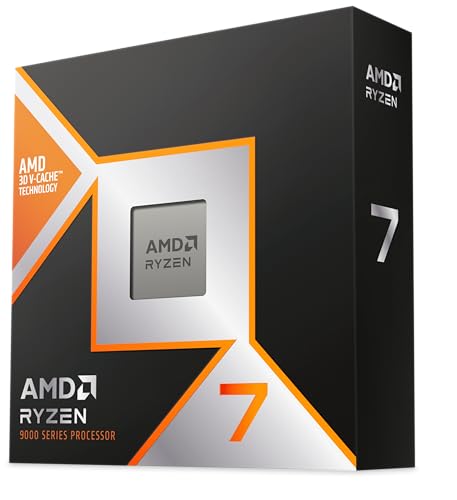
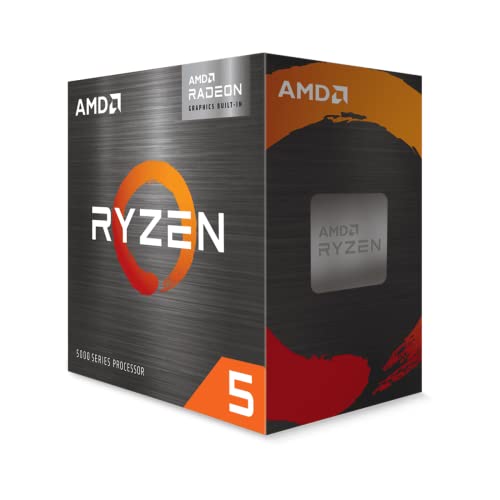
For most AM4 owners, the Ryzen CPU worth buying during Prime Big Deal Days 2026 is the AMD Ryzen 7 5800X: eight Zen 3 cores that drop into the board you already own. If you're building new on AM5, the Ryzen 7 9800X3D is only a buy at or below its $479 launch MSRP, which is listed on AMD's product page. Each pick's price button shows its current listing.
Introduction
Prime Big Deal Days 2026 runs October 6–7, 2026, starting at 12:01 a.m. PT on the 6th, according to About Amazon's announcement. It's Amazon's last big sale before Black Friday on November 27. Processors are among the easier things to buy in a sale. Core counts, cache sizes and sockets are fixed and published, so the only thing you need to judge is whether the price is actually low.
This guide covers three kinds of buyer.
- AM4 owners upgrading in place. You have a B450, X470, B550 or X570 board and DDR4. A Zen 3 chip is a one-component upgrade that keeps your RAM, cooler and motherboard. This is where Prime Day CPU deals are usually best.
- New AM5 builders. You're buying a board and DDR5 alongside the chip. The CPU discount is only part of the cost, and platform math decides whether a deal is real.
- Local-LLM builders who offload to the CPU. When a model doesn't fit in VRAM, layers spill to system RAM and the CPU does part of the work. Core count matters a little here. Memory bandwidth matters more.
Prices will move during the 48-hour event, sometimes more than once. Each pick below links to its live listing, and the price widget on each product page shows the current price with its date. This guide gives you an anchor price for each chip, which is the launch MSRP. You can judge any listing against it in a few seconds.
The six chips here come from the SpecPicks CPU catalog. They were chosen on published specs, third-party reviews from TechSpot, Tom's Hardware and Gamers Nexus, and how well each fits a particular upgrade path. No first-party benchmarking is reported here. Every performance figure is attributed to the outlet that measured it.
In short, the Ryzen 7 5800X is the Best Overall pick for an AM4 system that does a bit of everything. The Ryzen 5 5600X is the Best Value. The Ryzen 7 5800X3D is the AM4 gaming upgrade to beat, and the Ryzen 7 9800X3D is the fastest gaming chip here, but only at the right price.
Step 0: Are you upgrading AM4 or starting fresh on AM5?
Answer four questions before you look at a single listing.
- What socket is your board? If it's AM4, every pick below except the 9800X3D drops in. The 9800X3D needs an AM5 board and DDR5. It won't fit an AM4 board under any BIOS.
- What RAM do you have? DDR4 means AM4. Moving to AM5 means buying DDR5 too, so the cost of the kit belongs in the deal math.
- Does your BIOS support Ryzen 5000? Most B450 and X470 boards got AGESA updates that add Zen 3 support, but not every revision did. Check your board's CPU support list before the order ships. If the board has no BIOS Flashback button, flash it while the old CPU is still installed.
- Is the CPU actually your bottleneck? If you play at 1440p or 4K on a mid-range GPU, the graphics card sets your frame rate. A faster CPU barely changes it. In that case, put the money toward the Prime Big Deal Days GPU deals instead.
| Your situation | What to buy | Why |
|---|---|---|
| AM4 board, Ryzen 1000/2000/3000 chip, mostly gaming | Ryzen 7 5800X3D | Biggest AM4 gaming uplift; keeps your DDR4 and board |
| AM4 board, gaming plus streaming or compiling | Ryzen 7 5800X | Eight cores for less than the X3D part |
| AM4 board, tight budget | Ryzen 5 5600X | Six Zen 3 cores; the cheapest worthwhile jump from Zen+ |
| No GPU yet, home server, or iGPU-only LLM box | Ryzen 5 5600G | Built-in Radeon graphics, 65W TDP |
| New build, high-refresh gaming, budget for DDR5 | Ryzen 7 9800X3D | Fastest gaming CPU here; AM5 has an upgrade path |
| 4K gaming on a mid-range GPU | Skip the CPU deal | You're GPU-bound; a CPU swap won't move frame rates |
What is a good price for each chip?
These are launch MSRPs. They're anchors, not current prices. A listing at or below MSRP is a fair price for a chip that's a few years old. A listing above MSRP is a reason to wait, whatever the "deal" badge says. The live price and its date appear on each product page.
| Pick | Best for | Cores / threads | L3 cache | TDP | Launch MSRP | Verdict |
|---|---|---|---|---|---|---|
| Ryzen 7 5800X | AM4 all-rounder | 8 / 16 | 32 MB | 105W | $449 | Buy well below MSRP |
| Ryzen 5 5600X | AM4 value | 6 / 12 | 32 MB | 65W | $299 | Buy well below MSRP |
| Ryzen 7 5800X3D | AM4 gaming | 8 / 16 | 96 MB | 105W | $449 | Buy if found below MSRP |
| Ryzen 7 9800X3D | AM5 gaming | 8 / 16 | 96 MB | 120W | $479 | Buy only at or below MSRP |
| Ryzen 5 5600G | iGPU builds | 6 / 12 | 16 MB | 65W | $259 | Buy below MSRP |
| Ryzen 5 2600 | Nobody, today | 6 / 12 | 16 MB | 65W | $199 | Skip; upgrade instead |
Sources for the MSRPs: the Tom's Hardware 5800X3D review lists the 5800X3D and 5800X at $449. The Tom's Hardware 5600G review lists the 5600G at $259 and the 5600X at $299. AMD and TechSpot list the 9800X3D at $479–$480. The Ryzen 5 2600 launched at $199 in April 2018.
🏆 Best Overall: AMD Ryzen 7 5800X
The Ryzen 7 5800X is eight Zen 3 cores and 16 threads with 32 MB of L3 cache, and it drops into any AM4 board with a Ryzen 5000 BIOS. It's the chip that covers the most ground. It games well, it has the core count for streaming, compiling or video exports, and it's a sensible CPU host for a local-LLM box built around a 12GB GPU.
How it compares with older AM4 chips: in TechSpot's Ryzen 7 5800X vs Core i7-11700K vs Ryzen 7 2700X comparison, run on an RX 6900 XT across 30 games, the 5800X was up to 44% faster than the Zen+ Ryzen 7 2700X at 1080p in individual CPU-bound titles. In Watch Dogs: Legion it was 41% faster on average frame rate and 52% faster on 1% lows. In one title the margin shrank at 1440p to 14% on average. That's the pattern for every CPU upgrade in this guide. The gains are real when the CPU is the limit and small when the GPU is.
For local LLMs, see our breakdown of the 5800X as an inference host against a 12GB GPU. The short version is that when the model fits in VRAM, the CPU barely matters. When layers offload, eight cores keep prompt processing from stalling. Dual-channel DDR4 bandwidth is the ceiling either way.
Pros
- Drop-in for most AM4 boards; keeps your DDR4 and board
- Eight cores handle gaming plus a second workload
- Usually sells well below its $449 launch MSRP
Cons
- No bundled cooler; budget for a capable tower (105W TDP)
- The 5800X3D is clearly faster in CPU-bound games
When it's right: an AM4 system that games, streams and occasionally runs a local model. When it isn't: a pure gaming rig, where the 5800X3D is the better use of the money if the gap between them is small.
💰 Best Value: AMD Ryzen 5 5600X
The Ryzen 5 5600X is six cores and 12 threads with the same 32 MB of L3 cache as the 5800X, a 65W TDP and a bundled Wraith Stealth cooler. It launched at $299 according to Tom's Hardware. Today it's the cheapest worthwhile Zen 3 chip, and it sells far below that MSRP.
For gaming, six Zen 3 cores are enough for most titles at 1440p and above, where the GPU does most of the work. The 5600X shares the Zen 3 core design and cache layout of the 5800X, so in games that don't use more than six cores the two land close together. The extra two cores matter for streaming, compiling and LLM offload.
Who should take it: anyone on a Ryzen 1000 or 2000 chip, or an Intel 8th/9th-gen system builder with an AM4 board available, who wants a large jump for the least money. Who should step up: if you play CPU-bound esports or simulation titles at 1080p on a fast GPU, the 5800X3D's cache makes a measurable difference. See 5600X vs 5800X for the full spec diff.
🎯 Best for AM4 Gaming Upgrades: AMD Ryzen 7 5800X3D
The Ryzen 7 5800X3D adds 64 MB of stacked SRAM on top of the Zen 3 die for 96 MB of L3 cache in total. AMD trimmed 400 MHz from the base clock and 200 MHz from the boost to make room, per Tom's Hardware's review. In return, games that thrash cache get much faster.
TechSpot's 5800X3D vs 5800X shootout found that at 1080p:
- 1% lows improved by 22% on average, with gains of 50% or more in StarCraft II and Assetto Corsa Competizione.
- Overall, TechSpot measured 15–22% more performance on average, depending on the metric.
- Fortnite ran up to 27% faster at both 1080p and 1440p.
It's the last and best gaming chip for AM4, which makes it the obvious upgrade for a board you plan to keep another few years. It's also the hardest to find new. Stock has thinned since AMD moved to AM5, so check the seller on any listing (see "What to look for" below).
Counter-case: if you play at 4K on a mid-range GPU, you're GPU-bound and the cache does little. TechSpot saw some titles hit what it called a "GPU limited brick wall" at 4K. Also, the 5800X3D has a slight clock deficit, so in productivity work it trails the plain 5800X.
⚡ Best Performance: AMD Ryzen 7 9800X3D
The Ryzen 7 9800X3D is the fastest gaming CPU in this guide by a clear margin. In TechSpot's launch review it averaged 11% faster than the Ryzen 7 7800X3D across 14 games, with gains as high as 21%. In TechSpot's per-game average it was 28% faster than Intel's Core i9-14900K. Tom's Hardware measured it 30% ahead of the 14900K and 35% ahead of the Core Ultra 9 285K on average. Against the 5800X3D specifically, Gamers Nexus recorded game-by-game gains ranging from roughly 7% to more than 30%.
Unlike earlier X3D parts, its cache sits under the cores, so it doesn't give up much clock speed. TechSpot found single-core Cinebench performance within 1% of the Ryzen 7 9700X. The cost is power: in TechSpot's multi-core test it drew 128W through the EPS12V rails, 54% more than the 7800X3D.
The platform-cost math: on AM5 the chip is only part of the bill. You also need an AM5 board (B650 or B850 at the low end) and a DDR5 kit. If those parts aren't discounted at the same time, a modest CPU discount doesn't make the whole build cheaper.
Who should buy, and who should wait: use the 9800X3D's $479 launch MSRP as the line, and check the live price button for the current listing. Treat a listing at or below $479, sold by Amazon or AMD's authorized dealer rather than a reseller, as the buy signal. If the price is back above that during the event, Black Friday follows on November 27, and board and DDR5 discounts tend to arrive then too. See 5800X3D vs 9800X3D and the popular 9800X3D vs 5600X comparison for full spec sheets.
🧪 Budget Pick: AMD Ryzen 5 5600G
The Ryzen 5 5600G is the only chip here with usable integrated graphics. It has six Zen 3 cores and 12 threads, Radeon Vega 7 graphics at 1,900 MHz, a 65W TDP and a bundled cooler, and it launched at $259. Tom's Hardware rated its iGPU as "passable 1080p, solid 720p" for gaming.
It makes sense for three builds: a PC with no graphics card yet, a low-power home server or NAS, and a no-GPU local-LLM host. For that last one, see our guide to running local LLMs on a 5600G with no GPU. It's slow, but it can run small quantized models.
The tradeoffs matter once a discrete GPU goes in. The 5600G has half the L3 cache of the 5600X (16 MB vs 32 MB) and runs PCIe 3.0 instead of 4.0. Tom's Hardware lists PCIe 3.0 as a con. If a graphics card is coming within a few months, buy the 5600X instead.
Who should skip this sale entirely?
Ryzen 5 2600 owners shouldn't buy another 2600. The Ryzen 5 2600 is a Zen+ chip that launched at $199 in 2018, and the catalog lists it above that today. That's a stale third-party listing, not a deal. If you have one, the move is a 5600X or 5800X on the same board after a BIOS update. See Ryzen 5 2600 vs Ryzen 7 5800X: AM4 upgrade for the side-by-side.
Anyone whose real bottleneck is VRAM. If your local models don't fit on your GPU, a faster CPU gives a marginal speedup on offloaded layers. More VRAM fixes the problem outright. The GPU guide is the better place to spend.
4K gamers on a mid-range GPU. As noted above, the GPU sets the frame rate. A CPU upgrade won't show up on screen.
What to look for in a CPU deal
Socket and platform cost
Add up the full bill: CPU, plus a board if you're changing sockets, plus RAM if you're changing memory type. An AM4 drop-in has a platform cost of zero. An AM5 move needs a board and DDR5 kit on top of the chip.
Is a cooler included?
The 5600X, 5600G and 2600 ship with a Wraith Stealth. The 5800X, 5800X3D and 9800X3D don't. Budget for a capable tower or AIO. A 105–120W part on a stock-class cooler will throttle. Our AM4 cooler guide covers options.
BIOS Flashback
If your board doesn't support Ryzen 5000 out of the box and has no BIOS Flashback button, you need a supported CPU installed to update it. Flash the BIOS with your old chip before swapping.
DDR4 vs DDR5 total cost
Staying on AM4 keeps DDR4 you already own. Moving to AM5 means a new DDR5 kit. Check that kit's price in the same session before calling the CPU a deal.
Memory channels and bandwidth for LLM offload
Every chip here is dual-channel. For CPU-offloaded inference, token generation is limited mostly by memory bandwidth, so DDR5 on AM5 helps more than extra cores do. On AM4, run your DDR4 at its rated XMP/DOCP speed. Many owners report leaving it at the JEDEC default by accident.
The most-missed step: check the seller
Sale traffic pulls in third-party resellers. Make sure the listing is sold by Amazon or an authorized dealer, the box is retail (not "tray" unless that's intended), and the return window covers the event. Then confirm your board's QVL and BIOS version before the order ships.
Worked examples
Example 1: Ryzen 5 2600 on a B450 board, RTX 3060 12GB, 1080p gaming. Flash the BIOS first, then drop in a 5600X. You keep everything else. Based on the Zen+ to Zen 3 gaps TechSpot measured between the 2700X and the 5800X, expect noticeably better 1% lows in CPU-heavy games. If the price gap is small, the 5800X3D is the bigger jump.
Example 2: New AM5 build for 1440p high-refresh gaming. Take the 9800X3D only if it hits $479 or less from a first-party seller, and the board and DDR5 kit are discounted too. Otherwise build in late November.
Example 3: Home server that runs small local models, no GPU. The 5600G at a price below its MSRP covers it, with 65W TDP, a bundled cooler and video output for setup. Add the fastest DDR4 your board supports.
Head-to-head comparisons
- Ryzen 5 5600X vs Ryzen 7 5800X
- Ryzen 7 5800X3D vs Ryzen 7 9800X3D
- Ryzen 7 9800X3D vs Ryzen 5 5600X
- All CPUs in the catalog
Sources
- About Amazon — Prime Big Deal Days 2026 dates (accessed 2026-10-01)
- AMD — Ryzen 7 9800X3D product page (accessed 2026-10-01)
- TechSpot — AMD Ryzen 7 9800X3D review (accessed 2026-10-01)
- Tom's Hardware — Ryzen 7 9800X3D review (accessed 2026-10-01)
- Gamers Nexus — Ryzen 7 9800X3D review (accessed 2026-10-01)
- TechSpot — Ryzen 7 5800X3D vs Ryzen 7 5800X (accessed 2026-10-01)
- Tom's Hardware — Ryzen 7 5800X3D review (accessed 2026-10-01)
- Tom's Hardware — Ryzen 5 5600G review (accessed 2026-10-01)
- TechSpot — Ryzen 7 5800X vs Core i7-11700K vs Ryzen 7 2700X (accessed 2026-10-01)
This piece is editorial synthesis based on publicly available information. No independent first-party benchmarking is reported.
Related guides
- Prime Big Deal Days 2026 GPU deals for local LLMs: 12GB vs 16GB
- Prime Big Deal Days 2026 prebuilts: RTX 5060 vs 5060 Ti vs 5070
- Prime Big Deal Days 2026 mini PC deals for local LLMs and homelabs
- Best AM4 CPU 2026: 5800X vs 5700X vs 5600G
- Best CPU for local LLM inference: 5800X vs 5700X vs 5600G
— Mike Perry