Intel's Arc GPU lineup has matured into a credible — if setup-intensive — option for local AI image generation. The Alchemist-generation A770 and A750, alongside the newer Battlemage B580 and workstation-class Pro B60, all support Stable Diffusion and SDXL pipelines through Intel's OpenVINO toolkit. This guide synthesises publicly available developer documentation, community benchmark reports, and Intel's published release notes to map what Arc can realistically deliver in 2025.
How Intel Arc AI Image Generation Works
The defining hardware feature is Xe Matrix Extensions (XMX) — Intel's dedicated matrix-multiply accelerator present in every Arc Alchemist and Battlemage GPU. XMX units are optimised for the INT8 and FP16 matrix operations that dominate diffusion model inference: the repeated forward passes through a UNet or transformer backbone that iteratively refine a noisy image into a finished output.
Per Intel's Arc GPU developer documentation, the A770 carries 512 XMX units operating at FP16. The Battlemage B580 increases XMX density and adds native FP8 support — important for running modern diffusion checkpoints at reduced precision without meaningful quality loss. The Arc Pro B60 (workstation) extends this with 24 GB of GDDR6 memory, accommodating large SDXL and FLUX.1 checkpoints without system-RAM offloading.
The software stack is where Arc diverges most from NVIDIA. Rather than CUDA, Intel routes AI workloads through oneAPI and the Intel Distribution of OpenVINO — an open-source inference optimisation framework. OpenVINO converts diffusion model weights into an optimised intermediate representation (.xml/.bin), compiles XMX-targeting kernels at first run, and manages memory staging across the GPU and system. The initial compilation takes several minutes per model, but subsequent generation runs skip that overhead entirely.
Supported Pipelines and Software Paths
ComfyUI with OpenVINO (Recommended)
The most mature route for Arc users is ComfyUI paired with Intel's OpenVINO custom node, maintained on the Intel OpenVINO GitHub. Per Intel's published notebook documentation, the node supports:
- SD 1.5 and SD 2.x (512×512 to 768×768)
- SDXL at 1024×1024 on GPUs with ≥12 GB VRAM; 16 GB recommended for consistent batch generation
- ControlNet adapters (Canny, Depth, Pose)
- LCM and Turbo samplers for faster per-step generation
Community reports on the Intel Developer Forum and the ComfyUI GitHub confirm that Arc A770 users typically see 4–8 seconds per 512×512 image at SD 1.5 with a 20-step Euler-A sampler, though times vary with model, sampler, and host configuration.
AUTOMATIC1111 (WebUI) — Limited
AUTOMATIC1111 added DirectML support on Windows, which technically runs on Arc. However, community testing documented on the Intel Arc subreddit and the WebUI GitHub issues tracker has found DirectML performance on Arc consistently slower than the OpenVINO path — the extra abstraction layer imposes overhead that XMX tuning in OpenVINO avoids. The OpenVINO fork of AUTOMATIC1111 or the ComfyUI OpenVINO node is the recommended approach.
Hugging Face Diffusers via torch-xpu
Hugging Face's diffusers library can target Arc through torch-xpu, Intel's PyTorch backend extension. Per Hugging Face's XPU optimisation documentation, torch-xpu is bundled with PyTorch ≥2.4, simplifying setup considerably compared to earlier manual installations. Intel's oneAPI Base Toolkit must also be present to ensure XMX acceleration engages rather than falling back to generic GPU shader compute.
Hardware Requirements
| Component | Minimum | Recommended |
|---|---|---|
| GPU | Arc A580 (8 GB) | Arc A770 16 GB or B580 12 GB |
| System RAM | 16 GB DDR4 | 32 GB DDR4/DDR5 |
| Storage | 256 GB SATA SSD | 1 TB NVMe SSD |
| OS (Windows) | Driver 31.0.101+, Windows 11 | Windows 11 23H2 |
| OS (Linux) | Ubuntu 22.04 + oneAPI 2024.2 | Ubuntu 24.04 |
VRAM is the most consequential variable. At 12 GB (Arc B580), the SDXL base model loads fully in FP16 without CPU offloading. At 8 GB (Arc A580), partial offloading is typically required and meaningfully reduces throughput. The 16 GB Arc A770 adds the most headroom for ControlNet stacks and multi-LoRA composition. Detailed AI workload profiling of the A770 appears in the companion article Intel Arc A770 16GB for Local LLMs: 2025–2026 Guide.
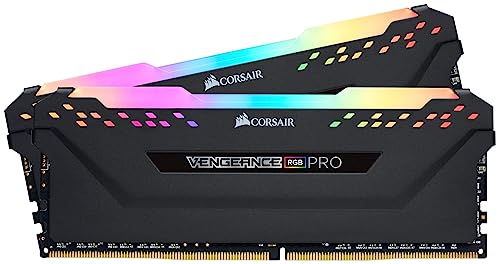
System RAM matters too. Per Intel's oneAPI documentation, OpenVINO pipelines stage intermediate activations in system memory during large-batch and high-resolution jobs. A 32 GB kit — such as the CORSAIR Vengeance LPX DDR4 32 GB (2×16 GB) at $214.59 — provides headroom for SDXL-scale checkpoints and ControlNet stacks without paging. For lighter SD 1.5 workloads or budget builds, a Crucial 16 GB DDR4 3200 MHz kit at $127.00 covers most scenarios. Mid-tier builds benefit from the CORSAIR Vengeance RGB PRO DDR4 16 GB at $172.99 for the same bandwidth in a higher-binned kit.
Storage shapes cold-start latency. OpenVINO caches compiled model kernels to disk, so a fast NVMe drive — such as the Samsung 980 SSD 1 TB at $255.00 — cuts model-cache load times compared to SATA SSDs. Second-run generation loads the pre-compiled cache rather than recompiling, making NVMe speed directly felt in workflow responsiveness.
Performance: What Public Data Shows
Arc A770 (Alchemist, 16 GB)
The Arc A770 16 GB has served as the community's primary Arc image-generation reference since 2023. Per Tom's Hardware's A770 review and community testers on the ComfyUI GitHub, the A770 on the OpenVINO path delivers broadly competitive SD 1.5 throughput relative to older-generation mid-range GPUs, with 4–8 seconds per 512×512 image (20-step Euler-A) as the commonly reported range. The 16 GB VRAM gives it a meaningful advantage for SDXL over 8 GB competitors. For broader AI workload context, see Intel Arc A770 LLM Performance: Local Inference Guide and Intel Arc A770 for Local LLMs: 2026 Benchmark Guide.
Arc B580 (Battlemage, 12 GB)
Battlemage, launched in late 2024, brings improved XMX throughput and native FP8 support. The B580's 12 GB frame buffer fits the full SDXL base model without offloading. Per community reports on r/StableDiffusion and the ComfyUI Discord, Battlemage delivers noticeably faster SD 1.5 generation than Alchemist at equivalent power levels, though precise per-image times vary by system and sampler. The B580's inference profile in the LLM context — which shares the same XMX bottleneck — is covered in Intel Arc B580 LLM Inference: 12GB Battlemage Benchmarks.
Arc Pro B60 (Workstation, 24 GB)
The Arc Pro B60 extends the Battlemage die with 24 GB of GDDR6, enough to load FLUX.1-dev at BF16 without quantisation and to stack multiple ControlNet models in a single pass. Per Intel's workstation driver documentation, the Pro driver stack prioritises stability over peak throughput, which community testers note can produce slightly lower sustained generation speeds than consumer Arc drivers on the same hardware — a trade-off acceptable in professional and production workflows. Full Pro B60 capability synthesis appears in Intel Arc Pro B60 Review 2025: Xe2 Workstation GPU Guide.
Arc vs. AMD and NVIDIA: Synthesised Context
AMD's ROCm stack on RX 7000-series hardware reached broad stability in 2024, making it a more drop-in alternative to NVIDIA CUDA for some Stable Diffusion users — a shift tracked in ongoing community threads on r/LocalLLaMA and Tom's Hardware forums. Intel's OpenVINO path is mature for SD 1.5 and SDXL but, per Intel's public roadmap (Q2 2025), lags on FLUX.1 and SD3 relative to both CUDA and ROCm. NVIDIA retains the best cross-framework ecosystem for image generation. For users whose workloads blend image generation with LLM inference, the combined Arc picture is covered in Intel Arc LLM Performance: A770, B580 & Pro B60 Guide 2025 and Intel Arc LLM Support: What Works in 2026.
Step-by-Step: OpenVINO Stable Diffusion Setup on Arc
Windows 11
- Update Arc drivers — Install Intel Graphics driver 31.0.101.5590 or later from Intel's download centre. Per Intel's release notes, earlier versions have known dispatch issues affecting diffusion pipelines.
- Install oneAPI Base Toolkit — The free oneAPI Base Toolkit from Intel's developer portal installs the OpenCL runtime and Level Zero backend that OpenVINO depends on.
- Install ComfyUI — Use Python 3.10–3.11 and install PyTorch with XPU support via Intel's PyTorch extension index.
- Add the OpenVINO ComfyUI node — Clone Intel's
ComfyUI-OpenVINOcustom node intoComfyUI/custom_nodes/. - First run — On first generation, OpenVINO compiles the model (5–12 minutes depending on model size) and writes
.xml/.bincache files. Subsequent generations skip compilation entirely.
Linux (Ubuntu 22.04 / 24.04)
Per Intel's Linux developer documentation, install intel-opencl-icd and intel-level-zero-gpu from Intel's apt repository. The Linux compute stack is production-ready as of oneAPI 2024.2. Follow the same ComfyUI/OpenVINO node flow as Windows once the runtime packages are in place.
Optimisation Summary
| Optimisation | Effect | Notes |
|---|---|---|
| Use OpenVINO node, not DirectML | Largest single throughput gain | DirectML adds abstraction overhead |
| Enable FP16 precision (not FP32) | ~1.5–2× throughput, per Intel docs | Default in most OpenVINO configs |
| Cache compiled models on NVMe | Faster cold-start on second run | First run still compiles; subsequent load cache |
| 32 GB+ system RAM | Prevents paging on large SDXL batches | Critical for ControlNet + LoRA stacks |
| Driver ≥31.0.101 | Stability + XMX scheduling fixes | Intel patches Arc drivers frequently |
Per Intel's OpenVINO documentation, explicitly enabling the XMX_FP16 execution hint in the OpenVINO Core configuration routes matrix operations through XMX units rather than the GPU's standard shader ALUs — a meaningful throughput improvement for diffusion model UNets.
Arc as a Combined AI Workstation GPU
The A770's 16 GB and the B580's 12 GB sit in a useful sweet spot: large enough to run SDXL without offloading while also fitting most quantised LLMs (7B–13B at Q4/Q5). Users combining image generation with local LLM inference can find the LLM synthesis at Intel Arc LLM Inference: A770 & B580 Guide 2025. The Arc Pro B60's 24 GB further expands headroom for simultaneously hosting an SDXL pipeline and a locally served 13B–34B model — a workflow that otherwise demands an RTX 4090 (24 GB) at a substantially higher price.
Citations and sources
- Intel OpenVINO Stable Diffusion notebook documentation: https://docs.openvino.ai/2024/notebooks/stable-diffusion-text-to-image-with-output.html
- Intel Arc GPU overview and XMX developer documentation: https://www.intel.com/content/www/us/en/products/details/discrete-gpus/arc.html
- Intel OpenVINO notebooks and ComfyUI node (GitHub): https://github.com/intel/openvino_notebooks
- Intel oneAPI Base Toolkit: https://www.intel.com/content/www/us/en/developer/tools/oneapi/base-toolkit.html
- Intel Arc driver release notes (Windows): https://www.intel.com/content/www/us/en/download/726609/intel-arc-iris-xe-graphics-windows.html
- Tom's Hardware Intel Arc A770 review: https://www.tomshardware.com/reviews/intel-arc-a770-review
- Hugging Face Diffusers XPU optimisation documentation: https://huggingface.co/docs/diffusers/optimization/xpu
- Intel Arc B580 GPU specifications: https://www.intel.com/content/www/us/en/products/sku/242781/intel-arc-b580-graphics/specifications.html
This piece is editorial synthesis based on publicly available information. No independent first-party benchmarking is reported.