Intel Arc A770 16GB for Local LLMs: What the 16GB VRAM Advantage Actually Means
The Intel Arc A770 occupies an unusual position in the local AI stack: a mid-range gaming card priced around $250–$300 that ships with 16 GB of GDDR6 VRAM — more headroom than the RTX 3060 12 GB or the RX 6700 XT 12 GB at similar price points. For LLM inference, VRAM capacity is the hard ceiling that determines which models fit without CPU offloading, and 16 GB opens the door to 13B-class models at practical quantization levels.
But VRAM alone does not make a fast inference card. Intel's oneAPI/SYCL software stack — and specifically the IPEX-LLM library (formerly BigDL-LLM) — has matured considerably since the A770's 2022 launch, and community reports on r/LocalLLaMA have tracked the arc from frustrating driver friction to serviceable, often surprisingly competitive inference performance. This guide synthesizes what is publicly documented about the A770 16 GB's LLM capabilities, where it fits, and where it still lags.
Arc A770 16 GB Specs at a Glance
| Spec | Intel Arc A770 16 GB |
|---|---|
| Architecture | Xe-HPG (Alchemist) |
| Shader units | 4,096 (32 Xe-cores) |
| VRAM | 16 GB GDDR6 |
| Memory bandwidth | ~560 GB/s |
| TDP | 225 W |
| PCIe | 4.0 x16 |
| MSRP at launch | $349 USD |
| Street price (mid-2025) | ~$250–$300 USD |
Per the TechPowerUp GPU database, the A770's ~560 GB/s memory bandwidth is broadly comparable to the RTX 3070 Ti's 608 GB/s. The RTX 3060 12 GB delivers roughly 360 GB/s — a meaningful gap that helps sustain higher tokens-per-second rates during inference when the model is fully VRAM-resident, since quantized LLM inference is predominantly memory-bandwidth-bound.
The 16 GB VRAM Advantage: Which Models Fit?
Local LLM practitioners on r/LocalLLaMA commonly use a rule of thumb to estimate VRAM consumption: multiply the model's parameter count by 2 bytes for FP16, or by approximately 0.5 bytes for 4-bit quantization (Q4_K_M), then add 1–2 GB for KV-cache and runtime overhead.
| Model | Quantization | Est. VRAM | Fits A770 16 GB? |
|---|---|---|---|
| Llama 3.1 8B | FP16 | ~16 GB | Tight — Yes |
| Llama 3.1 8B | Q4_K_M | ~5 GB | Yes |
| Llama 3.3 70B | Q4_K_M | ~40 GB | No — requires offload |
| Mistral 7B | FP16 | ~14 GB | Yes |
| Phi-4 14B | Q4_K_M | ~9 GB | Yes |
| Qwen 2.5 14B | Q4_K_M | ~9 GB | Yes |
| DeepSeek-R1 8B | Q4_K_M | ~5 GB | Yes |
| Gemma 3 27B | Q4_K_M | ~17 GB | Edge — partial offload |
Community reports indicate 7B–14B models at Q4_K_M quantization run entirely within VRAM on the A770, while 27B-class models sit at or slightly above the 16 GB ceiling and require partial CPU offloading that degrades throughput considerably. For a broader comparison of 16 GB VRAM options across GPU generations, see Best 16GB GPU for Local LLM 2026.
Software Stack: oneAPI, IPEX-LLM, and llama.cpp
The Arc A770's LLM story is inseparable from its software ecosystem — historically its biggest liability, and increasingly the area where Intel has invested most visibly.
IPEX-LLM (Intel Extension for PyTorch)
Intel's IPEX-LLM library (formerly BigDL-LLM) provides optimized LLM kernels for Arc GPUs via SYCL/oneAPI. Per Intel's official IPEX documentation, the library supports INT4 quantization, Flash Attention, and continuous batching, with compatibility across Hugging Face Transformers, LangChain, and LlamaIndex workflows. Intel's release notes across 2024–2025 document per-version inference improvements as attention kernel tuning on Arc hardware matured.
The library exposes an OpenAI-compatible API endpoint, making integration with front-ends like Open WebUI or LM Studio straightforward. Supported model families include Llama, Mistral, Qwen, ChatGLM, Gemma, and Phi series when loaded through the IPEX-LLM pipeline, according to the project's GitHub documentation.
llama.cpp SYCL Backend
The llama.cpp project added a SYCL backend that targets Arc hardware alongside other Intel GPU products. Community users on r/LocalLLaMA have reported successful inference on Arc A770 via llama.cpp's SYCL build path, with throughput varying considerably by driver version, quantization level, and model family. Results have ranged from modest to competitive with mid-range NVIDIA hardware when driver conditions are favorable, per community thread summaries compiled through 2024–2025.
Vulkan Backend (Fallback Path)
For users who prefer to avoid the oneAPI toolchain setup, llama.cpp's Vulkan backend also supports Arc GPUs. Per community reports, Vulkan performance generally trails the SYCL backend on Arc but offers simpler installation — particularly on Linux, where the Intel compute runtime handles driver dependencies.
For a comparison of Arc vs. NVIDIA on AI image generation workloads across these same software stacks, see Intel Arc Stable Diffusion Benchmark: A770, B580 & B60 (2025).
Arc A770 16 GB vs RTX 3060 12 GB for LLMs
The RTX 3060 12 GB is the most direct NVIDIA comparison at a similar price tier. The VRAM delta — 16 GB vs. 12 GB — is the primary differentiator for LLM workloads.
| Factor | Arc A770 16 GB | RTX 3060 12 GB |
|---|---|---|
| VRAM | 16 GB GDDR6 | 12 GB GDDR6 |
| Memory bandwidth | ~560 GB/s | ~360 GB/s |
| LLM software maturity | Growing (IPEX-LLM, SYCL, Vulkan) | Mature (CUDA, llama.cpp CUDA) |
| 14B Q4_K_M model support | Yes — fully in VRAM | Tight — partial offload |
| Driver stability (Linux) | Improved; was poor 2022–2023 | Excellent |
| Street price (mid-2025) | ~$250–$300 | ~$200–$250 |
| TDP | 225 W | 170 W |
The A770's bandwidth advantage (~55% over the RTX 3060 12 GB) translates into higher tokens-per-second for models that are bandwidth-bound — which most quantized LLMs are during inference. Community benchmarks on r/LocalLLaMA suggest the A770 16 GB can exceed the RTX 3060's throughput on 7B–13B Q4 models, though CUDA's deep software ecosystem gives NVIDIA a substantial edge on first-run setup and tool compatibility. For a detailed head-to-head, see Arc A770 16GB vs RTX 3060 12GB for Local Llama 3.
How Does the Arc A770 16 GB Compare to AMD?
AMD's ROCm-supported Radeon cards (RX 7900 XTX, RX 7900 XT) offer a more mature LLM software stack than Arc, particularly on Linux. ROCm's support for llama.cpp, PyTorch, and fine-tuning frameworks is broader and more consistently documented than Intel's oneAPI path. However, ROCm has historically had narrow GPU support lists, per-version compatibility friction, and required specific Linux kernel and driver versions to function correctly.
The Arc A770 16 GB sits alongside the RX 7600 XT 16 GB as one of the few consumer cards offering 16 GB VRAM at mid-range pricing. AMD's Instinct MI300X — a datacenter-class accelerator with 192 GB HBM3 sold at enterprise contract pricing — is an entirely different product tier and not a meaningful comparison for consumer LLM use cases.
System Build Recommendations for Arc A770 LLM Inference
A well-paired system maximizes the A770's inference capabilities. Key principles from community-documented practice:
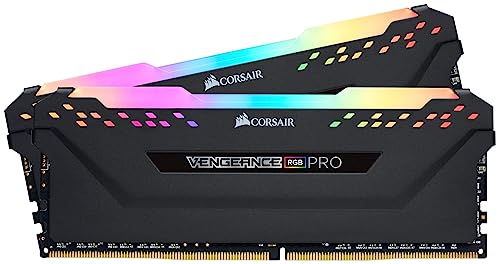
System RAM: LLM workloads that use CPU offloading — for layers that don't fit in the GPU's 16 GB — are sensitive to system RAM capacity and bandwidth. 32 GB DDR4-3200 is the practical minimum for hybrid GPU+CPU inference pipelines. The Crucial 16GB DDR4 3200MHz RAM Kit ($127.00) provides a solid baseline per-kit; a dual-kit configuration reaches 32 GB at reasonable cost. For higher-throughput or RGB builds, the CORSAIR Vengeance RGB PRO DDR4 16GB 3200MHz ($172.99) is a popular community-recommended alternative. For RAM scaling analysis beyond the GPU, see 16GB vs 32GB RAM for Windows 11 Gaming in 2026.
NVMe Storage: Loading large GGUF model files benefits from fast NVMe — a PCIe 4.0 SSD with sequential read speeds above 5 GB/s dramatically reduces model load time for 8–14 GB GGUF files.
CPU: Any modern 6-core CPU (Intel 12th gen+ or AMD Ryzen 5000+) is sufficient; LLM inference on the A770 is GPU-bound for models that fit entirely in VRAM.
PSU: The A770's 225 W TDP recommends a 650 W+ 80+ Gold PSU. The card uses a dual 8-pin power connector; some AIB variants include a PCIe 5.0 16-pin adapter.
Realistic Use Cases and Limitations
Where the Arc A770 16 GB shines
- Inference on 7B–14B models at Q4/Q5 quantization, fully VRAM-resident with no CPU offloading
- Local AI assistant deployments (Open WebUI + Ollama or IPEX-LLM API server)
- Developers who need more VRAM than the RTX 3060 12 GB provides at a mid-range budget
- Linux users willing to invest in the Intel oneAPI compute runtime setup
- Multimodal model families that fit the 16 GB envelope — see Gemma 4 12B Fits Multimodal AI Into 16GB of RAM
Where it falls short
- 27B+ model inference without offloading exceeds the 16 GB ceiling; offloading sharply reduces throughput
- CUDA ecosystem lock-in is real — fine-tuning frameworks such as Unsloth and bitsandbytes treat Arc as an afterthought or are entirely unsupported
- Windows driver stability lagged significantly through 2022–2023, though Intel's 2024–2025 driver releases substantially closed the gap
- Training and fine-tuning workloads remain primarily the domain of CUDA (NVIDIA) and ROCm (AMD) hardware
For context on what small models can realistically deliver in a 16 GB VRAM envelope, see IBM Granite 4.1 8B vs Qwen 3.6 27B: Which Small Local Model Wins on a 16GB GPU? and Raspberry Pi 5 16GB for Local LLMs: What Models Actually Fit? for the lower-power contrast.
Frequently Asked Questions
Can the Arc A770 16GB run Llama 3.1 70B?
The 70B model at Q4_K_M quantization requires roughly 40 GB of VRAM to run without CPU offloading — well beyond the A770's 16 GB ceiling. Partial offloading via llama.cpp's --n-gpu-layers flag is possible but shifts the majority of computation to the CPU, reducing throughput to single-digit tokens per second in most community-reported configurations.
Does the Arc A770 16GB work with Ollama?
Ollama added experimental Arc GPU support via its SYCL backend in its 2024 release cycle. Community reports on r/LocalLLaMA are generally positive for GGUF models at Q4 quantization; stability varies by driver version and Linux kernel. Intel's IPEX-LLM project provides an alternative OpenAI-compatible API server with broader Arc-specific documentation and a more active support community.
Is the Arc A770 16GB good for LLM fine-tuning?
Fine-tuning (LoRA, QLoRA) on Arc is technically possible via IPEX-LLM's training integration, but community tooling support is substantially thinner than CUDA or ROCm paths. For serious fine-tuning workloads, an NVIDIA card with CUDA or an AMD ROCm-supported GPU remains the more battle-tested choice.
How does 16GB GDDR6 on the A770 compare to the Raspberry Pi 5 16GB for LLMs?
These target entirely different use cases. The Pi 5 16 GB uses unified system memory shared between its CPU and GPU cores, running LLMs at low throughput suited for experimentation on small models. The A770's 16 GB is dedicated GDDR6 with ~560 GB/s bandwidth. For Pi-specific model recommendations, see Raspberry Pi 5 16GB for Local LLMs: What Models Actually Fit?.
What quantization level should I use on the Arc A770 16GB?
Community guidance consistently points to Q4_K_M as the sweet spot — it fits 7B–14B models fully in VRAM with minimal quality degradation compared to FP16. Q5_K_M offers a slight quality improvement at roughly 25% more VRAM. Q8_0 approximately doubles VRAM use relative to Q4_K_M, which pushes 14B models to the edge of the 16 GB ceiling.
Is the Arc A770 16GB still worth buying in 2025–2026?
At sub-$300 street pricing, the A770 16 GB remains one of the few paths to 16 GB GDDR6 VRAM in the mid-range consumer tier. Intel's newer Arc B580 (12 GB, Battlemage) offers substantially improved driver maturity and is the preferred new-purchase recommendation; however, used A770 16 GB units offer more raw VRAM at competitive prices for inference-focused builds where the 12 GB ceiling of the B580 is a constraint. See Best 16GB GPU for Local LLM 2026 for a full comparison of 16 GB options across generations.
Citations and sources
- https://github.com/intel/ipex-llm — Intel IPEX-LLM (formerly BigDL-LLM): Arc GPU LLM optimization library and documentation
- https://www.techpowerup.com/gpu-specs/intel-arc-a770.c3914 — TechPowerUp Arc A770 GPU specifications database
- https://github.com/ggml-org/llama.cpp — llama.cpp SYCL backend documentation and Arc GPU support notes
- https://www.reddit.com/r/LocalLLaMA/ — r/LocalLLaMA community benchmarks and Arc A770 inference experience reports
- https://www.intel.com/content/www/us/en/developer/tools/oneapi/overview.html — Intel oneAPI toolkit documentation
- https://intel.github.io/intel-extension-for-pytorch/ — Intel Extension for PyTorch (IPEX) documentation
This piece is editorial synthesis based on publicly available information. No independent first-party benchmarking is reported.