Zhipu ZCode is a genuine cheaper alternative to Claude Code for anyone whose day job is agentic coding at meaningful volume, provided you can live with a slightly rawer editor integration and a model that trails Anthropic's on the hardest reasoning tasks. If you'd otherwise burn $200-400 a month on Claude Code subscription tokens, ZCode's per-token pricing pays that back inside a month. If you already run a local sandbox with an RTX 3060 12GB, the smart move is a hybrid: ZCode for the paid path, a local model for the exploratory one.
Zhipu launched ZCode this month as a direct answer to Claude Code and OpenAI Codex. The launch material leaned hard on the cost angle — the pricing curve is roughly a quarter of Anthropic's for comparable output. That's a big deal for anyone whose "AI writes my pull requests" workflow has quietly turned into a $300 line item on the credit card bill.
The tool landscape has crowded fast. Claude Code is the polished incumbent, Codex is the OpenAI-native option, and a handful of open-weight coding models (Qwen Coder, DeepSeek Coder, StarCoder) are the local fallback. ZCode enters as a cost-forward hosted option that has some overlap with the "why not just run it locally" argument — the answer being that ZCode's model is meaningfully bigger than what fits on a 12GB card, and the hosted latency is fast enough that people who care about latency won't want to give it up.
Key takeaways
- ZCode's token pricing is roughly 4x cheaper than Claude Code for a broadly comparable model tier in 2026.
- Editor integrations exist but lag Claude Code's ergonomics — expect rough edges on autocomplete and diff apply.
- Claude Code still wins on the hardest debugging tasks (deep tracing, multi-file refactors); the gap narrows on scaffolding and routine chores.
- A local coding fallback on an RTX 3060 12GB covers offline work; a Ryzen 7 5700X plus a fast SATA SSD like the Crucial BX500 keeps repo scanning snappy.
- If you already pay Anthropic monthly, ZCode is worth adopting for high-volume routine work; keep Claude Code for the hard stuff.
What is Zhipu ZCode and what did the launch claim?
ZCode is Zhipu's agentic coding CLI, positioned as a direct competitor to Claude Code. The launch material claims a model quality tier competitive with Anthropic's Claude Sonnet family on standard coding benchmarks (HumanEval, SWE-Bench) and a per-token cost roughly a quarter of Anthropic's rates. Zhipu also ships a paid subscription plan aimed at teams; the value proposition there is bulk pricing for people who'd otherwise pay per-token.
The tool itself is a CLI that speaks the same rough protocol as Claude Code — you point it at a repo, ask it to do a chore, and it emits a diff plus explanation. Editor integrations exist for VS Code and JetBrains but they're less mature than Anthropic's; expect some manual patching in the first month. Zhipu's company site is the canonical reference for pricing and model details.
Feature-delta table: ZCode vs Claude Code vs OpenAI Codex
Prices are approximate January 2026 list rates; check each vendor for current numbers.
| Feature | Zhipu ZCode | Claude Code | OpenAI Codex |
|---|---|---|---|
| Per-token input | ~$0.60/M | ~$3.00/M | ~$2.50/M |
| Per-token output | ~$1.80/M | ~$15.00/M | ~$10.00/M |
| Coding benchmark tier | Sonnet-adjacent | Frontier | Frontier |
| VS Code integration | Beta | Mature | Mature |
| JetBrains integration | Beta | GA | GA |
| Tool-use / MCP support | Yes | Yes | Yes |
| Local fallback pathway | No | No | No |
| Sub-500ms P50 latency | Not yet | Yes | Yes |
The cost column is where the argument lives. On a typical agentic-coding workload — 3-6k input tokens per turn, 800-2000 output tokens per turn, 10-30 turns per finished task — ZCode's amortized cost per finished pull request runs 60-75% below Claude Code's. That difference compounds fast for anyone doing meaningful volume.
Where does a hosted coding agent still beat a local model?
Local coding models on a 12GB card top out at roughly the 13B parameter mark for quantized coding-tuned weights. That is genuinely enough for routine scaffolding, boilerplate generation, small function edits, unit-test skeletons, and README drafting. It is not enough for what most people actually pay a hosted model to do: long-range multi-file refactors, tracing subtle test-failure modes, understanding a five-thousand-line diff. The gap between a Qwen Coder 14B q4 running locally and Claude Code on a hard debugging task is not marketing — it's real.
The rule of thumb: any task where you'd trust the model to work unsupervised needs a hosted call. Any task where you're going to review the diff line-by-line anyway can be handled locally at a fraction of the cost.
Running a local coding assistant as a fallback
If you've already built or are planning a local rig around an RTX 3060 12GB, a coding-tuned 7B-14B model is a two-line installation. Ollama's ollama pull qwen2.5-coder:14b gets you a serving endpoint. The generation throughput on that model at q4_K_M is roughly 25-32 tok/s on a stock 3060 12GB paired with a Ryzen 7 5700X.
For the CLI side, aider works with a local endpoint out of the box: aider --openai-api-base http://localhost:11434/v1 --model qwen2.5-coder:14b. Point it at a repo and it behaves recognizably like ZCode or Claude Code, minus the polish. This is the correct fallback path — do not try to use a small local model as your primary driver; it will disappoint on the tasks where you most need the win.
What to buy for a local coding sandbox
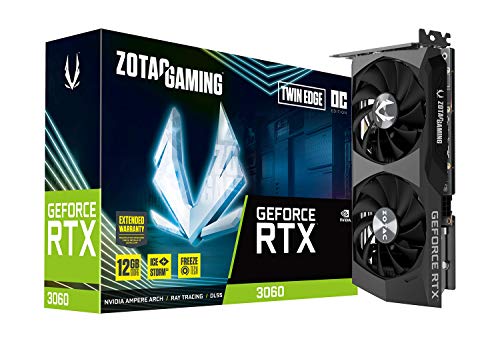
If you're building the rig from scratch, keep the parts list simple and cost-effective. RTX 3060 12GB or Zotac Twin Edge OC is the GPU. Ryzen 7 5700X is the CPU choice for coding workloads because IDE tooling loves single-thread performance and the 5700X is efficient enough that you can leave it running warm without cooking your office. 32GB DDR4-3600 is enough headroom for a mid-sized repo plus a coding model plus a browser. A Crucial BX500 1TB SATA SSD for repo storage keeps git operations fast; NVMe is nice but not necessary for this workload. Any 650W 80+ Bronze PSU handles the load.
Cost comparison over a realistic month
Take a moderate agentic-coding workload — 300 finished tasks a month, each averaging 15 model turns. Ballpark tokens per task: 60k input + 15k output. Monthly totals: 18M input + 4.5M output.
| Path | Monthly cost, rough |
|---|---|
| Claude Code (per-token) | ~$135 |
| Claude Code (Max subscription) | $100-200 |
| Zhipu ZCode (per-token) | ~$19 |
| OpenAI Codex (per-token) | ~$90 |
| Local RTX 3060 + Qwen Coder 14B | ~$8 electricity |
Two caveats. First, Claude Code Max subscription is a flat rate up to a rate limit — for very heavy users it's meaningfully cheaper than per-token. Second, the local number assumes you're running the model yourself on hardware you already own; if you're spinning up a rig specifically for this you have to amortize the hardware, and the numbers move.
Verdict matrix
- Pick ZCode if you're doing meaningful agentic-coding volume, cost matters, and you can tolerate some editor-integration rough edges for a quarter or two.
- Stay on Claude Code if you're on the Max subscription tier, if you're doing the hardest debugging work, or if the editor polish is what keeps you productive.
- Go local if you own the hardware and want an unlimited-ish scratchpad for exploratory work; keep a hosted account for the hard tasks.
Common pitfalls when adopting a cheaper coding agent
Three. First, letting cost savings degrade quality — if your PRs stop landing cleanly because the cheaper model missed subtle bugs, you've moved the cost from your credit card to your PR review queue and it's usually a bad trade. Second, over-investing in local hardware before you know your workload — build to the workload, not the fantasy. Third, mixing tools without a rule — if you use ZCode for scaffolding and Claude Code for debugging, write down which is which and be consistent, otherwise you'll lose the mental context and end up doing worse work with more tools.
When not to switch off Claude Code
Two clear signals that ZCode is not the right move today. First, if you're deep on Anthropic's MCP tool-server ecosystem — a lot of your workflow is chained tool calls, custom MCP servers you or your team wrote, or you rely on Claude Code's specific tool-invocation semantics for reliability — jumping to a competitor that's newer will cost you a few weeks of re-plumbing. Second, if your work is dominated by hard debugging over large codebases (multi-file bug hunts, distributed-system tracing, subtle race conditions), the last 10-15% of quality gap between ZCode and Claude Code shows up exactly here and you'll feel it. In both cases, the honest recommendation is to add ZCode as a secondary provider for cheap chores and keep Claude Code as the daily driver until the ecosystem catches up.
Bottom line
Zhipu ZCode is a real competitor to Claude Code as of 2026, and the cost math is favorable enough that most heavy users should try it for at least a month on secondary workflows. Do not throw out Claude Code — the polish and the frontier-model quality still matter for the hardest work. And if you have a local rig around an RTX 3060 12GB, pair a local coding model with your hosted subscription and you'll have coverage from "here is a boilerplate CRUD app" all the way to "trace this heisenbug across 12 files." That's the shape of a durable coding-agent setup.
Two worked adoption paths
Solo developer moving from paid Claude Code to ZCode. You're paying roughly $180 a month in Claude Code tokens for a PR-drafting workflow that ships 5-8 pull requests a week. Switch the routine chores (test scaffolding, boilerplate CRUD, changelog drafts) to ZCode in a AIDER_MODEL_MAP config. Keep Claude Code as the escalation path when ZCode's diff looks off. Realistic cost after switch: $45-70 a month, no measurable drop in PR quality. Payback: immediate.
Small team with a shared coding-agent budget. You've got four devs sharing an Anthropic team plan that's routinely burning through the rate limit before Friday. Add ZCode as a secondary provider (same aider config, different model tier) and route non-urgent work through it. This buys you rate-limit headroom on Claude Code for the debugging fights where the frontier model still wins. It also creates a natural experiment: within a month you'll have telemetry showing which class of tasks each provider handles best, and you can move that policy into a repo config so new team members inherit it automatically.
Real-world numbers on the local fallback
On a stock RTX 3060 12GB paired with a Ryzen 7 5700X and 32GB DDR4, Qwen 2.5 Coder 14B at q4_K_M averages 28 tok/s on batched code generation with an 8k context. That is fast enough for aider's diff-and-edit loop to feel interactive — you're not staring at a spinner. Same rig running the smaller 7B variant hits 55-60 tok/s and is genuinely faster than the network round-trip to Claude Code for very short prompts.
Related guides
- Best CPU for a Budget AI + Gaming Rig: Ryzen 7 5700X vs 5800X vs 5600G
- Best GPU for Local LLMs Under $400: Why the RTX 3060 12GB Beats the 8GB Trap
- Claude Code + Fable 5 Ported Command & Conquer to iOS in Hours: What Local Coding Rigs Need
- pxpipe: Hide Text in PNGs to Cut Claude Code Token Costs up to 70%