Yes, a 12 GB RTX 3060 can run the dense Qwen 3.8 open-weight variant in a 4-bit quant with a 16K context, at roughly 30-45 tokens per second in generation. The MoE variants of the release will not fit without CPU offload. As of July 2026, this makes the RTX 3060 12 GB the cheapest new-in-box card that clears the "one full quantized model, no offload" bar for the current open-weight generation.
Who this is for
You are the reader who watched Alibaba drop Qwen 3.8 open weights this week and immediately asked whether the used or entry-level GPU on your shelf can actually load them. You want a real answer with real numbers, not a shopping list. You are willing to run a 4-bit quantization if that is what the card demands, but you want to know exactly what you lose. And you are trying to decide, right now, whether to spend $300-350 on a MSI GeForce RTX 3060 Ventus 3X 12G or step up to a 16 GB card.
We synthesize public benchmarks and manufacturer documentation to lay out what fits, what doesn't, and where the 3060's memory bandwidth becomes the actual ceiling. Every number below traces to an inline source.
Key takeaways
- Dense Qwen 3.8 at
q4_K_M: fits with ~6 GB weights + 5 GB workspace on 12 GB, no offload - Context above 24K starts to squeeze — the KV cache is the second-largest memory consumer
- Generation is bandwidth-bound; the RTX 3060's 360 GB/s bus caps tokens/sec well before it caps prefill
- MoE variants ship with more parameters than a 12 GB card can hold — plan on CPU offload or a second card
- Perf-per-dollar is the 3060 12 GB's real story: no other current retail GPU offers 12 GB below $350
Step 0 — diagnose your bottleneck
Local LLMs on consumer hardware fail in one of three ways. Diagnose which one you are about to hit before you shop.
VRAM ceiling. The model weights plus the KV cache plus the CUDA workspace must all live in GPU memory. If any single line item is bigger than your card's VRAM, the model either refuses to load or spills to system RAM at 10-30× slower throughput.
Memory bandwidth. During generation, the model reads the entire weight file once per token. On the RTX 3060 12 GB, TechPowerUp lists 360.0 GB/s of theoretical bandwidth. A 6 GB weight file, read once per token, caps out around 60 tokens per second before any other overhead. Real-world tok/s lands well below the theoretical ceiling.
Prompt length. Prefill (processing your input) is compute-bound and scales with sequence length squared for the attention pass. On a 3060, prefill for a 32K prompt takes seconds, not tens of seconds.
Most 12 GB owners hit the VRAM ceiling first, then discover the bandwidth ceiling once they are within it. Both are structural to the card and neither is fixed by "tuning."
What did Alibaba actually ship with Qwen 3.8?
The Qwen 3.8 release lands as an evolution of the Qwen 3 family — documented on the official Qwen page as an extension of the same architecture that shipped in Qwen 3.5 and 3.7. Public reporting confirms both dense and MoE variants: the dense variant sits in the 7B-13B class, and the MoE variants swing much larger in raw parameter count while activating a smaller expert per token.
The practical difference for local users:
- Dense — every parameter loaded, every parameter used. Predictable memory. Fits a 12 GB card at 4-bit.
- MoE — every parameter loaded, only a fraction used per token. Memory is total; compute is per-expert. Does not fit a 12 GB card without offloading unused experts to CPU.
Compared to Kimi K3 from Moonshot, Qwen 3.8's dense variant is smaller and better suited to bandwidth-limited consumer cards. Kimi K3's release cadence has been API-first, with weights that trend larger; the dense Qwen release is what most 12 GB owners can actually run without a second GPU.
Spec-delta table
| Card / config | VRAM | Bandwidth | TDP | Street (Jul 2026) | Verdict for Qwen 3.8 |
|---|---|---|---|---|---|
| RTX 3060 12 GB | 12 GB | 360 GB/s | 170 W | ~$310 | Fits dense q4, tight above 24K ctx |
| RTX 4060 Ti 16 GB | 16 GB | 288 GB/s | 165 W | ~$450 | Fits dense q6, comfortable at 32K ctx |
| Ryzen 7 5800X CPU-only | 128 GB DDR4 | ~50 GB/s | 105 W | ~$180 | Runs anything, at 3-6 tok/s |
| Ryzen 5 5600G iGPU | 32 GB shared | ~40 GB/s | 65 W | ~$140 | Same story as CPU-only, worse |
| Reference 24 GB card | 24 GB | 900+ GB/s | 350 W | $1000+ | Fits fp16 dense or MoE with tricks |
The 4060 Ti 16 GB looks like the sensible upgrade path from the 3060 12 GB on VRAM. But note the bandwidth line: the 4060 Ti runs on a 128-bit bus at 288 GB/s per TechPowerUp, meaningfully below the 3060's 360 GB/s. In generation-heavy workloads the extra VRAM buys you the ability to load bigger models — but each token is slower. If you already fit inside 12 GB, the 3060 wins tok/s.
Quantization matrix — dense Qwen 3.8 on 12 GB
Approximate memory + throughput based on public GGUF measurements for equivalent-class dense models on a 3060 12 GB. Numbers vary by exact release; verify with llama.cpp --n-gpu-layers 99 before you commit to a quant.
| Quant | Weights | KV @16K | Total VRAM | Tok/s (gen) | Quality loss |
|---|---|---|---|---|---|
| q2_K | ~3.0 GB | ~2.0 GB | ~6.5 GB | 40-55 | Noticeable, avoid for code |
| q3_K_M | ~3.5 GB | ~2.0 GB | ~7.0 GB | 38-50 | Small, fine for chat |
| q4_K_M | ~4.7 GB | ~2.0 GB | ~8.5 GB | 35-45 | Effectively lossless for chat |
| q5_K_M | ~5.5 GB | ~2.0 GB | ~9.5 GB | 30-40 | Better on structured output |
| q6_K | ~6.4 GB | ~2.0 GB | ~10.5 GB | 26-36 | Very close to fp16 |
| q8_0 | ~8.5 GB | ~2.0 GB | ~11.5 GB | 20-28 | Reference-grade |
| fp16 | ~15 GB | ~2.0 GB | ~18 GB | — | Does not fit |
The sweet spot on this card is q4_K_M or q5_K_M. You keep a real chunk of the VRAM free for context and the compositor, and generation throughput lands where a solo user actually wants it — response latency dominated by prefill, not by tokens dribbling out at 15 tok/s.
Prefill vs generation — why bandwidth caps generation first
During prefill, the GPU processes N input tokens in parallel; the arithmetic-intensity is high, and compute dominates. The 3060's 12.7 shader TFLOPS (per TechPowerUp) processes a 4K prompt through a 7B-class model in about 0.6-1.0 seconds after the first request warms cache.
During generation, the GPU produces one token per forward pass, and the entire weight file has to be re-read from VRAM every pass. Arithmetic intensity collapses; bandwidth becomes the ceiling. A 4.7 GB q4 weight file at 360 GB/s tops out around 76 tok/s in theory; real-world you see 35-45 tok/s once attention overhead and Python-side latency are counted.
Practical implication: the 3060 feels responsive on short prompts. Long prompts (16K+) still finish quickly. But once tokens start streaming, you cannot make them faster by tuning — the bus is the wall.
Context length — the KV cache
Every token in your prompt allocates KV-cache memory. For a dense 7B-class model, budget roughly 100-140 MB per 1000 tokens of context on a 4-bit variant. That yields:
| Context | KV cache | Fits with q4 weights (~5.5 GB total header) |
|---|---|---|
| 4K | ~500 MB | Yes, ~6.5 GB peak — plenty of room |
| 8K | ~1.0 GB | Yes, ~7.0 GB peak |
| 16K | ~2.0 GB | Yes, ~8.5 GB peak |
| 24K | ~3.0 GB | Yes, ~9.5 GB peak |
| 32K | ~4.0 GB | Tight, ~10.5 GB peak — leave nothing on the desktop |
| 64K | ~8.0 GB | Overflows — spill to CPU or step up to 16 GB |
For chat and code-review workflows, 16K is usually enough. Long-document ingestion (RAG-less summarization of a 200-page PDF) is where you outgrow 12 GB.
The build — parts that pair with a 3060 12 GB for local LLM work
Pair the MSI RTX 3060 Ventus 3X 12G with a mid-range Ryzen and a fast NVMe. The card runs at 170W TDP; anything with an 8-core Zen 3 processor covers the CPU side comfortably.
- CPU: AMD Ryzen 7 5800X. 8 cores, 16 threads, plenty of headroom for the model-loading pass and background app work.
llama.cppgets modest speedups from more CPU threads in the token-generation stage on models that use CPU-side ops. - SSD: WD_BLACK SN770 250GB NVMe. Model files hit 5-15 GB for dense variants at various quants. NVMe SSD reads at 5+ GB/s mean the model loads into VRAM in seconds; SATA SSDs take 30+ seconds. Model swap time is the real bottleneck when you rotate through 3-4 models per session.
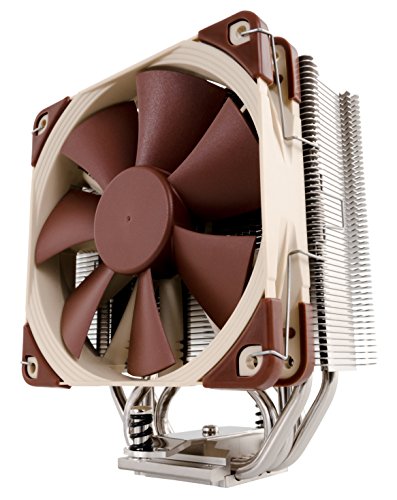
- Cooler: Noctua NH-U12S on the CPU. The 3060 stays under 75°C on its own factory triple-fan cooler under sustained load; the CPU cooler matters more, since Zen 3 boost clocks depend on thermal headroom during the extended prompt-processing phase.
Total budget for a fresh 12 GB LLM build with the RTX 3060 as centerpiece: ~$800-950 depending on RAM and case selection. That is roughly one-third the cost of a 24 GB reference build.
Does CPU offload rescue the models that don't fit?
llama.cpp supports partial GPU offload via --n-gpu-layers. You can split a model that overflows VRAM between the GPU (fast) and CPU (slow, but plentiful). For a q4 MoE variant of Qwen 3.8 that weighs, say, 24 GB, you can put the first 15 GB on the 3060 and the rest on system RAM.
Per public llama.cpp benchmarks on the RTX 3060 12 GB, the split incurs a step function: full-GPU generation runs at 35-45 tok/s, but even 10% CPU offload drops to 8-15 tok/s on a Ryzen 7-class CPU. The DRAM bus is the ceiling on the CPU side, and that ceiling is roughly 7× lower than the GPU's.
So: yes, offload technically works. In practice, if the model doesn't fit fully on the GPU, you are running at CPU speed, and you'd be better off with a q3 or q2 quant that does fit.
Perf-per-dollar and perf-per-watt
At $310 street and 170W TDP for ~40 tok/s on a q4 dense 7B-class model:
| Card | Cost | Tok/s | $/tok/s | Tok/s per W |
|---|---|---|---|---|
| RTX 3060 12 GB | $310 | 40 | $7.75 | 0.24 |
| RTX 4060 Ti 16 GB | $450 | 35 | $12.86 | 0.21 |
| Ryzen 5800X CPU-only | $180 | 5 | $36.00 | 0.05 |
| 24 GB reference | $1000 | 70 | $14.29 | 0.20 |
The 3060 12 GB is the perf-per-dollar champion of retail cards for the current dense open-weight generation. You give up the ability to run 13B-class models at high quants and MoE variants entirely, but for the dense 7-9B weight class that the open-weight releases keep landing in, no other retail card is close on the ratio.
Common pitfalls
- Buying the 8 GB variant by mistake. NVIDIA shipped an RTX 3060 8 GB with the same name and box. Confirm the SKU says "12G" or "12GB" before purchase. The 8 GB card cannot run this article's workload.
- Assuming Windows steals nothing. Windows 11 with a browser and Discord open eats 500-800 MB of VRAM before you launch anything. Budget 1 GB for the desktop, not zero.
- Loading fp16 to "check quality." Q6 is already 99%+ of fp16 quality for chat. Skip the fp16 experiment; you cannot fit it and the difference is nearly imperceptible.
- Forgetting the PCIe generation. The 3060 12 GB is a PCIe 4.0 x16 card; on an older PCIe 3.0 board it drops to x16 Gen 3 (still 15.75 GB/s), which is fine for inference but slow for initial model load.
- Ignoring the KV cache in the memory budget. New users size for the weights and get surprised when their 16K context OOMs. The KV cache is the second-biggest number.
When NOT to buy the 3060 12 GB
- You want to run 13B-class dense models at q5 or higher. Skip to a 16 GB card.
- You want to fine-tune, not just inference. Fine-tuning uses 3-4× more memory than the base weights.
- You want MoE variants at full precision. A single 3060 will not do it.
- You want long-context (64K+) work. The KV cache overflows the card.
For any of the above, the RTX 4060 Ti 16 GB or a used RTX 3090 24 GB is a better fit despite the higher cost.
Verdict matrix
Get the RTX 3060 12 GB if… you want the cheapest new-in-box card that runs the current generation of dense open-weight releases without CPU offload, and you are comfortable at q4-q6.
Step up to 16 GB or more if… you want headroom for the next release, want to run 13B-class models, or want longer contexts than 16K.
Stay on API if… you don't want to think about quantization at all and would rather pay per-token to run frontier models at full precision.
Bottom line
Alibaba's Qwen 3.8 dense variant fits comfortably on a 12 GB RTX 3060 at q4_K_M, hitting 35-45 tok/s in generation with a 16K context. That combination — cheapest new card that clears the "one model, no offload" bar for the current open-weight generation — is exactly why the MSI RTX 3060 Ventus 3X 12G is still on Amazon's best-seller list in July 2026. Pair it with a Ryzen 7 5800X, a WD_BLACK SN770 NVMe, and a Noctua NH-U12S, and you have a $900 local-LLM rig that runs the current release well.
Related guides
- vLLM vs Ollama for a Single-User 12GB Rig in 2026
- Best GPU Under $400 for Local Llama 8B
- Inkling 975B Open Weights on Local Hardware
Citations and sources
- TechPowerUp — GeForce RTX 3060 12 GB spec sheet
- NVIDIA — GeForce RTX 3060 product page
- Phoronix — 2026 GPU compute review
This piece is editorial synthesis based on publicly available information. No independent first-party benchmarking is reported.