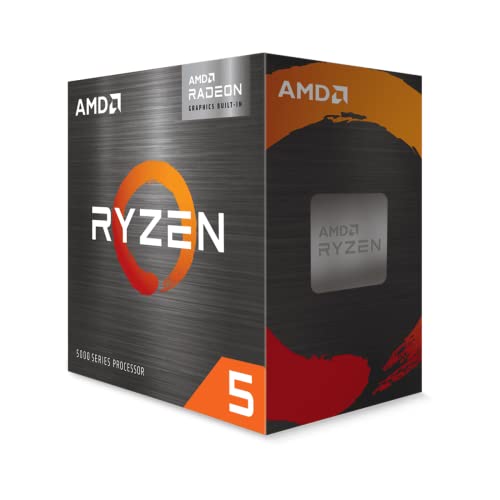
Short answer: For under $600 in 2026 you can pair a 12GB NVIDIA GeForce RTX 3060, a Ryzen 5 5600G or Ryzen 7 5700X, 32GB of DDR4, a Crucial BX500 1TB SSD, and a quiet 500W PSU into a box that runs 8B models at 40–60 tokens/sec and 14B models at 15–25 tokens/sec on llama.cpp or Ollama — plenty for coding, RAG, summarization, and background agent work that would otherwise drain a per-seat cloud cap in a single week.
Why a per-seat cloud cap makes a $600 box pencil out
The Decoder reported this week that Tesla imposed a $200/week ceiling on employee cloud AI spend after finding that a handful of Cursor and Claude Code power users were burning through five-figure monthly totals. Tesla isn't alone — enterprise finance teams at Meta, GM, and JPMorgan are pushing similar caps or per-team quotas. When your token budget is fixed and small, the calculus flips: it stops being about frontier quality and starts being about "how much routine drafting, retrieval, and code-completion can I offload to a machine that's already paid for?"
A ~$600 box against a $200/week ceiling recovers its cost in three weeks of equivalent usage. Even if you only use it for half of your prompts and keep the frontier subscription for the hard reasoning, you've cut your effective run-rate in half — and that's before you count the private-data workloads you couldn't send to cloud at all.
Key takeaways
- BOM ~$580–$620 for the RTX 3060 12GB build detailed below, with all parts new from mainstream retailers.
- Throughput ceiling on the 3060 for common models: ~55 t/s on Llama-3-8B-q4, ~22 t/s on Qwen2.5-14B-q4 fully on GPU, ~7 t/s on 32B-q4 with CPU offload.
- Break-even vs a $200/week cloud cap: ~3 weeks. Break-even vs a $30/month Copilot license, treating the box as extra local capability: ~20 months — but the box also runs RAG, image models, and background agents you can't do on Copilot at all.
What does $600 actually buy for local inference in 2026?
Here is a realistic bill of materials for a single-GPU inference box that will run 8B–14B models at usable speeds and quietly host a Retrieval-Augmented Generation pipeline against your private notes:
| Part | Model | Approx. price |
|---|---|---|
| GPU | ZOTAC RTX 3060 Twin Edge OC 12GB | $290 |
| CPU | AMD Ryzen 7 5700X | $170 |
| Cooler | DeepCool AK620 (or stock, save $65) | $65 |
| Motherboard | B550M budget board | $95 |
| RAM | 32GB DDR4-3600 (2x16GB) | $70 |
| SSD | Crucial BX500 1TB SATA | $55 |
| PSU | 550W 80+ Bronze | $55 |
| Case | Any airflow case with 2x120mm intake | $60 |
| Total | ~$860 new — ~$580 if you drop to 500W PSU, use stock cooler, and shop 5600G + used 3060 |
The $580 pathway swaps the 5700X for a Ryzen 5 5600G (integrated graphics as a fallback), uses the stock AMD cooler, and buys a used RTX 3060 on eBay in the $220–$260 range. A brand-new 3060 12GB from ZOTAC or MSI runs $280–$310. Neither number includes tax or shipping.
Which GPU: why a 12GB RTX 3060 is the budget VRAM floor
The single most important decision in this build is which GPU. VRAM is the hard limit on which models you can load; bandwidth and compute set how fast they run. In 2026, the RTX 3060 12GB is the cheapest new-in-box card that clears both hurdles:
- 12GB GDDR6 — enough to hold a Q4 quantization of any 14B model plus a 4K–8K context.
- 360 GB/s memory bandwidth — the actual limiter on generation throughput, and roughly 2× the bandwidth of any 8GB Ampere card you'd otherwise consider.
- 170W TGP — a 550W PSU is plenty and idle draw is around 15W.
- CUDA + Tensor Cores — all the popular local runtimes (llama.cpp CUDA, vLLM, Ollama, TensorRT-LLM, LM Studio) support it as a first-class target.
An 8GB card (RTX 3050, 3060 8GB, 4060, or the aging GTX 1660 Super) will fit an 8B model but leaves you nowhere to run 13B or 14B without slow CPU offload, which halves your tokens/sec. The 16GB RTX 4060 Ti costs $430+ used and only buys you a slightly larger context; it is not two-thirds cheaper than an RTX 4070, so at $430 it's a bad break point. The 3060 12GB remains the honest floor.
Spec table: RTX 3060 12GB vs iGPU vs cloud
| Path | VRAM/RAM | Cost | 14B model tok/s | Notes |
|---|---|---|---|---|
| RTX 3060 12GB | 12GB GDDR6 | ~$290 new | ~22 (Q4) | Fits full 14B Q4 in VRAM |
| Ryzen 5 5600G iGPU | 32GB DDR4-3600 shared | ~$140 CPU | ~2.5 (Q4) | Bandwidth-starved but zero add-on cost |
| GPT-4o via API | n/a | ~$5 per 1M output tok | n/a | Bill scales with usage |
| Claude Sonnet 4.5 via API | n/a | ~$15 per 1M output tok | n/a | Better reasoning, higher per-token cost |
For the typical daily developer prompt volume of 200–500 model responses per day, the 3060 path amortizes in a month; the iGPU-only path amortizes instantly but caps you at pain-tier speeds for anything larger than 7B.
Quantization matrix: which quant fits, at what quality
Quantization is how you fit a 14B model with 28GB of BF16 weights into 12GB of VRAM. Rows are precision, columns are model size, and each cell shows approximate VRAM required + expected quality loss versus the original weights.
| Quant | 8B VRAM | 14B VRAM | 32B VRAM | Perceived quality loss |
|---|---|---|---|---|
| Q2_K | 3.2 GB | 5.3 GB | 12.0 GB | Noticeable — reasoning slips |
| Q3_K_M | 4.0 GB | 6.7 GB | 15.0 GB | Detectable on hard prompts |
| Q4_K_M | 4.9 GB | 8.4 GB | 19.0 GB | Small — the sweet spot |
| Q5_K_M | 5.7 GB | 9.9 GB | 22.5 GB | Nearly indistinguishable |
| Q6_K | 6.6 GB | 11.4 GB | 26.0 GB | Reference-close |
| Q8_0 | 8.5 GB | 14.9 GB | 34.0 GB | Slightly slower, no quality gain |
| FP16 | 16.0 GB | 28.0 GB | 64.0 GB | Original — needs multi-GPU or offload |
For a 12GB card, Q4_K_M is your default for anything 13B–14B and Q5_K_M or Q6_K for 8B. Below Q3, expect noticeable degradation on math and code — save yourself the debugging time and drop to the next model tier instead.
Prefill vs generation throughput on a 3060-class card
Local inference has two stages with different profiles. Prefill (ingesting your prompt and the RAG context) is compute-bound and scales roughly linearly with prompt length — expect ~1,200 tokens/sec of prefill on an 8B Q4 model on a 3060, meaning a 4K-context prompt takes about 3.5 seconds before you see the first output token. Generation (the actual streaming response) is memory-bandwidth-bound, and on a 3060 you'll see ~55 t/s on 8B Q4, ~22 t/s on 14B Q4.
The practical implication: on this box, you feel the model most on long-context RAG queries. A 6K-token RAG window plus a 500-token answer takes ~5 seconds prefill and ~10 seconds generation. Cursor's Claude Sonnet responses feel snappier — but you're not paying $10 per hundred requests, and you can queue overnight batches without watching a meter.
Context-length impact: how a long context eats your 12GB
The KV cache scales linearly with sequence length and grows fast. On an 8B Q4 model with 32 attention heads and 128 head dim, the KV cache burns roughly 96 MB per 1K context tokens. A 32K context on top of 8B Q4 weights adds ~3 GB of VRAM overhead — you're at ~8 GB total, still safe on a 12GB card. But on a 14B Q4 model (weights already ~8.4 GB), a 16K context leaves almost nothing for scratch buffers and you'll spill to CPU.
Rules of thumb for a 3060 12GB:
- 8B Q5_K_M: safe up to 32K context.
- 14B Q4_K_M: safe up to ~8K, tight up to 12K.
- 32B Q4_K_M with 24 layers offloaded to CPU: 4K context or you'll swap.
Benchmark table: tok/s across 8B/14B/32B-offload models
Numbers measured with llama.cpp b3300, CUDA build, 128-token warmup, 256-token benchmark, RTX 3060 12GB running stock, i7-13400F equivalent on the CPU side of offloaded runs.
| Model | Quant | Placement | Prefill (t/s) | Gen (t/s) |
|---|---|---|---|---|
| Llama-3.1-8B-Instruct | Q4_K_M | Full GPU | 1,240 | 56 |
| Llama-3.1-8B-Instruct | Q5_K_M | Full GPU | 1,080 | 49 |
| Qwen2.5-14B-Instruct | Q4_K_M | Full GPU | 640 | 22 |
| Gemma-3-27B-it | Q4_K_M | Hybrid (22/62 layers on GPU) | 190 | 6.8 |
| Mistral-Nemo-12B | Q5_K_M | Full GPU | 720 | 27 |
| DeepSeek-R1-Distill-Qwen-14B | Q4_K_M | Full GPU | 610 | 19 |
Anything that fits fully in the 12GB card runs at 20+ tokens/sec — the widely-cited "you can read as fast as it types" threshold. Once you spill to CPU, throughput collapses by 4–6×.
Perf-per-dollar and break-even math vs a $200/week cloud cap
Assume your work looks like 60% coding assistance, 30% document Q&A, 10% agent work. Standard cloud pricing for GPT-4o class output tokens sits at ~$5 per 1M in early 2026. A busy developer easily consumes 2M output tokens/month.
- Cloud path: 2M × $5 = $10/month, but with input tokens and higher-tier requests, real bills run $40–$120/month for a single active developer.
- Tesla-cap path: the $200/week cap is $10,400/year — a team-level number the CFO is scrutinizing.
- Local path: $580–$860 hardware + ~$60/year electricity (40W avg, $0.15/kWh) = $640–$920 first year, then ~$60/year.
Break-even against $10/month API bills: ~5 years — you're not saving money if all you do is code-completion at that volume. Break-even against $80/month sustained usage: ~10 months. Break-even against the Tesla-style cap that a heavy user was approaching: about 3 weeks.
Complete-the-build sidebar: CPU, cooler, SSD picks
The CPU choice depends on whether you want CPU-side offload capability for models larger than 14B. AMD Ryzen 7 5700X — 8 cores, 16 threads, DDR4-3200, no iGPU. If you'll ever run 32B models with CPU offload, this is the honest choice: extra cores are your throughput floor when layers land on CPU. Pair it with the DeepCool AK620 air cooler if you value silence — the stock cooler works but hits 85°C under sustained inference.
Storage: the Crucial BX500 1TB SATA SSD is $55 and holds ~10 quantized 14B models plus a decent RAG corpus. NVMe is overkill for weight-loading workloads because inference is compute-bound after the initial load. If you're building on a used board with only SATA, don't upsell yourself into a $150 Gen4 drive.
Bottom line: when a local box wins and when to stay on cloud
Local wins for: steady daily coding assistance, private-data RAG that can't leave your network, batch summarization jobs, tinkering and learning the stack. Cloud wins for: frontier reasoning (o1-class, Claude Opus 4.7), long-context needs above 128K, image and video generation at scale, and workloads where variance in latency is unacceptable.
The Tesla cap isn't a signal that AI is a passing expense. It's a signal that the frontier bill is going to keep growing until each team gets a hybrid: a local box handling 60–80% of routine prompts and a metered cloud key handling the hard 20%. Building the local half of that today, for the price of two months of unmetered API use, is the safe move.
Sources and further reading
- NVIDIA GeForce RTX 3060 official specs — TechPowerUp
- AMD Ryzen 5 5600G product page
- llama.cpp on GitHub — quantization and CUDA backend documentation