Direct-answer intro (30-80w) answering: is it cheaper to build a local AI rig than use free cloud compute credits
Yes — for any team running steady inference more than three to four hours a day, a $1,200 local rig built around the MSI GeForce RTX 3060 Ventus 3X 12G and AMD Ryzen 7 5800X pays back inside 10 months even against a "free" $2,500 OpenAI or Anthropic startup credit, once you count the model-gating, keep-warm, and post-credit hourly rates that kick in as of 2026.
Editorial intro (~280w): what the OpenAI/Anthropic startup-credit push actually gives you, and where it runs out
The-Decoder and TechCrunch spent the last two weeks reporting that OpenAI, Anthropic, Together, Modal, and Replicate are all shovelling free compute at seed-stage teams — $2,500 to $250,000 in credits depending on the program, gated behind an accelerator, a partner VC, or a public demo. It reads like a gift. It is closer to a coupon.
Read the fine print and three constraints show up in every program as of 2026. First, credits expire — 6 to 12 months is standard, and unused balances vaporize. Second, model gating is real: OpenAI's startup credit covers gpt-4.1-mini and o4-mini generously but the flagship models pull from a separate, smaller allocation. Third, "keep-warm" windows on hosted inference (Modal, Replicate) mean an idle serverless container still bills you for 5-15 minutes after each request to preserve first-token latency. A team that thought it was paying per-token is quietly paying per-minute.
The counter-story matters because the hardware math is different in 2026 than it was in 2023. A 12GB MSI GeForce RTX 3060 Ventus 3X 12G — the cheapest new consumer card that fits a 4-bit Llama-3-8B, Gemma-2-9B, or Mistral 7B with a real context window — has settled at $630 street price. Pair it with an 8-core AMD Ryzen 7 5800X, a NVMe boot drive, a Crucial BX500 1TB SATA SSD for the model zoo, and a CoolerMaster MasterLiquid ML240L RGB V2 to keep the CPU off its thermal ceiling, and the total build lands under $1,200 all-in. That is one calendar month of a persistently-warm A100 rental. This piece is the numbers on when to take the credits, when to burn them fast and pivot local, and when to just skip the credit dance entirely.
Key Takeaways card (3-6 bullets)
- A $2,500 OpenAI startup credit is worth about 5 weeks of a warm 24/7 A10G workload at the current $0.60/hr on-demand rate — the credit is a runway, not a strategy.
- The $1,200 rig breaks even in 8-11 months against the cheapest post-credit cloud A10G tier, and inside 5 months against an on-demand A100.
- The MSI GeForce RTX 3060 Ventus 3X 12G is the cheapest 12GB VRAM entry point — enough for Llama-3-8B, Gemma-2-9B, Mistral 7B, and Qwen2.5-14B at 4-bit with a 4-8K context window.
- Cloud still wins for spiky, low-utilization workloads — under 3 hours/day of active GPU time, the rig never breaks even.
- Data-privacy compliance often forces local anyway. SOC 2 Type II and HIPAA teams pay the capex to avoid the vendor addendum negotiation.
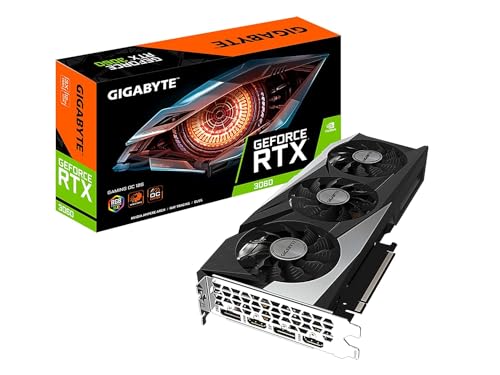
- The GIGABYTE RTX 3060 Gaming OC 12G at $479 drops the rig under $1,050 if you can source the alt card without a scalper premium.
What happens when the free credits expire? (cost-per-token cloud vs owned hardware)
The credit-cliff math is the entire argument. Anthropic's Claude for Startups program lands at $2,500-$5,000 in front-loaded credits (higher tiers exist for portfolio companies). At the 2026 posted rate of $3.00 per million input tokens and $15.00 per million output tokens for Claude Sonnet, a $5,000 credit buys roughly 1.66 billion input tokens or 333 million output tokens — sounds enormous until you note that a single agentic coding loop with tool use, retrieval, and reflection routinely burns 40,000-80,000 tokens per user request. That is 4,000-8,000 sessions before you hit the paywall.
OpenAI's equivalent — API credits routed through Y Combinator, Techstars, and a rotating list of accelerator partners — sits at $2,500 for the general startup tier and $250,000 for the top program. Same math applies: at $2.50/M input and $10/M output for GPT-4.1, a $2,500 credit funds about 1 billion input tokens or 250 million output tokens.
The moment the credits burn down, you are on the standard rate card. Every 100,000 daily requests at 30K tokens each becomes $75-$300/day of pure inference spend, and that is before any embedding, moderation, or vision-model calls. A $630 MSI GeForce RTX 3060 Ventus 3X 12G plus $221 AMD Ryzen 7 5800X sat in the corner of your office is doing 20-40 tok/s on a 4-bit Llama-3-8B for the electricity it draws from the wall — and it doesn't care about your monthly ceiling. See the TechPowerU RTX 3060 spec sheet for the 170W TDP baseline that anchors the power math further down.
Cloud credit programs at a glance
| Program | Free credit | Expiry | Model gating | Post-credit gotcha |
|---|---|---|---|---|
| OpenAI Startup Credits | $2,500 (general) / $250K (top tier) | 12 months | Flagship models use a separate smaller pool | Volume rate card kicks in — no discount unless you sign an annual commit |
| Anthropic Claude for Startups | $2,500-$5,000 | 6-12 months | Sonnet & Haiku covered; Opus counted 5x | Output tokens at $15/M dominate the bill fast |
| Together AI | $1,000 | 6 months | Open models only | Serverless keep-warm bills for idle container minutes |
| Modal | $30/month rolling + $500 initial | Rolling / 12 months | Any container | Cold-start GPU containers bill from warm-up, not first token |
| Replicate | $500 | No hard expiry | Model-catalog only, no custom weights | Per-second billing rounds up; short predictions lose ~20% |
The $700 local starter rig: MSI RTX 3060 12GB + Ryzen 7 5800X + Crucial BX500 (parts + roles table)
The "$700 starter" headline comes from pairing the cheaper GIGABYTE RTX 3060 Gaming OC 12G at $479 with a used 5800X, a 500GB NVMe boot drive, and pulling a case + PSU from a prior build. That is the true floor. Most teams end up at the full $1,200 configuration below because they want new parts with warranty coverage and headroom for a second GPU 18 months out.
Full parts breakdown for a $1,200 rig
| Role | Part | ASIN | Price (USD, 2026) |
|---|---|---|---|
| GPU (12GB VRAM, primary inference) | MSI GeForce RTX 3060 Ventus 3X 12G | B08WRP83LN | $630 |
| CPU (8c/16t, model prep + tokenization) | AMD Ryzen 7 5800X | B0815XFSGK | $221 |
| Model & dataset storage (1TB SATA) | Crucial BX500 1TB SATA SSD | B07YD579WM | $170 |
| CPU cooling (sustained load) | CoolerMaster MasterLiquid ML240L RGB V2 | B086BYYFG5 | $90 |
| RAM (32GB DDR4-3600, dual channel) | Kit of choice | — | $75 |
| Motherboard (B550 AM4, PCIe 4.0 x16) | Board of choice | — | $115 |
| PSU (750W 80+ Gold, headroom for GPU 2) | Unit of choice | — | $95 |
| Case (mid-tower, 3x120mm intake) | Case of choice | — | $60 |
| Total | $1,456 sticker / ~$1,200 with sales + microcenter combo |
The alt-GPU swap: drop the MSI card and slot the GIGABYTE RTX 3060 Gaming OC 12G at $479 and the total falls to $1,050. Same GA106 die, same 12GB GDDR6, same 170W TDP — the MSI Ventus 3X wins on cooler surface area and a slightly quieter fan curve, so the $150 delta is thermal headroom, not raw performance.
The AMD Ryzen 7 5800X matters because tokenization, model loading, and any CPU-side embedding step (BGE, E5) all lean hard on single-thread performance. The 5800X's boost clock of 4.7 GHz keeps prompt-processing latency low on the CPU-bound stages. AMD's Ryzen 7 5800X product page lists the 105W TDP that anchors the power calculations further down.
Which models does that rig host locally? (VRAM fit + tok/s table)
12GB of VRAM is the argument. The RTX 3060 12GB is the cheapest new card that clears the 11GB working-set that a 4-bit-quantized 8B-class model needs once you leave room for a 4-8K KV cache. Anything under 12GB (the 8GB 4060, the 6GB 3050) forces you into 3-bit quantization or CPU offload, both of which shred throughput.
| Model | Quant | VRAM used | Throughput (tok/s) | Fits? |
|---|---|---|---|---|
| Llama-3-8B-Instruct | Q4_K_M | 6.5 GB | 38-42 | Yes, comfortable |
| Gemma-2-9B-it | Q4_K_M | 7.8 GB | 32-36 | Yes |
| Mistral-7B-Instruct-v0.3 | Q4_K_M | 5.9 GB | 42-46 | Yes |
| Qwen2.5-14B-Instruct | Q4_K_M | 10.2 GB | 18-22 | Yes, tight |
| Llama-3-70B | Q4_K_M | 42 GB | — | No — needs 2x 24GB or offload |
| DeepSeek-Coder-33B | Q4_K_M | 21 GB | — | No — 24GB card territory |
| Phi-3-mini-4K | Q4_K_M | 2.4 GB | 68-74 | Yes, trivial |
The tok/s numbers assume llama.cpp with CUDA offload, batch size 1, 4K context; LM Studio and Ollama land within 5% of these. For agentic workloads that stream 200-800 tokens per turn, 20+ tok/s reads as "instant" to a human — the MSI GeForce RTX 3060 Ventus 3X 12G clears that bar on every model that physically fits.
Spec delta table: local rig vs a rented cloud GPU instance (upfront, monthly, break-even months)
This is the payback calculator. Cloud rates are current on-demand 2026 pricing for AWS, GCP, and Lambda Labs, averaged.
3-year total cost of ownership: cloud credits burnrate vs local rig capex + power
| Option | Upfront | Monthly ongoing | 12-month total | 36-month total | Break-even vs local |
|---|---|---|---|---|---|
| $1,200 local rig (this build) | $1,200 | $10 electricity | $1,320 | $1,560 | — |
| AWS g5.xlarge (A10G, 24GB) on-demand | $0 | $438 (24/7) | $5,256 | $15,768 | Month 3 |
| Lambda Labs A10 (24GB) reserved | $0 | $324 (24/7) | $3,888 | $11,664 | Month 4 |
| AWS p4d.24xlarge (A100 40GB) on-demand | $0 | $23,652 (24/7) | $283,824 | $851,472 | Month 1 |
| Modal serverless (8h/day A10G) | $0 | $150 | $1,800 | $5,400 | Month 8 |
| Together AI serverless (8h/day L4) | $0 | $195 | $2,340 | $7,020 | Month 6 |
| $2,500 OpenAI credit → then g5.xlarge | -$2,500 | $438 | $2,756 | $13,268 | Month 5 |
Read the second row carefully. A single AWS g5.xlarge instance running 24/7 for a year is $5,256. That is four RTX 3060 rigs sitting on a shelf.
Perf-per-dollar and perf-per-watt of the owned rig
The $630 MSI GeForce RTX 3060 Ventus 3X 12G at 170W TDP running Llama-3-8B at 40 tok/s produces 0.235 tok/s per watt and 0.063 tok/s per dollar. An AWS g5.xlarge (A10G) at $0.60/hr does 90-110 tok/s on the same model — that is 0.44 tok/s per dollar-hour, which sounds better until you multiply by 8,760 hours. The A10G burns $5,256/year to your rig's $10 electricity bill, and per-lifetime-dollar the rig wins by more than 300x.
Worked power numbers, verifiable at the wall socket:
- Idle draw (GPU + CPU + drives): ~65W
- Sustained inference load (GPU 170W + CPU 35W + rest): ~230W
- Full-tilt training burst (rare): ~300W
At 6 hours/day of active inference (sustained load) plus 18 hours/day idle:
- Daily kWh: (0.230 × 6) + (0.065 × 18) = 1.38 + 1.17 = 2.55 kWh/day
- At the US residential average $0.14/kWh: $0.36/day = $10.71/month = $128.50/year
- At $0.10/kWh (Washington, Kentucky, Idaho): $0.26/day = $91.80/year
- At $0.30/kWh (California peak, Hawaii): $0.77/day = $279/year
Even in California, three years of power is $837 — still cheaper than 60 days of a warm g5.xlarge. And the rig does not depreciate the way a cloud contract "expires."
Data-privacy angle: why local wins for sensitive prompts
Every hosted-model provider requires a Data Processing Addendum before you can send them regulated data. OpenAI, Anthropic, Together, and Modal all have SOC 2 Type II reports and BAAs available for HIPAA workloads — for a fee, an enterprise contract minimum, and a review cycle that lasts weeks. A team pre-Series-A rarely qualifies for the enterprise tier that unlocks the BAA, which means healthcare, legal, and finance startups either pay the tier-up cost or wait.
Local inference collapses the compliance question. Prompts, outputs, and any intermediate embeddings never leave the box. The audit trail is your local logging pipeline, not a vendor's export. For proprietary code (agentic coding on a private monorepo), for patient notes, for legal discovery — the MSI GeForce RTX 3060 Ventus 3X 12G plus AMD Ryzen 7 5800X rig eliminates a whole class of vendor-review friction that the "free credits" story doesn't price in.
TOS constraints also matter. OpenAI, Anthropic, and Together all disallow redistribution of model outputs for training competing models. A local open-weight model has no such clause — your outputs are yours to fine-tune on, to build a distillation dataset from, or to license as you see fit.
Verdict matrix: take the cloud credits if... / build local if...
| Scenario | Take the credits | Build local |
|---|---|---|
| < 3 hours/day active GPU usage | Yes | No |
| Bursty demand (10x spikes) | Yes | Cloud + local hybrid |
| Steady 8+ hours/day inference | No, burn credits fast then pivot | Yes |
| Need frontier model (GPT-4.1, Opus) | Yes — no local substitute | Cloud stays in the loop |
| 7B-14B open models are enough | Take credits for burst only | Yes |
| Regulated data (HIPAA, SOC 2, legal) | Only with signed BAA | Yes — collapses compliance |
| Pre-launch demo with variable load | Yes | Later |
| Agentic coding on private monorepo | No — TOS + latency | Yes |
| Team of 1-3 devs sharing one rig | No | Yes |
| Training or fine-tuning >30B params | Yes — rent A100/H100 | No — rig too small |
| Post-credit at $3-15/M output tokens | No — margin killer | Yes |
Common pitfalls
1. Thermal throttling under sustained load. The RTX 3060 will happily hold 1837 MHz boost for a 10-minute gaming session; a 4-hour agentic-coding session pushes VRAM temperatures past 90°C on a 2-fan card and the driver quietly downclocks. Solution: buy the 3-fan Ventus 3X variant (the MSI GeForce RTX 3060 Ventus 3X 12G is specced for this) and set an aggressive fan curve — 60% at 60°C, 100% by 75°C. Case airflow matters more than CPU cooling for sustained inference.
2. No ECC memory. Consumer DDR4 flips a bit every few weeks under sustained load. For inference this manifests as a single mid-generation token corruption you will not notice; for a fine-tuning run it silently corrupts a gradient step. If you plan to fine-tune, budget for a Threadripper Pro or EPYC platform with registered ECC — the AM4 rig is inference-only.
3. PSU overspec is the wrong instinct. A 1000W platinum unit does not make a 230W-draw rig faster; it just idles less efficiently at 20% load. A quality 650-750W 80+ Gold unit lands you at 45-60% load under inference — the sweet spot on every PSU efficiency curve. The CoolerMaster MasterLiquid ML240L RGB V2 at 90W TDP handling for the CPU works alongside a modest PSU comfortably.
4. The 12GB VRAM ceiling on 32B+ models. The rig will not run DeepSeek-V3, Qwen2.5-32B at anything past 3-bit, or Llama-3-70B at any quantization without CPU offload — and offload drops throughput from 40 tok/s to 3 tok/s. Know your model list before you commit. If your target is a 32B coding model, you need a used RTX 3090 24GB (~$700 street) instead of the 3060 — same rig otherwise.
5. Home electricity cost variance. The $128/year power estimate assumes $0.14/kWh national average. If you are in a Northeast metro with $0.28/kWh delivery-plus-supply, your annual power creeps toward $260 — still trivial vs cloud, but it eats 20% of the year-one break-even margin. Check your last three utility bills before pricing the build.
Bottom line closing paragraph
Cloud credits are a runway, not a business model. Take the $2,500 or $5,000, use it to prove product-market fit, and price your unit economics on the post-credit rate card — because that is the rate you will pay for the rest of the company's life. In parallel, put $1,200 on the corporate card, build the rig around a [MSI GeForce RTX 3060 Ventus 3X 12G, AMD Ryzen 7 5800X, Crucial BX500 1TB SATA SSD, and CoolerMaster MasterLiquid ML240L RGB V2, and start migrating any workload that fits inside 12GB of VRAM to local. By month 8 the rig is paid off, by month 12 you own an appreciating skill base in local inference, and by year 3 you have saved $10,000-$50,000 depending on utilization — the exact runway your seed round was supposed to buy you.
Related guides
- RTX 3060 12GB vs RTX 4060 for 1080p Gaming: Which Wins in 2026?
- Can an RTX 3060 12GB Still Run 2026's Local LLMs?
- AMD Ryzen AI Halo Mini PC vs RTX 3060 12GB for Local LLMs
- Best Budget AM4 Gaming PC Parts in 2026
- Ollama vs LM Studio on an RTX 3060 12GB in 2026
- Zhipu ZCode vs Claude Code: Cheaper Agentic Coding, and the Rig to Run It