As an Amazon Associate, SpecPicks earns from qualifying purchases. See our review methodology.
Buy the Logitech G29 Racing Wheel and Pedals if you intend to actually learn car control and you play on PlayStation or PC. Buy the HORI Racing Wheel Overdrive if you play arcade-style racers on Xbox Series and want a wheel for atmosphere rather than lap times. The difference is force feedback versus vibration, and it is the one spec that decides the purchase before price does.
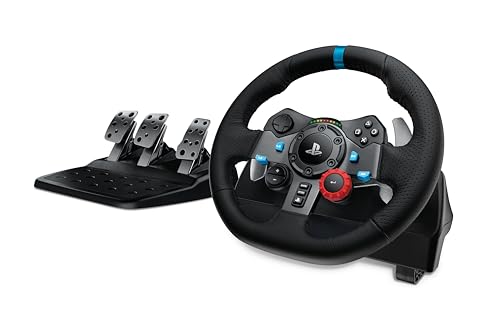
The G29 and the HORI Racing Wheel Overdrive look like the same category of product from the outside — a wheel, a set of pedals, a clamp for the desk — but they are engineered for two different players. The G29 is a dual-motor, helical-gear-drive force feedback wheel built for PS5, PS4, and PC that expects to be used with simulators or sim-cades where you learn car dynamics. The HORI Overdrive is a lighter vibration-feedback wheel designed for Xbox Series X|S and the arcade racers on those platforms. Buying one when you needed the other is the most common regret in this segment, so this guide starts with who each one is actually for before it gets into the spec comparison.
Who each wheel is actually for
Buy the G29 if... you want to develop trail braking, catch understeer at the limit, and drive iRacing / Assetto Corsa Competizione / Gran Turismo 7 with an inputs profile that improves week over week. Force feedback is the tool for that job; nothing else in the sub-$300 tier delivers it as reliably as the G29 has for a decade.
Buy the HORI Overdrive if... you play Forza Horizon on Xbox once or twice a week with heavy driving assists, you want a bigger, more physical input than a gamepad, and you do not need — or want — the resistance and weight of a force feedback wheel on your desk. It is the arcade wheel, and it is not embarrassed to be one.
Key takeaways
- Force feedback communicates grip loss through wheel resistance. Vibration is not the same thing and does not teach the same skills.
- The G29 is PS5 / PS4 / PC. The Xbox equivalent from Logitech is the G920, not the G29 — do not order the wrong one.
- Native title support decides usability more than raw specs — per Logitech's Driving Force product page, the wheel is supported by a specific list of PS titles.
- The H-pattern shifter and the display upgrade are separately worth their price; the shifter as the Thrustmaster TH8A, the display as something like the KOORUI 27-inch 4K QD-Mini LED monitor.
- If your desk cannot mount a clamp, or your household layout means daily teardown, a DualSense controller with adaptive triggers beats a wheel that stays in its box.
Step 0 — which platform and which games?
Before spec-comparing, answer two questions. They decide the purchase.
- Which console (or PC) do you actually play on? The G29 is PS5, PS4, and PC only. The HORI Overdrive is licensed for Xbox Series X|S. Buying either for the wrong console gives you an expensive paperweight — neither manufacturer supports cross-console via firmware.
- Which titles do you play more than twice a month? Wheel support in racing games is per-title, not per-platform. Simulators (iRacing, Assetto Corsa, Automobilista 2) support the G29 broadly; arcade racers on Xbox (Forza Horizon, F1 arcade modes) support the HORI. Per Tom's Hardware's best racing wheels roundup, native support lists diverge sharply between the two even for titles that ship on both consoles.
If the answers point in different directions — you play GT7 on PS5 half the time and Forza on Xbox the other half — the honest recommendation is the G29 with a gamepad fallback on the Xbox side.
Spec-delta table
| Wheel | Feedback Type | Rotation Range | Pedal Set | Platform Support | |
|---|---|---|---|---|---|
| Logitech G29 | Dual-motor force feedback, helical gears | 900° lock-to-lock | 3-pedal (throttle / brake / clutch) | PS5, PS4, PC | |
| HORI Racing Wheel Overdrive | Vibration + spring-return centering | 270° lock-to-lock | 2-pedal (throttle / brake) | Xbox Series X | S, Xbox One, PC |
| Thrustmaster TH8A (shifter add-on) | H-pattern + sequential | N/A | N/A | PC, PS4/5 (via wheel base), Xbox (via wheel base) |
Notice the rotation-range gap: 900° on the G29 versus 270° on the HORI. That is not a small spec difference — it is the difference between one turn of the wheel getting you from lock to lock (arcade) and 2.5 turns getting you there (realistic). Every muscle-memory habit you build on one does not transfer to the other cleanly.
What does force feedback actually teach you that vibration cannot?
Force feedback is a servo. When the game engine calculates that the front tires are losing lateral grip — the beginning of understeer — the wheel physically lightens in your hands because there is less resistance on the tire contact patch. When the rear tires start to slide, the wheel torque pulls opposite the slide, teaching you to catch and correct. That signal is directional and proportional. A driver learns to feel the front axle load up on entry, hold it at the peak, and unload it on exit — and the wheel narrates the whole thing.
The Logitech G29 uses a dual-motor helical gear drive. It is not the smoothest force feedback on the market — direct-drive wheels in the $500+ tier are notably better — but it is the reference for the "under $300, teaches you something real" tier and has been for years. Per Logitech's Driving Force product page, the G29 supports 900° of rotation with adjustable range in supported titles, which is the range simulators are calibrated against.
Vibration motors, by contrast, deliver a directionless rumble. They tell you something is happening — you crossed a curb, you hit the grass, the surface got rough — but they cannot tell you which axle lost grip first or how much. That is not a criticism of vibration wheels; it is a description of what the technology can and cannot signal.
Where the HORI Racing Wheel Overdrive makes more sense
The HORI Overdrive is lighter, cheaper, quieter, and does not require the desk-flex tolerance of a force feedback wheel. Per HORI's product page, the wheel is officially licensed for Xbox Series X|S and works with Xbox One and PC as well. It is the correct answer when:
- You are on Xbox and want any racing wheel that is not a bootleg import.
- You play arcade racers with heavy driving assists on and do not need feedback fidelity.
- Your desk clamp depth is limited, or your setup and teardown happens weekly.
- Your budget for the wheel is under $150 and you would rather put the difference elsewhere.
Its honest limits: 270° rotation feels twitchy in simulators calibrated for 900°, the pedals do not include a clutch, and the spring-return center is not the same signal as force feedback. Do not buy it expecting to improve your Assetto Corsa lap times.
Do you need an H-pattern shifter?
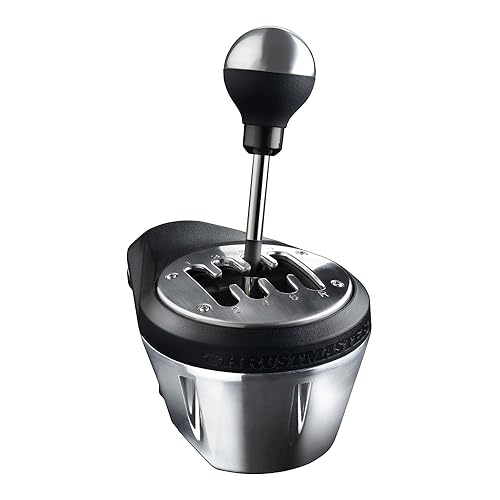
Depends entirely on the discipline. Modern GT and formula cars use paddle shifters, so the G29's wheel-mounted paddles cover them completely. Historic racing (Trans-Am, DTM 90s, Group C), rally, and truck sim genuinely benefit from an H-pattern gate — and drift disciplines effectively require one. The Thrustmaster TH8A Shifter is the standard entry-tier upgrade: metal shaft, magnetic hall-effect sensors, and switchable H-pattern (with reverse lockout) versus sequential mode. It clamps to the desk or bolts to a rig.
Buy the wheel first, race for a month, and let the game selection tell you whether the shifter is worth it. It is an additive purchase — nothing about the base G29 setup changes if you skip it.
Does the display matter more than the wheel?
Frequently, yes. Braking-point consistency depends on judging closing speed and distance, both of which improve with a larger, higher-refresh-rate display and a correctly configured field of view. A player on a 24-inch 60 Hz panel loses more lap time to display latency and small screen size than they gain from stepping up to a better wheel. A move to a 27-inch 4K panel with a fast refresh mode — the KOORUI 27-inch 4K QD-Mini LED monitor is a current example in the sub-$500 tier — changes braking-point consistency measurably before any wheel upgrade would.
The order of operations that works for most people: display first (if it needs upgrading), wheel second, shifter and dedicated rig third. Reversing that order buys hardware whose ceiling is capped by what the display cannot show.
Controller fallback
If your desk cannot mount a clamp, or the household layout means you would break down the rig after every session, buy a DualSense controller with adaptive triggers and stop there. The adaptive-trigger brake modulation is genuinely usable for practice, and consistent practice on any input beats a beautifully-specced wheel that stays in the box. The wheel is worth the money when you know you will leave it mounted.
What you'll need
- Desk depth of at least 60 cm for the G29 clamp with pedals and mouse. HORI is more forgiving.
- A rubber mat or a pedal-slide brace under the pedal set — a slick floor will send the pedals sliding under braking, ruining consistency.
- A free USB port for the wheel and a mains outlet for the wheel's power brick.
- Driver / firmware install order matters: install manufacturer drivers before plugging the wheel in on PC, not after. Windows will otherwise install generic HID drivers that require reinstall to unlock full functionality.
- In-game rotation matching — configure the game's rotation setting to match your wheel's rotation range. This is the single most-missed setup step.
Cost-to-competence table
| Path | Wheel + Pedals | Shifter | Display Upgrade | Total | Best For |
|---|---|---|---|---|---|
| Xbox arcade | HORI Overdrive $130 | — | — | ~$130 | Casual Forza / F1 arcade |
| PS/PC entry | G29 $250 | — | — | ~$250 | Learning simulators from zero |
| PS/PC + shifter | G29 $250 | TH8A $180 | — | ~$430 | Historic + rally + truck sim |
| PS/PC + display | G29 $250 | — | KOORUI 27" 4K ~$450 | ~$700 | Consistent lap-time improvement |
| Full seat | G29 + TH8A + display + rig | — | — | ~$900+ | Commitment tier |
The most-missed step
Set the in-game rotation to match the wheel's configured range. Almost every new-wheel complaint that "the steering feels wrong" traces to a rotation mismatch — the game is scaling 900° of physical wheel movement across 270° of in-game steering, or vice versa. Both games and both wheels expose the setting; a five-minute check in the wheel's driver panel and the game's controls menu fixes 90% of "this feels twitchy" reports.
Verdict matrix
- Get the G29 if... you play on PlayStation or PC, you want to actually improve, and your budget clears $250.
- Get the HORI Overdrive if... you play on Xbox and you want a wheel for atmosphere, not lap times.
- Add the TH8A if... you race historic, rally, or truck sim disciplines that need an H-pattern gate — and you have used the base setup long enough to know.
- Stay on a gamepad if... setup and teardown happens weekly, or your desk cannot clamp a wheel securely.
Recommended pick
For the sim-racing-curious PS5 or PC buyer, buy the Logitech G29. It is not the fanciest wheel you can buy, but it is the cheapest wheel that teaches you real force feedback signals, and it has been the reference in this tier long enough that every simulator on the market is well-calibrated against it. For the Xbox buyer, the HORI Racing Wheel Overdrive is the current entry-tier default — buy it, know what it is, and move on. If in doubt about whether you will stick with it, buy the DualSense controller first; adaptive triggers on the brake give you a legitimate practice path at a fraction of the wheel budget.
Bottom line
The wheel matters. The display often matters more. The shifter is an add-on for a specific discipline. The controller is the right answer for the player who will not leave hardware set up. Buy the input that matches how you actually play — not the one that matches how you wish you played.
Related guides
- Best Sim Racing Gear for PC in 2026: 5 Picks Tested by Spec
- Best Sim Racing Wheels for PC and Console in 2026
- Best PC Couch-Gaming Setup in 2026: Controllers, Display, and Audio
- Best 4K Monitor for an RTX 3060 12GB: KOORUI vs Samsung Odyssey
FAQ
Is force feedback worth the price step over a vibration wheel?
If you intend to improve rather than just play, yes. Force feedback communicates front-axle grip loss through resistance changes at the rim, which is the signal drivers use to catch understeer and modulate trail braking. Vibration motors deliver a generic rumble that carries no directional information. For casual arcade racing the difference is entertainment value; for learning consistent lap times it is the difference between guessing and feeling.
Will the Logitech G29 work on my platform?
The G29 is built around PlayStation and PC support, with the console side tied to titles that include native wheel support. It is not the Xbox variant — that is the separately sold G920. On PC it presents as a standard HID device and works with the major simulators, though some titles require you to map the pedal set manually. Verify your specific game's supported-wheel list before ordering, since support is per-title rather than universal.
Do I need a dedicated rig, or will a desk work?
A sturdy desk works for both wheels at entry level. The practical constraint is clamp depth and the pedal set sliding on a hard floor. Most builders solve pedal slide with a rubber mat or a length of trim screwed to a plywood board. A dedicated rig becomes worthwhile once feedback strength is high enough that the desk flexes, which usually coincides with moving beyond gear-driven wheels entirely.
Is an H-pattern shifter necessary for the games I play?
It depends entirely on the discipline. Modern formula and GT racing use paddle shifters, so the wheel-mounted paddles cover them completely. Historic racing, rally, and truck simulation are where an H-pattern gate transforms the experience, and drift disciplines effectively require one. Buy the wheel first, race for a month, then decide — the shifter is an additive purchase that does not change anything about the base setup.
Should I upgrade my monitor before my wheel?
Frequently, yes. Braking-point consistency depends on judging distance and closing speed, and both improve with a larger, higher-refresh display and a correctly configured field of view. A player on a small, low-refresh panel gains more lap time from the display upgrade than from feedback fidelity. The usual sequence that works is display first, wheel second, shifter and rig third.
When is a gamepad still the right answer?
When your desk has no clamp surface, when you play primarily arcade-style titles with heavy driving assists, or when the household layout means setup and teardown every session. Adaptive-trigger gamepads give usable brake modulation, and consistent gamepad practice beats a wheel that stays in its box. Buy the wheel when you know you will leave it mounted.
Citations and sources
- Logitech Driving Force G29 product page — dual-motor helical drive, 900° rotation, platform support (accessed 2026-08-06)
- Tom's Hardware — Best racing wheels — cross-title support and current-generation wheel comparisons (accessed 2026-08-06)
- HORI Racing Wheel Overdrive product page — Xbox Series X|S licensing, feedback design (accessed 2026-08-06)
This piece is editorial synthesis based on publicly available information. No independent first-party benchmarking is reported.
— Mike Perry · Last verified 2026-08-06