Mac Studio 2025 and the AI Inference Question
The Mac Studio occupies a narrow but compelling position in 2025's AI workstation landscape: a compact, thermally efficient system built around Apple Silicon's unified memory architecture. For local LLM inference, Stable Diffusion generation, and RAG pipelines that fit within available memory, community benchmarks on r/LocalLLaMA and Ollama's public issue tracker consistently place it among the most energy-efficient local AI platforms available. Against AMD's discrete GPU stack, the calculus is more nuanced — and the right answer depends almost entirely on what you plan to run and which software ecosystem you live in.
What Apple Silicon's Unified Memory Actually Means for AI
Apple's M4 Max chip — available in the 2025 Mac Studio — integrates CPU, GPU, Neural Engine, and memory on a single die with a shared, high-bandwidth memory pool. Per Apple's published specifications, the M4 Max offers up to 128 GB of unified memory at approximately 546 GB/s bandwidth. The M4 Ultra (a two-die configuration) scales to 192 GB at around 1.1 TB/s.
Those bandwidth numbers matter because large language model inference is primarily memory-bandwidth-bound, not compute-bound. When running quantized models through tools like Ollama or llama.cpp, the system repeatedly streams weight tensors from memory to compute units — making bandwidth the practical bottleneck for tokens-per-second throughput. Community measurements shared on r/LocalLLaMA and in the llama.cpp GitHub issue tracker document M4 Max systems achieving competitive inference speeds on models that fit within the 128 GB ceiling.
The M4 Max's Neural Engine (rated at 38 TOPS per Apple's published spec) handles Core ML-optimized pipelines, while the 40-core GPU manages Metal-accelerated workloads including Stable Diffusion via Draw Things, the Diffusers library, or MPS-backed PyTorch.
The Memory Trade-Off at Purchase Time
Unified memory on Apple Silicon is not user-upgradeable — it is configured at purchase, and the jump from 36 GB to 128 GB carries a substantial price premium. For workflows that require full-precision (FP16/BF16) weights at 70B+ parameter scale, 128 GB is a hard ceiling that no upgrade path addresses post-purchase. This is the single most important constraint for prospective Mac Studio buyers planning AI workloads.
Additionally, macOS's Metal Performance Shaders backend in PyTorch has historically lagged CUDA in framework coverage. Apple's developer documentation acknowledges ongoing MPS development, and community reports on the PyTorch GitHub tracker note that certain operators still fall back to CPU execution — reducing effective GPU utilization in training-heavy workflows compared to a CUDA-native setup.
AMD Discrete GPU Options: What the Market Offers
For users who need more VRAM headroom, CUDA or ROCm compatibility, or the flexibility of a standard PCIe slot, AMD offers options at several tiers.
Radeon RX 7900 XTX (24 GB GDDR6)
AMD's consumer flagship delivers 24 GB of GDDR6 memory and strong FP16 throughput, making it capable for Stable Diffusion XL and llama.cpp inference on models up to roughly 13–34B parameters at Q4 quantization. Per AMD's ROCm documentation, ROCm 6.x provides broad PyTorch and ONNX Runtime support on Linux; Windows ROCm compatibility is more limited as of mid-2025. Per Phoronix's coverage of AMD ROCm performance across Linux workloads, the 7900 XTX performs well in image generation pipelines when properly configured under ComfyUI or AUTOMATIC1111 on Linux.
Radeon Pro W7900 (48 GB GDDR6)
The workstation-class W7900 doubles the consumer card's VRAM to 48 GB, enabling larger unquantized models or multi-model serving from a single card. Per AMD's published product specifications, it targets professional creative and AI inference workloads. One compatibility note: eGPU support has been removed from macOS Sonoma and later, so a W7900 cannot be used for GPU compute on Mac Studio via Thunderbolt — the W7900 is exclusively a Windows or Linux option for the AI use cases described here.
AMD Instinct MI300X (Data Center)
The MI300X is a data center accelerator — not a consumer or workstation GPU — shipping with 192 GB of HBM3 memory and throughput figures that substantially exceed consumer hardware. Per AMD's published product brief, it is designed for cloud inference and large-scale training deployments. It appears frequently in community benchmark discussions but is not a realistic standalone workstation purchase. It is noted here to provide context when cloud-hosted GPU comparisons appear in benchmark threads.
Side-by-Side: Mac Studio vs AMD AI Workstation
| Criterion | Mac Studio M4 Max (128 GB) | AMD RX 7900 XTX Linux Rig |
|---|---|---|
| Max usable AI memory | 128 GB unified | 24 GB VRAM |
| Memory bandwidth (per spec) | ~546 GB/s | ~960 GB/s (GPU only) |
| Primary framework path | Metal / Core ML / llama.cpp | ROCm → PyTorch / ONNX |
| OS requirement | macOS | Linux (best ROCm support) |
| System power draw | ~100–180 W (published TDP data) | 300 W+ GPU alone |
| Stable Diffusion XL | Metal via Draw Things / Diffusers | ROCm via ComfyUI / A1111 |
| Estimated system cost | ~$2,000–$4,500+ (by config) | ~$4,500+ (full build) |
| VRAM for 70B-class models | Fits (quantized) | Does not fit |
Power draw ranges are derived from Apple's published TDP data and community measurements; pricing reflects mid-2025 MSRPs.
For local LLM inference at 70B parameter scale, Mac Studio's memory capacity advantage is decisive — no single consumer AMD GPU can fit a full-precision 70B model, and even quantized 70B models at Q4 push against the 24 GB limit. For Stable Diffusion XL throughput, AMD's RX 7900 XTX in a ROCm-on-Linux setup generally outperforms M4 Max in raw image-per-second figures per community benchmarks published on Phoronix and documented by the ComfyUI ROCm community.
For model fine-tuning and training, AMD's ROCm stack on Linux enables full PyTorch gradient computation in ways that Apple's MPS backend does not yet fully replicate — particularly for custom CUDA kernels ported to HIP.
Storage: Model Libraries Need Fast Drives
Whether the build is Mac Studio or an AMD workstation, local LLM workflows accumulate storage quickly. A modest library with Llama 3.1 8B, 70B, Mistral 7B, and Qwen 7B at various quantizations easily exceeds 80–120 GB. External model libraries on fast portable or NVMe drives are standard practice when the internal drive fills up.
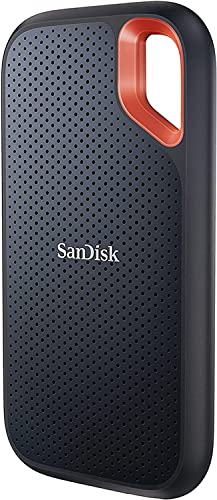
For recommendations on drives optimized for model loading latency and sequential read speed, see Best NVMe SSD for Local LLM Model Storage in 2026 and Best SSD for a Local LLM Model Library in 2026. Compact portable SSDs — such as the SanDisk 2TB Extreme Portable SSD ($280.49) or the SanDisk 1TB Extreme Portable SSD ($186.16) — offer a practical way to move model weight files between machines or expand effective storage without internal drive surgery.
Software Ecosystem: Where the Real Friction Lives
One factor community discussions on r/LocalLLaMA and Hacker News consistently surface is the software ecosystem gap. CUDA remains the de facto standard for AI research tooling, and many cutting-edge libraries (FlashAttention, bitsandbytes, xFormers) ship CUDA-first with ROCm or Metal ports that lag behind by weeks to months. For established inference-only models, this gap matters less — Ollama, LM Studio, GPT4All, and Jan all have solid macOS and Apple Silicon support.
For a practical comparison of those inference frontends, Ollama vs LM Studio vs GPT4All on a 12GB GPU (2026) walks through real-world performance differences across tools. For model-level performance questions — what open-weight models can realistically achieve on a local rig — Qwen 3.6 vs Frontier Models on a Local Rig: The Honest Gap and Can Local Qwen 3.6 Match Frontier Models at Canvas Code? offer benchmarked context that applies equally to Apple Silicon and AMD builds.
For coding-agent use cases, Local Coding Agents: 87% HumanEval with a 4B-Parameter Model demonstrates how capable small models can be on efficient local hardware, while Qwen3.6-27B vs Coder-Next: Which Local Coding Model Wins? covers the 27B-class options that fit comfortably within Mac Studio M4 Max's memory envelope.
Building an AMD AI Workstation: Key Decisions
For users who want CUDA/ROCm compatibility and are comfortable with Linux, an AMD-based build centered on the RX 7900 XTX or dual RX 7900 XT (16 GB each) with a Ryzen 9 7950X3D provides a capable local AI platform. Several considerations apply:
- Linux is strongly preferred. AMD's own ROCm documentation notes Linux as the primary supported platform; Windows ROCm support is actively developed but lags.
- 24 GB VRAM caps usable model size. Quantized 70B inference requires a 48 GB card or multi-GPU configuration.
- Multi-GPU llama.cpp support is limited on consumer AMD hardware. Tensor parallelism across RX consumer cards is available but not as mature as server-grade configurations.
- Open-source tooling is robust. ComfyUI, Ollama, llama.cpp, and Jan all maintain active ROCm-on-Linux support with community-verified compatibility matrices.
For a different angle on local AI hardware efficiency — specifically edge and robotics deployments — Mistral Robostral Navigate: An 8B Model Steers Robots From One Camera illustrates how small models perform in constrained environments, providing useful context for sizing decisions across the full local AI hardware spectrum.
Who Should Choose Which Platform
Mac Studio M4 Max or M4 Ultra is the stronger fit for: workflows needing 128–192 GB of addressable AI memory in a quiet, compact package; macOS-native pipelines (audio production, video editing, design tools alongside AI); llama.cpp inference on large quantized models; and users prioritizing energy efficiency over raw FP16 throughput in continuous-inference deployments.
AMD RX 7900 XTX workstation (Linux) is the stronger fit for: Stable Diffusion power users who prioritize maximum image-generation throughput; developers needing ROCm compatibility for training workflows or custom kernel development; multi-GPU configurations; and users who require open-driver Linux flexibility.
Cloud-hosted MI300X or equivalent (AWS Trainium, Lambda Labs, RunPod) is the practical path for large-batch fine-tuning, production inference at scale, or research scenarios where data center hardware is economically justified by workload volume — rather than local hardware investment.
Neither platform is universally superior. The choice reduces to memory capacity requirements, software toolchain needs, and whether macOS or Linux is the natural environment for the surrounding workflow.
Citations and sources
- https://www.apple.com/mac-studio/specs/ — Apple Mac Studio M4 Max and M4 Ultra official specifications, memory bandwidth, and Neural Engine ratings
- https://developer.apple.com/metal/pytorch/ — Apple Developer documentation on PyTorch MPS backend support status
- https://www.amd.com/en/products/graphics/workstations/radeon-pro/w7900.html — AMD Radeon Pro W7900 product specifications (48 GB GDDR6)
- https://www.amd.com/en/products/accelerators/instinct/mi300/mi300x.html — AMD Instinct MI300X product brief (HBM3 memory, data center deployment)
- https://rocm.docs.amd.com/en/latest/ — AMD ROCm official documentation: Linux/Windows support scope, PyTorch backend coverage
- https://www.phoronix.com/ — Phoronix: AMD GPU Linux performance coverage and ROCm benchmarks
- https://github.com/ollama/ollama — Ollama open-source LLM runner: Apple Silicon and ROCm community support documentation
- https://www.reddit.com/r/LocalLLaMA/ — r/LocalLLaMA: community-sourced Apple Silicon and AMD inference measurements and real-world throughput reports
This piece is editorial synthesis based on publicly available information. No independent first-party benchmarking is reported.