Apple's unified memory architecture has become the reason hobbyists and developers increasingly reach for a Mac Studio instead of assembling a multi-GPU rig to run large language models locally. The short answer: a single pool of memory shared by the CPU, GPU, and Neural Engine lets a sufficiently equipped Mac hold model weights that would otherwise require several discrete GPUs working in tandem — at the cost of lower raw memory bandwidth than purpose-built datacenter accelerators. Whether that trade-off is worth it depends on what "running an LLM" actually means for the workload in question: fitting a huge model at all, or serving many requests as fast as possible.
How Unified Memory Actually Helps LLM Inference
On a conventional PC, the CPU addresses system RAM while a discrete GPU addresses its own onboard VRAM. Loading a model onto the GPU means copying weights across the PCIe bus into that separate, capacity-limited pool — and if the model is larger than the GPU's VRAM, it has to be split across multiple cards or partially offloaded to slower system RAM.
Apple's unified memory architecture puts the CPU, GPU cores, and Neural Engine on the same package addressing the same physical memory. There's no separate VRAM pool and no PCIe copy step. For an LLM, that means the ceiling on how large a model can be loaded is simply how much unified memory the machine has, not how much VRAM a specific GPU card shipped with. Per Apple's published Mac Studio specifications, that ceiling currently tops out at 512GB on the M3 Ultra configuration — large enough to load quantized versions of models with 600 billion or more parameters, including sizable mixture-of-experts models, on a single desktop machine.
Mac Silicon Memory Specs at a Glance
Capacity and bandwidth move together on Apple Silicon, but not proportionally — the jump from a Pro to a Max to an Ultra chip roughly doubles bandwidth at each tier via Apple's chip-fusion packaging.
| Chip (representative products) | Max unified memory | Notes |
|---|---|---|
| M4 Pro (Mac mini, MacBook Pro) | 64GB | Entry point for serious local inference; fine for 7B–13B class models |
| M4 Max (MacBook Pro, Mac Studio) | 128GB | Comfortable for mid-size quantized models (30B–70B class) |
| M2 Ultra (Mac Studio, Mac Pro) | 192GB | Apple's prior top-tier chip-fusion design |
| M3 Ultra (Mac Studio) | 512GB | Only consumer-accessible platform that fits 400B+ parameter quantized models in one machine |
Exact figures and current configurations are listed on Apple's Mac Studio specifications page, which should be treated as the source of truth over any third-party summary, since Apple periodically revises memory tiers between chip generations.
Mac vs. Datacenter Accelerators: Capacity vs. Bandwidth
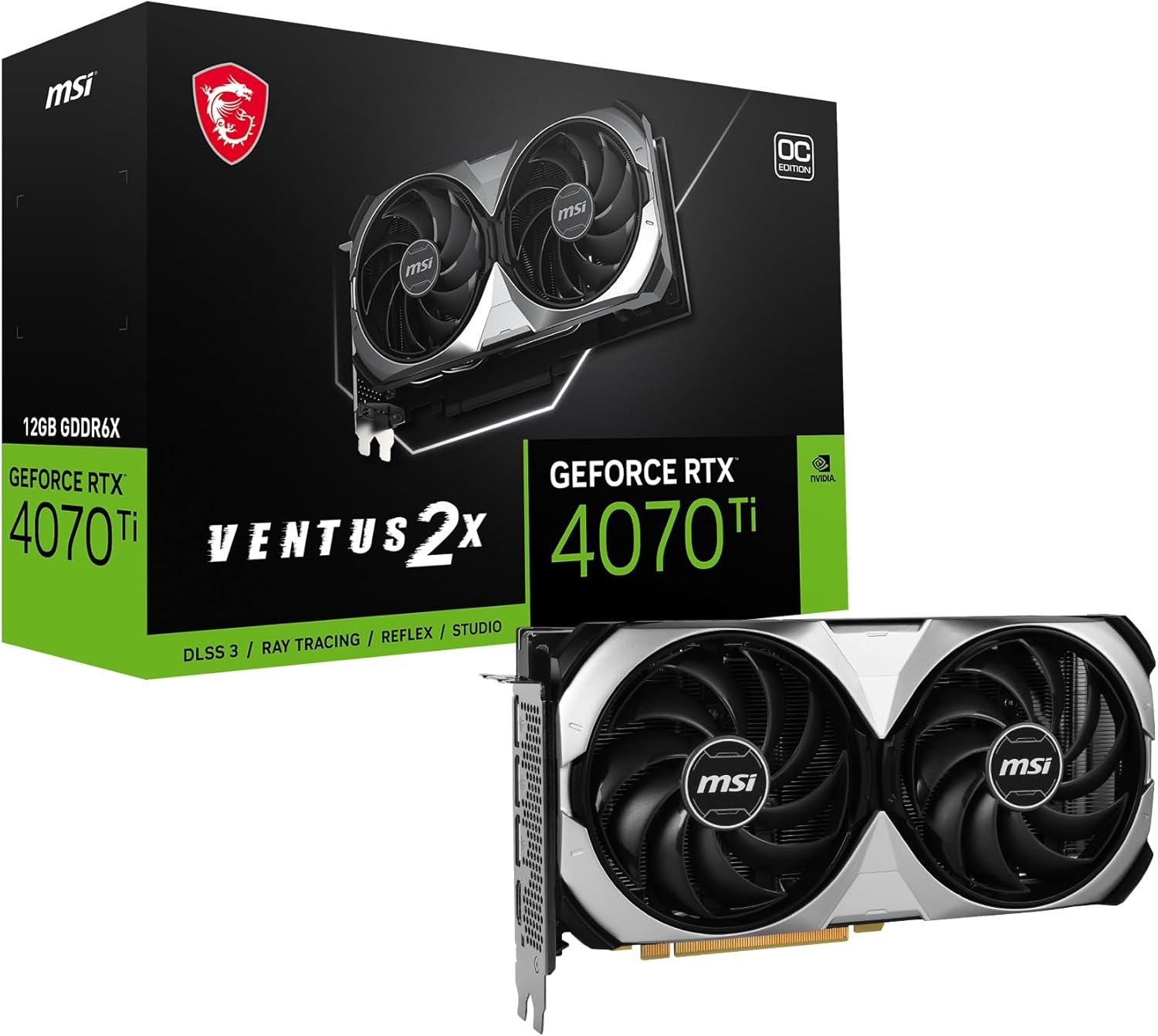
The comparison that matters isn't Mac vs. gaming GPU — a single RTX-class card tops out well below even a mid-tier Mac's unified memory pool. The more useful comparison is Mac vs. purpose-built datacenter accelerators like AMD's Instinct line, because both are aimed at holding large models rather than gaming workloads.
| Platform | Memory pool | Memory type | Primary strength |
|---|---|---|---|
| Mac Studio (M3 Ultra) | Up to 512GB | LPDDR5-based unified memory | Single-machine capacity, power/noise efficiency, no cluster orchestration |
| AMD Instinct MI300X | 192GB per accelerator | HBM3 | Bandwidth (~5.3TB/s per AMD's product specifications), designed for multi-GPU datacenter clusters |
The practical read: AMD's MI300X packs less memory per accelerator than a maxed-out Mac Studio but moves data through that memory dramatically faster, and datacenter deployments typically link many accelerators together for both more total memory and more total bandwidth than any single machine offers. That combination is why MI300X and similar accelerators dominate large-scale training and high-throughput serving, while a Mac's niche is a single developer or small team wanting to load a large model locally without renting cloud GPU time or building a multi-card server. Community discussions on forums like r/LocalLLaMA have repeatedly centered on this exact trade-off since the M3 Ultra Mac Studio's 512GB configuration became available — enough capacity to load models that previously required renting multi-GPU cloud instances, even though per-token generation speed lags what those cloud GPUs deliver.
Running LLMs Locally on a Mac: The Practical Stack
Three open-source projects account for most local-Mac LLM usage:
- llama.cpp — the inference engine most other Mac-focused tools are built on; supports Apple's Metal API to run model layers on the GPU cores while addressing unified memory directly.
- MLX — Apple's own array/ML framework, built specifically to take advantage of unified memory and Apple Silicon's GPU and Neural Engine, with growing support for both inference and fine-tuning.
- Ollama — a wrapper around llama.cpp that packages model downloading, quantization selection, and a simple local API, making it the most common on-ramp for developers who don't want to manage llama.cpp builds directly.
All three lean on quantized model formats (commonly GGUF) to shrink a model's memory footprint — a 70B-parameter model at 4-bit quantization can fit in roughly 40GB, well inside a 64GB or 128GB unified memory Mac, while full-precision weights for the same model would require several times that.
The Trade-offs: What Unified Memory Doesn't Fix
Unified memory solves a capacity problem, not a speed problem. Two limits carry over regardless of how much memory a given Mac has:
- Bandwidth still caps token generation speed. Even the fastest current Apple Silicon chips run at a fraction of HBM3's bandwidth, so tokens-per-second on a large model loaded into unified memory will generally trail the same model served from a GPU with dedicated high-bandwidth memory.
- Shared memory means shared contention. Because the GPU, CPU, and Neural Engine draw from the same pool, running other memory-heavy applications alongside an LLM reduces what's actually available to the model — unlike a discrete GPU's VRAM, which is isolated from the rest of the system.
These limits are why Mac unified memory tends to win on "can this model even load" questions for individual developers and researchers, and loses on "how many requests per second can this serve" questions that matter for production inference at scale — the domain where accelerators like the MI300X and multi-GPU Nvidia clusters remain the default.
Where This Fits in the Broader Memory Market
Unified memory on Mac and HBM3 on datacenter accelerators both ultimately depend on the same upstream DRAM and packaging supply chain, which is why memory pricing trends are worth tracking even for a Mac-focused buying decision — see Memory Prices Climb as Samsung and SK Hynix Pour $590B Into Chips and Samsung and SK Hynix Plan $590B Chip Push as Memory Prices Climb for how that investment could affect both consumer and datacenter memory costs going forward. The bandwidth-vs-capacity trade-off discussed above also shows up outside Apple Silicon — for a broader look at how memory bandwidth shapes AI hardware generally, from HBM in datacenter cards down to GDDR6 in consumer GPUs, see Why AI Memory Bandwidth Matters: From Micron's HBM to Your GDDR6.
On the PC side, memory configuration questions are just as relevant to AI workloads as they are on Mac. Dual-channel vs. single-channel setups materially affect memory-bound workloads on desktop platforms, as covered in Single vs. Dual Channel Memory: Intel Core Ultra 7 270K and Intel Core Ultra 7 270K Plus: Dual-Channel Memory Scaling Tested. Security-conscious builders running local LLMs on Ryzen platforms should also be aware of memory encryption changes tracked in ASUS Beta BIOS Restores Ryzen 9000 Memory Encryption Ahead of AMD's July Update. And for anyone weighing whether to add more memory to an existing homelab box rather than buying a new Mac, 20GB Homelab Memory Left: What to Add Next covers incremental upgrade paths on non-Apple hardware.
The Bottom Line
For an individual developer or researcher who wants to load the largest possible open-weight model on one machine without assembling a multi-GPU server, a high-memory Mac — particularly the M3 Ultra Mac Studio's 512GB configuration — is currently one of the few consumer-accessible ways to do it. For production inference serving many concurrent users, or training workloads that need maximum throughput, HBM-equipped accelerators like AMD's Instinct MI300X remain the better fit, precisely because their advantage is bandwidth and multi-accelerator scaling rather than single-box capacity. The right choice comes down to whether the bottleneck in a given workload is "will this model fit in memory at all" or "how fast can this system serve it."
Citations and sources
- Apple Mac Studio — Tech Specs
- Apple Mac Studio — Product page
- AMD Instinct MI300X — Product specifications
- llama.cpp — GitHub repository
- MLX — Apple's array framework for Apple Silicon, GitHub repository
- Ollama — GitHub repository
This piece is editorial synthesis based on publicly available information. No independent first-party benchmarking is reported.