Local large language model inference lives or dies on one number: how much memory the GPU (or GPU-equivalent) can address. That single constraint is why "unified RAM" — a shared memory pool that the CPU, GPU, and any on-chip AI accelerator can all read from — has become one of the most-discussed hardware concepts in the local-LLM community heading into 2026.
This guide breaks down what unified memory actually is, which 2025-2026 platforms implement it, how it compares to traditional discrete GPU VRAM, and how to think about it when shopping for a local-LLM machine.
What "Unified RAM" Means for Running an LLM
On a conventional desktop PC, the CPU has its own system RAM and the discrete GPU has its own separate, faster VRAM (GDDR6 or HBM). Data has to be copied across the PCIe bus between the two pools. On a unified-memory system, there is one physical memory pool that both the CPU and GPU (and, on Apple Silicon, the Neural Engine) can address directly, with no copy step.
For LLM inference specifically, this matters less for raw speed and more for ceiling. A discrete GPU with 12GB or 24GB of VRAM hard-caps the size of model (or the context window) that can be loaded without offloading layers to slower system RAM. A unified-memory system with a large shared pool can load a much bigger quantized model in one place, even if the per-token throughput of that shared memory is lower than dedicated GDDR6 or HBM.
That trade-off — capacity versus raw bandwidth — is the core tension covered throughout this piece and in SpecPicks' related coverage of Mac unified memory for LLMs and the AMD Ryzen AI Max "Gorgon Halo" 192GB platform.
Apple Silicon: The Original Consumer Unified-Memory Play
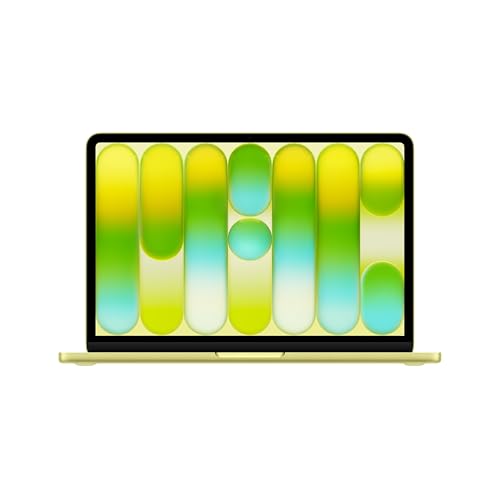
Apple has marketed its M-series chips around a single unified memory architecture since the first Apple Silicon Macs, and that architecture is central to how Apple positions its current laptop lineup for on-device AI workloads, per Apple's own product materials. The Apple 2025 MacBook Air 15-inch with M4 chip, listed on SpecPicks at $864.38, is built around this shared-memory design and is explicitly marketed as "Built for Apple Intelligence" — Apple's on-device AI feature set.
The practical upshot for anyone evaluating a Mac as a local-LLM machine: the unified memory configuration selected at purchase — not just the chip tier — determines how large a model can be loaded, since system RAM and "VRAM" are the same pool. Buyers should check the specific configuration's listed memory before assuming a number, since Apple sells the same chip family across multiple memory tiers.
Apple has continued this direction into newer AI-branded hardware. The catalog also includes several 2026 MacBook Neo 13-inch laptops with Apple's A18 Pro chip, marketed as "Built for AI and Apple Intelligence" and priced from $689.99 to $799.00 depending on configuration — positioned as a lower-cost entry point into Apple's on-device AI ecosystem rather than a workstation-class local-LLM box.
SpecPicks has covered the Mac side of this trend in more depth in "Mac Unified Memory for LLMs: What Matters in 2026", which is worth reading alongside this guide for platform-specific buying advice.
AMD's Answer: Ryzen AI Max and Large Unified-Memory APUs
Apple no longer has the unified-memory conversation to itself. AMD's Ryzen AI Max line (codenamed "Strix Halo," with a newer "Gorgon Halo" generation covered extensively elsewhere on SpecPicks) pairs CPU cores with an integrated RDNA-based GPU and gives that GPU access to a large shared LPDDR5X memory pool through a feature AMD calls Variable Graphics Memory — letting the integrated GPU address far more memory than a typical laptop iGPU normally could, per AMD's product materials.
This is the platform behind SpecPicks' running coverage of 192GB and 128GB unified-memory APU configurations:
- AMD Ryzen AI Max 400 "Gorgon Halo": What 192GB of Unified Memory Unlocks
- Ryzen AI Max 400 "Gorgon Halo": 192GB Unified Memory vs an RTX 3060 for Local LLM
- AMD Ryzen AI Max+ "Gorgon Halo" 192GB: What 192GB Unified Memory Means
- AMD Ryzen AI Max 400 "Gorgon Halo": 192GB Unified Memory APU Hits $3,999
- AMD Ryzen AI Max 395 Box: Can a 128GB Unified-Memory APU Replace a Dual-GPU Rig?
- AMD Ryzen AI Max+ 395 Box (Strix Halo) for Local LLMs: What 128GB Unified Memory Buys You
The consistent theme across that coverage: a single APU with a 128GB-192GB shared memory pool is being positioned by enthusiasts and reviewers as an alternative to running multiple discrete GPUs purely to get enough combined VRAM for a large model — see the dual-RTX-3090 comparison specifically. Whether that trade makes sense depends entirely on the tokens-per-second the buyer actually needs versus simply wanting the model to load at all.
Unified Memory vs. Discrete GPU VRAM: The Real Trade-off
| Factor | Unified memory (Apple Silicon / Ryzen AI Max) | Discrete GPU VRAM (GDDR6/HBM) |
|---|---|---|
| Typical capacity ceiling | Up to 128GB-192GB shared pool on high-end configurations | Capped per-card — 12GB-24GB is typical on current consumer cards, per public GPU databases such as TechPowerUp |
| Bandwidth per GB | Generally lower than dedicated GDDR6/HBM | Generally higher |
| Upgrade path | Fixed at purchase (soldered/non-upgradable on both Apple and AMD APU platforms) | Add a second card, or buy a card with more VRAM |
| Best fit | Loading large quantized models that would not fit in discrete VRAM | Maximizing tokens/second on models that already fit in VRAM |
The practical decision rule that emerges from SpecPicks' related coverage: if the model a buyer wants to run does not fit in the VRAM of an affordable discrete GPU, a large unified-memory system is the more direct answer than stacking multiple discrete GPUs — but if the model already fits comfortably in 12GB-24GB of VRAM, a discrete card with high memory bandwidth will typically still deliver faster generation.
Datacenter Context: Where Unified Memory Concepts Originated
The unified-memory conversation in consumer and prosumer hardware echoes a trend already established in datacenter AI accelerators, where AMD's Instinct MI-series and comparable accelerators use large HBM memory pools specifically to keep massive models resident without constant host-to-device transfers, per AMD's accelerator product materials. That same underlying principle — keep more of the model in the fastest memory tier the compute can reach — is what Apple and AMD are now bringing down to laptop and desktop-class hardware.
How to Choose: Matching Unified RAM to a Local-LLM Workload
- Decide the model size first. A 7B-8B parameter quantized model fits comfortably in most modern discrete-GPU VRAM tiers or even smaller unified-memory configurations. A 70B-class model, by contrast, is the scenario where a 128GB+ unified-memory system becomes genuinely useful rather than a discrete GPU upgrade.
- Check the exact memory configuration, not just the chip name. Both Apple and AMD sell the same chip across multiple memory tiers — the number that matters is the specific unit's configured memory, not the chip family.
- Weigh throughput against capacity. If the goal is fast iteration on a model that already fits in 24GB of VRAM, a discrete GPU will typically still win on speed. If the goal is running the largest model possible on a single machine, unified memory's higher ceiling is the deciding factor.
- Factor in whether the system is portable. Apple's unified-memory laptops and AMD's Ryzen AI Max mini-PCs and laptops offer a portability advantage a multi-GPU desktop tower cannot match.
FAQ Recap
See the FAQ section below for direct answers on capacity, speed, and buying priorities.
Citations and sources
- https://www.apple.com/ — Apple's unified memory architecture and product configuration details for Apple Silicon Macs
- https://www.amd.com/ — AMD's Ryzen AI Max ("Strix Halo") product family and Instinct accelerator memory specifications
- https://www.techpowerup.com/ — public GPU specification database referenced for discrete GPU VRAM capacity context
This piece is editorial synthesis based on publicly available information. No independent first-party benchmarking is reported.