Who this comparison is for
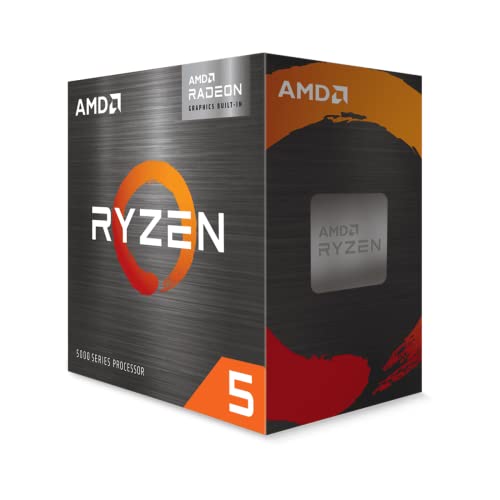
This comparison is for a builder planning a single-user Qwen2.5 7B assistant who is choosing between two ways to spend the money. The first is a 12GB discrete card, either a used unit or one of the new listings still on shelves. The second is a no-GPU APU box built around AMD's Ryzen 5 5600G, which boots on its integrated Radeon graphics and costs less up front.
Qwen2.5 7B is where this question gets interesting. The Hugging Face model index lists 7,615,616,512 parameters. At Q4_K_M that's a file small enough to load comfortably into 32 GB of system RAM, yet big enough that memory bandwidth shapes every token. At 14B, the APU path is no longer a serious option. At 3B and below, it's often good enough. At 7B, it's the last size where the APU path is even arguable, and the answer depends on what the box is for.
The comparison below uses three kinds of public evidence. The first is measured llama.cpp results for the RTX 3060 from the llama.cpp project's own CUDA performance discussion, from Jeff Geerling's ai-benchmarks issue #40, and from Hardware Corner's RTX 3060 12GB page. The second is CPU and iGPU measurements on Zen 3 APUs, from TechHara's llama.cpp CPU-vs-iGPU test and ROCm issue #2774. The third is the model's own files and config. No source here has published a Qwen2.5 7B run on either part specifically, so the headline figures are scaled from the nearest measured model by weight size. Each scaled figure is labelled as an estimate, with the arithmetic shown.
Key takeaways
- Qwen2.5 7B at Q4_K_M is a 4.68 GB file, and Q8_0 is 8.10 GB, per bartowski's GGUF repository. Both fit in 12 GB of VRAM with a full 32K-token cache.
- An RTX 3060 generates 76.92 tok/s and prefills 2,407.67 tok/s on llama 7B Q4_0 (3.56 GiB) under CUDA, per the llama.cpp scoreboard. Scaled to Qwen2.5 7B's 4.36 GiB file, that's about 63 tok/s.
- Zen 3 APUs measure 8.8-10 tok/s on 7B Q4 models (ROCm #2774, TechHara). Both measurements scale to about 8.2 tok/s for Qwen2.5 7B Q4_K_M.
- The iGPU doubles prefill but not generation. TechHara saw pp512 rise from ~34 to ~76 tok/s on Vega graphics while generation stayed near 10 tok/s.
- Bandwidth is roughly a 7× gap: 360 GB/s on the card per Hardware Corner, against about 51.2 GB/s for dual-channel DDR4-3200.
- The card also wins on energy per token, at about 1.1 kWh per million tokens against at least 2.2 kWh for the APU (arithmetic below).
How much VRAM does Qwen2.5 7B actually need?
File sizes come from bartowski's Qwen2.5-7B-Instruct GGUF repository. KV-cache size is derived from Qwen's published config.json, which lists 28 layers, 4 key-value heads and a 3,584 hidden size across 28 attention heads, or 128 dimensions per head. At FP16 that's 2 × 28 × 4 × 128 × 2 bytes = 57,344 bytes per token. That comes to 0.23 GB at 4,096 tokens and 1.88 GB at 32,768 tokens. Bits per weight is llama.cpp's own figure for each format, from the llama-quantize README. It was measured on a different model, but it describes the format itself.
| Quant | File size | Weights + 4K KV | Weights + 32K KV | Bits per weight | Quality note |
|---|---|---|---|---|---|
| Q2_K | 3.02 GB | ~3.3 GB | ~4.9 GB | 3.16 | Most aggressive; largest expected quality loss |
| Q3_K_M | 3.81 GB | ~4.0 GB | ~5.7 GB | 4.00 | For tight memory budgets |
| Q4_K_M | 4.68 GB | ~4.9 GB | ~6.6 GB | 4.89 | The common local-inference default |
| Q5_K_M | 5.44 GB | ~5.7 GB | ~7.3 GB | 5.70 | Small step up for about 16% more size |
| Q6_K | 6.25 GB | ~6.5 GB | ~8.1 GB | 6.56 | Higher fidelity at 1.34× the Q4_K_M size |
| Q8_0 | 8.10 GB | ~8.3 GB | ~10.0 GB | 8.50 | Highest-fidelity quant; ~58% of Q4_K_M speed |
| F16 | 15.24 GB | ~15.5 GB | ~17.1 GB | 16.00 | Doesn't fit on a 12 GB card |
The table leaves out the runtime's own working buffers, which add a few hundred megabytes on top. Even so, the result is clear. Every quant from Q2_K through Q8_0 fits on a 12 GB card at the model's native 32,768-token context. Qwen2.5 7B has only 4 key-value heads, so its cache is unusually light. The same 32K window on Qwen3 8B, with 36 layers and 8 KV heads, costs about 2.6 times as much memory.
Qwen doesn't publish per-quant accuracy for this model, so the quality column describes the formats, not a measured Qwen2.5 7B score. On bandwidth-bound hardware, file size is also speed. Q8_0 is 1.73 times the size of Q4_K_M, so it generates at roughly 58% of the Q4_K_M rate on either machine.
The model card also notes that the default config "is set for context length up to 32,768 tokens" and that YaRN rope scaling extends it to 131,072 (Qwen2.5-7B-Instruct model card). At 131K tokens the FP16 cache alone would be about 7.5 GB. That's the one configuration where the 12 GB card becomes tight.
Spec delta: RTX 3060 12GB vs Ryzen 5 5600G
The two concrete parts here are the MSI Gaming GeForce RTX 3060 12GB and the AMD Ryzen 5 5600G.
| Spec | RTX 3060 12GB | Ryzen 5 5600G | Why it matters for Qwen2.5 7B | Source |
|---|---|---|---|---|
| Model memory | 12 GB GDDR6, 192-bit | Shared system DDR4, dual channel, up to 3200 MT/s | Where the weights live | NVIDIA, AMD |
| Memory bandwidth | 360 GB/s | ~51.2 GB/s (2 × 25.6 GB/s) | Sets the generation ceiling | Hardware Corner, arithmetic |
| Compute | 3,584 CUDA cores | 6 Zen 3 cores / 12 threads + 7-core Radeon iGPU | Prefill speed | NVIDIA, AMD |
| Power | 170 W card; 550 W system PSU required | 65 W default TDP | Load draw, PSU budget | NVIDIA, AMD |
| Theoretical Q4_K_M ceiling | 360 ÷ 4.68 ≈ 77 tok/s | 51.2 ÷ 4.68 ≈ 11 tok/s | Upper bound, before overhead | Arithmetic |
| What fits at Q4_K_M | Weights + full 32K cache, with room to spare | Anything that fits in system RAM | Both hold the model | Table above |
The bandwidth row explains most of the gap. Generating a token on a dense model reads essentially every weight once, so the ceiling is bandwidth divided by file size. That puts the card near 77 tok/s and the APU near 11 tok/s before any real-world overhead. The measured figures below land sensibly under both lines.
What throughput does each path deliver on Qwen2.5 7B?
Measured figures first, then the scaled estimates for Qwen2.5 7B.
| Platform | Model measured | Prefill | Generation | Source |
|---|---|---|---|---|
| RTX 3060, CUDA, flash attention | llama 7B Q4_0, 3.56 GiB | 2,407.67 tok/s (pp512) | 76.92 tok/s | llama.cpp #15013 |
| RTX 3060, Vulkan, Core Ultra 265K host | Llama 2 7B Q4_K_M, 3.80 GiB | 1,945.69 (pp512) / 1,446.03 (pp4096) tok/s | 61.53 tok/s at 224 W system peak | Geerling #40 |
| RTX 3060 | Qwen3 8B Q4_K, 4K context | 1,696.8 tok/s | 55.2 tok/s | Hardware Corner |
| Ryzen 5 5600H CPU (Zen 3, 6 cores) | Llama 2 7B Q4_0, 3.56 GiB | ~34 tok/s (pp512) | ~10 tok/s | TechHara |
| Ryzen 5 5600H Vega 7 iGPU, Vulkan | Same | ~76 tok/s (pp512) | ~10 tok/s | TechHara |
| Ryzen 7 5700G CPU-only | Mistral 7B Q4_K_M (4.37 GB) | not reported | 8.8 tok/s | ROCm #2774 |
Scaling generation by weight size (Qwen2.5 7B Q4_K_M is 4.36 GiB; Q8_0 is 7.54 GiB) and prefill by parameter count (7.62B against 6.74B) gives these estimates:
| Qwen2.5 7B (estimates) | Prefill | Generation, Q4_K_M | Generation, Q8_0 | First token after a 1,000-token prompt |
|---|---|---|---|---|
| RTX 3060 12GB | ~1,700-2,100 tok/s | ~54-63 tok/s | ~31-36 tok/s | ~0.5-0.6 s |
| Ryzen 5 5600G CPU | ~30 tok/s | ~8.2 tok/s | ~4.7 tok/s | ~33 s |
| Ryzen 5 5600G iGPU (Vulkan) | ~67 tok/s | ~8 tok/s | ~4.7 tok/s | ~15 s |
The two APU measurements agree closely. TechHara's 10 tok/s on a 3.56 GiB file scales to 8.2 tok/s. The 5700G's 8.8 tok/s on a 4.07 GiB Mistral file also scales to 8.2 tok/s. The 3060's range spans the Vulkan and CUDA backends. Hardware Corner's measured 55.2 tok/s on the slightly larger Qwen3 8B sits right inside it.
Why is the APU so much slower than its spec sheet suggests?
On paper the 5600G looks capable: six Zen 3 cores, twelve threads, a Radeon GPU with seven cores at 1,900 MHz, and support for DDR4-3200 (AMD). None of those numbers limits token generation. Memory bandwidth does.
Each DDR4-3200 channel moves 25.6 GB/s, and the 5600G has two. Every generated token has to stream roughly 4.68 GB of Q4_K_M weights past the compute, CPU or iGPU, so the ceiling is about 11 tok/s no matter how many cores wait on the bus. The RTX 3060's GDDR6 runs at 360 GB/s on a 192-bit bus (Hardware Corner, NVIDIA), which is about seven times more.
llama.cpp developer Johannes Gäßler documented the same effect on a Zen 2 desktop with DDR4-3200. He found that "just 5 threads are enough to fully utilize the memory bandwidth provided by dual channel memory", and that "more threads can actually be detrimental" (Gäßler's llama.cpp performance notes). For a 5600G, that means setting llama.cpp's -t to 5 or 6, not 12.
Two practical consequences follow. Run matched dual-channel memory, because a single stick halves the ceiling to about 5.5 tok/s. And don't expect faster timings to close the gap: even DDR4-3600 only lifts the ceiling by about 12%.
Prefill vs generation: which one actually breaks the APU?
Generation speed is what people quote. Prefill decides whether a RAG query feels broken.
Prefill is compute-bound, batched matrix arithmetic, and that's the one place the APU's iGPU earns its keep. TechHara measured prompt processing roughly doubling, from ~34 to ~76 tok/s, when the whole model moved to a Zen 3 APU's Vega graphics, while generation "remained nearly identical (~10 t/s)" (TechHara).
Doubling a small number still leaves a small number. Here is how the estimates play out on realistic workloads:
| Workload | RTX 3060 12GB | 5600G CPU | 5600G iGPU |
|---|---|---|---|
| 300-token chat turn with system prompt | ~0.2 s to first token | ~10 s | ~4.5 s |
| 2,000-token RAG context (four retrieved chunks) | ~1-1.5 s | ~67 s | ~30 s |
| 4,000-token pasted document | ~3.1 s (pp4096 scaled from Geerling) | ~2.2 min | ~60 s |
| 250-token answer, after prefill | ~4-5 s | ~30 s | ~31 s |
The APU is usable for short, single-turn chat, where a 30-second answer is slow but bearable. RAG breaks it. Retrieval pipelines routinely push 2,000-4,000 tokens of context into every request, so each question waits half a minute to two minutes before the first output token appears. Coding autocomplete is worse still, because it sends context on every keystroke pause.
What happens at 32K context?
Two things happen as context grows: the KV cache takes memory, and every generated token has to attend over more history, which costs speed.
| Context | FP16 KV cache (Qwen2.5 7B) | Q4_K_M + cache | Fits on RTX 3060 12GB? |
|---|---|---|---|
| 4,096 | 0.23 GB | ~4.9 GB | Yes |
| 16,384 | 0.94 GB | ~5.6 GB | Yes |
| 32,768 | 1.88 GB | ~6.6 GB | Yes, with ~5 GB spare |
| 131,072 (YaRN) | 7.51 GB | ~12.2 GB | No, without KV quantization |
For memory, the 12 GB card never has to offload Qwen2.5 7B at its native 32K window, even at Q8_0 (~10.0 GB). The speed penalty is the part to plan for. Hardware Corner measured Qwen3 8B on the 3060 falling from 55.2 tok/s at 4K to 42.0 at 16K and 31.9 at 32K, with prefill dropping from 1,696.8 to 764.7 tok/s (Hardware Corner). Qwen2.5 7B's cache is about 39% the size of Qwen3 8B's per token, so its long-context slowdown should be milder. Treat that as an inference from the architecture, not a measurement.
On the APU, long context is an arithmetic problem. A 32K prompt at ~67 tok/s of iGPU prefill takes about eight minutes before the first token.
Does a faster host CPU rescue the no-GPU path?
No. The obvious upgrade is the AMD Ryzen 7 5800X: eight Zen 3 cores and sixteen threads at a 105 W default TDP, on the same dual-channel DDR4-3200 memory (AMD). The two extra cores raise CPU prefill by up to about a third. Generation doesn't move, because the memory bus is identical and Gäßler's five-thread saturation point is already below the 5600G's core count. The 5800X also has no integrated graphics. AMD lists "Discrete Graphics Card Required", so it isn't a no-GPU build at all.
The 5800X only makes sense as a GPU host. Paired with a 12 GB card, the CPU barely matters once the model sits in VRAM. Geerling's issue #40 shows the RTX 3060 generating 29.77 tok/s on a 14B model behind a Core Ultra 265K and 29.40 tok/s behind a Raspberry Pi CM5 (Geerling #40).
If the MSI card's twin-fan cooler is too long for the case, the ZOTAC Gaming GeForce RTX 3060 Twin Edge OC 12GB is the alternate board. Its listing specifies 12 GB of 15 Gbps GDDR6 on a 192-bit bus, the same memory configuration NVIDIA specifies for the chipset. Tokens per second should be identical within noise, so choose between the two on case clearance and noise under sustained 170 W load.
Perf-per-dollar and perf-per-watt
Electricity is assumed at $0.15/kWh. The card's power figure is Geerling's measured 224 W system peak during a 7B run (Geerling #40). The APU figure is its 65 W package TDP (AMD), which undercounts the rest of the system, so treat its energy figures as a lower bound.
| Metric | RTX 3060 12GB path | Ryzen 5 5600G path |
|---|---|---|
| Generation, Qwen2.5 7B Q4_K_M (est.) | ~58 tok/s (midpoint) | ~8.2 tok/s |
| Power basis | 224 W, whole system | 65 W, package only |
| Energy per 1M tokens | ~1.07 kWh | ≥2.20 kWh |
| Electricity per 1M tokens | ~$0.16 | ≥$0.33 |
| Price basis (2026-09-16, may vary) | ~$230 average market (Hardware Corner); catalog listing $479.99 | $199.99 catalog listing |
| Tok/s per $100 of part | ~25 at $230; ~12 at $479.99 | ~4.1 |
The card delivers roughly three to six times more tokens per dollar of silicon and about twice the tokens per watt-hour. The APU's argument isn't efficiency. It's that the total system is cheaper and simpler, and that the box sits at low power while it waits.
Idle draw is where an always-on box earns or loses money. Neither vendor publishes an idle figure for these parts, and a desktop's idle floor depends more on the motherboard, PSU and fans than on the CPU. Measure at the wall before assuming either path is cheap to leave running. As a rule of thumb, a discrete card adds its own idle draw on top of whatever host it sits in.
Verdict matrix
Get the RTX 3060 12GB if you want interactive chat. About 55-63 tok/s answers faster than most people read.
Get the RTX 3060 12GB if you run RAG or document Q&A. About three seconds of prefill on a 4,000-token context, against one to two minutes on the APU, is the whole difference between usable and not.
Get the RTX 3060 12GB if you want coding autocomplete. Completion latency is dominated by prefill, and only the card keeps it under a second.
Get the 5600G if the box has to stay on and low-power, answers occasional queries from a Home Assistant automation or a nightly summarizer, and nobody waits on the output. About 8 tok/s produces roughly 700,000 tokens a day at full load, which is plenty for background work.
Get the RTX 3060 12GB if it also has to game. The 5600G's integrated graphics isn't a gaming part, while the card does both jobs from one slot.
Get the 5600G if the build is mini-ITX with no room for a dual-slot card, or it has to run on a small power budget. The same box can take a card later, though the 5600G limits it to PCIe 3.0 per AMD. That doesn't affect generation speed once the model is loaded.
Recommended pick
Buy the RTX 3060 12GB. For Qwen2.5 7B it's roughly seven times faster at generation and 25-70 times faster at prefill than the 5600G (llama.cpp #15013, TechHara), and it uses about half the energy per token. Its 12 GB also carries you to 12B-14B models later without a second purchase. The one condition that flips this is a background-only workload that nobody waits on, running 24/7 in a small or power-limited enclosure. In that case the 5600G's 8 tok/s is enough, and its simplicity is the feature.
Live price comparison
Current listings for both sides: the MSI Gaming GeForce RTX 3060 12GB and the AMD Ryzen 5 5600G. Per-chipset benchmark data lives at /benchmarks/nvidia-geforce-rtx-3060-12-gb and /benchmarks/amd-ryzen-5-5600g. Prices come from the retailer at the last refresh and may vary, so confirm at checkout.
As an Amazon Associate, SpecPicks earns from qualifying purchases.
Frequently asked questions
Can Qwen2.5 7B run entirely in 12GB of VRAM at long context?
Yes. Bartowski's Q4_K_M file is 4.68 GB, and Qwen2.5 7B's light cache (28 layers, 4 KV heads) costs about 1.88 GB at its native 32,768-token window. That's roughly 6.6 GB in total, leaving about 5 GB spare on a 12 GB card. Even Q8_0 at 8.10 GB plus a full 32K cache (~10 GB) fits. Only YaRN-extended contexts toward 131K push past the card without KV-cache quantization.
Is the Ryzen 5 5600G iGPU faster than its own CPU cores for inference?
For prompt processing, yes. For token generation, no. In TechHara's llama.cpp test on a Zen 3 APU, moving the model to the Vega iGPU via Vulkan roughly doubled prefill, from about 34 to 76 tok/s, while generation stayed near 10 tok/s. Both paths read weights over the same dual-channel DDR4 bus, so memory bandwidth sets the generation ceiling. Turn on the iGPU for long prompts and RAG, not for faster typing speed.
How much system RAM should the APU build have?
32 GB in a matched dual-channel kit is the practical target. The 5600G's integrated graphics shares system memory, and a 4.68 GB Q4_K_M model plus its cache, the operating system and any other services fill a 16 GB box quickly. More importantly, a single stick halves memory bandwidth, which would halve the roughly 11 tok/s generation ceiling. It's the most common reason an APU build underperforms published figures.
Will a 550W power supply handle the RTX 3060 12GB?
Yes for most builds. NVIDIA's specification lists 170 W of graphics card power and a 550 W required system power for the RTX 3060, and Jeff Geerling measured a 224 W whole-system peak running a 7B model on the card. A quality 550 W unit with the right PCIe power connector for your specific board is enough for a mainstream CPU and a single card. Check the partner card's connector before buying a PSU.
When is the APU-only build actually the right call?
When nobody waits on the output. A home-automation backend, a nightly summarizer or a low-volume classifier can live with about 8 tok/s, which still adds up to roughly 700,000 tokens a day at full load. The 5600G needs no graphics card, fits mini-ITX cases where a dual-slot card won't, and keeps the build simple. For interactive chat, RAG or coding autocomplete, its one-to-two-minute prefill on long prompts is too slow.
Does a newer 8GB card beat a 12GB RTX 3060 for this model?
An 8 GB card can hold Qwen2.5 7B at Q4_K_M with a modest context, and generation speed follows memory bandwidth, so compare that number rather than the model year. The 3060's 360 GB/s on a 192-bit bus beats some newer cards with narrower 128-bit buses. The 12 GB card also wins on headroom: Q8_0, full 32K context, and 12B-14B models later. If you'll stay at 7B forever, weigh bandwidth. Otherwise, weigh VRAM.
Related guides
- Best GPU for local LLMs under $400
- RTX 3060 12GB for local LLMs
- LLM quantization on a 12GB GPU
- RTX 3060 12GB vs Ryzen 9 3900X for Qwen2.5 14B
- Ryzen 5 5600G for local LLM CPU inference
- RTX 3060 benchmark data
Citations and sources
- bartowski, Qwen2.5-7B-Instruct-GGUF (accessed 2026-09-16)
- Hugging Face model index, Qwen/Qwen2.5-7B-Instruct (accessed 2026-09-16)
- Qwen2.5-7B-Instruct config.json (accessed 2026-09-16)
- Qwen2.5-7B-Instruct model card (accessed 2026-09-16)
- llama.cpp, llama-quantize README (accessed 2026-09-16)
- llama.cpp discussion #15013: performance on NVIDIA CUDA (accessed 2026-09-16)
- Jeff Geerling, ai-benchmarks issue #40: RTX 3060 results (accessed 2026-09-16)
- Hardware Corner, RTX 3060 12GB LLM benchmarks (accessed 2026-09-16)
- TechHara, llama.cpp benchmark: CPU vs iGPU on Ryzen 5 5600H (accessed 2026-09-16)
- ROCm issue #2774: APU support for 5600G/5700G (accessed 2026-09-16)
- Johannes Gäßler, llama.cpp performance testing (accessed 2026-09-16)
- NVIDIA, GeForce RTX 3060 family specifications (accessed 2026-09-16)
- AMD, Ryzen 5 5600G specifications (accessed 2026-09-16)
- AMD, Ryzen 7 5800X specifications (accessed 2026-09-16)
This piece is editorial synthesis based on publicly available information. No independent first-party benchmarking is reported.