The Raspberry Pi single-board computer has become one of the most accessible entry points into electronics, coding, and maker culture available today. For teens, it offers something rare: a platform cheap enough to experiment on, powerful enough to run real software, and well-documented enough that nearly any build has a community behind it.
The Pi 4 Model B — featuring a 1.5GHz quad-core Cortex-A72 CPU and up to 8GB of RAM per Raspberry Pi Foundation specifications — handles everything from a lightweight ad-blocking DNS server to real-time object detection. The Pi Zero 2 W, a quad-core upgrade over the original Zero W, covers portable and always-on builds at a fraction of the power draw.
The ten projects below are organized by difficulty and skill focus, drawing on the Raspberry Pi Foundation's documentation, community build logs, and established open-source platforms. For teens ready to advance beyond these builds, the Raspberry Pi Projects for College Students: 2026 Guide covers more demanding implementations including cluster computing and research-grade sensor arrays.
Project 1: Retro Gaming Console with RetroPie
Building a retro gaming console is one of the most popular first Pi projects for good reason — the payoff is immediate and the skills transfer broadly. RetroPie, the open-source emulation front-end, supports dozens of classic systems including NES, SNES, Sega Genesis, and PlayStation 1, all configured through a polished graphical interface.
Per the RetroPie documentation, the Pi 4 is the recommended board for 16-bit and 32-bit console emulation, while the Pi Zero 2 W handles 8-bit NES, Game Boy, and Game Boy Advance libraries well. Community reports on r/RetroPie consistently note that a Pi 4 with 2GB or 4GB RAM covers most SNES and PS1 titles smoothly, while the Pi 3 shows limitations with more demanding PS1 titles.
What you need:
- Raspberry Pi 4 (2GB or 4GB)
- 32GB+ microSD card
- USB gamepads or GPIO-wired arcade buttons
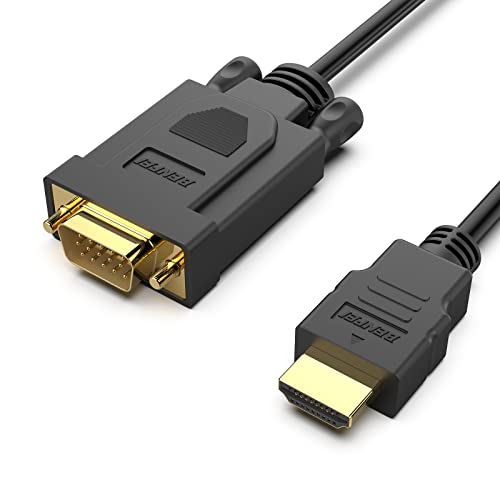
- HDMI cable for modern displays; or an HDMI-to-VGA adapter like the BENFEI Gold-Plated for older CRT or VGA monitors
- 3D-printed or off-the-shelf enclosure
This project teaches file management, Linux command-line basics, and network configuration (for downloading box art metadata). For the handheld variation, see Build a Retro Emulation Handheld on Raspberry Pi Zero W with RetroPie.
Project 2: Smart Mirror with MagicMirror²
A magic mirror places a monitor behind a two-way acrylic panel, running MagicMirror² — an open-source Node.js platform with over 20,000 GitHub stars — to display weather, calendar events, news feeds, and custom widgets through the reflective surface.
A Pi 4 is the recommended board; MagicMirror²'s Node.js runtime benefits from more than 1GB of RAM when multiple modules run simultaneously. For builds reusing a monitor with VGA output rather than HDMI, a BENFEI HDMI to VGA 10-foot cable bridges the Pi's HDMI port to older displays cleanly. Classroom or multi-station setups can source multi-packs — the BENFEI 5-pack 6-foot option keeps costs down per unit.
Skills developed: JavaScript and Node.js, CSS layout, REST API integrations (OpenWeatherMap, Google Calendar).
Project 3: Network Ad Blocker (Pi-hole)
Pi-hole is one of the most immediately useful Pi projects a teen can run. Installed on a Pi Zero 2 W or any spare Pi, Pi-hole acts as a DNS sinkhole that blocks ads and trackers for every device on the home network — no client-side configuration required.
Setup is a single-line curl command from the Pi-hole documentation, and the web admin dashboard provides real-time analytics on blocked domains. The Pi-hole project reports blocking millions of ad requests per day across its global installed base.
Skills developed: DNS concepts, Linux networking, shell scripting, cron scheduling. A Pi Zero 2 W running Pi-hole consumes only a few watts continuously, making it an efficient always-on appliance.
Project 4: AI-Powered Object Detection Camera
Pairing a Pi 4 with the Raspberry Pi Camera Module 3 and Google's TensorFlow Lite runtime enables real-time object detection at prototype speeds — a project that bridges embedded systems with machine learning fundamentals.
The Raspberry Pi Foundation's official TensorFlow Lite guide demonstrates running MobileNet-based image classification on the Pi 4's CPU. Community walkthroughs on Hackster.io and the Raspberry Pi Forums document practical builds including pet-detection doorbells, plant health monitors, and classroom attendance trackers.
For a deeper look at the Pi 4's AI inference ceiling, Can a Raspberry Pi 4 Run a Local LLM? Ollama tok/s Tested covers language model inference in detail.
Skills developed: Python, OpenCV, TensorFlow Lite, GPIO integration for LED or buzzer outputs.
Project 5: DIY Weather Station with Data Logging
A DIY weather station is one of the most practical first-hardware projects. A Pi Zero 2 W paired with a DHT22 temperature and humidity sensor and a BMP280 barometric pressure sensor logs local conditions to a SQLite database and optionally pushes data to a lightweight Flask web dashboard.
The Pi Zero 2 W runs Raspberry Pi OS Lite efficiently for always-on sensor polling. Its compact form factor fits inside a weatherproof outdoor enclosure, and its low power draw makes solar-battery operation viable.
Skills developed: Python sensor libraries (adafruit-circuitpython-dht, RPi.GPIO), basic SQL, Flask web development, soldering header pins.
Project 6: Raspberry Pi 4 NVMe Media Server (Jellyfin)
For teens interested in self-hosting, a Pi 4 with an NVMe SSD HAT can serve as a compact Jellyfin or Plex media server for the household. Per the Raspberry Pi Foundation's USB 3.0 documentation, the Pi 4's USB 3.0 interface delivers substantially higher storage throughput than the USB 2.0 on older Pi models, making it practical for local media serving.
The SpecPicks guide Build a Raspberry Pi 4 NVMe Jellyfin Homelab Box in 2026 covers the full bill of materials, NVMe HAT options, and Jellyfin configuration for a functional home media server.
Skills developed: Linux storage and permissions, Docker, network services, remote SSH administration.
Project 7: Cyberdeck — DIY Portable Linux Terminal
A cyberdeck is a custom portable Linux terminal built around a Pi board, a small display, a keyboard, and a battery — essentially a hand-built pocket computer. The r/cyberDeck subreddit community has generated hundreds of open-source designs ranging from minimalist text terminals to full desktop workstations.
A Pi Zero 2 W handles a text-terminal or SSH-client cyberdeck well; a Pi 4 8GB opens the door to full Raspberry Pi OS desktop, web browsing, and light development on the go. SpecPicks has detailed build guides for both configurations:
- Build a Raspberry Pi Zero W Cyberdeck in 2026
- Raspberry Pi 4 8GB Cyberdeck Build: A Practical 2026 Parts Guide
- Raspberry Pi Zero W vs Pi 4 for a 2026 Cyberdeck: Which Board Fits?
Skills developed: Linux desktop configuration, battery and power management, 3D printing or laser-cutting for enclosures.
Project 8: Home Automation Hub with Home Assistant
A Pi 4 running Home Assistant OS becomes a local-first smart home controller, connecting Zigbee and Z-Wave devices without relying on manufacturer cloud subscriptions. Home Assistant — one of the largest open-source home automation platforms, with an active development community — supports thousands of device integrations.
Per Home Assistant's hardware requirements documentation, a Pi 4 with 4GB of RAM is recommended when running multiple integrations simultaneously. A Zigbee USB dongle (such as the Sonoff Zigbee 3.0 USB Plus) pairs with Philips Hue, IKEA Tradfri, Aqara sensors, and dozens of other devices through the Pi's USB ports.
Skills developed: home networking, YAML configuration, automation scripting, API webhooks.
Hardware Comparison: Choosing the Right Board
| Project | Recommended Board | Min RAM | Notes |
|---|---|---|---|
| Pi-hole / Ad Blocker | Pi Zero 2 W | 512 MB | Always-on, minimal power draw |
| Weather Station | Pi Zero 2 W | 512 MB | Compact, GPIO-friendly |
| Retro Gaming (8/16-bit) | Pi 4 | 2 GB | Pi 3 may struggle with SNES |
| Retro Gaming (PS1/N64) | Pi 4 | 4 GB | Community recommends 4 GB+ |
| Smart Mirror | Pi 4 | 2 GB | Node.js needs memory headroom |
| AI Object Detection | Pi 4 | 4 GB | TensorFlow Lite is RAM-hungry |
| Home Assistant | Pi 4 | 4 GB | More integrations = more RAM |
| Cyberdeck (text terminal) | Pi Zero 2 W | 512 MB | Portable, low power |
| Cyberdeck (full desktop) | Pi 4 | 8 GB | Full Linux desktop |
| Media Server (Jellyfin) | Pi 4 | 4–8 GB | NVMe HAT strongly recommended |
For the latest Pi hardware, including the Pi 5's native PCIe lane for NVMe drives, see New Raspberry Pi 5 Active-Cooler + NVMe VESA Case Lands (3D-Printable).
Skills Map: What Each Project Teaches
| Skill Area | Example Projects |
|---|---|
| Python programming | Weather station, AI camera, Pi-hole |
| Linux command line | All projects |
| Electronics and GPIO | Weather station, smart mirror, AI camera |
| Networking and DNS | Pi-hole, Home Assistant, media server |
| Web development | Smart mirror (MagicMirror²), Flask dashboards |
| Machine learning basics | AI camera, LLM experiments |
| 3D printing and fabrication | Cyberdeck, retro handheld |
Per the Raspberry Pi Foundation's education resources, educators in over 100 countries use Pi-based project curricula — evidence that the platform's learning progression maps well onto secondary-school computing syllabuses.
Display Connectivity: Connecting Pi to Older Monitors
Many teen makers source second-hand monitors for their builds. The Pi 4 outputs via two micro-HDMI ports, connecting directly to any modern HDMI display. For older VGA monitors — common in school surplus sales and thrift stores — an HDMI-to-VGA adapter bridges the gap. The BENFEI HDMI to VGA Gold-Plated Adapter ($5.19) handles most Pi-to-VGA monitor connections without additional configuration. Multi-station classroom or makerspace setups may prefer a multi-pack such as the BENFEI 5-pack 6-foot HDMI-to-VGA cables for consistency.
Important: The Pi 4 uses micro-HDMI ports. A micro-HDMI to standard-HDMI adapter or cable is required before connecting to a standard HDMI-to-VGA adapter.
Starter Checklist
A complete kit for most beginner teen builds:
- Raspberry Pi 4 Model B — 2 GB for Pi-hole, weather station, or smart mirror; 4 GB for retro gaming, AI camera, or Home Assistant; 8 GB for a desktop cyberdeck or media server
- Official 27W USB-C power supply (Pi 5) or 15W for Pi 4 — underpowered supplies cause random reboots
- 32 GB or 64 GB microSD card — Class 10 / A2 speed rating
- Micro-HDMI to HDMI cable for modern displays, or a micro-HDMI adapter plus an HDMI-to-VGA cable for VGA monitors
- Raspberry Pi Imager (free download from raspberrypi.com) — flashes the OS in under five minutes
From there, each project requires only the sensors, HATs, or peripherals specific to that build — most of which cost under $15 individually from standard electronics distributors.
Citations and sources
- https://www.raspberrypi.com/products/raspberry-pi-4-model-b/ — Raspberry Pi 4 Model B official specifications and RAM options
- https://retropie.org.uk/ — RetroPie official project site, supported hardware, and setup documentation
- https://magicmirror.builders/ — MagicMirror² open-source smart mirror platform and module directory
- https://www.tensorflow.org/lite/guide — TensorFlow Lite guide for embedded and edge devices including Raspberry Pi
- https://pi-hole.net/ — Pi-hole network-wide ad-blocking project and installation documentation
- https://www.home-assistant.io/installation/raspberrypi/ — Home Assistant installation documentation and hardware requirements for Raspberry Pi
- https://www.raspberrypi.com/documentation/ — Raspberry Pi Foundation official documentation covering USB throughput, GPIO, and supported operating systems
- https://projects.raspberrypi.org/ — Raspberry Pi Foundation official learning projects portal
This piece is editorial synthesis based on publicly available information. No independent first-party benchmarking is reported.