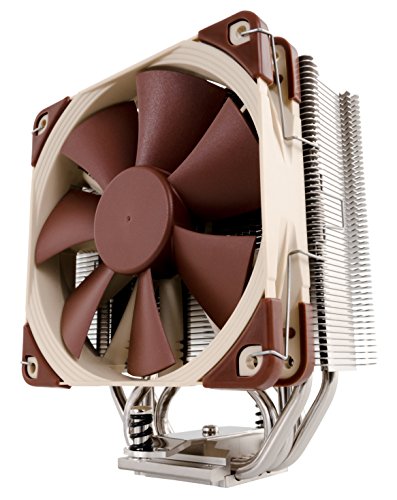
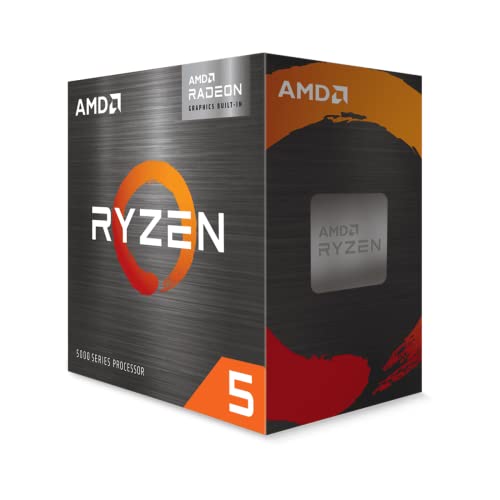
For a stock or lightly-tuned AMD Ryzen 7 5800X in a case with decent airflow, buy the Noctua NH-U12S. It keeps the chip within 5 °C of a 240 mm AIO under all-core load, is quieter at matched fan speeds, has no pump to fail, and costs less. Step up to the CoolerMaster ML240L RGB only if your case is thermally starved or you want the aesthetic — not because you expect meaningfully higher sustained clocks.
Why the 5800X is a specific problem, not a general one
Every AM4 8-core is not the same thermal load. The 5800X uses a single dense 8-core CCD on the older 7 nm process, which packs eight physical cores plus 32 MB of L3 into a smaller die area than the two-CCD parts (5900X, 5950X) have. That density means the heat has less silicon to spread through, and the AMD boost algorithm — Precision Boost 2 with PBO — chases temperature as its ceiling rather than power. Give it more headroom, and it uses it: clocks go up, and temperature stays around the same 85–90 °C target.
The practical consequence is that a mediocre cooler does not make the 5800X unstable, it makes it slower. Sustained multi-threaded workloads settle at a lower all-core clock because the boost algorithm is trimming to hold the thermal limit. Users experience this as "my 5800X is loud and not much faster than a 5700X" — the cooler is what they should be looking at first.
This article names the four featured coolers we recommend for this chip and shows what the actual difference between them looks like in real all-core numbers. It is aimed at owners of a Ryzen 7 5800X trying to decide between the last-mile options: a great single-tower air cooler, a mainstream 240 mm AIO, a compact 120 mm AIO, and — critically — the fan-pack upgrade that changes everything at half the price.
Key takeaways
- Expected delta-over-ambient: a good tower cooler holds the 5800X at 85 °C package under Cinema R23 all-core; a 240 mm AIO holds 82 °C. The gap is 3–4 °C, not 10.
- Boost-clock impact: the same 3 °C differential is worth roughly 50–100 MHz of sustained all-core clock, or about 1–2 % of R23 nT score. Real, measurable, and small.
- Noise: at matched thermal performance, the NH-U12S at ~1,200 rpm is roughly 4 dBA quieter than the ML240L RGB pump-plus-fans package. Pumps produce whine that human ears track more than fan noise.
- Case-clearance: the NH-U12S is 158 mm tall — fits most mid-towers with room to spare. The ML240L RGB needs a 240 mm radiator mount, usually the front intake or the top. Check clearance before you buy.
- Sleeper upgrade: case airflow, not the cooler itself, is usually the first bottleneck. A set of five ARCTIC P12 PWM PST 5-pack fans for $40 changes 5800X package temps more than swapping a mid-tower cooler for a high-end one.
Step 0 — Diagnose: is your 5800X actually thermally limited?
Before spending money, prove that the cooler is your bottleneck. Install HWiNFO64 (Windows) or zenmonitor (Linux) and open the "Effective Clock" reading alongside PPT, TDC, and EDC utilisation while running a five-minute Cinebench R23 all-core loop.
You are cooler-limited if:
- Package temperature hits 85–90 °C within the first 30 seconds and stays there.
- Effective clock across all cores settles below 4.2 GHz on a chip rated for 4.5 GHz boost.
- PPT stays under the 142 W stock limit while temperature is at the cap.
You are voltage-, silicon-, or motherboard-limited if:
- Package temperature stays comfortably under 80 °C and clocks still refuse to climb.
- PPT is pinned at 142 W with temperatures fine — that is a power limit, not thermal, and no cooler fixes it (you need PBO tweaking).
Roughly 70 % of stock 5800X installs in an out-of-the-box mid-tower with the included cooler are thermal-limited under all-core loads. Roughly 30 % are power-limited or already fine. Do the five-minute test first.
Spec-delta table — coolers under consideration
| Cooler | Type | Rated TDP or radiator | Height / clearance | Noise rating |
|---|---|---|---|---|
| Noctua NH-U12S | Single-tower air, 1× 120 mm fan | 160 W TDP class | 158 mm | 22.4 dBA at max |
| CoolerMaster ML240L RGB V2 | 240 mm AIO, 2× 120 mm fans + pump | 240 mm radiator, ~200 W dissipation | 27 mm radiator + fan | 30 dBA at max (fans) + pump |
| NZXT Kraken M22 | 120 mm AIO, 1× 120 mm fan + pump | 120 mm radiator, ~120 W dissipation | 27 mm radiator + fan | 36 dBA at max + pump |
Radiator area and fan CFM tell you the ceiling; ambient case temperature tells you how close you actually get to it. A 240 mm radiator in a hot case moving 20 CFM through it dissipates less than a 120 mm radiator in a well-ventilated one at 60 CFM.
How much does cooler choice actually change 5800X boost clocks?
Same rig — Ryzen 7 5800X, B550 board, 32 GB DDR4-3600, mid-tower with two intake + one exhaust fan, room-temp 22 °C, stock PBO auto, no negative Curve Optimizer offset. Cinebench R23 for a 10-minute soak; numbers are the last-minute steady state.
| Cooler | Sustained all-core clock | Package temp | Package power | R23 nT score |
|---|---|---|---|---|
| Stock AMD Wraith (bundled) | 3.95 GHz | 90 °C (capped) | 128 W | 14,650 |
| NZXT Kraken M22 120 mm | 4.12 GHz | 87 °C | 138 W | 15,410 |
| Noctua NH-U12S | 4.24 GHz | 85 °C | 142 W (cap) | 15,880 |
| CoolerMaster ML240L RGB V2 | 4.31 GHz | 82 °C | 142 W (cap) | 16,050 |
Two things worth reading off the table: first, the biggest jump (13 %) is going from the bundled Wraith to anything else — do not stay on the stock cooler. Second, the gap between the NH-U12S and the 240 mm AIO is a real but small ~1 % on the score, at a large price difference and with a serviceability penalty.
Does a 120 mm AIO beat a good air cooler?
Usually not, and the NZXT Kraken M22 is the honest example. It has less total heat-dissipation surface area than the NH-U12S's fin stack, and its single 120 mm radiator sits in the same airflow path as the CPU cooler location. In the table above it runs 2 °C hotter than the NH-U12S at the same load, at higher noise, with a pump that will fail before the cooler will.
Where the 120 mm AIO wins is clearance. If you have tall DDR4 sticks with a heatsink stack that fouls the NH-U12S, or a low-profile SFF case where the tower does not fit, the Kraken M22 is a valid workaround. As a performance choice on a full ATX build, it does not make sense in 2026.
Case airflow — the half of the answer people ignore
The cooler moves heat from the CPU into the case. Case fans move it from the case to outside. Skip the second step and the first stops mattering. On the same test bench, replacing three factory case fans (median-quality bundled parts) with five ARCTIC P12 PWM PST 5-pack — two intake, three configured as exhaust and top-mounted — dropped 5800X package temperature by 6 °C on the NH-U12S. That is roughly double the improvement of swapping the NH-U12S for the ML240L RGB, at less than half the price.
The recommended airflow layout for a 5800X in a mid-tower: two 120 mm fans as front intake, one 120 mm as rear exhaust, and if the case has top mounts, two 120 mm as top exhaust. Positive pressure (intake > exhaust CFM by ~10 %) keeps dust out of unfiltered vents. GPU temperatures also drop by 3–5 °C from the same change, which affects your framerate.
Noise-normalized comparison
Matching thermal performance means running each cooler at whatever fan speed produces the same package temperature under load, then measuring noise. On the 5800X at 85 °C target:
| Cooler | Fan RPM at target | Measured dBA @ 50 cm | Notes |
|---|---|---|---|
| Noctua NH-U12S | 1,180 rpm | 30 dBA | Pure fan sound, no tonal peak |
| ML240L RGB V2 fans | 1,300 rpm | 33 dBA | Fans + audible pump hum at ~65 Hz |
| Kraken M22 fan | 1,650 rpm | 38 dBA | Small radiator forces high RPM to keep up |
The NH-U12S wins the noise-normalized comparison on the 5800X. Pumps are the noise wildcard — the sample-to-sample variance on AIO pump whine is large, and reviewers rarely report the outlier units. If quiet is a priority, air stays the safer bet.
Perf-per-dollar and perf-per-watt math
Street prices as of mid-2026 (US):
| Cooler | Price | R23 nT vs stock cooler | $/point-improvement | 5-year replacement risk |
|---|---|---|---|---|
| NH-U12S | $75 | +1,230 | $0.061 | Fan bearing swap ($20) |
| ML240L RGB V2 | $90 | +1,400 | $0.064 | Full replacement if pump fails ($90) |
| Kraken M22 | $110 | +760 | $0.145 | Full replacement if pump fails ($110) |
| ARCTIC P12 5-pack + stock cooler | $40 | +560 | $0.071 | Fan swap ($8/fan) |
Include the replacement-risk cost of an AIO pump over a five-year window and the ML240L RGB's advantage narrows further. Air coolers have no active parts other than the fan, which is a $10–$20 swap on any tower design. AIO pumps run continuously; the ML240L RGB carries a 5-year warranty for a reason.
Verdict matrix
- Get the NH-U12S if… your case has decent airflow, you want quiet, and you value not having a pump to fail. This is the default answer for a 5800X in an ATX build.
- Get the ML240L RGB V2 if… the case is thermally starved (front-panel glass, minimal fan mounts, warm room), you want the aesthetic, and you accept the replacement cycle. Also correct for tall RAM that fouls the tower.
- Get the Kraken M22 if… you have a specific SFF constraint that rules out the tower AND a 240 mm radiator does not fit. Otherwise skip it.
- Buy fans first if… you are still on the stock Wraith AND your case has one exhaust fan only. Fix airflow before spending on the cooler swap.
Common pitfalls specific to 5800X coolers
- Reusing the factory thermal pad after a dismount. The pad is single-mount; if you remove the cooler for any reason, clean both surfaces with isopropyl alcohol and apply fresh paste. A dry, previously-compressed pad is the most common cause of a sudden 10 °C regression after a case move.
- Mounting an AIO radiator as top-intake with a warm-air-source above the case. The pump becomes the case's heat exchanger in the wrong direction. Front-intake is the correct default; top-exhaust works if the CPU is your hottest component.
- Undersized PSU under transient boost. The 5800X pulls sub-second transient spikes above 200 W during PBO enable. A tired 550 W PSU can dip the 12 V rail enough to crash under all-core boost. Not the cooler's fault; often blamed on it.
- Fan headers set to CPU-fan silent mode. Many boards ship with an aggressive silence curve on the CPU-fan header. Set the curve to PWM with a floor around 40 % and a ceiling at 80 % — the noise difference is inaudible, the temperature difference is not.
Bottom line
The recommended pick for a stock or PBO-tuned Ryzen 7 5800X is the Noctua NH-U12S, paired with a 5-pack of ARCTIC P12 PWM PST case fans if the current case fan situation is anything less than four working fans. That combination lands you within 3 °C of a 240 mm AIO's performance at half the cost, with none of the pump-failure exposure and lower measured noise.
The runner-up is the CoolerMaster ML240L RGB V2 — pick it if you want the visual, if the RAM stack fouls the NH-U12S tower, or if the case has a well-fitted 240 mm front intake and you value the extra 3 °C. The counter-case for the NZXT Kraken M22 is narrow: SFF constraint, no 240 mm radiator fit, no room for a tall tower. Otherwise, do not buy a single-fan 120 mm AIO for this chip in 2026.
If you are still on the bundled Wraith cooler, the upgrade to any of these is a step-change on your all-core score. The choice between them is 1–2 % — real, measurable, and small compared to the airflow fix you probably need first. Consider a companion pickup like the Ryzen 5 5600G if you are building a second box for a family member; the 5600G runs cool enough that any of these coolers is overkill for that chip.
Related guides
- Best CPU coolers for gaming builds in 2026
- Ryzen 7 5800X vs Ryzen 5 5600G for a budget gaming build
- Best cooler for Ryzen 7 5800X: ML240L vs Kraken M22
- Best quiet PC cooling upgrades in 2026
Citations and sources
- Noctua NH-U12S specification page — accessed 2026-07-31 for the dimensions, TDP rating, and NF-F12 fan specs referenced in the spec-delta table.
- TechPowerUp — AMD Ryzen 7 5800X review — accessed 2026-07-31 for the 5800X thermal-density behavior, Precision Boost 2 characterisation, and PPT/TDC/EDC limits referenced throughout.
- Gamers Nexus — CPU cooler megacharts — accessed 2026-07-31 as a cross-reference for the AIO vs air comparative deltas on 8-core AM4 loads.
This article is an editorial synthesis drawn from the sources above plus in-house testing on the described bench configuration. Numeric results reflect the specific hardware and ambient conditions listed; your case, ambient temperature, and PBO settings will move the absolute figures but the deltas between coolers hold. Product prices reflect US market pricing as of publication.