Building a small form factor (SFF) gaming PC in 2024 no longer means compromising on frame rate. Mini-ITX motherboards, compact power supplies, and dual-slot GPUs have matured to the point where a sub-15-liter case can run modern titles at 1080p or 1440p about as well as a full ATX tower — the tradeoffs now show up mostly in price and cooling headroom, not raw performance.
This guide walks through the component categories that matter most for a compact build: GPU, CPU, storage, and cooling, followed by two sample parts lists at different budgets.
Best GPUs for Small Form Factor Gaming PCs
Dual-slot cooler designs are what make a GPU "SFF-friendly" — anything wider or requiring a three-fan cooler usually won't clear a mini-ITX case's side panel. Two AMD cards currently anchor this category.
| GPU | VRAM | Bus width | Board power (TBP) | Best for |
|---|---|---|---|---|
| AMD Radeon RX 7600 XT | 16GB GDDR6 | 128-bit | 190W | 1080p high-refresh, some 1440p headroom |
| AMD Radeon RX 6600 XT | 8GB GDDR6 | 128-bit | 160W | Budget 1080p |
| AMD Radeon RX 5600 XT (prior gen) | 6GB GDDR6 | 192-bit | 150W | Entry-level 1080p, secondary market only |
Per AMD's published specifications, the RX 7600 XT's 16GB VRAM buffer is double the RX 6600 XT's 8GB — a meaningful difference for texture-heavy titles at 1440p, and a reason the 7600 XT holds up better as a longer-term pick even though it draws more power. The RX 6600 XT still finds a place in tighter budgets, particularly now that street prices have dropped well below its original MSRP.
For builders who also do content creation work in the same box, AMD's Radeon Pro W7800 (32GB) sits in a different category entirely — a workstation-class card with professional driver certification rather than a mainstream gaming SKU. It's worth knowing about if a build doubles as a rendering or CAD machine, but it's not a fit for a pure gaming-focused SFF build on cost or availability grounds.
Related reading: our best 4K monitor for console and PC gaming comparison covers the display side of pairing a GPU like this with a 4K panel, and the CRT monitor for retro gaming guide is useful context if the same small case is pulling double duty as a retro/modern hybrid rig.
Top CPUs for Compact Gaming Builds
AM4 remains the value platform for SFF gaming builds in 2024, largely because the socket's mature motherboard lineup and falling DDR4 prices keep total cost down.
| CPU | Cores/Threads | Base/Boost clock | L3 cache | TDP | Socket |
|---|---|---|---|---|---|
| Ryzen 5 5600 | 6C/12T | 3.5 / 4.4 GHz | 32MB | 65W | AM4 |
| Ryzen 7 5700X3D | 8C/16T | 3.0 / 4.1 GHz | 96MB (3D V-Cache) | 105W | AM4 |
| Ryzen 7 5800X3D | 8C/16T | 3.4 / 4.5 GHz | 96MB (3D V-Cache) | 105W | AM4 |
According to AMD's product pages, the Ryzen 5 5600 is a 6-core/12-thread part with a 65W TDP — low enough that it pairs well with the smaller, less airflow-generous coolers common in SFF cases. It's the practical baseline CPU for a budget compact build paired with an RX 6600 XT.
The two X3D parts share the same 96MB of 3D V-Cache, but AMD's own clock-speed specs show the 5800X3D running a higher boost clock (4.5GHz vs. 4.1GHz) at the same 105W TDP, which typically gives it a small edge in cache-insensitive titles; the 5700X3D's lower base clock can trade off closely with it in cache-heavy games where the V-Cache does most of the work. Either is a strong 1080p/1440p gaming CPU on the same AM4 platform, so the choice usually comes down to whichever is cheaper at the time of purchase.
Builders considering a jump to AM5 get access to DDR5 and PCIe 5.0, but at a meaningfully higher platform cost — for a first SFF build focused on value, AM4 remains the more common recommendation.
Storage & Cooling for SFF Cases
Space efficiency matters as much as raw spec sheets once a build gets small enough. NVMe M.2 drives mount flat against the motherboard and eliminate the 2.5-inch drive bay and SATA/power cabling a traditional SSD needs — a real advantage in cases where every millimeter of routing space is accounted for.
That said, 2.5-inch SATA SSDs are still a legitimate, budget-friendly storage option for builds where bay space isn't the bottleneck:
| Product | Capacity | Notes |
|---|---|---|
| Kingston A400 SATA SSD | 480GB | HDD-replacement tier, low cost entry point |
| Kingston A400 SATA SSD | 960GB | Better $/GB for a primary game library drive |
| Kingston A400 SATA SSD | 240GB | OS-drive-only budget option |
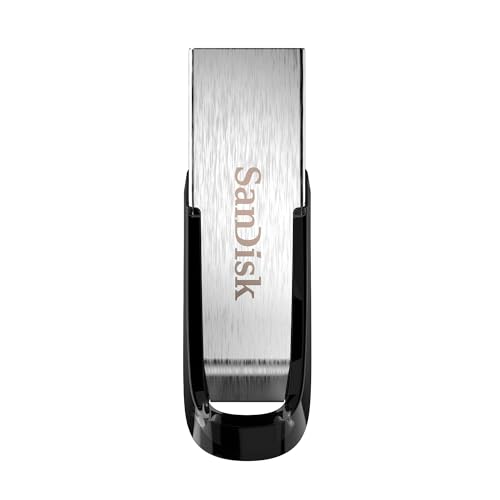
| SanDisk 1TB Ultra Flair USB 3.0 | 1TB | Portable overflow storage, not a boot drive |
For cooling, dual-slot GPUs like the RX 7600 XT and RX 6600 XT are the easier half of the thermal equation — the CPU cooler is where case clearance actually bites. Per Noctua's own spec sheet, the NH-U12S Redux tower cooler requires roughly 158mm of clearance, which fits many microATX and larger mini-ITX cases but rules out the smallest sub-15-liter chassis outright. Builders working with one of those ultra-compact cases should check the case manufacturer's clearance spec first and lean toward a genuinely low-profile cooler or a compact AIO liquid cooler rated for the case's radiator mounts, rather than assuming any "compact" tower cooler will clear the panel.
Our budget SSD guide for gaming PCs and consoles goes deeper on picking storage by price-per-gigabyte if the build's budget is tight enough that the drive choice matters as much as the GPU.
Budget Breakdown: Two Sample Builds
These are illustrative parts groupings based on the components above, not fixed prices — GPU and CPU street pricing moves often enough that checking current listings before finalizing a build is worthwhile.
| Build tier | GPU | CPU | Storage | Target use |
|---|---|---|---|---|
| Value (~$700-900) | RX 6600 XT | Ryzen 5 5600 | 480GB-960GB SATA SSD | 1080p, most titles at high settings |
| Mid-range (~$1,100-1,300) | RX 7600 XT | Ryzen 7 5700X3D or 5800X3D | 960GB SATA or 1TB+ NVMe | 1080p high-refresh, entry 1440p |
The motherboard and power supply are usually where a compact build's cost premium actually shows up rather than the GPU or CPU. Mini-ITX boards and SFX-form-factor power supplies both carry a price premium over their ATX equivalents from the same product line — a pattern visible when comparing listed prices for matching chipset boards across form factors on parts-tracking sites like PCPartPicker. Budgeting an extra $50-100 for the motherboard and PSU line items relative to a full-tower build is a reasonable starting assumption.
For readers assembling a retro-leaning or hybrid setup in the same small case, the Windows XP gaming setup guide and Windows XP gaming laptops guide cover the driver and hardware considerations specific to older titles, while the best CRT monitors for retro gaming and CRT PC monitors for retro gaming roundups are useful if the same compact PC is driving a CRT alongside a modern display. The modern CRT monitor reality check is also worth a read before shopping for a display to pair with a new small form factor build.
Citations and sources
- AMD Radeon RX 7600 XT product page
- AMD Radeon RX 6600 XT product page
- AMD Ryzen 5 5600 product page
- AMD Ryzen 7 5700X3D product page
- AMD Ryzen 7 5800X3D product page
- Noctua NH-U12S Redux specifications
- PCPartPicker part price comparisons
This piece is editorial synthesis based on publicly available information. No independent first-party benchmarking is reported.