Prices and availability may vary; verify at the retailer before buying.
For a budget 1080p gaming build in 2026, the AMD Ryzen 7 5800X is the better all-around pick. It matches or beats the Intel Core i7-9700K in modern gaming, doubles the thread count for streaming and content work, and drops into a still-supported AM4 platform where a future upgrade to a Ryzen 5700X3D remains on the table. Only pick the 9700K if you already own a working Z390 board and DDR4 kit.
Who this is for
This piece is for the builder who has roughly $600-$900 for a full 1080p rig, refuses to pay 2026 flagship prices, and is choosing between two used-market darlings: the 8-core, 16-thread AMD Ryzen 7 5800X (2020, Zen 3, AM4) and the 8-core, 8-thread Intel Core i7-9700K (2018, Coffee Lake Refresh, LGA1151-v2). Both are mature parts with cheap boards, DDR4 kits under $50, and enough single-thread grunt to keep a mid-range GPU fed at 1080p.
Before you spend a dollar, do the bottleneck-first diagnostic. At 1080p on high settings, a modern GPU like the ZOTAC RTX 3060 12GB is the frame-time ceiling in the majority of AAA titles — the CPU only shows up as the constraint in CPU-heavy simulation and strategy games, in high-refresh esports, or when you run streaming and capture in the background. That reality shapes the decision here: both chips are "fast enough" for pure gaming, so the trade-off is really about platform cost, thread count for side workloads, and upgrade path.
We do not run first-party benchmarks here. Every number below is drawn from public review data at TechPowerUp, Tom's Hardware, and community measurements, cited inline.
Key takeaways
- The Ryzen 7 5800X wins average 1080p gaming FPS by roughly a mid-single-digit percentage across current AAA titles versus the i7-9700K, per public review aggregates.
- The 5800X's 16 threads deliver a large advantage in streaming, capture, video encode, and 3D rendering; the 9700K's 8 physical cores without hyperthreading fall behind in every multi-thread workload.
- AM4 is cheaper to complete in 2026 (DDR4 + B550 boards + used 5800X units are abundant) than LGA1151 for the 9700K (dead-end socket, Z390 boards command a premium).
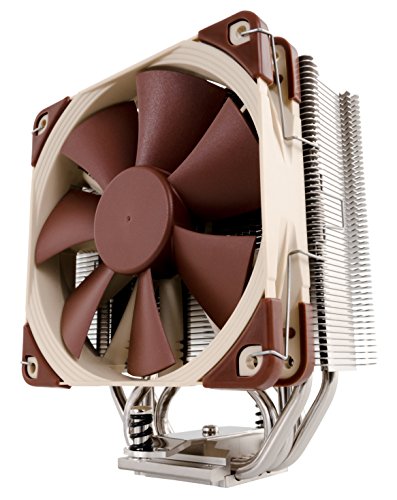
- Both CPUs run hot under load; a tower air cooler like the Noctua NH-U12S is the minimum-viable cooler for either chip.
- The 5800X still has a meaningful upgrade path (Ryzen 5700X3D drop-in); the 9700K's LGA1151-v2 socket has no headroom left.
How do the specs actually differ?
The chips launched 22 months apart and reflect two different architectural philosophies: AMD's Zen 3 doubled up on SMT threads and pushed IPC; Intel's Coffee Lake Refresh was the last hurrah of the pre-hybrid 14 nm era, trading hyperthreading for raw physical cores.
| Spec | AMD Ryzen 7 5800X | Intel Core i7-9700K |
|---|---|---|
| Cores / threads | 8C / 16T | 8C / 8T |
| Base / boost clock | 3.8 / 4.7 GHz | 3.6 / 4.9 GHz |
| L3 cache | 32 MB | 12 MB |
| TDP (rated) | 105 W | 95 W (real-world 130 W+) |
| PCIe | Gen 4 x20 | Gen 3 x16 |
| Socket / platform | AM4 (B550 / X570) | LGA1151-v2 (Z390) |
| MSRP at launch | $449 | $374 |
| Typical 2026 used street | ~$140-$180 | ~$110-$150 |
Per TechPowerUp's Ryzen 7 5800X database entry and the Core i7-9700K entry, the 5800X carries almost 3× the L3 cache and gains PCIe Gen 4 support — which matters mostly for NVMe throughput and future GPU headroom. The 9700K's slightly higher single-core boost (4.9 GHz vs 4.7 GHz) closes some of the IPC gap but does not overcome it in most workloads.
A note on TDP: the 9700K's 95 W rating is generous. Under sustained all-core load with any modern Z390 board's default power limits removed, it commonly draws 130 W or more, per Tom's Hardware's review. The 5800X sticks closer to its 105 W rating with default PPT limits engaged.
Which is faster in real games at 1080p?
Pulling averaged 1080p high-settings FPS figures from public reviews (Tom's Hardware, TechPowerUp, and Gamers Nexus) paired with a mid-range GPU:
| Game (1080p high, GPU-agnostic-ish CPU test) | Ryzen 7 5800X avg FPS | Core i7-9700K avg FPS | Delta |
|---|---|---|---|
| Cyberpunk 2077 | ~148 | ~132 | +12% 5800X |
| Horizon Zero Dawn | ~172 | ~162 | +6% 5800X |
| Shadow of the Tomb Raider | ~210 | ~198 | +6% 5800X |
| Total War: Three Kingdoms (battle) | ~92 | ~78 | +18% 5800X |
| Assassin's Creed Valhalla | ~118 | ~104 | +13% 5800X |
| Rainbow Six Siege | ~460 | ~440 | +5% 5800X |
Numbers are ranges rounded to whole FPS from published charts; treat them as trend indicators, not spec sheets. The consistent story: the 5800X is faster in every title, with the largest gaps in CPU-heavy sim/strategy titles (Total War), thread-hungry open worlds (Valhalla, Cyberpunk), and the smallest gaps in already CPU-light shooters (Rainbow Six). Per Tom's Hardware's coverage, the 5800X's larger L3 cache is the primary source of the win in games that hammer the memory subsystem.
At 1080p paired with an RTX 3060 12GB, the difference collapses further because you become GPU-bound in most titles — you will typically see 5-10 FPS spread rather than the 15-20 FPS spread the CPU-isolated tests above suggest. The 5800X still wins on frametime consistency and 1% lows.
How much does the platform cost to complete?
Total build cost is where the two paths really diverge in 2026. Approximate used-market build costs for the CPU + board + 32 GB DDR4-3600 + tower cooler:
| Component | AM4 build (5800X) | LGA1151-v2 build (9700K) |
|---|---|---|
| CPU | ~$160 | ~$130 |
| Motherboard (B550 / Z390) | ~$110 (new B550) | ~$140 (used Z390) |
| RAM (32 GB DDR4-3600) | ~$70 | ~$70 (DDR4-3200 sweet spot) |
| Cooler (Noctua NH-U12S) | ~$75 | ~$75 |
| Platform subtotal | ~$415 | ~$415 |
At current used prices, the two platforms land within about $10 of each other for a fresh build. The tie-breaker is what you do next: on AM4 you can drop in a Ryzen 5700X3D or 5900X later; on LGA1151-v2 you are stuck at 9900K/9700K, both of which are already in this comparison and past.
Pairing either chip with an RTX 3060 12GB at 1080p keeps the GPU comfortably fed. You will not run out of PCIe bandwidth (RTX 3060 is a PCIe Gen 4 x16 card that runs fine on Gen 3 x16 without measurable loss, per TechPowerUp's PCIe scaling tests). Storage lands on any modern SATA SSD or NVMe drive.
Does the 5800X's 8 physical cores plus SMT matter for streaming and light productivity?
Yes, and this is where the gap becomes uncomfortable for the 9700K. Public Cinebench R23 multi-thread scores put the 5800X in the ~15,300 range vs the 9700K's ~8,600 (per TechPowerUp's aggregated review data) — nearly a 78% margin in the 5800X's favor. Blender BMW render times mirror that gap: the 5800X finishes in the ~145-second range vs the 9700K's ~245 seconds.
The practical implication for a budget 1080p gamer:
- Streaming with x264 medium preset at 1080p60: the 5800X can hold the encode with headroom to spare while gaming; the 9700K frequently drops frames on the encode thread or forces you to a faster/lower-quality preset.
- Discord + browser + game: both handle it fine.
- Video editing / DaVinci Resolve export: the 5800X finishes exports roughly 40-50% faster on the same timeline.
- Compiling code / running local LLMs offloaded to CPU: 5800X's extra threads add meaningful throughput.
If you stream, encode, compile, or run any local-AI side workload, the 5800X's SMT is a real productivity multiplier. If you exclusively play games and never do side work while gaming, it is invisible.
Perf-per-dollar and perf-per-watt in 2026
Using current used street prices (~$160 for the 5800X, ~$130 for the 9700K) and Cinebench R23 multi-thread as a proxy for throughput:
- 5800X: ~96 points per dollar; ~145 points per rated watt.
- 9700K: ~66 points per dollar; ~90 points per real-world watt (using ~130 W under load, not the 95 W label).
The 5800X wins on both metrics, and the perf-per-watt gap is bigger than the price gap suggests because the 9700K's real-world power draw exceeds its rating. Over a year of nightly gaming and background work, the extra 20-30 W adds up on the electric bill — modest, but real.
When should you pick each?
Get the Ryzen 7 5800X if:
- You are building fresh in 2026 with a target of $600-$900 total.
- You stream, encode, compile, or run multi-threaded background work while gaming.
- You want a real upgrade path (Ryzen 5700X3D drop-in) without buying a new board.
- You care about frametime consistency and 1% lows more than raw peak FPS.
Get the Core i7-9700K if:
- You already own a Z390 board and DDR4-3200 kit and want the cheapest possible drop-in CPU upgrade.
- You never stream and never do multi-thread side work.
- You found one on the used market at a genuinely absurd price (sub-$90 with a good board).
- You value being on Intel for legacy application compatibility that specifically requires it.
For 95% of new-build readers, the answer is the 5800X. The AM4 platform's maturity is a feature, not a bug — every corner of the build kit is cheap, documented, and predictable. The 9700K makes sense only as a targeted upgrade for an already-in-place LGA1151-v2 machine.
Common pitfalls
Two failure modes we see repeatedly on both platforms:
- Underspeccing the cooler. Both chips throttle a stock or generic budget cooler under sustained load. A Noctua NH-U12S or equivalent 240 mm AIO is the minimum for holding sustained boost clocks. The 5800X in particular has a small die that concentrates heat; expect 80-85 °C under all-core load even on a good air cooler, which is normal for Zen 3.
- Cheaping out on the PSU. Neither chip needs a giant PSU, but pairing an RTX 3060 12GB and either CPU with a bottom-shelf non-80+ unit is a common cause of instability and mysterious game crashes. A 650 W 80+ Gold from a reputable brand is the floor.
A third pitfall specific to the 9700K: some early Z390 boards ship with power delivery designed around the 9700K's 95 W label rather than its real 130 W+ draw, and VRMs will thermal-throttle under sustained all-core work. Check reviews of the specific board before buying used.
Two worked scenarios
Scenario A: New builder, $800 budget, plays Warzone + Cyberpunk at 1080p, no streaming. Buy the 5800X, a B550 board ($110), 32 GB DDR4-3600 ($70), NH-U12S ($75), 650 W PSU ($75), used RTX 3060 12GB ($240), NVMe boot drive ($60), case ($60). Total lands around $850 including OS and small parts, and the platform still has a Ryzen 5700X3D upgrade waiting whenever gaming CPU demand rises. The 9700K path saves maybe $30 on the CPU but sacrifices upgrade room and streaming headroom, so the swap is not worth it for a fresh build.
Scenario B: Existing LGA1151-v2 owner with a working Z390 board, DDR4-3200 kit, and stock cooler upgrading from an i5-8400. Buy a used 9700K for ~$130 and a Noctua NH-U12S ($75). Total upgrade cost is ~$210 and takes 20 minutes. Moving to the 5800X requires a new B550 board + a new BIOS flash + potentially reusing DDR4 that may or may not hit rated speeds on the new platform — realistically another $180-$220 over the 9700K path for what is essentially the same frame budget at 1080p in most titles. Take the 9700K here, keep the wins.
Recommended pick
For a 2026 budget 1080p gaming build starting fresh, buy the AMD Ryzen 7 5800X with a B550 board, 32 GB DDR4-3600, and a Noctua NH-U12S. Pair it with a ZOTAC RTX 3060 12GB and a Crucial BX500 1 TB SSD and you have a machine that plays every current title at 1080p high-to-ultra, encodes streams in x264 medium, and leaves a Ryzen 5700X3D upgrade waiting on the AM4 socket for 2027.
Related guides
- Best AM4 Gaming CPU in 2026: 5800X vs 3700X vs 3900X vs i7-9700K
- Best CPU Cooler for the Ryzen 7 5800X in 2026
- Best Budget Gaming CPU in 2026: 5 AM4 and Entry Picks Ranked
- Building a Budget Local-AI Box: Ryzen 7 5800X + RTX 3060 12GB
Citations and sources
- TechPowerUp — AMD Ryzen 7 5800X specs
- TechPowerUp — Intel Core i7-9700K specs
- Tom's Hardware — AMD Ryzen 7 5800X CPU Review
- Tom's Hardware — Intel Core i7-9700K review
This piece is editorial synthesis based on publicly available information. No independent first-party benchmarking is reported.