
EVGA
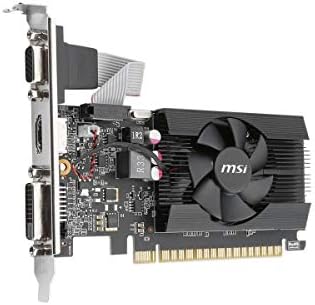
EVGA GeForce 210 1024 MB DDR3 PCI Express 2.0 DVI/HDMI/VGA Graphics Card, 01G-P3-1312-LR
Bottom line: The EVGA GeForce 210 1024 MB DDR3 PCI Express 2.0 DVI/HDMI/VGA Graphics: DVI, HDMI and VGA outputs cover modern TVs and legacy CRT/VGA monitors; main trade-off: 64-bit memory bus severely limits bandwidth for 3D workloads.
As an Amazon Associate, SpecPicks earns from qualifying purchases. Full disclosure →
Pros & Cons
Pros
- ✓ DVI, HDMI and VGA outputs cover modern TVs and legacy CRT/VGA monitors
- ✓ 1024 MB DDR3 frame buffer is ample for desktop use and video playback
- ✓ Needs only a 300 W PSU with 18 A on the +12 V rail
- ✓ Listed support for Windows XP, Vista and 7 in both 32-bit and 64-bit
- ✓ Fits any PCI Express x16 slot, suited to reviving older desktops
Cons
- ✗ 64-bit memory bus severely limits bandwidth for 3D workloads
- ✗ 520 MHz core clock is not suited to modern or demanding games
- ✗ OS support is listed only through Windows 7
- ✗ PCI Express 2.0 interface reflects its older, legacy-era design
Manufacturer description
The EVGA GeForce 210 (model 01G-P3-1312-LR) is an entry-level graphics card for adding video outputs to an older desktop, or replacing a failed card in one. It is not built for 3D gaming. It carries 1024 MB of 64-bit DDR3 memory and runs a 520 MHz core clock, a 600 MHz memory clock and a 1230 MHz shader clock. It plugs into a PCI Express 2.0 x16 slot. The card has DVI, HDMI and VGA outputs, so you can connect a modern HDMI TV, a DVI monitor or an older VGA display without an adapter. That makes it a practical fit for retro PC builds, office machines and home theater PCs that need a working…
SpecPicks Verdict
SpecPicks scored EVGA GeForce 210 1024 MB DDR3 PCI Express 2.0 DVI/HDMI/VGA Graphics… using a rating × review-volume × price-fit model applied to published specs and reviews across the retro graphics cards category. EVGA's retro graphics cards lineup sits within the broader category mid-tier; price and specs are the deciding factors over brand loyalty here. Judge it on the specification table and the price rather than on sentiment: check the figures that decide your use case, then put it side-by-side with two or three close alternatives in the Compare tool before clicking through.
Common buyer scenarios for retro graphics cards of this kind: matching it to an existing build, replacing a failing part, or upgrading from a previous-generation equivalent. Check the spec table below against your current setup — particularly socket / form-factor / power-rating fields — and confirm compatibility on the retailer's listing before purchase. Prices and stock are set by the retailer and may have moved since this page was last updated.
Frequently Asked Questions
What power supply do I need for the EVGA GeForce 210?
EVGA specifies a minimum 300 W power supply with a +12 V rail rated for at least 18 amps.
Which display outputs does this card have?
It has one each of DVI, HDMI and VGA. You can connect an HDMI TV, a DVI monitor or an older VGA display directly.
Which versions of Windows does the GeForce 210 support?
The listed support is Windows 7, Windows Vista and Windows XP, in 32-bit and 64-bit versions. For newer operating systems, check NVIDIA's driver site for current compatibility before you buy.
Will it fit my motherboard?
The card uses a PCI Express 2.0 x16 interface, so it needs a PCIe x16 slot. PCIe x16 slots are generally backward compatible, but check your motherboard manual and the case clearance.
Can the EVGA GeForce 210 play modern games?
Not well. Its 520 MHz core clock and 64-bit DDR3 memory bus are aimed at desktop display, video playback and older titles, not current 3D games.
Key Features
- 520 MHz core clock
- Requirements - Minimum of a 300 Watt power supply.(Minimum recommended power supply with +12 Volt current rating of 18 Amps.)
- 1024 MB 64-bit DDR3 memory. PCI Express 2.0 x16. 8 CUDA Cores
- 600 MHz memory clock and 1230 MHz shader clock
- Operating system support is windows 7 32 or 64 bit, windows vista 32 or 64 bit and windows xp 32 or 64 bit
Full Specifications
| Brand | EVGA |
|---|---|
| Weight | 01g |
| Model Name | 01G-P3-1312-LR |
| Model Number | 01G-P3-1312-LR |
| Built-In Media | Graphics card, manuel, cables |
| Number of Fans | 1 |
| Mfr Part Number | 01G-P3-1312-LR |
| Video Processor | NVIDIA |
| Antenna Location | Office |
| Graphics Card Ram | 1 GB |
| Graphics Ram Size | 1 GB |
| Graphics Ram Type | DDR3 SDRAM |
| Compatible Devices | Desktop |
| Memory Clock Speed | 520 MHz |
| Graphics Coprocessor | NVIDIA GeForce 210 |
| Graphics Description | GeForce 210 |
| Warranty Description | 2 Year if registered in thirty days |
| Video Output Interface | DVI, HDMI, VGA |
| Graphics Card Interface | PCI Express |
| Display Maximum Resolution | 2560x1600 |
Ready to buy?
EVGA GeForce 210 1024 MB DDR3 PCI Express 2.0 DVI/HDMI/VGA Graphics Card, 01G-P3-1312-LR is listed on Amazon. Price, availability, shipping and returns are set by Amazon and its sellers — check the listing for current terms. SpecPicks earns a small commission on qualifying purchases — thank you for supporting independent review work.
Related Retro Graphics Cards


More guides & deep dives from the SpecPicks archive
Browse all articles & guides →- Best Budget Gaming PC Build 2026 — ~$1,000 ($800 on Sale)
- Best 1440p Gaming GPUs in 2026
- Emulation Hardware in 2026: FPGA, Software, and Cart-Reader Ecosystems
- RTX 4070 Super vs RX 7800 XT — Which to Buy in 2026
- The Complete Voodoo5 5500 AGP Driver Guide (2026 Edition)
- Best Retro Handhelds in 2026 — From $35 to $500
- How to Build a Windows 98 Retro PC in 2026
More reviews from the SpecPicks archive
Browse all reviews →- Gemini Intelligence Hardware Requirements Explained
- xAI Open-Sources Grok-Build: Can You Run It Locally?
- Intel Arc vs NVIDIA 2026: Local LLM Tokens per Dollar
- Raspberry Pi 5 Kit: What's Actually Worth Buying in 2025
- Prime Day 2026: Gaming Monitor and Logitech Peripheral Deals to Watch
- ASUS A7N8X-Deluxe + Athlon XP Barton 2500+: The Definitive 2003 Enthusiast Build Guide
- How to run Qwen 3 14B on NVIDIA GeForce RTX 4090
- Best 1TB SATA SSD for Cloning Old Drives and OS Migrations 2026
- Best Retro Emulator Consoles 2026: AMD GPU Buying Guide
- Best Parts for a CPU-Offload Local LLM Build in 2026
- NVIDIA RTX A6000 48GB Review: The Workstation Card That Still Owns Local 70B Inference (2026)
- Cisco's Open Security LLMs: Local Vulnerability Scanning on an RTX 3060
- Sound Blaster X G6 on a Win98 + Voodoo3 Build: Period-Correct Audio That Beats On-Board
- Best CPU for a Local-LLM Homelab Under $300 in 2026
- HyperX QuadCast 2 vs Blue Yeti: Best USB Mic for Streaming and Podcasting in 2026
- Best Budget GPU for 1440p Gaming in 2026: Is the RTX 3060 12GB Still It?
- Best Budget SSD for a Steam Library: NVMe vs SATA Game Load Times
- Best Controller for PC Emulation in 2026: Pro 2 vs DualSense
- The Truth About Sega's TradeMark Security System (TMSS)
- Ollama vs LM Studio vs GPT4All on a 12GB GPU (2026)
- Noctua NH-U12S vs DeepCool AK620: Best Air Cooler for AM5 OC
- AI-Driven Driver Hunt: Installing Vintage Sound Cards on Windows 98 With Claude
- How to Find and Join Active UT99 and UT2004 Servers in 2026
- Qwen 0.8B AI Detectors: Fine-Tuned on Pangram-Style Data
Earliest SpecPicks reviews
Browse full archive →- Best GPU for Llama 3.1 8B (2026)
- Best GPU for Qwen 3 14B (2026)
- Best GPU for Qwen 3 32B (2026)
- Best GPU for Llama 3.1 70B (2026)
- Best GPU for DeepSeek-R1 32B (2026)
- Best GPU for Llama 3.1 405B (2026)
- How to run Llama 3.1 8B on NVIDIA GeForce RTX 5090
- How to run Qwen 3 14B on NVIDIA GeForce RTX 5090
- How to run Qwen 3 32B on NVIDIA GeForce RTX 5090
- How to run Llama 3.1 70B on NVIDIA GeForce RTX 5090
- How to run DeepSeek-R1 32B on NVIDIA GeForce RTX 5090
- How to run Llama 3.1 8B on NVIDIA GeForce RTX 4090