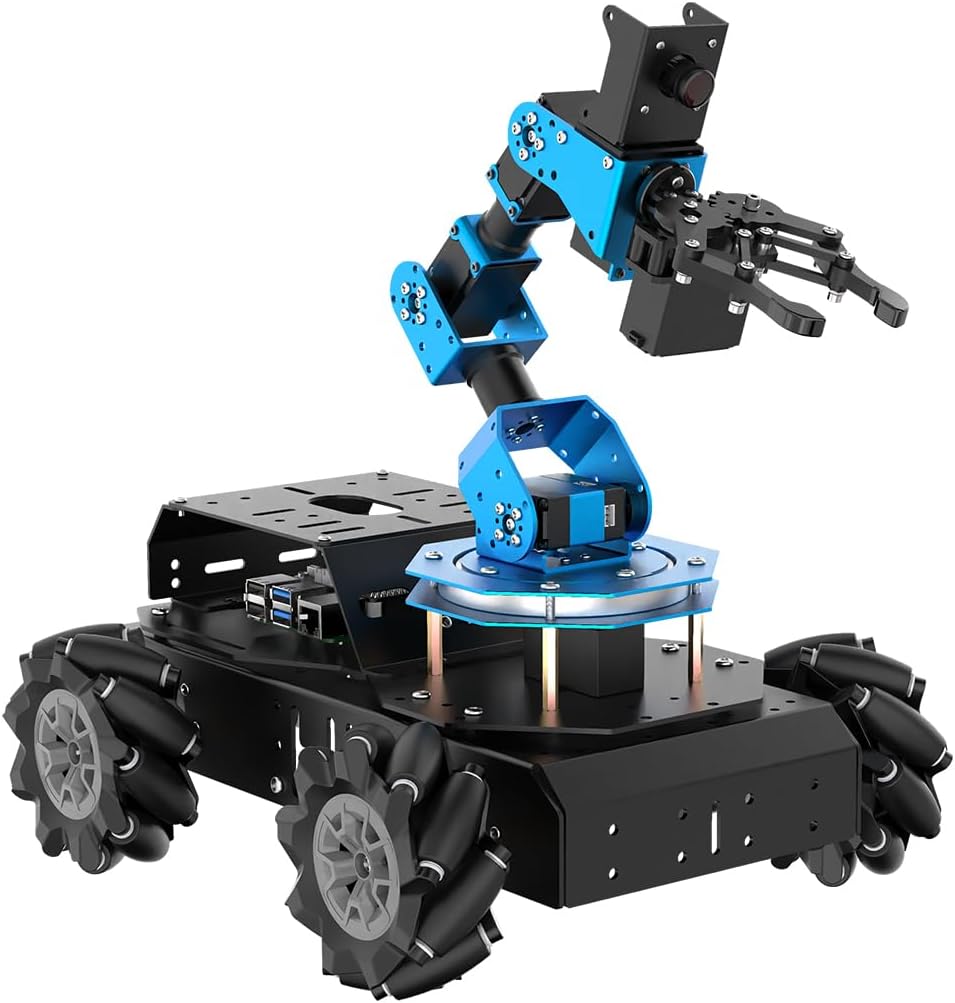
The Raspberry Pi 5 kit remains the reference single-board computer for makers heading into the back half of 2025, and the decision most buyers actually face isn't whether to buy one — it's which configuration to buy. Board-only, 4GB vs. 8GB, official case-and-cooler bundle, or a third-party starter kit with a microSD card thrown in. This guide synthesizes Raspberry Pi's own published specifications alongside public reviews and benchmark write-ups to help narrow that decision.
Key Upgrades in Raspberry Pi 5 vs Previous Generations
Per Raspberry Pi's own product announcement, the Pi 5 is built around a 2.4GHz quad-core Arm Cortex-A76 CPU — a meaningful architectural jump from the Cortex-A72 cores in the Pi 4. Raspberry Pi's specification page cites this as delivering roughly 2-3x the CPU throughput of the previous generation for general workloads.
Other headline changes documented on raspberrypi.com/products/raspberry-pi-5/specifications:
| Spec | Raspberry Pi 4 | Raspberry Pi 5 |
|---|---|---|
| CPU | Quad-core Cortex-A72 @ 1.8GHz | Quad-core Cortex-A76 @ 2.4GHz |
| GPU | VideoCore VI | VideoCore VII |
| Memory options | 1GB / 2GB / 4GB / 8GB LPDDR4 | 2GB / 4GB / 8GB (16GB added later) LPDDR4X |
| Video output | 2x micro-HDMI (4K60 or dual 4K30) | 2x micro-HDMI (4K60, HDR support) |
| Storage | microSD only | microSD + optional M.2 NVMe via HAT+ |
| PCIe | None | Single-lane PCIe 2.0 |
The addition of a real PCIe lane is arguably the most consequential change for makers — it's the first Pi generation where an NVMe SSD (via an add-on HAT) is officially supported, addressing the microSD I/O bottleneck that limited earlier Pi-based NAS and media-server builds.
For a full pin-level breakdown of what's exposed on the 40-pin header, see Raspberry Pi 5 Pinout Guide: The Full 40-Pin GPIO Breakdown, and for the complete spec sheet with historical context see Raspberry Pi 5 Specs: Full 2025 Breakdown.
Raspberry Pi 5 Performance Context vs Desktop Hardware
It's worth being direct about positioning: the Pi 5 is not a desktop CPU competitor, and public reviews treat it accordingly. Jeff Geerling's early benchmark coverage and Phoronix's Pi 5 test suite both frame the Cortex-A76 jump as substantial within the SBC category — the biggest single-generation CPU gain in the Pi line's history — while still sitting well below entry-level desktop x86 chips on raw multi-threaded throughput. Tom's Hardware's ongoing Pi coverage similarly frames the Pi 5 as class-leading among SBCs on power-per-dollar rather than as an absolute-performance play.
Where the Pi 5 does hold up well against general expectations, per the public write-ups above:
- Video decode and general desktop responsiveness under Raspberry Pi OS feels tangibly snappier than the Pi 4, attributable to both the CPU and VideoCore VII gains.
- The GPU supports 4K HDR output, a first for the Pi line, useful for media-center builds.
- Idle and light-load power draw stays in the single-digit-watt range typical of the Pi family, which is the actual reason to choose a Pi over a small x86 board for always-on projects.
For workloads that genuinely need desktop-class CPU or GPU throughput — heavy compilation, gaming, GPU compute — a small-form-factor x86 desktop or a budget discrete GPU setup will outperform any Pi by a wide margin, and that gap is exactly why the two categories serve different jobs rather than competing head-to-head.
Best Use Cases for a Raspberry Pi 5 Kit
The Pi 5's combination of low idle power, real PCIe, and a meaningfully faster CPU maps cleanly onto a specific set of projects:
- Home automation hubs. Running Home Assistant or a standalone MQTT broker (Mosquitto) benefits from the Pi 5's extra headroom over the Pi 4, especially once dozens of Zigbee/Z-Wave devices and automations are in play. See Raspberry Pi Projects for Home Automation in 2025 for build-specific guidance.
- Lightweight media centers. Kodi and Jellyfin both benefit from the VideoCore VII's improved 4K/HDR decode path, and the optional NVMe HAT removes the microSD bottleneck for large local libraries.
- Python-based IoT and GPIO projects. The 40-pin header is pin-compatible with earlier Pi generations, so existing HATs and GPIO code largely carry over — see the pinout guide for the full signal map.
- Retro emulation and light gaming. The CPU bump noticeably helps CPU-bound emulator cores (older-console and arcade emulation) compared to the Pi 4.
- Beginner and kid-friendly builds. No-solder GPIO kits and starter projects remain a strong fit — see Raspberry Pi Projects for Beginners: 6 No-Solder Builds and 10 Raspberry Pi Projects for Kids to Build in 2026.
- More ambitious builds. NAS boxes, self-hosted services, and small clusters are covered in Advanced Raspberry Pi Projects for Adults (2026 Guide).
Raspberry Pi 5 Kit vs. an All-in-One Board Like the Pi 500
Buyers weighing a traditional Pi 5 board-and-case kit against Raspberry Pi's keyboard-integrated Pi 500 should note these solve slightly different problems. The Pi 500 folds the board into a keyboard chassis for a ready-to-use desktop feel, while a standard Pi 5 kit keeps the board separate for HAT stacking, custom enclosures, and GPIO-heavy projects. The tradeoffs are covered in depth in Raspberry Pi 500 Specs, Price & Real-World Use in 2026 and Raspberry Pi 500 Plus: The Real Lineup vs. the Rumors, which are worth reading before committing to either form factor.
How to Choose the Right Raspberry Pi 5 Kit
| Priority | Recommended configuration |
|---|---|
| Budget home automation / light IoT | 4GB board, official case + 27W PSU |
| Media center, local AI experiments, multitasking | 8GB board, active cooler, optional NVMe HAT |
| First-time builder | A bundled starter kit that includes a preloaded microSD card, case, and power supply — avoids sourcing components separately |
| NAS / self-hosted services | 8GB board + M.2 NVMe HAT, since sustained I/O on microSD is the most common bottleneck reported in public reviews |
A few practical notes worth budgeting around, drawn from Raspberry Pi's own product documentation:
- Power supply matters more than on older Pis. The Pi 5 wants the official 27W USB-C PD supply; underpowering it can throttle performance or cause instability, per Raspberry Pi's own specification notes.
- Cooling is not optional at sustained load. The Cortex-A76 cores can throttle under prolonged full load without at least a passive heatsink; the official active cooler is recommended for anything CPU-intensive.
- microSD card isn't always included. Confirm whether a given kit bundles a card — many board-only and case-only kits do not, and a fast A2-rated card meaningfully affects boot and app-load times.
- Display connectivity changed. The Pi 5 outputs only over micro-HDMI with no composite video option. Anyone connecting to an older VGA-only monitor — common in retro-computing and signage projects — needs an active HDMI-to-VGA adapter, such as the BENFEI HDMI to VGA adapter or the BENFEI 2-pack version for multi-display setups.
Bottom Line
For most home-automation, media, and general IoT use, the 4GB Raspberry Pi 5 in the official case-and-power-supply kit covers the bulk of what buyers need, per the specs and use-case coverage above. Makers doing local AI experimentation, heavier multitasking, or NAS-style storage work should step up to the 8GB board and budget for the NVMe HAT rather than treating microSD as a long-term storage plan. Either way, the Pi 5's CPU and GPU gains over the Pi 4 — as documented directly by Raspberry Pi — make this the generation where PCIe-attached storage and 4K HDR output finally become practical rather than theoretical.
Citations and sources
- https://www.raspberrypi.com/products/raspberry-pi-5/
- https://www.raspberrypi.com/products/raspberry-pi-5/specifications/
- https://www.raspberrypi.com/news/introducing-raspberry-pi-5/
- https://www.tomshardware.com/raspberry-pi
- https://www.jeffgeerling.com/blog/2023/raspberry-pi-5-early-benchmarks
- https://www.phoronix.com/review/raspberry-pi-5-benchmarks
This piece is editorial synthesis based on publicly available information. No independent first-party benchmarking is reported.

