TMSS is a small piece of code on later Genesis units that checks whether the inserted cartridge writes the ASCII string "SEGA" to a specific memory address before the game can access the video display processor. When it works, you see the familiar "PRODUCED BY OR UNDER LICENSE FROM SEGA ENTERPRISES LTD." screen. When it doesn't, the screen freezes. It was Sega's trademark-based anti-clone weapon against unlicensed cartridges.
What happened: Adafruit's writeup on the TMSS lockout
Adafruit's blog has been running a long-form retrospective series on classic console security systems, and their piece on Sega's Trademark Security System (TMSS) laid out — in careful detail — exactly what the hardware and cartridge cooperate to do at boot on late-model Genesis units (1990-onward). The core mechanism is delightfully simple: the console's bootloader checks whether the inserted cart wrote the four bytes "SEGA" (0x53455341 in ASCII) to memory address $A14000 before the video display processor was accessed. If yes: normal boot, "Produced by Sega" screen displayed. If no: the VDP stays locked and you get a black screen or a lockup.
The Sega Retro wiki entry on TMSS documents the exact byte pattern, memory address, and versions of the Genesis hardware where TMSS was added. It first shipped in late 1990 with the "Model 2" Genesis. Model 1 units (the earliest launch consoles) don't have it at all.
Why it matters: how TMSS shaped cartridge compatibility
TMSS was never a serious anti-piracy measure. Copiers and unlicensed manufacturers figured out the "write SEGA to $A14000" step within weeks and rolled it into their cartridge ROMs. Cracked and reproduction ("repro") cartridges from any competent modder pass the check trivially.
What TMSS actually did was legal, not technical. Because a cartridge that boots on a TMSS-equipped Genesis has to write the ASCII string "SEGA" into the console's memory, any unlicensed manufacturer that made their cart work was — arguably — using Sega's trademark. That was the plan: give Sega grounds to sue. It worked to varying degrees; a US federal court case (Sega vs. Accolade, 1992) tested the theory and found that the trademark use was incidental and fair. But the mere existence of TMSS raised the legal cost of the unlicensed cartridge business, which was the point.
For collectors and modders, TMSS matters in two practical ways:
- Reproduction and homebrew cartridges must include the TMSS write or they won't boot on Model 2+ consoles. Homebrew SDKs like SGDK bake this in.
- Some Genesis add-ons — the 32X, Sega CD — have their own boot processes that interact with TMSS in subtle ways. Certain unlicensed carts booted fine on a bare Genesis but locked up when a 32X was attached.
TMSS also inadvertently created a small "collectible" market for early Model 1 launch consoles: those play cartridges the later Model 2 wouldn't. Very early homebrew and some rare unlicensed titles from 1989 don't include the TMSS write.
How the modern Sega Genesis Mini sidesteps the whole question
The Sega Genesis Mini is not a Genesis. It's an ARM-based emulation platform in a tiny plastic Genesis shell. It runs Genesis ROMs through emulation on Linux; there is no VDP to lock, no $A14000 address to gate, and TMSS is a historical footnote rather than a live boot check.
Because it emulates the game rather than running the cart, the Mini plays licensed Genesis titles Sega bundled and nothing else. Repro carts, homebrew, unlicensed titles — none of those matter to the Mini because there's no cartridge slot. The SNES Classic Edition took the same shortcut on the Nintendo side: skip the security question entirely by not being real hardware.
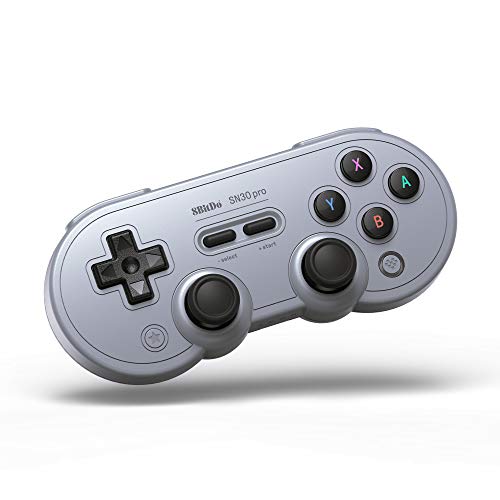
For collectors who want to actually run cartridges — original, repro, or homebrew — a real Model 1 or Model 2 Genesis is still the play, ideally paired with a modern controller adapter like the 8Bitdo Sn30 Pro via a wireless receiver so you're not fighting 35-year-old rubber pads.
Common misconceptions
- "TMSS is copy protection." No — it's a trademark trap disguised as a boot check. Copies pass trivially.
- "All Genesis consoles have TMSS." Early Model 1 consoles from 1988-1989 don't. If a repro cart won't boot on your Genesis, check the model — you may have an early one.
- "Region-locking and TMSS are the same thing." They're separate. Region-locking checks the cartridge's declared region against the console's; TMSS just checks the SEGA-write pattern. Some carts fail one, some fail both.
- "You can defeat TMSS by removing a chip." On some Model 2 boards there's a mod-chip removal path, but on most modern hardware TMSS is baked into the boot ROM. The right fix for booting a stubborn cart is a cartridge-side patch, not a console-side surgery.
The technical mechanics, step by step
For the technically curious, here is what actually happens at boot on a Model 2 Genesis with TMSS active:
- Power-on reset. The 68000 CPU jumps to the reset vector in the console's boot ROM (not the cartridge).
- VDP lock check. The boot ROM sets a flag: "VDP access is currently locked." Reading or writing the VDP registers now silently fails.
- Cartridge handoff. The boot ROM reads the reset vector from the cartridge ROM at address
$000004and jumps to it. Now the game code is running. - TMSS write. A well-behaved cartridge writes the four bytes
0x53 0x45 0x47 0x41(ASCII "SEGA") to memory-mapped address$A14000. This is the license check. - VDP unlock. The next VDP register access succeeds; the "PRODUCED BY OR UNDER LICENSE FROM SEGA ENTERPRISES LTD." screen displays.
- Normal boot. The game runs.
A cartridge that skips step 4 is effectively bricked on the console: it can execute code (RAM works fine) but can't render anything (VDP stays locked). Homebrewers who write raw 68000 without an SDK will hit this the first time and see nothing on screen; adding the TMSS write fixes it.
Why "SEGA" specifically?
Sega's lawyers were thinking about trademark law when they picked the string. A cartridge that boots on a Model 2 Genesis has to write Sega's registered trademark into the console's memory as a condition of playing. From the outside, it looks like the cartridge is using the trademark — and unlicensed manufacturers can't authorize themselves to use it.
The theory: any unlicensed cartridge that boots is a trademark violation, and Sega can go after the manufacturer. It's a legal firewall, not an encryption scheme.
Whether that theory would hold up depended on the court. In Sega v. Accolade the Ninth Circuit disagreed, ruling that the required trademark use was incidental and thus not infringing. But by the time that ruling landed, TMSS had already discouraged a lot of would-be entrants; the raise-the-cost strategy worked even after the legal theory lost.
Repro and homebrew: the modern angle
The 2020s retro scene brought a wave of reproduction cartridges — new-manufacture boards with modern flash chips playing original Genesis ROMs. Every well-made repro passes TMSS trivially by including the write in the ROM. A cheap poorly-made repro that skips the check just doesn't boot on Model 2+ hardware, which is one way to tell a good repro from a bad one.
For homebrew developers, SGDK (the SEGA Genesis Development Kit for C on modern PCs) handles the TMSS write in its default startup code. If you're writing raw 68000 assembly, you own the write yourself; every homebrew tutorial covers it in chapter 1.
What this means if you're buying a Genesis today
Two paths, depending on what you want.
If you want to actually play cartridges — real ones, homebrew, repro: buy a Model 1 (VA6 or earlier) if you can find one at a reasonable price. It has no TMSS, so it plays everything without cartridge-side workarounds. Prices on eBay for a working Model 1 are $80-140 in 2026. Add a controller: the 8Bitdo Sn30 Pro with a wireless receiver runs about $15 and gets you a modern d-pad that's arguably better than the original.
If you want the classic Sega library on a plug-and-play console: the Sega Genesis Mini is the ideal answer. It ships with 40+ built-in games (including the Sonic titles, Streets of Rage, and others), plays them with excellent emulation quality, and doesn't require you to think about TMSS at all. The SNES Classic is Nintendo's equivalent for the other 16-bit library.
If you want to write homebrew: any Model 2 Genesis works. SGDK — the community C-based SDK for Genesis homebrew — handles the TMSS write for you at boot time, so you never touch $A14000 directly. Your ROM is portable across all Model 2 and Model 3 units without special handling.
TMSS in context: other 16-bit security schemes
Sega wasn't alone in trying to gate cartridges. A quick comparison of the major schemes:
| Console | Scheme | Method | Effectiveness |
|---|---|---|---|
| Genesis (Model 2+) | TMSS | Cartridge must write "SEGA" to $A14000 | Trivial to bypass, legal firewall |
| SNES | CIC lockout chip | Handshake between console and cart chips | Bypassable with matching CIC clone |
| Neo Geo AES | ROM encryption | Encrypted graphics ROMs | Very effective, later cracked |
| PC-Engine | Card format | Proprietary Hu-Card physical form | Physical barrier, easily replicated later |
TMSS is unusual in that it was primarily a legal weapon, not a technical one. The CIC lockout chip on the SNES was a real technical challenge — reverse-engineering the handshake took years. TMSS took an afternoon to work around; its power came from what happened next in court.
Model 1 vs Model 2 Genesis: how to tell
Common question in the retro scene: "How do I know if my Genesis has TMSS?" Quick identification:
- Model 1 (with "HIGH DEFINITION GRAPHICS" on the front): VA0-VA6 board revisions. VA0-VA5 lack TMSS; VA6 is transitional and varies. If you're playing a Model 1, most units are TMSS-free.
- Model 2 (smaller, rounded, no "HIGH DEFINITION" text): All Model 2 units have TMSS. This includes the vast majority of Genesis consoles produced from 1990 onward.
- Model 3 (JVC / Majesco "smaller than a paperback" version): Has TMSS, but a shorter startup sequence than Model 2.
If you can't tell from the shell, check the boot screen. A console showing "PRODUCED BY OR UNDER LICENSE FROM SEGA ENTERPRISES LTD." is passing TMSS; that screen didn't exist on pre-TMSS Model 1s.
Related guides
- Best Controller for Emulation and Fighting Games in 2026 — pairing a modern d-pad with a Genesis
- Sega Genesis Mini vs SNES Classic — the mini-console decision
The source
- Adafruit blog — retro console security series
- Sega Retro — Trademark Security System entry
- Sega Corporation
Bottom line
TMSS is a small, elegant piece of console security history: a check that used trademark law rather than cryptography to make unlicensed cartridges harder to sell. It didn't stop the copiers, but it raised the legal cost of the business. On modern hardware — the Sega Genesis Mini, the SNES Classic, and their peers — it's a piece of trivia rather than a live check. On a real Model 2 Genesis with a repro cartridge, it's still exactly as relevant as it was in 1991.
Citations and sources
As of 2026, retro hardware pricing on eBay and in dedicated markets remains stable; the ratio of Model 1 to Model 2 units in the wild continues to slowly shift toward the (more common) Model 2.