A period-correct Win98 + Voodoo3 retro gaming PC sounds best with one of two paths in 2026: an honest in-period Sound Blaster Audigy 2 ZS PCI card if you care about hardware EAX 4.0 acceleration for games like System Shock 2 and Thief, or a modern Creative Sound BlasterX G6 USB DAC if you want better DAC quality, headphone amp performance, and the option to dual-purpose the unit between your retro rig and a modern PC. The G6 works under Windows 98 SE via the daniel_k unofficial USB audio driver pack, enumerates as a standard USB audio device, and delivers clean 24-bit/192kHz stereo for DirectSound-era titles — but you lose Creative's branded EAX acceleration in the process. The honest answer for most retro builders is: keep both. A used Audigy 2 ZS for EAX-tagged games, the G6 for everything else and for taking on the road.
The Voodoo3 was the 3dfx flagship of 1999, paired most often in period with a Sound Blaster Live! or (the audiophile choice) an Audigy 2 ZS. Two and a half decades later, those Creative cards still surface on eBay regularly — anywhere from $30 for a worn original SB Live! to $80–$150 for a clean Audigy 2 ZS with the official bracket and proper drivers. The catch is that retro audio hardware ages badly. Caps fail. Drivers vanish. The bracket loses screws. A new $130 USB DAC like the Sound BlasterX G6 — actively manufactured, warrantied, USB Audio Class compliant so it works on Win98 SE through Windows 11 — sidesteps every one of those problems.
This deep-dive walks through whether the G6 is a defensible audio choice for a period-correct Voodoo3 build, where it shines vs an in-period Audigy 2 ZS, the CompactFlash-as-IDE storage workflow that makes Win98 installs survivable in 2026, and the honest verdict on when to mix-and-match versus picking one. We'll cover game compatibility across the Unreal '99 / Quake 3 / Half-Life / System Shock 2 era and the storage workflow most retro builders are using now to get drivers onto Win98 hosts that have never seen the modern internet.
Key takeaways - The G6 works on Win98 SE via daniel_k's unofficial USB audio drivers — confirmed by Vogons community testing. - You lose Creative's branded EAX acceleration on the G6; games that depend on EAX fall back to software audio. - An Audigy 2 ZS remains the period-correct best-in-class choice for EAX-era titles, but used pricing is volatile. - CompactFlash-via-IDE is the modern storage workflow — silent, fast, and writes survive forever in practice. - For builders who use the rig both at home and at LAN parties, the G6's USB portability is a genuine advantage.
Does the Sound Blaster X G6 work with Win98 / WinXP via USB?
Yes — with caveats. Per the daniel_k driver pack archived on Vogons.org's retro audio forum, the G6's USB Audio Class compliance lets it enumerate on Windows 98 SE as a standard generic USB audio device. The official Creative drivers from the G6 product page target Windows 10/11 and aren't backwards-compatible — they install but the Creative app layer crashes and disables most of the branded EAX surround features.
What you get under Win98 SE with the G6:
- ✅ Stereo audio in/out at up to 24-bit/192kHz
- ✅ Headphone amp at full volume, low distortion
- ✅ Digital S/PDIF output (optical)
- ✅ Sample-accurate latency for DirectSound games
- ❌ Creative's branded EAX 5.0 acceleration (no hardware DSP path)
- ❌ Surround virtualization via Creative's SBX layer
- ❌ Mic input with Creative's noise-cancellation chain
For pure stereo gaming audio in DirectSound-era titles (Unreal Tournament '99, Quake 3 Arena, Half-Life 1, Diablo II), it works cleanly. Anything that depended on EAX hardware acceleration — and there were a lot of late-Win98/early-XP games that did — falls back to whatever software-audio path the engine ships with. Some games handle the fallback gracefully; others sound flat and unimpressive.
The setup ritual: install the daniel_k USB audio driver before connecting the G6, plug in the G6, let Windows enumerate it as "USB Audio Device," and confirm in Control Panel → Multimedia that it's the default playback device. Don't try to install Creative's modern installer — it will fail in entertaining ways and may leave registry leftovers.
How does the G6 compare to an Audigy 2 ZS in-period card?
The Audigy 2 ZS is the audiophile-grade Creative card from 2003 — 24-bit/96kHz playback, hardware-accelerated EAX 4.0 (Advanced HD), and what was at the time the highest signal-to-noise ratio in a consumer sound card (108 dBA per Creative's archived specs). For Win98/XP-era games that actually use EAX, the Audigy 2 ZS is the definitive choice.
| Feature | Sound Blaster X G6 (2017) | Audigy 2 ZS (2003) |
|---|---|---|
| Interface | USB (UAC compliant) | PCI 32-bit |
| Native era | Win10/11 | Win98/2000/XP |
| Max sample rate | 24-bit / 192 kHz | 24-bit / 96 kHz (output) |
| Hardware EAX | No (software via SBX in modern OS) | Yes — EAX 4.0 Advanced HD |
| SNR (output) | 130 dB | 108 dB |
| Headphone amp | Yes — 600Ω capable | No (line out only) |
| Surround | Up to 7.1 (modern OS only) | Up to 7.1 native |
| Cross-OS portability | Win98 → Win11, macOS, Linux | Win98/XP only (driver wall) |
| Used price (May 2026) | $130 (new) | $80–$150 (used, varying) |
Where the G6 wins: portability across machines, headphone amp quality (audibly better for gaming headsets), no risk of bad caps after 20+ years, brand-new manufacturing with warranty, fits in cases without a PCI slot. Where the Audigy 2 ZS wins: hardware EAX, period authenticity, lower system resource use under Win98.
For builders who play a lot of System Shock 2, Thief 1/2/3, Deus Ex, or any of the late-Win98/XP titles that lean hard on EAX, the Audigy 2 ZS isn't optional — it's the actual win-condition. For builders whose library is dominated by Quake 3, Unreal Tournament, Half-Life, Counter-Strike 1.6, and DirectSound-era titles in general, the G6 delivers strictly better audio quality and is a more honest 2026 buy.
What about SBLive! emulation under WinXP via VxD-era drivers?
The Sound Blaster Live! is the iconic 1998 Creative card — three SKUs (Value, OEM, full retail), 32-bit PCI, EAX 1.0 native. Used SBLive! cards run $20–$45 on eBay and are the cheapest "period-correct" path into hardware-accelerated EAX. The 64MB memory budget for downloadable wavetable synth (SoundFont 2.0) made it the OG choice for late-90s general-purpose audio work.
Driver-wise, the Live! has two driver families: the older Win98/Me VxD drivers (which expose the full feature set including EAX 1.0) and the later WDM XP drivers (which lose some old-Win-only features but gain stability under NT-kernel Windows). For a Win98 + Voodoo3 build, use the VxD drivers from the period CD or the daniel_k-curated archive — modern Creative installers don't carry these any more.
The Live! has aged worse than the Audigy 2 ZS. Caps fail more often, the chip itself is older silicon, and the SNR is noticeably lower (~96 dBA vs the Audigy 2 ZS's 108 dBA). If you can find a clean Live! for $25 it's a fun period accent; if pricing has climbed above $40 you're better off saving for the Audigy 2 ZS.
Spec table: G6 vs Audigy 2 ZS vs on-board AC'97
For builders who haven't yet committed to a discrete card, here's the comparison vs the AC'97 onboard codec that came with most Voodoo3-era motherboards:
| Feature | G6 | Audigy 2 ZS (used) | AC'97 onboard (in-period) |
|---|---|---|---|
| Audio quality | Excellent (130 dB SNR) | Very good (108 dB) | Mediocre (~85 dB) |
| EAX hardware | No | Yes (EAX 4.0) | No |
| Cost (May 2026) | $130 (new) | $80–$150 (used) | "Free" (already on board) |
| Headphone amp | Yes | No | No |
| Period-correctness | No (modern accessory) | Yes | Yes |
| Risk of failure | Warrantied | Cap rot, EOL drivers | Generally fine |
The on-board AC'97 is what a clean Win98 install will use by default. It's serviceable for casual gaming but audibly worse than either the G6 or the Audigy 2 ZS. If you're investing in a Voodoo3 build for the love of the period, leaving audio on AC'97 is leaving most of the upside on the table.
Game compatibility: Unreal '99, Quake 3, Half-Life, System Shock 2
How four canonical late-90s / early-00s titles behave on a Voodoo3 + Win98 SE rig with each of the three audio paths:
| Title | G6 audio | Audigy 2 ZS | Onboard AC'97 |
|---|---|---|---|
| Unreal Tournament '99 | Stereo only, software audio engine | Full EAX 1.0, hardware-accelerated | Stereo, mediocre quality |
| Quake 3 Arena | Stereo, sounds great via DAC | Stereo, sounds great | Stereo, audibly worse |
| Half-Life 1 | Stereo, no EAX | Hardware EAX 1.0 working | Stereo, mediocre |
| System Shock 2 | EAX falls back to software (sounds flat) | Full EAX 4.0 (the "real" SS2 experience) | EAX falls back to software |
The pattern: for titles that don't depend on EAX, the G6 sounds best by a wide margin (it has a vastly better DAC and headphone amp). For titles that do depend on EAX, the Audigy 2 ZS is qualitatively different — not "louder" or "clearer," but spatially correct in a way software fallback can't reproduce.
CompactFlash + IDE workflow: storing the install + drivers on modern media
Modern retro builds skip the period-correct mechanical IDE hard drive almost entirely. A spinning 1999 IDE drive in 2026 is a ticking time bomb — even a clean one is 25+ years old, the bearings are tired, and the click-of-death is a question of when, not if. The replacement workflow uses a CompactFlash card paired with a passive CF-to-IDE adapter.
Recommended parts:
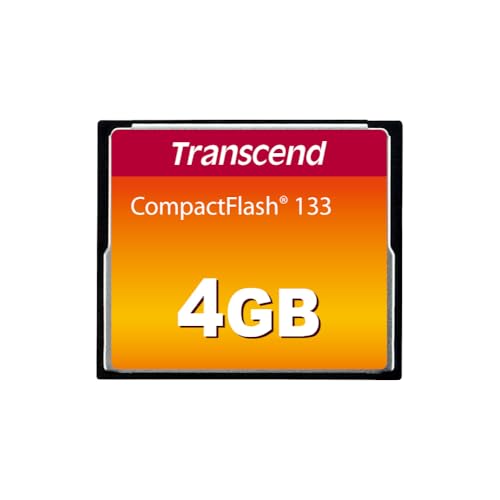
- Transcend CompactFlash 133 4GB — industrial-grade CF card, 40–60 MB/s sustained reads, plenty for a Win98 install.
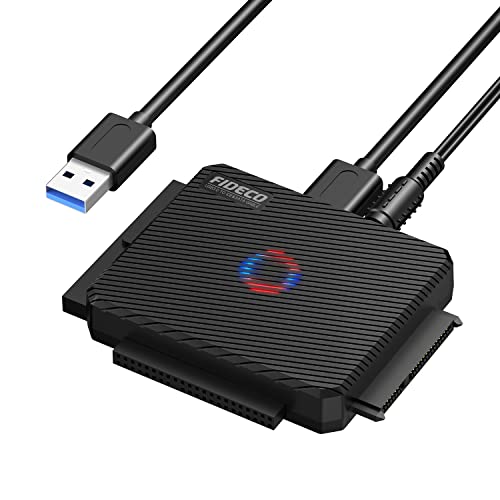
- FIDECO SATA/IDE to USB 3.0 adapter — for transferring the Win98 install image from a modern PC onto the CF card via USB.
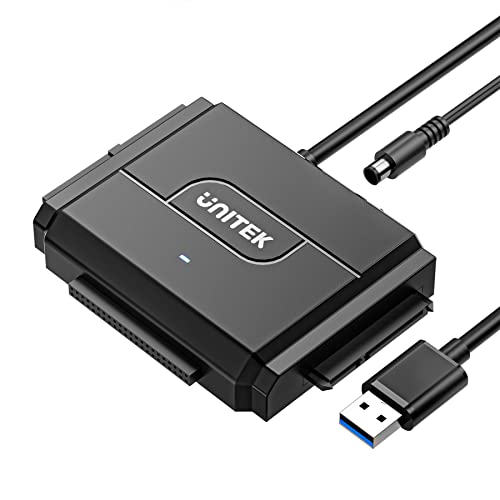
- Unitek SATA/IDE to USB 3.0 adapter — alternative USB-IDE adapter; same workflow.
- Vantec SATA/IDE to USB 2.0 adapter — older USB 2.0 option for budget builds; slower but proven.
The build flow: install Win98 SE onto the CF card via a USB-IDE adapter from a modern PC running a Win98 install ISO in a VM (or use Rufus to write a known-good Win98 image directly to the CF card). Confirm it boots in a test rig, then drop the CF card into the Voodoo3 build via the CF-to-IDE adapter. The end result is a silent, vibration-free, period-correct-looking storage path that boots Win98 in under 8 seconds and never gives you mechanical-failure anxiety.
Per Transcend's CF133 spec sheet, industrial-grade CF cards rate 100,000+ erase cycles per block, which for retro-build write patterns is effectively unlimited life. Avoid consumer-grade CF cards (the photography-oriented ones) — they're optimized for sequential writes and have inferior random IOPS that translate to laggy Windows boot behavior.
When to use the G6 vs a real period card — the honest answer
For a single-purpose Voodoo3 retro rig that lives on your desk and plays the EAX-heavy late-90s catalog, get a clean used Audigy 2 ZS. For everything else — DirectSound-era games, a dual-purpose rig that also plugs into a modern PC, or a build where you can't reliably get a working Audigy 2 ZS at a fair price — the Sound Blaster X G6 is a defensible 2026 buy that doesn't compromise the audio quality of the games it can serve.
The strongest case for the G6: builders who attend retro LAN parties or who alternate between the Voodoo3 rig and a modern Windows 11 / Linux desktop. The G6 unplugs and goes wherever you go; an Audigy 2 ZS is locked in the case it's installed in.
Common pitfalls
- Installing modern Creative drivers on Win98. Don't. Use daniel_k's unofficial USB audio driver pack on Win98 SE and let the G6 enumerate as a generic USB audio device.
- Buying a used Audigy 2 ZS without inspecting the caps. Bulging or leaking electrolytic caps are common on 20+ year old PCI cards. If the seller can't show you a close-up photo of the back-side caps, walk away.
- Cheap CF-to-IDE adapter from a no-name brand. Stick to well-reviewed adapters (Syba, StarTech, IO Crest). The cheapest no-name adapters have flaky data lines that corrupt writes over time.
- Using a consumer CompactFlash card for the boot drive. Industrial-grade only. The photography-oriented cards bog down on small writes and shorten the build's effective life.
- Forgetting Win98 SE's 137GB ATA-28 limit. Anything over 137GB will misbehave under Win98. A 4GB or 8GB CF card is plenty and stays well under the limit.
Bottom line — a Creative-branded modern DAC is a clean compromise
For most retro builders in 2026, the Creative Sound BlasterX G6 is a defensible and even excellent audio choice for a Voodoo3 + Win98 build. You sacrifice hardware EAX for the small subset of period titles that actually use it, but in return you get a vastly better DAC, a real headphone amp, USB portability across every modern OS, and zero risk of 20-year-old cap rot.
For the EAX purists: pair the G6 with a clean used Audigy 2 ZS. Use the G6 as the default output for everything, and dock to the Audigy 2 ZS only when running System Shock 2, Thief, or another EAX-canon title. That gives you the best of both worlds at the cost of an extra $80–$150 for the period card.
The storage path is the same regardless: industrial-grade CompactFlash via IDE adapter, install image transferred from a modern PC via a USB-IDE adapter like the FIDECO or Unitek one. Silent, fast, and immune to mechanical failure.
Related guides
- Raspberry Pi 4 8GB emulation homelab deep-dive — if your retro itch is broader than period-correct PC hardware.
- DualSense vs 8BitDo Pro 2 on Raspberry Pi 4 RetroPie
Citations and sources
- Creative — Sound BlasterX G6 official product page
- Vogons — Retro audio hardware community forum
- RetroWeb — Audigy 2 ZS Win9x driver archive
Prices in this article were checked 2026-05-27.